
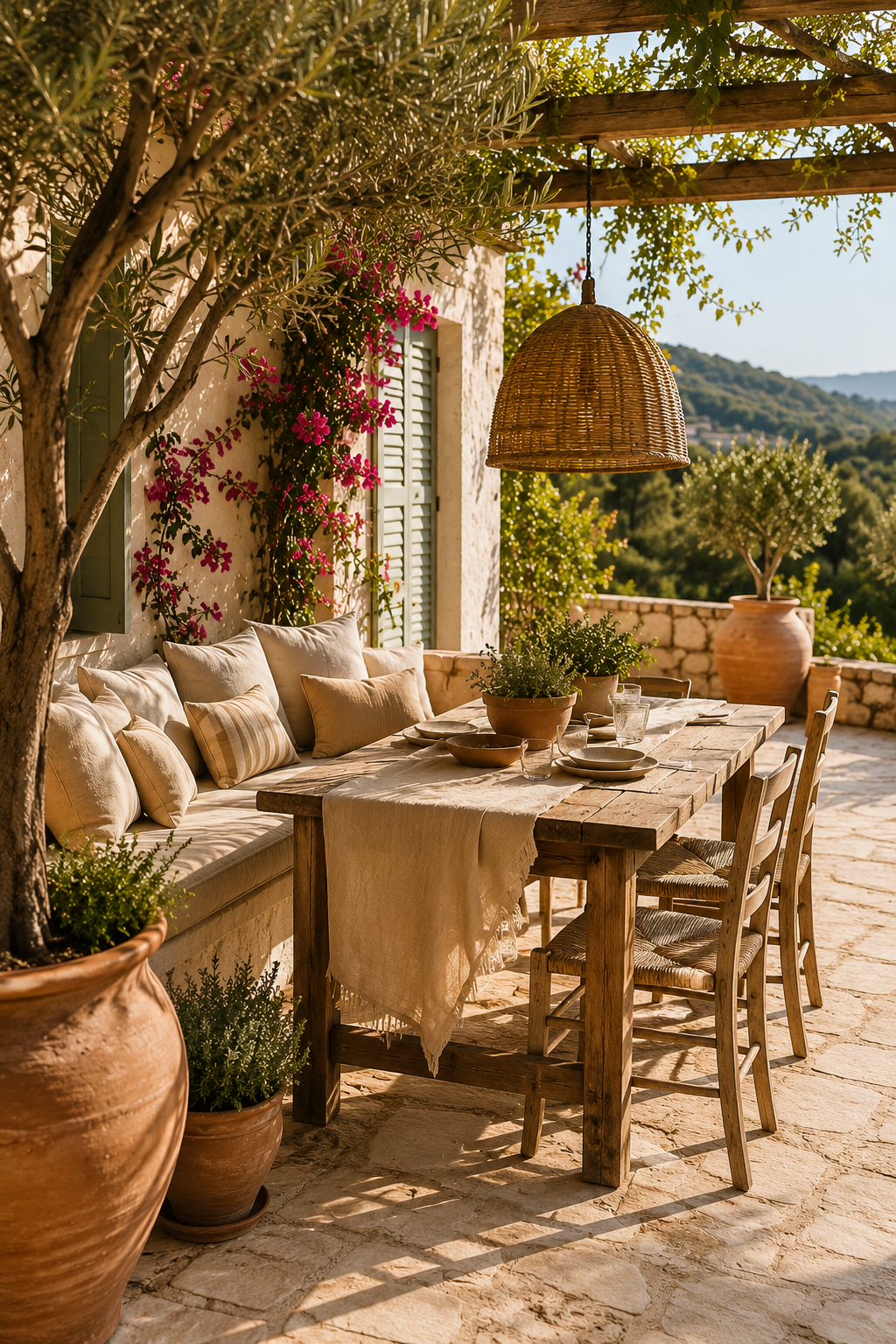
Mediterranean Patio Ideas: Layout, Shade, Materials and Lighting
A Mediterranean patio works when it is comfortable before it is decorative. Shade arrives where it is needed, chairs can move without blocking the doorway, plants suit the actual exposure, and evening lighting makes the space usable after sunset. Terracotta, pale stone, weathered wood and linen-look textiles then give that practical layout its Southern character.
This guide brings together the strongest ideas from our earlier patio articles into one complete planning method. It covers compact balconies as well as larger terraces, with realistic choices for climate, maintenance and budget.
Plan use, circulation and shade first
Decide what the patio must do before choosing furniture. A dining area needs enough clearance to pull chairs back without closing the route to the house. A reading corner needs dependable shade and a surface for a drink or book. A narrow balcony may work better with one genuinely comfortable chair and a folding table than with a complete outdoor set.
Mark the proposed furniture footprint with painter’s tape and walk through the space. Check doors, steps, drainage points and the route used to carry food outside. If heat is the main problem, solve shade before buying cushions or pots. A suitable umbrella, awning or professionally installed structure will change how often the patio is used; decorative accessories will not.
Choose a restrained material palette
Mediterranean character usually comes from a small family of tactile materials: pale mineral surfaces, terracotta, timber, natural or stone-look paving, woven fibres and matte metal. Using all of them equally can make a patio feel themed. Choose one dominant material, one warm secondary material and one darker accent.
For example, pale paving can form the background, terracotta can repeat in three containers, and dark bronze can appear in lighting and furniture frames. On a grey existing patio, use warm-white textiles, clay-coloured planters and timber to shift the temperature without replacing the floor.
Exterior performance matters. Confirm that stone, tile, furniture finishes and fabrics suit the local combination of frost, rain, salt air, wind or intense sun. Porous terracotta can be damaged by frost and standing water. Timber may need regular maintenance. Some woven furniture is intended only for sheltered use. A photograph cannot tell you whether a material will survive your climate.
Use terracotta as structure, not clutter
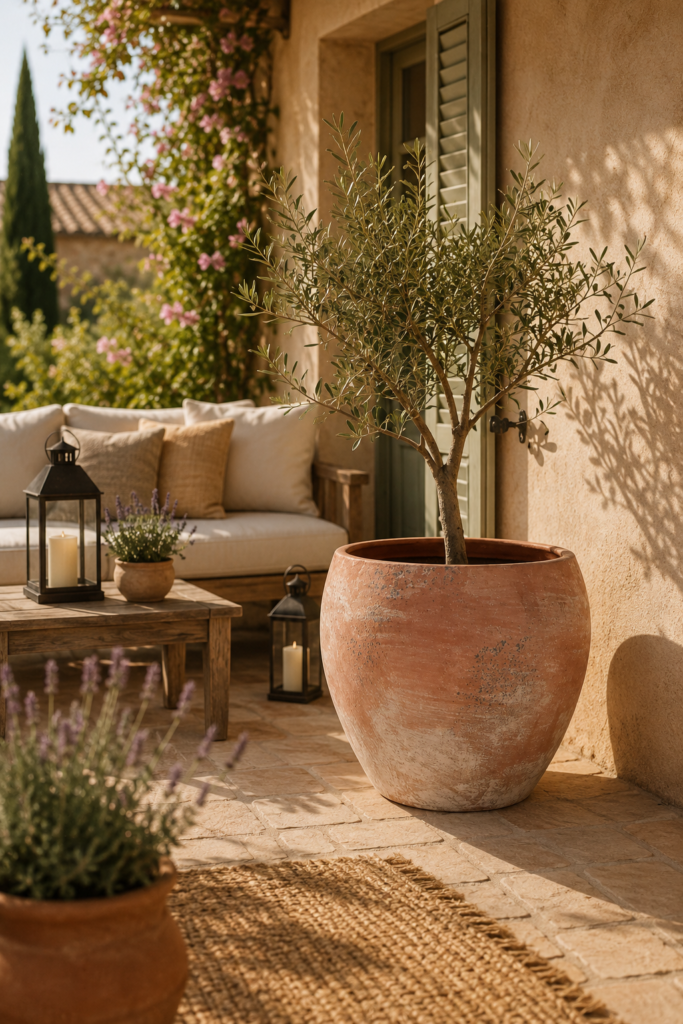
Terracotta is most effective in deliberate groups. Three containers in related colours and different heights create more impact than a perimeter lined with many small pots. Place the largest pot first, then use the smaller ones to connect it visually to seating or an architectural corner.
Protect the surface below with appropriate feet, saucers or drainage arrangements. A balcony also has weight and water-management constraints that should be checked before adding very large containers. When winter conditions are unsuitable, choose pots that can be moved or protected rather than treating every container as permanent.
Select plants for light, wind and winter
Olive, citrus, rosemary and lavender immediately suggest Southern Europe, but they are not automatic choices for every patio. Check hours of direct sun, mature size, drainage, exposure to wind and local winter temperatures. A struggling olive tree is less convincing than a healthy locally suitable plant with silvery foliage or a sculptural form.
Repeat one or two plant types to create calm. Many small containers dry out quickly and require constant attention. One substantial focal plant, supported by herbs or lower planting, is often easier to manage and visually stronger. For pathways and larger planted areas, see our guide to Mediterranean garden paths with stone, gravel and planting.
Make outdoor seating genuinely comfortable
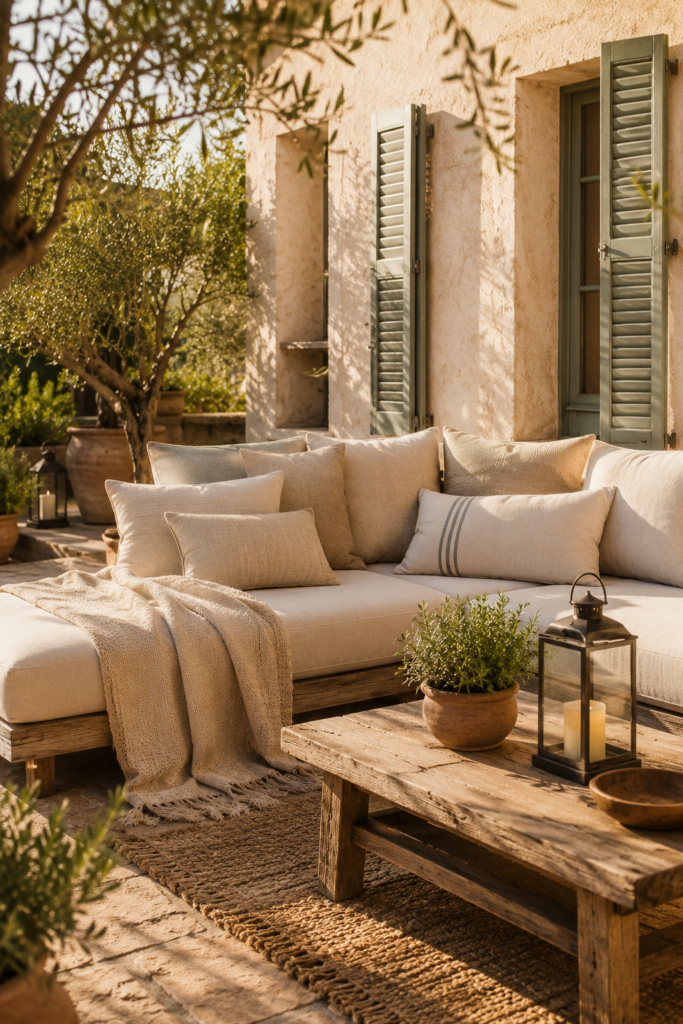
Woven chairs, timber benches and slim metal frames can all support the style. Comfort should decide between them. Check seat height, depth, back support and whether cushions can be stored quickly when the weather changes. A built-in or wall-side bench can make good use of a narrow patio, but loose chairs provide more flexibility around a dining table.
Use washable, fade-resistant outdoor fabrics rather than indoor linen exposed permanently to rain and sun. Warm white, sand, muted olive and clay form a calm base. Add one stripe or small-scale pattern rather than covering every seat with a different print. The softness should support the architecture, not compete with it.
Create an outdoor dining area that works
Start with the number of people who use the table regularly, not the maximum number who might visit once a year. A smaller table with room to circulate is more useful than a large table that dominates the patio. Allow the serving route from the kitchen to remain clear and include a stable nearby surface for dishes or drinks when space permits.
Rustic styling does not mean impractical styling. Choose tableware that can be carried safely, textiles that can be washed and lighting that allows people to see their food. A linen-look runner, a restrained set of ceramics and one low arrangement generally works better than a crowded table of decorative objects.
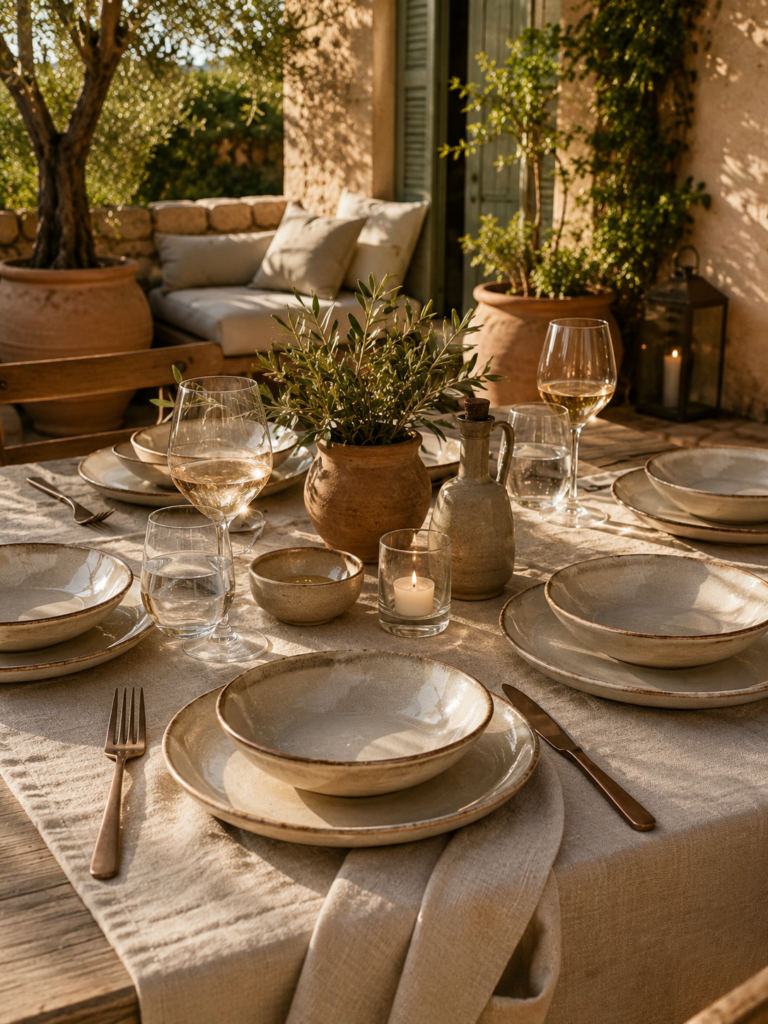
Layer evening light at three heights
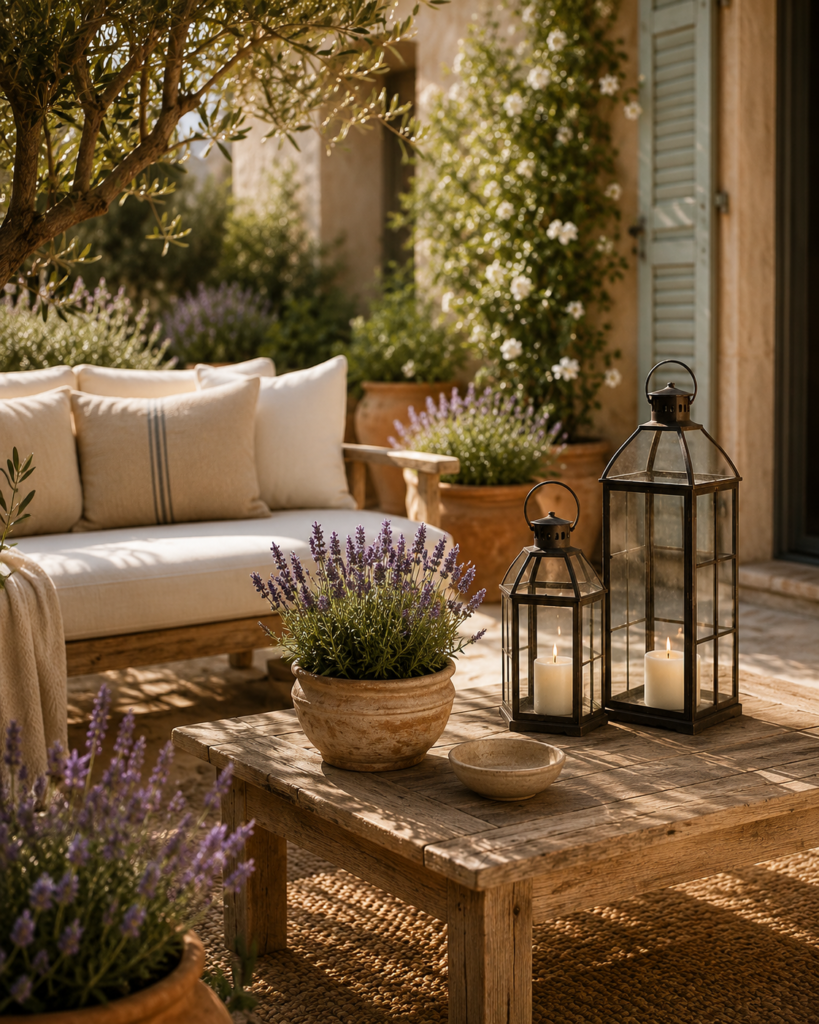
A useful outdoor lighting plan has three levels: safe light for steps and routes, functional light at the table, and a softer glow near planting or the floor. One extremely bright wall fitting flattens stone and clay textures and can make the patio feel exposed. Several controlled points of warm light create depth.
Rechargeable outdoor lamps and properly protected lanterns are flexible additions. Fixed electrical fittings must be suitable for their location and installed correctly. Avoid open flames where wind, dry vegetation, children, pets or local restrictions make them unsafe. Our separate guide to Mediterranean outdoor lighting explains the lighting layer in more detail.
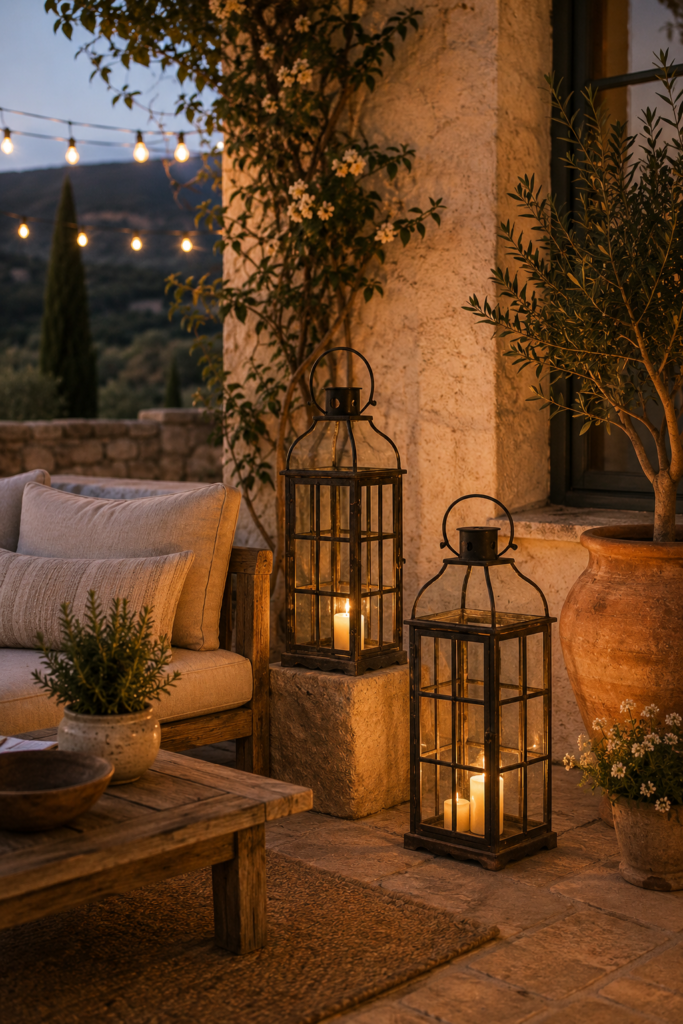
Adapt the plan to a small patio
Place seating against the longest usable edge and preserve one obvious route. Use the tallest plant near a corner to draw the eye upward, then keep the centre visually open. A folding or nesting table can serve several functions without permanently occupying the walkway.
Limit the number of decorative categories. One group of pots, one textile family and two levels of lighting may be enough. If the space is rented, focus on movable shade, containers, an outdoor rug where suitable and rechargeable light. Avoid drilling, loading railings or attaching overhead elements without permission and appropriate checks.
Spend in the order that changes use
- First: repair, drainage, circulation, comfortable seating and adequate shade.
- Second: a durable table or surface, practical storage and lighting.
- Third: focal planting, coordinated containers and washable textiles.
- Last: purely decorative accessories.
This order prevents a common failure: a patio full of attractive objects that is still too hot, cramped or uncomfortable to use. Live with each stage for several evenings before adding more. Notice where drinks are placed, which seat catches the strongest sun and which route becomes blocked.
Shop the Look
Use accessories only after the layout and comfort problems are solved. A smaller coordinated selection is more effective than multiple repeated “get the look” lists.
- terracotta outdoor pots
- neutral outdoor cushions
- rustic outdoor lanterns
- linen-look table runner
- ceramic dinner plates
A Mediterranean patio should feel easy to use
The final test is not whether the patio resembles a holiday photograph. It is whether you naturally choose to sit there. A clear route, dependable shade, comfortable seating, healthy planting and useful evening light create that habit. The Mediterranean character then comes from warm restraint: a few honest materials, repeated calmly, with enough empty space for them to be noticed.
Affiliate disclosure: La Maison du Sud may earn a commission from qualifying purchases made through links in this article, at no extra cost to you.
Choose Pergola Shade for Climate and Maintenance
A pergola can define an outdoor dining or seating zone while reducing harsh midday sun. Before choosing timber, metal, retractable fabric or climbing plants, consider wind exposure, winter weather, drainage and the amount of maintenance you can realistically provide. A vine-covered structure develops character over time but also needs pruning, support and seasonal care.
Fixed structures and heavy awnings may require permission, engineering checks or professional installation. On a rental terrace or small patio, a properly weighted exterior umbrella or removable shade sail may achieve the same comfort with less permanent work. Position shade according to when the space is actually used rather than where it looks best in a photograph.