15 Mediterranean Garden Path Ideas for a Warm and Natural Outdoor Space
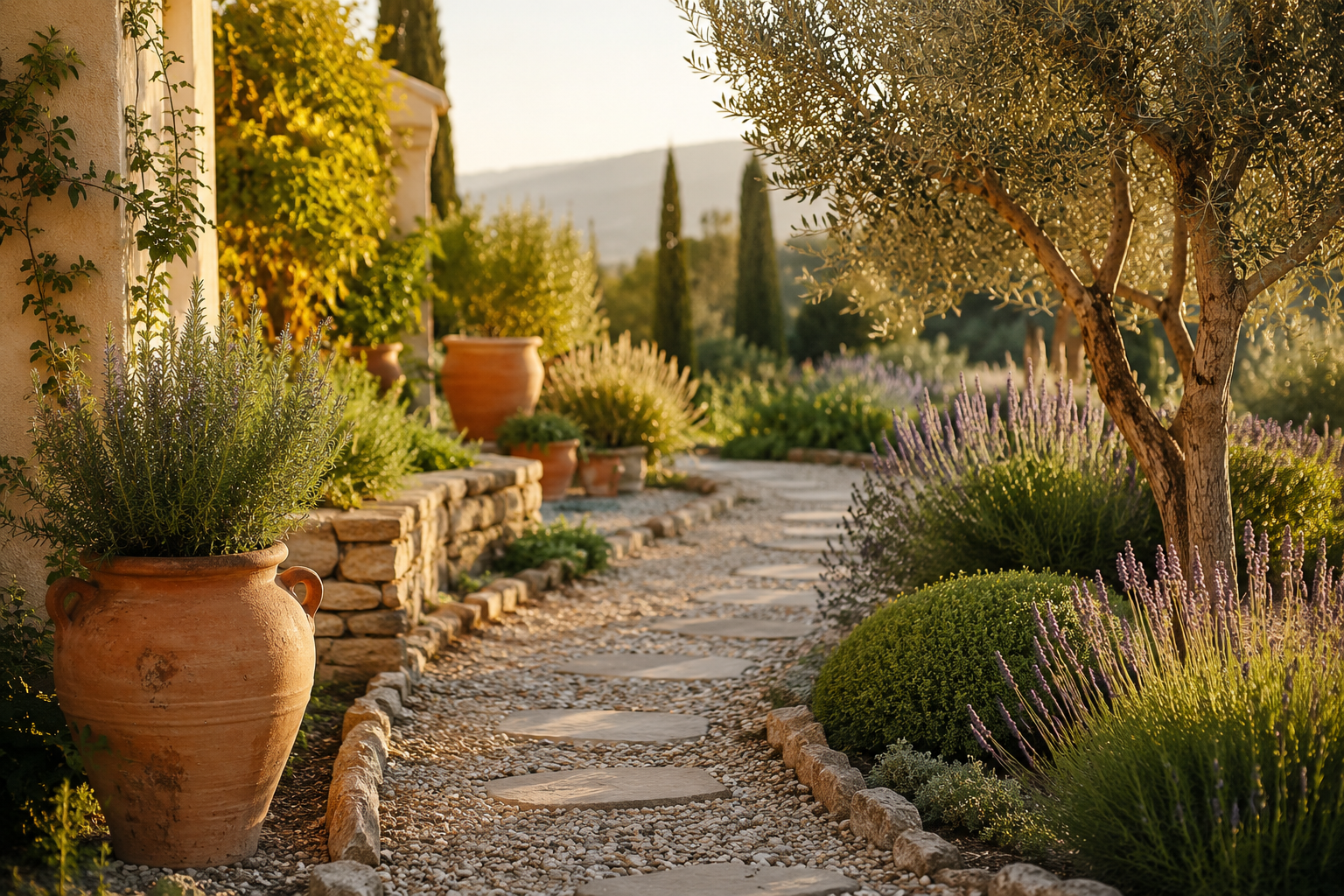
A Mediterranean garden path should feel warm, natural, and inviting. It does not need to be perfectly straight or overly designed. The beauty of this style comes from simple materials, soft colors, aromatic plants, and a relaxed atmosphere that feels connected to the sun, stone, and nature.
Whether you have a large garden, a small courtyard, or a narrow outdoor space, a Mediterranean-inspired path can completely change the way your garden feels. Gravel, terracotta pots, lavender, olive trees, solar lanterns, and rustic stone are all simple elements that can create a charming walkway with a southern European atmosphere.
Here are 15 Mediterranean garden path ideas to help you create a warm and natural outdoor space.
1. Use Gravel for a Natural Mediterranean Garden Path
Gravel is one of the most classic materials for a Mediterranean garden path. It has a relaxed, natural look and works beautifully with terracotta pots, olive trees, lavender, rosemary, and warm stone walls.
A gravel path is especially useful if you want a garden that feels simple and low-maintenance. It does not need to look perfect. In fact, a slightly informal shape often feels more authentic and charming. Curved gravel paths can make a garden feel softer, while straight paths can create a calm and structured look.
Choose gravel in warm colors such as beige, cream, sand, or light grey. These shades reflect the natural tones of Mediterranean landscapes and help the garden feel bright and sunny.
To make the path more practical, use edging along the sides. This keeps the gravel in place and creates a cleaner finish without making the design feel too formal.
2. Add Terracotta Pots Along the Walkway
Terracotta pots are one of the easiest ways to bring Mediterranean character to a garden path. Their warm clay color adds depth, texture, and a natural southern feeling.
Place pots along the edge of the path, near the entrance, or in small groups at key points in the garden. You can use them for lavender, rosemary, thyme, geraniums, olive trees, or citrus trees. The combination of terracotta and greenery immediately creates a warm outdoor atmosphere.
For a more natural look, mix different pot sizes. A large pot with a small olive tree can become a focal point, while smaller pots with herbs or flowers can soften the walkway.
Terracotta pots also work well in small spaces. Even if your garden path is narrow, one or two well-placed pots can make the area feel more finished and inviting.
3. Create a Stone Path with Irregular Slabs
Irregular stone slabs are perfect for a Mediterranean garden path because they feel rustic, natural, and timeless. Unlike perfectly cut paving stones, irregular slabs create a relaxed look that feels closer to old courtyards, village gardens, and traditional southern homes.
Use stones in warm beige, grey, or sandy tones. Leave small gaps between the slabs and fill them with gravel, creeping thyme, or small groundcover plants. This makes the path feel softer and more connected to the garden.
A stone path works especially well near white walls, terracotta pots, olive trees, or climbing plants. The combination of stone and greenery creates a calm and elegant outdoor space.
This idea is also useful for small gardens because the irregular shapes make the path feel more organic and less rigid.
4. Border the Path with Lavender
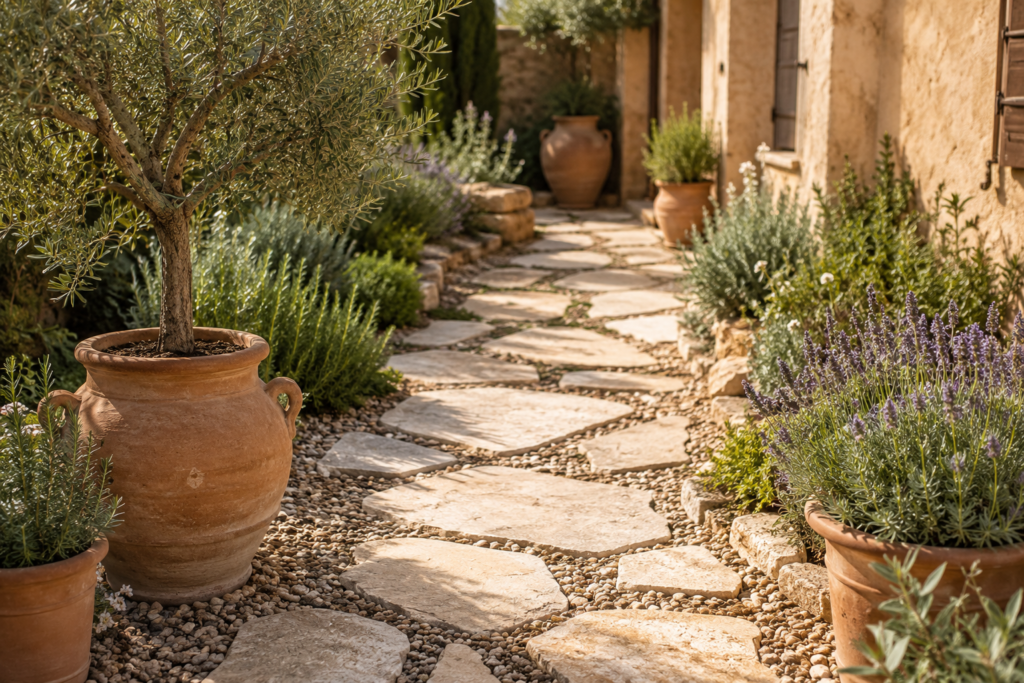
Lavender is one of the most beautiful plants for a Mediterranean garden path. It adds color, fragrance, texture, and movement. When planted along the edge of a walkway, it creates a soft and romantic atmosphere.
Lavender works especially well with gravel and stone. The purple flowers contrast beautifully with beige paths, terracotta pots, and green olive trees. It also brings a strong southern feeling, especially in summer.
Plant lavender in repeated groups along the path rather than placing one plant here and there. This gives the walkway a more intentional and harmonious look.
If lavender does not grow well in your climate, you can create a similar effect with rosemary, santolina, catmint, or other drought-tolerant plants with silver-green leaves.
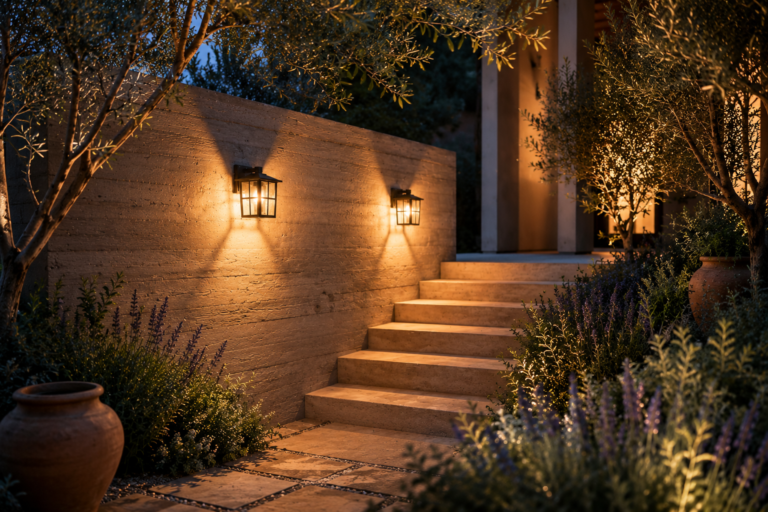
5. Add Solar Lanterns for Evening Atmosphere
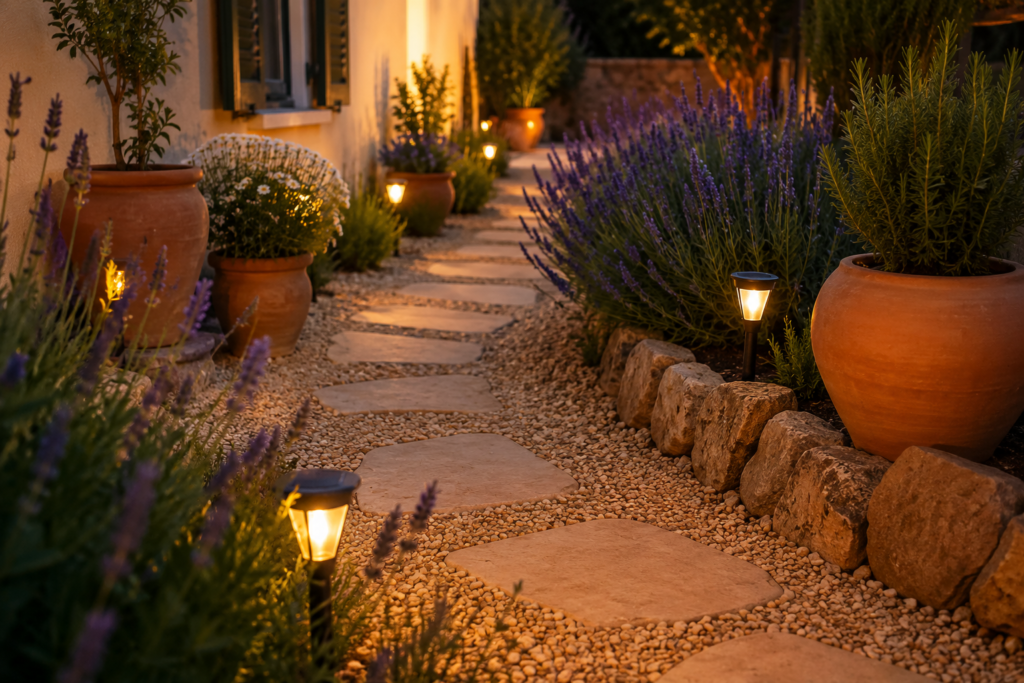
A Mediterranean garden path should feel beautiful in the evening too. Solar lanterns are a simple way to add warmth and atmosphere without complicated wiring.
Place small solar lanterns along the path, near steps, beside pots, or at the entrance of the garden. The goal is not to create strong light, but to guide the eye and make the garden feel welcoming after sunset.
Warm white light works best. Avoid cold white lighting, which can feel harsh and modern. Soft golden light creates a more relaxed and cozy Mediterranean feeling.
You can also combine solar lanterns with candles, wall lights, or string lights near a seating area. This creates layers of light and makes the garden feel more intimate.
6. Use Olive Trees to Frame the Entrance
Olive trees are a classic Mediterranean element. They bring structure, elegance, and a timeless southern atmosphere to a garden path.
Use two olive trees to frame the entrance of a path, or place one larger olive tree near a corner or turning point. Even a small olive tree in a large terracotta pot can make the path feel more established and beautiful.
The silver-green leaves of olive trees work perfectly with gravel, stone, lavender, rosemary, and warm beige walls. They add height without making the garden feel heavy.
If you live in a colder climate, choose olive trees in containers so they can be moved or protected during winter.
7. Mix Gravel and Stepping Stones
Gravel and stepping stones are a perfect combination for a Mediterranean garden path. The gravel gives the path a relaxed natural base, while the stepping stones make it practical and easy to walk on.
Choose stones with an irregular or rustic shape for a more authentic look. Place them with enough space between each step to feel natural, but not so far apart that the path becomes uncomfortable.
This idea works well in small gardens because it does not require a large paved area. It keeps the space light and open while still creating a clear walkway.
For extra charm, add terracotta pots, lavender, or small solar lanterns along the side of the path.
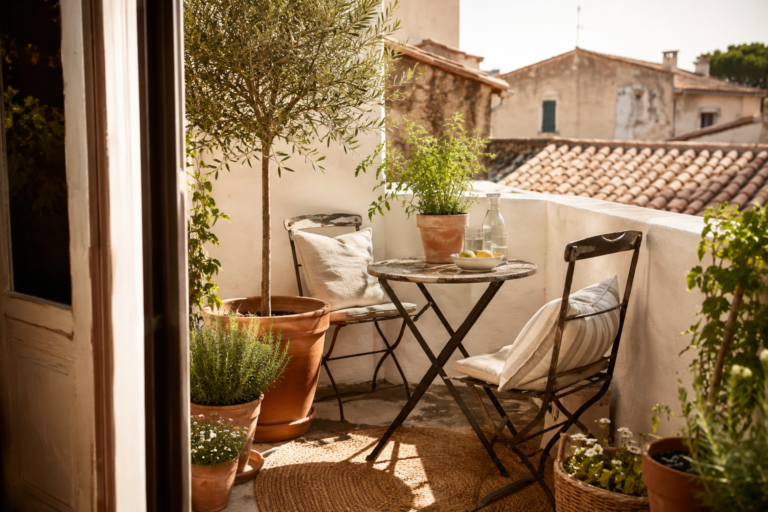
8. Create a Narrow Path for a Small Garden
You do not need a large garden to create a Mediterranean path. A narrow walkway can feel just as charming when it is designed with the right materials.
Use gravel, small stones, or narrow slabs to define the path. Keep the color palette simple with beige, cream, terracotta, green, and white. This helps the space feel calm rather than crowded.
In a small garden, vertical elements are very useful. Add climbing plants, wall planters, or tall pots instead of filling the ground with too many objects.
A narrow Mediterranean path should feel easy, relaxed, and practical. Keep the design simple and let the materials create the atmosphere.
9. Add Climbing Plants Around the Path
Climbing plants can make a garden path feel romantic and lush. They are especially useful near walls, fences, pergolas, or entrances.
Jasmine, bougainvillea, climbing roses, grapevine, and wisteria can all create a beautiful Mediterranean atmosphere. They soften hard surfaces and make the path feel more natural.
If your path runs along a wall, train climbing plants upward to create height and shade. This is a great way to make a small space feel more alive without taking up much floor area.
Climbing plants also combine beautifully with lanterns and terracotta pots. Together, they create a warm and inviting walkway that feels full of character.
10. Use Warm Beige and Sand-Colored Materials
Color is very important in Mediterranean garden design. Warm neutral tones help create a sunny, natural, and relaxed feeling.
Choose materials in beige, sand, cream, stone grey, terracotta, and soft white. These colors work well together and reflect the natural landscapes of southern Europe.
Avoid materials that feel too dark, shiny, or cold. Mediterranean style usually feels best when the materials look matte, textured, and natural.
A path made from warm gravel, rustic stone, or sand-colored paving will look beautiful with green plants, clay pots, and soft outdoor lighting.
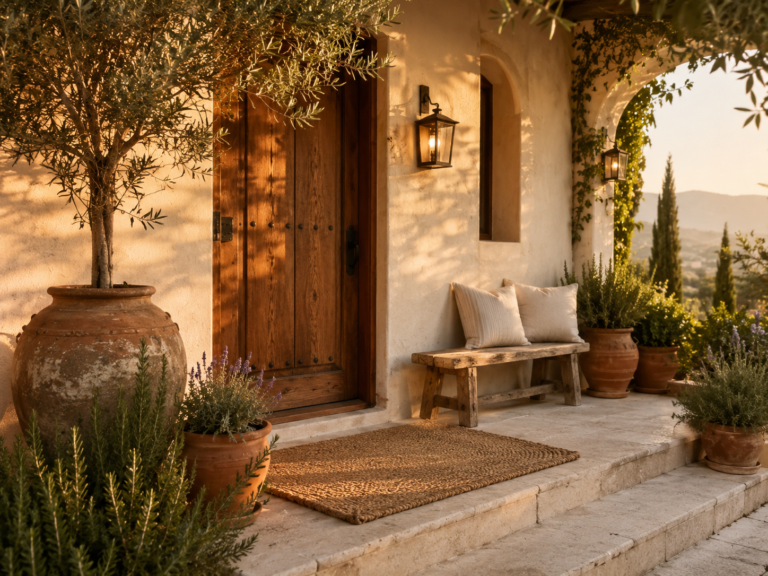
11. Add a Small Bench Beside the Path
A garden path feels more inviting when there is a small place to pause. A bench beside the walkway can create a quiet corner for reading, coffee, or simply enjoying the garden.
Choose a bench in wood, stone, wrought iron, or another natural-looking material. Keep it simple and rustic rather than too modern.
Place the bench near lavender, herbs, olive trees, or a warm wall. Add a cushion in beige, blue, white, or terracotta tones for comfort and style.
Even in a small garden, a simple bench can make the path feel more like a destination rather than just a way to move through the space.
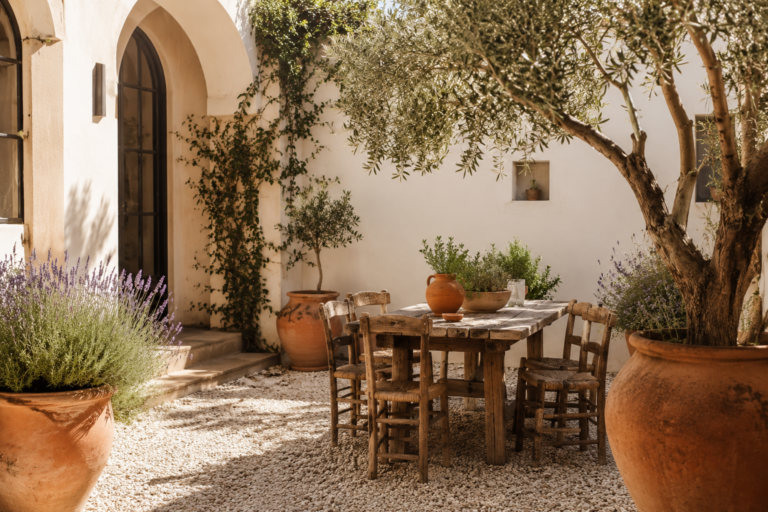
12. Create a Courtyard-Style Garden Walkway
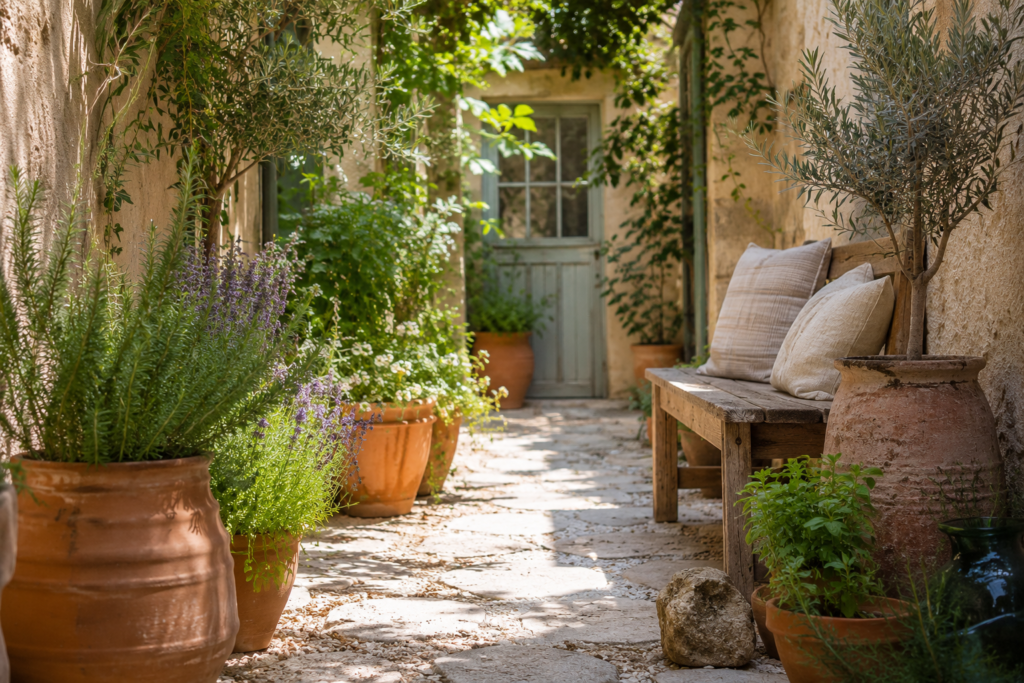
Mediterranean courtyards often have a special charm because they feel enclosed, warm, and intimate. You can create a similar effect with a garden path by using walls, pots, plants, and natural materials.
A courtyard-style walkway works well with gravel, stone slabs, terracotta pots, climbing plants, and lanterns. The space does not need to be large. In fact, small enclosed spaces often feel more authentic and cozy.
Use repeated materials to create harmony. For example, combine beige gravel with terracotta pots and green plants throughout the path.
Add a few personal details such as ceramic pieces, a rustic bench, or a small water feature to make the space feel lived-in and relaxed.
13. Use Rustic Edging for a Natural Look
Edging helps define a garden path and keeps gravel or stones in place. But it does not need to look too formal.
For a Mediterranean look, choose rustic edging made from stone, brick, terracotta, wood, or metal with a natural finish. These materials help the path feel structured while still keeping the relaxed atmosphere.
Low stone edging works especially well with gravel paths and lavender borders. Terracotta edging can add warmth and connect the path visually with clay pots and tiled details.
The best edging is practical but discreet. It should guide the path without becoming the main feature.
14. Add Mediterranean Herbs Along the Path
Herbs are perfect for a Mediterranean garden path because they are beautiful, useful, and fragrant. Rosemary, thyme, oregano, sage, basil, and lavender all bring texture and atmosphere.
Plant herbs along the edges of the path, in terracotta pots, or between stepping stones. As you walk past them, they can release a soft natural scent, making the garden feel even more inviting.
Herbs also work well in small spaces because they do not need to take up much room. A few pots near a path or entrance can already create a strong Mediterranean feeling.
Choose herbs that suit your climate and sun exposure. Many Mediterranean herbs prefer sunny, well-drained conditions.
15. Keep the Design Simple and Relaxed
The most beautiful Mediterranean garden paths often feel simple and natural. They are not overdecorated or too perfect. The charm comes from warm materials, plants, texture, and atmosphere.
Start with one main material, such as gravel or stone. Then add a few key elements: terracotta pots, lavender, olive trees, solar lanterns, and maybe a bench.
Avoid using too many different colors or styles. A calm palette of beige, terracotta, green, white, and soft grey will create a more harmonious result.
The goal is to create a path that feels easy to enjoy. It should invite you to slow down, walk through the garden, and enjoy the warmth of the outdoor space.
Conclusion
A Mediterranean garden path can transform an outdoor area into a warm and welcoming space. With simple materials like gravel, rustic stone, terracotta pots, lavender, olive trees, herbs, and solar lanterns, you can create a walkway that feels natural, timeless, and relaxed.
Whether your garden is large or small, the same principles apply: choose warm colors, use natural textures, add greenery, and keep the design simple. A Mediterranean path should never feel too formal or complicated.
With a few thoughtful details, your garden path can become more than just a walkway. It can become a beautiful part of your outdoor living space, full of charm, fragrance, light, and southern atmosphere.
Affiliate disclosure: this article contains affiliate links. La Maison du Sud may earn a commission from qualifying purchases at no additional cost to you. Product mentions are not personal test results unless explicitly stated.