Mediterranean Bathroom Ideas: Materials, Layouts and Details That Work
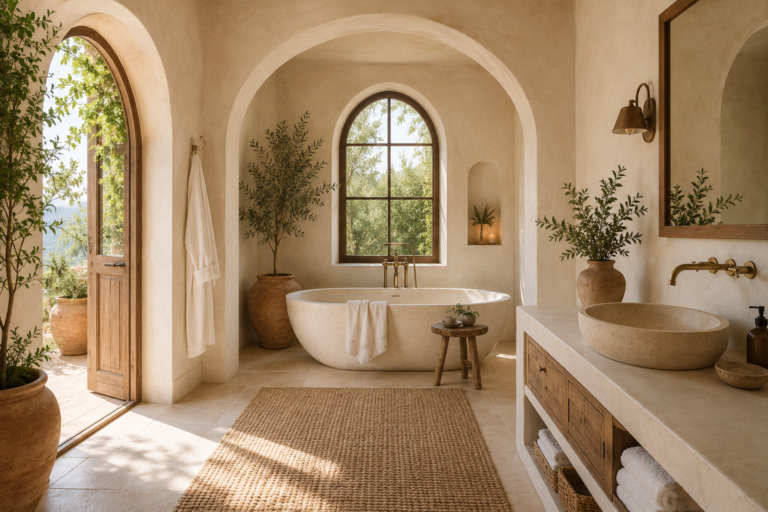
A convincing Mediterranean bathroom is built from practical decisions, not a collection of beige accessories. The room has to cope with water, steam, cleaning products, limited storage and often poor natural light. Warm plaster, travertine, timber and aged brass can create the right atmosphere, but only when each material is used where it can perform properly.
This guide explains how to plan the room as a complete scheme: which surfaces belong in wet zones, how to combine warm neutrals without creating a flat beige box, where to spend the budget, and which details can be changed without a full renovation. If you are working with a very small room, our Aegean blue and limewash-white powder room palette offers a more compact starting point.
Begin with the bathroom’s constraints
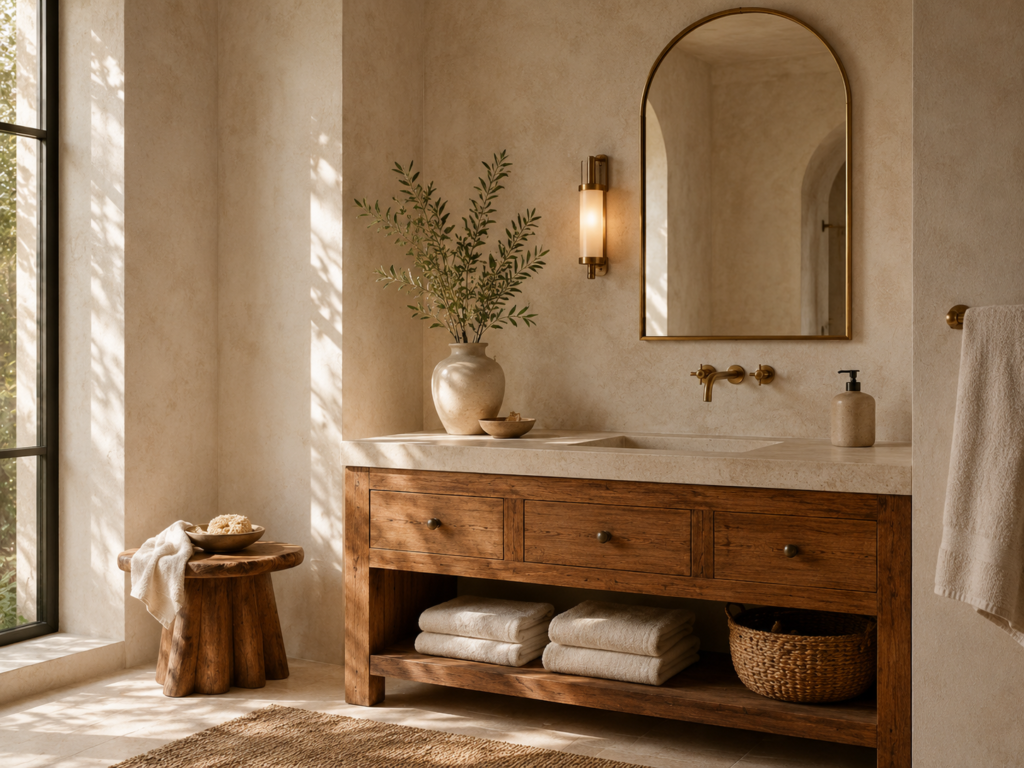
Before choosing tile or paint, map the parts of the room that receive direct water, regular splashes and only occasional humidity. A shower enclosure needs a proven waterproofing system behind the visible finish. The wall behind a basin needs a cleanable splash-resistant surface. A wall well away from water gives you more freedom to use mineral paint, limewash or a decorative plaster effect.
This distinction matters because photographs often make Mediterranean bathrooms look as though every surface is untreated plaster. Reproducing that appearance without the correct substrate, waterproofing and ventilation can lead to staining, mould or failure of the finish. Decorative character belongs on top of sound bathroom construction, never in place of it.
Check four things before buying anything:
- Ventilation: steam must leave the room effectively, especially when there is no opening window.
- Water zones: identify which walls and floors require a complete waterproof system.
- Daylight: note whether the room receives warm southern light or cooler northern light.
- Storage pressure: list what must remain accessible and what should disappear behind doors.
Build warmth with three related neutrals
A single beige used everywhere usually looks flat. A better Mediterranean palette combines three related temperatures: a pale mineral tone for the largest surfaces, a slightly deeper stone or clay tone at floor level, and a darker natural accent in wood, bronze or iron. The contrast can remain subtle, but the materials should not all reflect light in the same way.
For example, pair warm white walls with honed limestone-look floor tile and an oak vanity. Alternatively, use sand-coloured wall tile, a lighter plaster-toned ceiling and walnut or smoked oak details. In a north-facing bathroom, avoid grey-beige surfaces with a blue undertone; they can make brass look yellow and the room feel colder. In strong daylight, a muted clay or olive accent can stop the space from appearing washed out.
Always compare samples vertically and horizontally in the actual room. The same tile often looks lighter on a wall than on the floor, and artificial bathroom lighting can change a cream surface toward pink, green or yellow.
Choose stone for performance, not appearance alone
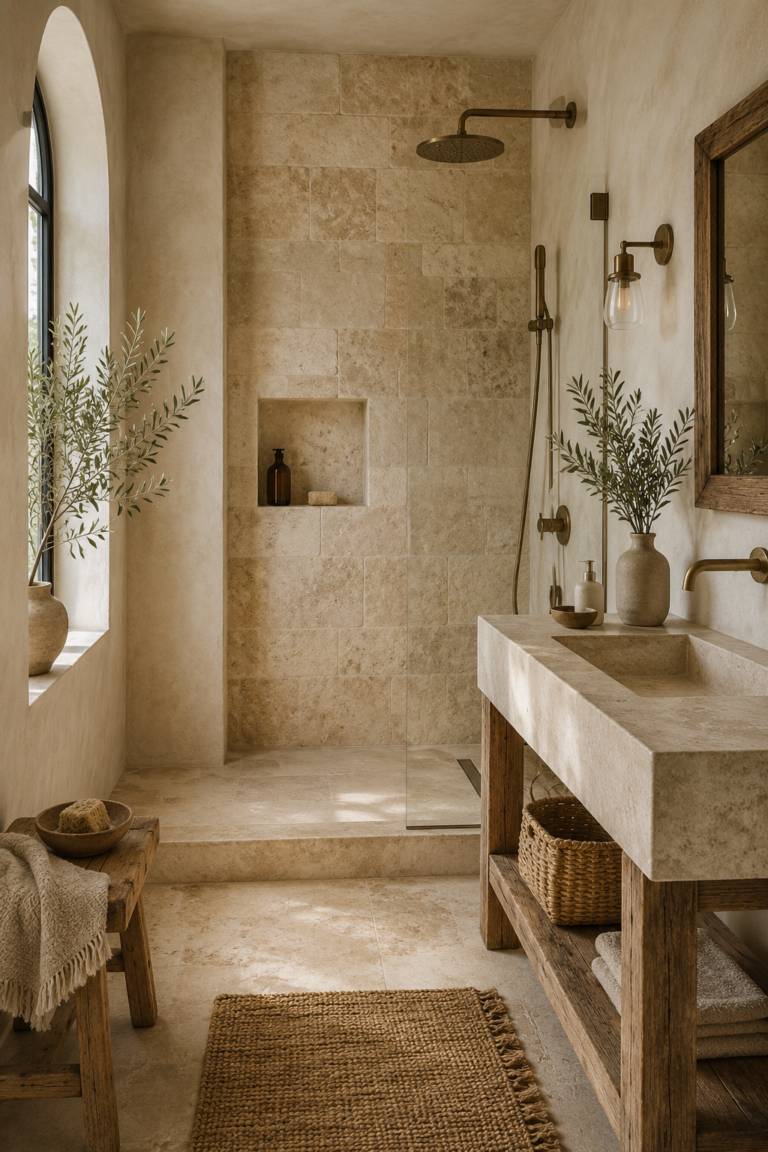
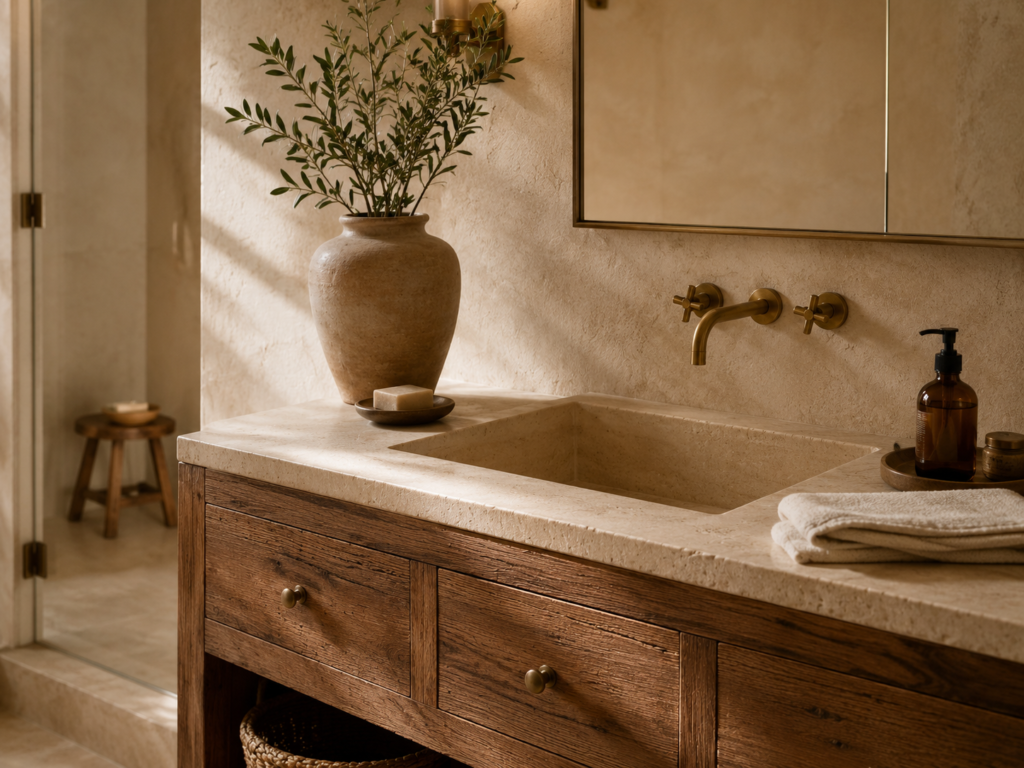
Travertine and limestone bring depth because their colour and pattern are naturally irregular. They also require more care than porcelain. Natural stone normally needs appropriate sealing, compatible cleaning products and careful installation. Acidic cleaners can damage calcareous stone, and highly textured finishes may be awkward to clean in a busy shower.
Porcelain that convincingly imitates stone is often the more rational choice for a family bathroom, rental or heavily used shower. It offers consistent thickness, predictable maintenance and a wider choice of slip-resistant floor finishes. Use fewer, larger-format tiles when you want a calm architectural effect, but check that the chosen size works with the shower falls and drainage layout.
If the budget allows only one real-stone element, make it a small surface that people see closely: a vanity top, backsplash, niche shelf or tray. That creates material authenticity without committing every wet surface to natural-stone maintenance.
Use wood where it can survive
A timber vanity is one of the fastest ways to remove the clinical feeling from a bathroom, but untreated wood beside a basin is not a sensible shortcut. Choose a bathroom-suitable construction and finish, protect vulnerable edges, and wipe standing water rather than allowing it to collect around the basin.
Wall-mounted furniture works especially well in small bathrooms. Seeing more floor makes the room feel wider and simplifies cleaning. A vanity with drawers generally stores everyday objects more efficiently than a cabinet with deep shelves. If custom cabinetry is outside the budget, introduce wood through a sealed mirror frame, high shelf or stool positioned away from direct spray.
Make the basin wall the focal point
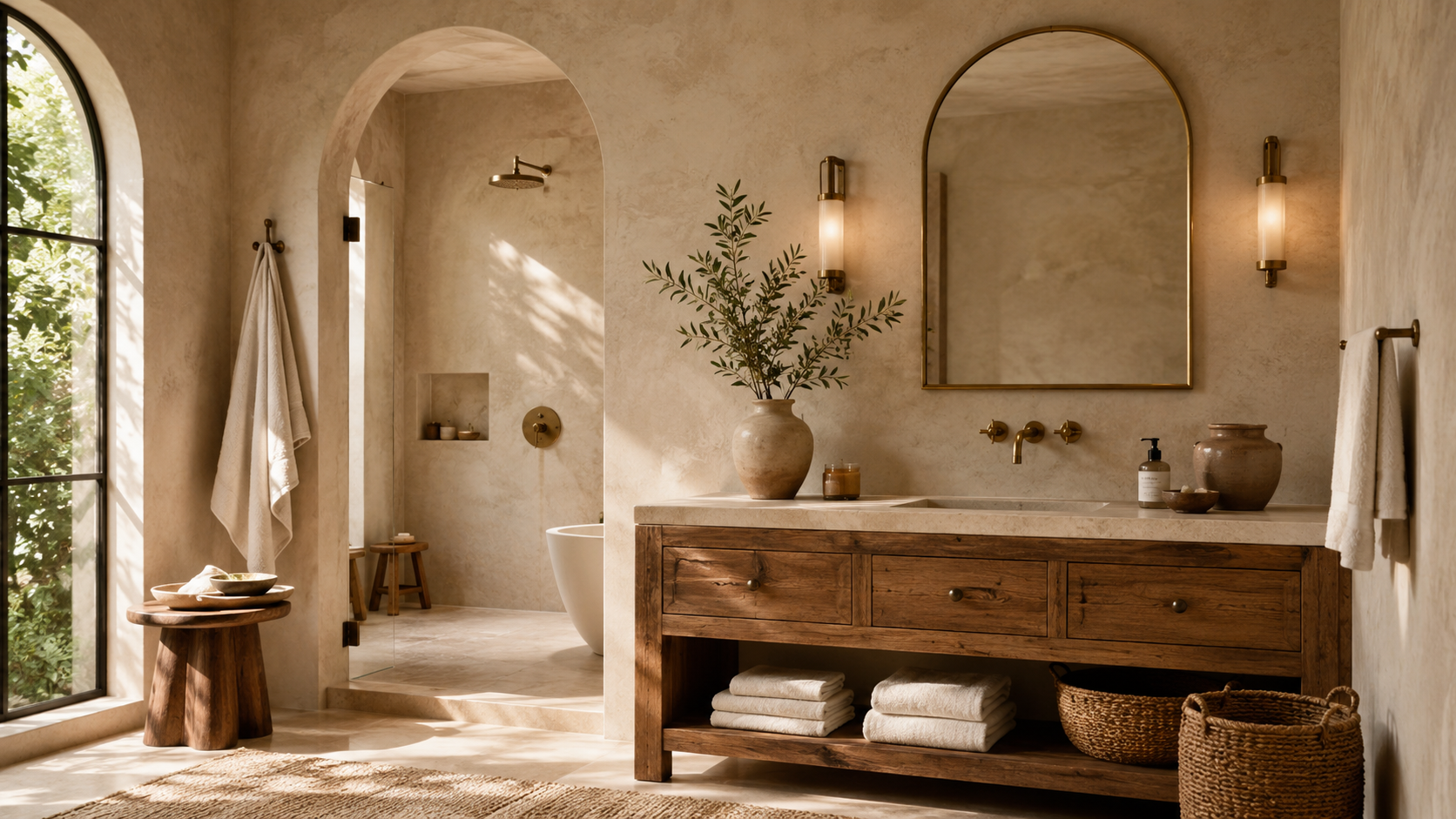
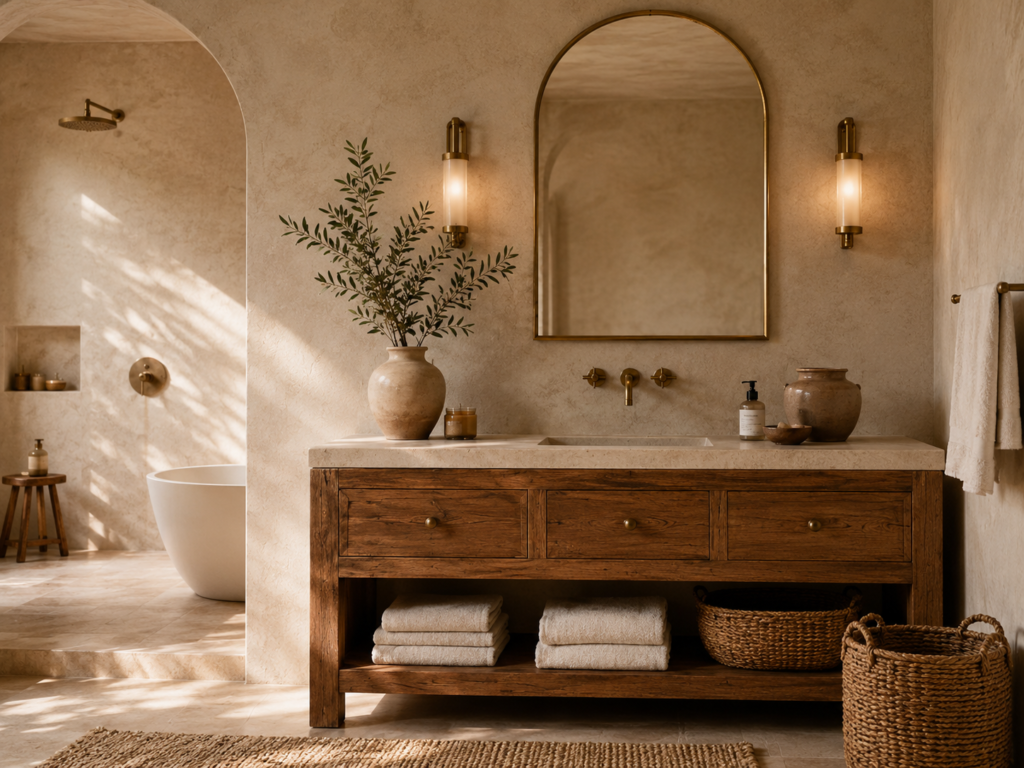
Trying to give every wall equal importance creates visual noise. Concentrate the strongest combination of material, shape and light around the basin. An arched mirror can soften a rectangular room, but it should be large enough to relate to the vanity rather than floating above it. As a practical rule, choose a mirror roughly two-thirds to almost the full width of the vanity, depending on the position of wall lights.
Side lighting is usually more flattering and useful than one harsh fitting directly overhead. Warm light supports stone, timber and clay tones, but colour quality matters as much as colour temperature: poor-quality light can distort skin tones and surface colours. Use fittings and installation methods suitable for their bathroom zone, and have electrical work assessed locally where required.
Brushed or aged brass can add warmth, but consistency is more important than forcing every fitting to match. Two coordinated finishes—such as aged brass with dark bronze—can look intentional. Four slightly different gold finishes usually look accidental. For more detail on layered lighting, see our guide to plaster wall sconces and warm Mediterranean lighting.
Plan a small Mediterranean bathroom differently
In a compact bathroom, visual calm is more valuable than adding decorative objects. Continue the same floor tone into the shower where technically appropriate, limit abrupt changes of tile, and use closed storage for bright packaging. A recessed niche can be useful, but its location and waterproofing should be decided before the wall is finished—not improvised after tiling begins.
Choose one architectural gesture: an arched mirror, a plaster-toned wall, a stone basin or a warm timber vanity. Adding all four to a tiny room can make it feel themed. Keep baskets, branches and pottery to one or two functional pieces rather than treating every empty surface as a styling opportunity.
Decide where the budget should go
A durable Mediterranean bathroom does not require every material to be expensive. Spend first on the parts that are difficult to replace: waterproofing, plumbing positions, drainage, ventilation, floor preparation and permanent lighting points. Next, invest in the surfaces that dominate the room and the vanity hardware used every day.
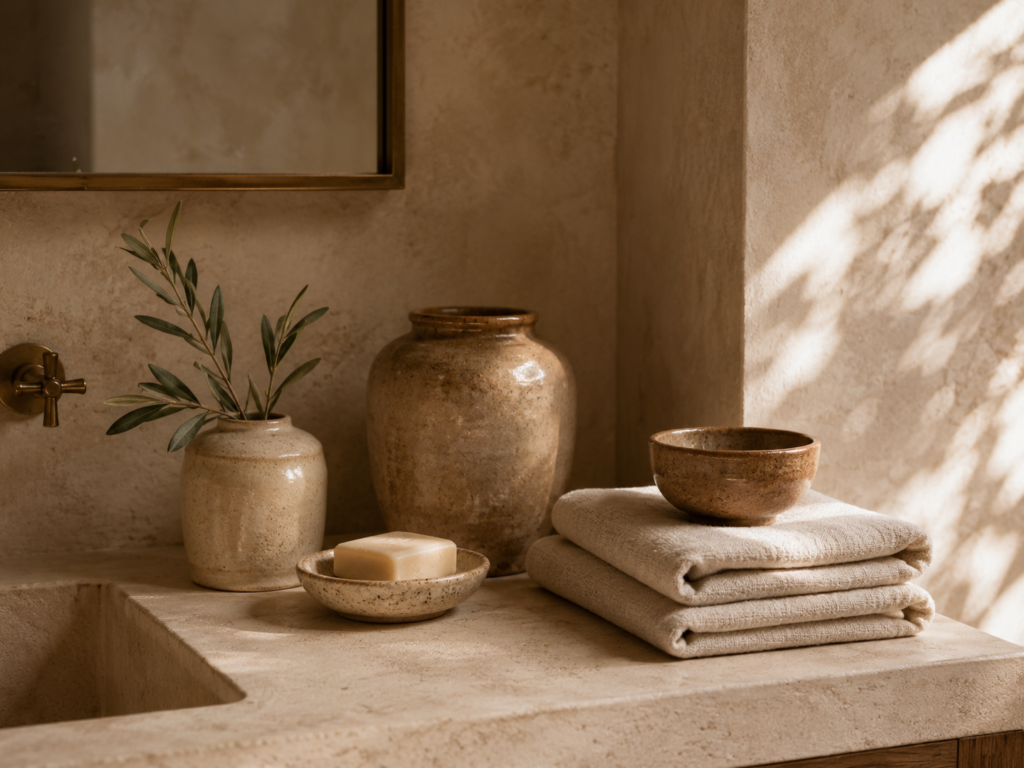
Save on movable styling. Towels, baskets, soap dishes, trays and branches can be replaced gradually. This order prevents the common mistake of buying beautiful accessories while leaving the underlying room poorly lit, badly ventilated or short of useful storage.
- Low-disruption update: warmer wall colour outside wet zones, improved bulbs or fittings, coordinated textiles and one substantial mirror.
- Mid-level renovation: new vanity, basin wall, lighting positions and selected tile replacement.
- Full renovation: waterproofing, plumbing, ventilation, floor and wall finishes planned as one system.
A room-by-room finishing checklist
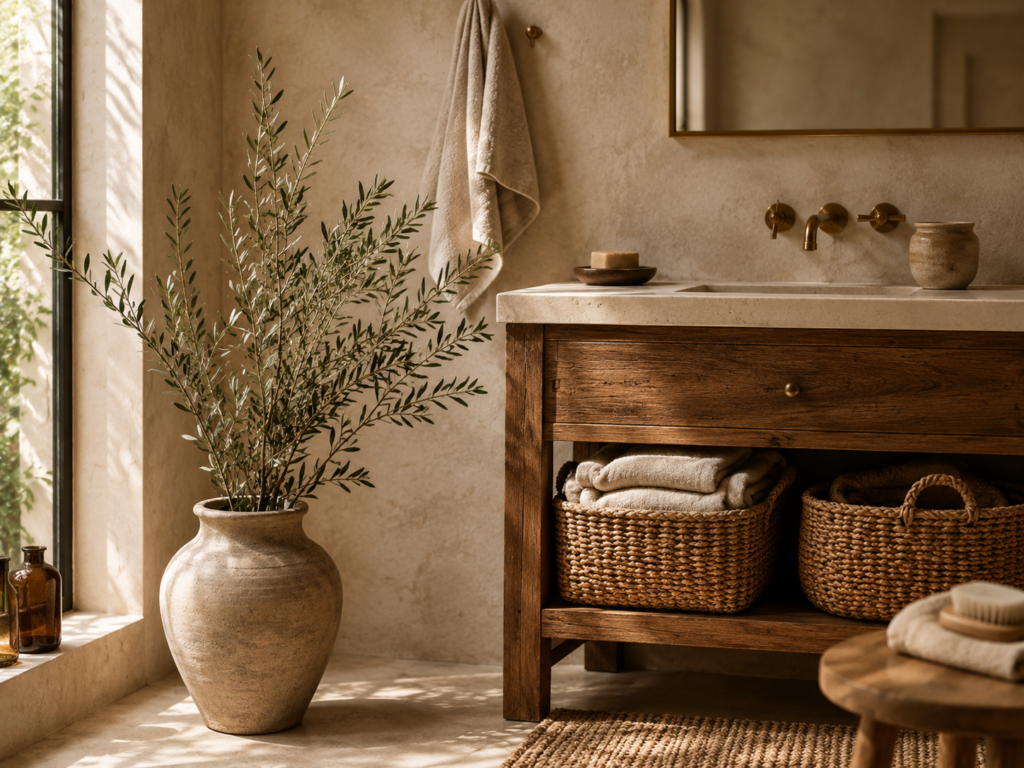
Before calling the scheme finished, remove anything that exists only to signal “Mediterranean.” The result should still work when the decorative basket and olive branch are taken away. Architecture, materials, light and storage should carry the design.
- Wet areas have suitable substrates, waterproofing and finishes.
- The palette contains tonal variation rather than one flat beige.
- Natural wood is protected and kept away from standing water.
- The mirror and lights are proportioned to the vanity.
- Daily products have accessible closed storage.
- Flooring is selected for bathroom use and practical maintenance.
- Decorative objects are limited to a few functional pieces.
Shop the Look
These finishing pieces can support the scheme after the essential surfaces, lighting and storage have been resolved. Select only what answers a real need in the room.
- brass towel hooks
- handmade ceramic soap dish
- linen towels
- woven storage baskets
- arched bathroom mirror
- warm wall light
The result should feel permanent, not themed
The strongest Mediterranean bathrooms are restrained. Their character comes from the relationship between mineral colour, tactile surfaces, useful wood, warm metal and controlled light. Start with construction and maintenance, choose one focal area, and let a limited number of honest materials do the work. The room will feel warmer and more individual without becoming a catalogue of predictable accessories.
Explore more practical examples in our Mediterranean bathroom collection.
Affiliate disclosure: La Maison du Sud may earn a commission from qualifying purchases made through links in this article, at no extra cost to you.