Mediterranean Entryway Ideas for a Narrow Foyer That Feels Warm, Not Cluttered
A narrow foyer has one job before it has any style: it must let you enter, put things down, take off a coat, and move into the home without an obstacle course. Mediterranean warmth works beautifully here, but only when the decoration follows the circulation. The goal is not to squeeze a miniature living room beside the door. It is to make a small threshold feel calm, useful, and welcoming.
Start with the route through the room
Before buying a console or hanging a mirror, open the front door fully and walk the route you use every day. Notice where the door swings, where shoes naturally land, and which wall your shoulder passes closest to. Mark that path mentally as protected space. Anything that narrows it, catches a bag, or forces you sideways is too large, however attractive it looks online.
A useful test is to place cardboard on the floor in the footprint of the furniture you are considering. Live with it for a day. Carry groceries through the doorway, put on a coat, and let two people pass. This simple trial reveals more than a product photograph ever will.
Coming from the South of France and living in Scandinavia for many years has made me appreciate both atmosphere and discipline. In a small entrance, Mediterranean character should come from texture, light, and a few honest materials. Scandinavian practicality keeps those choices from becoming clutter.
Choose storage in the order you actually need it
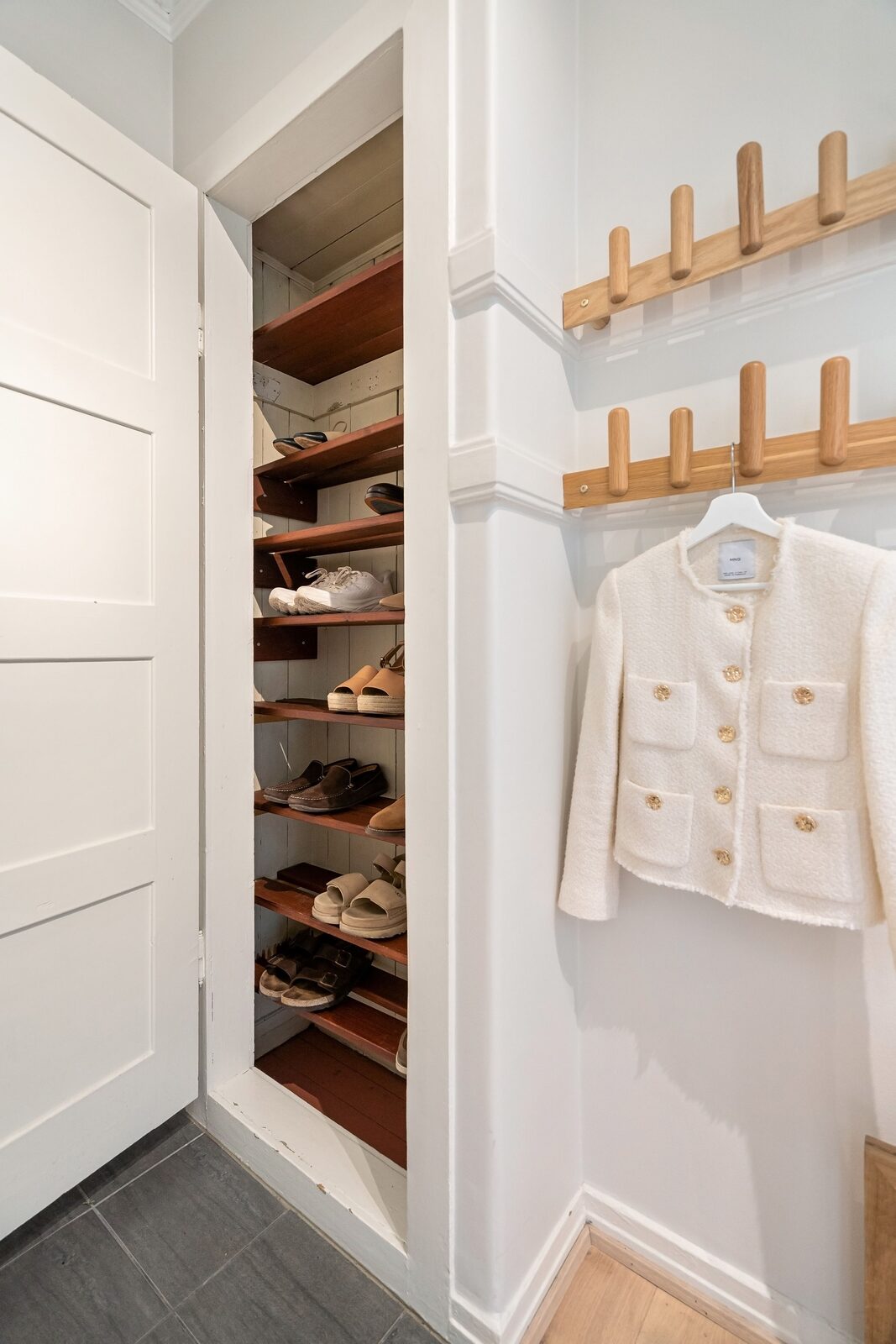
Entryway clutter usually comes from four categories: shoes, coats, keys, and mail. Solve them in that order of urgency for your household instead of buying a matching storage set. If shoes are the daily problem, begin with a closed, shallow cabinet or a low bench with baskets. If coats pile up, install a short row of substantial hooks and keep only the current season at the door.
Keys and sunglasses need one small, fixed landing place. A wooden or ceramic tray is enough. Mail needs a rule rather than a large container: recycle unwanted paper immediately and move important documents out of the foyer. A generous basket often looks like a solution but becomes permission to postpone decisions.
Closed storage is usually calmer
Open cubbies photograph well when they contain three perfect objects. In real life they collect mismatched shoes, bags, dog leads, and chargers. In a narrow entrance, visual noise is amplified because everything is close to eye level. Use closed fronts for the least attractive necessities, then leave one open shelf or tray for the objects you touch every day.
Use the wall before using the floor
Wall hooks, a narrow ledge, and a mirror provide function without claiming valuable floor area. Mount hooks in one deliberate line rather than scattering them wherever space remains. If children use the entrance, add one or two lower hooks, but keep the overall composition ordered. A shelf above head height can hold an occasional basket, although everyday items should stay within easy reach.
Pick furniture that is shallow, not merely small
A short console can still project too far into the passage. Depth matters more than width. Look for a slim wall-mounted drawer, a narrow demilune table, or a shoe cabinet designed for tight halls. Rounded corners are helpful near a busy route, and legs that reveal more floor can make the space feel lighter.
Do not force a bench into the room unless you can sit without blocking the door or the main path. A small stool that tucks under a ledge may work better. If the entrance opens directly into the living area, a low cabinet can create a visual boundary while serving both rooms, but it should not turn the doorway into a corridor.
Build Mediterranean character through materials
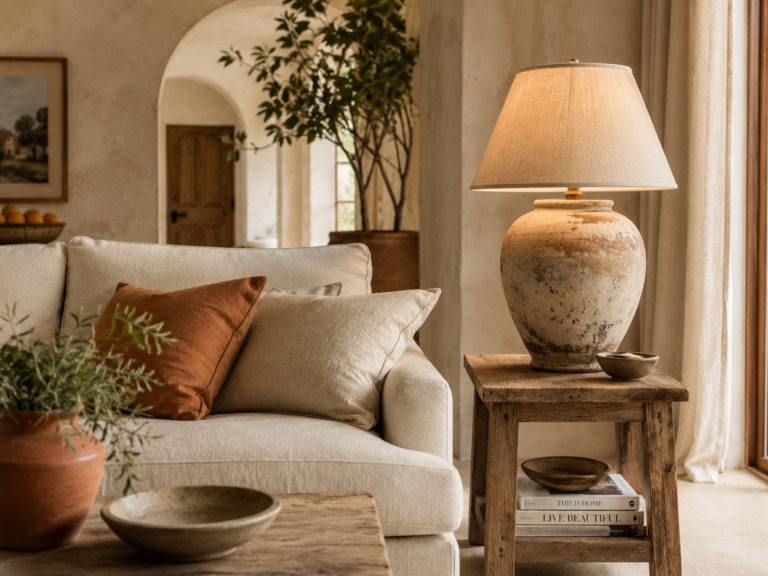
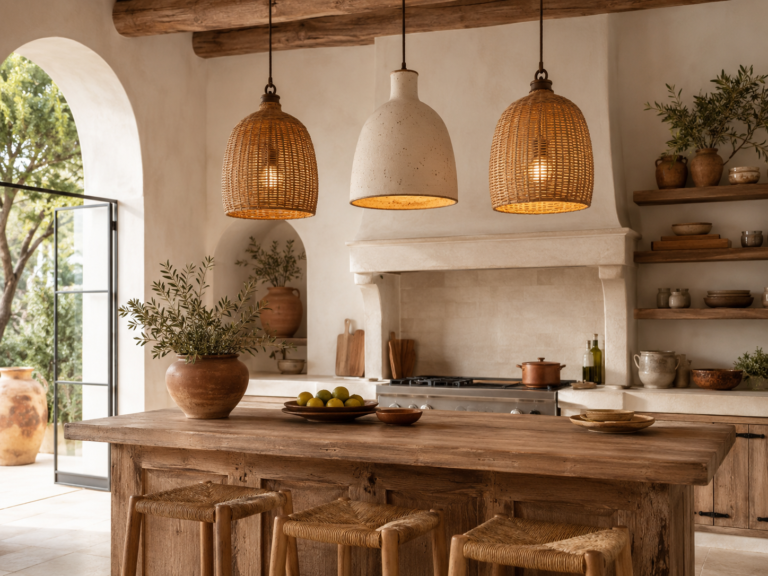
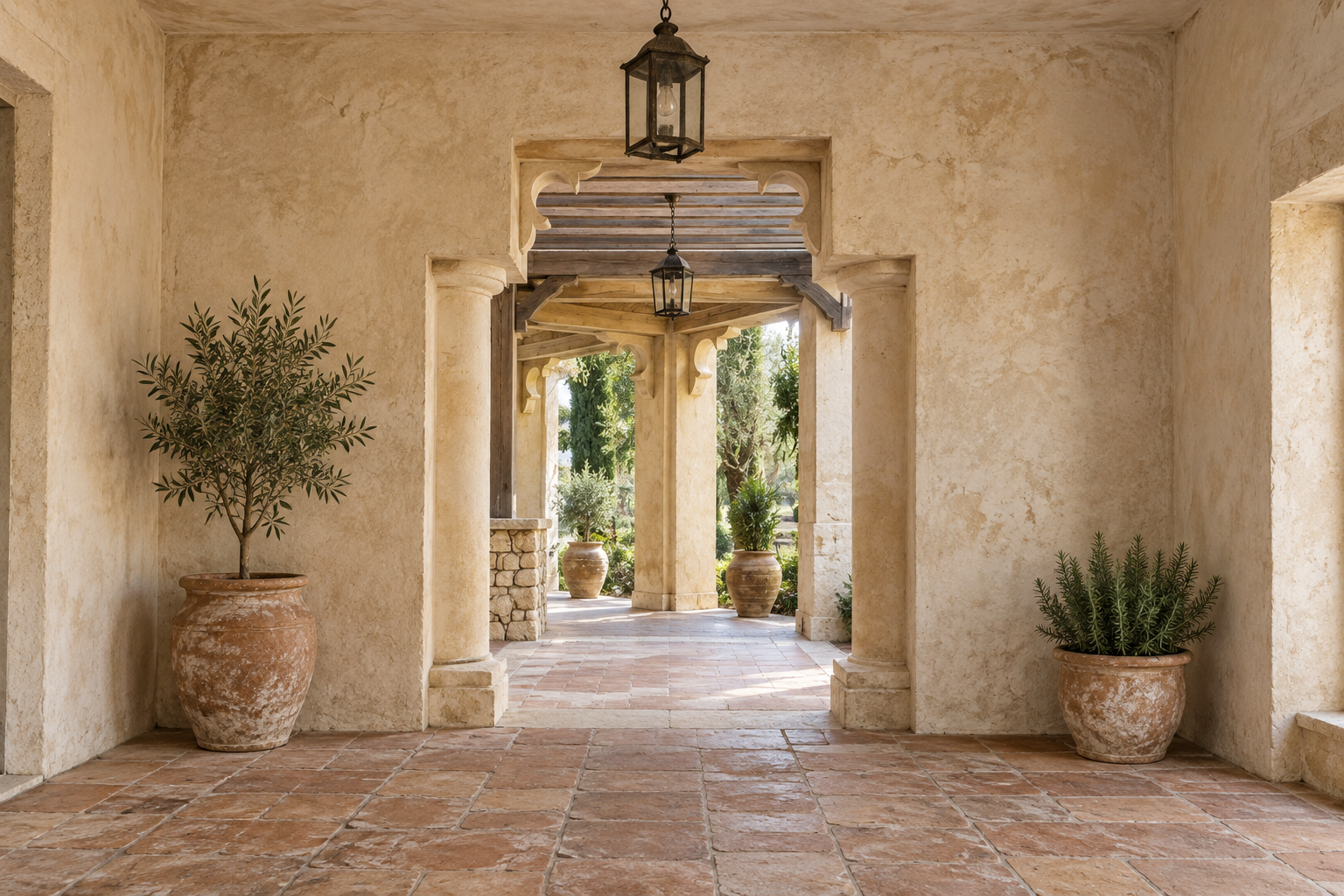
The quickest way to make a narrow foyer feel themed is to fill it with signs, shells, blue-and-white accessories, and miniature olive trees. The more convincing approach is quieter. Choose materials that age well: warm wood, terracotta, linen, woven rush, aged brass, iron, plaster, and stone. One or two of these are enough to establish the mood.
If the existing floor is plain, a flatwoven runner can introduce faded clay, ochre, olive, or muted blue. Make sure the front door clears it and use a proper non-slip pad. On the wall, a warm off-white or mineral beige will usually feel softer than brilliant white. In a rental, bring that warmth through a lampshade, a basket, and a framed textile instead of repainting.
Avoid the souvenir-shop effect
Mediterranean style is not a collection of symbols. A single handmade bowl on a wooden shelf says more than five decorative objects competing for attention. Let texture do the work. The grain of oak, an irregular ceramic glaze, or the weave of a basket gives the room depth without making it busy.
Use a mirror for light, not as a reflex
A mirror is valuable when it reflects daylight, a lamp, artwork, or an open view into the home. It is less successful when it reflects a crowded coat rack or the bathroom door. Stand where the mirror will hang and check the reflection before drilling. An arched or softly rounded frame adds a Mediterranean note without requiring extra decoration.
Scale matters. A tiny mirror above a long console looks hesitant; an oversized mirror beside a swinging door can feel precarious. Leave visible wall around the frame and align it with the furniture or ledge below. If the entrance is extremely tight, a tall mirror mounted securely on the wall gives a full-length view without using floor space.
Layer the lighting
Many entrances rely on one harsh ceiling light. Replace the bulb with a warm, good-quality light source and add a second point of light if space allows. A compact wall sconce is ideal because it keeps the landing surface free. A small ceramic lamp can work on a stable console, provided its cable is controlled and it cannot be knocked over by coats or bags.
The light should help you find keys and see the floor, but it should also ease the transition from outside to inside. Aim for a soft pool of light rather than a brightly lit display. A mirror placed near the lamp will spread that glow further.
A practical plan for a very small entry
- Clear the path. Remove every decorative object and keep only the necessities used during the current season.
- Give shoes one boundary. Choose a shallow cabinet, one basket, or a defined mat rather than several small solutions.
- Add controlled hanging space. Install enough hooks for daily coats and bags, not the entire wardrobe.
- Create one landing point. A narrow ledge or small tray is sufficient for keys.
- Hang one strong wall element. Choose a mirror, artwork, or textile, not all three on the same short wall.
- Finish with warm light. Lighting will contribute more atmosphere than another accessory.
Five mistakes that make a narrow foyer feel smaller
1. Buying furniture before measuring the door swing
A beautiful cabinet is useless if the front door hits it or if its open drawer blocks the route. Measure both the furniture and the space needed to use it.
2. Storing every season at the entrance
Rotate heavy coats, beach bags, boots, and scarves. The foyer should support the present month, not act as overflow storage for the whole year.
3. Filling every wall
Empty wall is not wasted space. It gives the eye a pause and makes the useful pieces look intentional.
4. Using too many small baskets
Several containers create several decisions. One basket with a clear purpose is easier to maintain and visually quieter.
5. Choosing style over cleaning
Dust-catching objects, pale rugs at a wet doorway, and fragile pottery at bag height will quickly become irritating. The entrance must tolerate real shoes, weather, and rushed mornings.
Shop the look with a filter, not a checklist
Buy only what solves a problem you have already observed. For a narrow Mediterranean foyer, the most useful categories are a wall-mounted or shallow landing surface, contained shoe storage, a secure mirror, warm lighting, and one tactile accent. Before ordering, record the maximum width, depth, and height available and check the return policy.
- arched mirror for a narrow entry wall
- ceramic table lamp for a warm console glow
- terracotta table lamp with Mediterranean texture
- woven storage baskets for shoes and small entry clutter
- wooden tray for keys and mail
- simple ceramic vase for branches or greenery
Frequently asked questions
What color makes a narrow entryway feel warmer?
Warm white, sand, pale clay, soft olive, and muted ochre work well because they add depth without closing in the room. Test the color under both daylight and evening lighting before painting the whole wall.
Should a small foyer have a console table?
Only if it leaves the route comfortable and provides a function you actually need. A wall-mounted ledge or shallow shoe cabinet often uses the space better than a conventional console.
How can I make a rental entryway feel Mediterranean?
Use reversible layers: a flatwoven runner, an arched mirror, wooden hooks, a woven basket, warm bulbs, and one piece of framed textile or landscape art. Keep the palette restrained.
What should stay near the front door?
Keep only the items used almost every day: current shoes, current outerwear, keys, and perhaps a bag or dog lead. Move occasional equipment and out-of-season clothing elsewhere.
The best entrance is edited
A narrow foyer feels generous when every object earns its place. Protect the route, hide the least attractive necessities, and use Mediterranean materials for warmth rather than relying on themed decoration. One good mirror, one controlled storage solution, and one soft light can be enough.
The final test is simple: can you arrive with full hands, put down your keys, remove your coat, and enter the home without moving anything first? If the answer is yes, the design is working.
Affiliate disclosure: La Maison du Sud may earn a commission from qualifying purchases made through links in this article, at no extra cost to you.