Mediterranean Indoor Plants for Sunny Rooms: Terracotta, Herbs, and Sculptural Greenery
A Mediterranean room can look beautifully finished on the surface and still feel oddly still: limewashed walls, linen curtains, a pale sofa, maybe a carved wood table, but nothing living to soften the edges. The missing piece is often greenery—not a jungle, not a shelf crowded with tiny pots, but a few sculptural plants in earthy containers that make the room feel sun-warmed and inhabited.
The trick is choosing indoor plants and planters that suit the Mediterranean mood without pretending every home has a Provençal courtyard outside the window. Some plants need real sun. Some tolerate ordinary indoor light. Terracotta breathes and ages beautifully, but it also dries soil faster. Woven baskets add softness, but they need protection from damp soil. A good scheme balances romance with maintenance, so the plants look collected rather than staged.
Start With the Light, Not the Plant Wish List
The Mediterranean look is tied to sunlight: silver-green olive leaves, citrus trees near shutters, rosemary spilling over clay pots. Indoors, light is the first constraint. Before choosing plants, watch the room for a full day and note where direct sun actually lands.
A south- or west-facing window can often support sun-loving plants if the glass is unobstructed. An east-facing room gives gentler morning light, which is useful for herbs, smaller citrus, and many foliage plants that dislike harsh afternoon heat. North-facing rooms are the most limiting; they can still feel Mediterranean, but the plant choices need to be more forgiving and the styling must carry more of the atmosphere through clay, linen, wood, and texture.
Do not judge light by how bright the room feels to your eye. White walls and pale floors can make a space seem sunlit even when the plant receives very little direct light. If a plant is repeatedly leaning toward the window, dropping leaves after being moved inward, or producing thin, stretched growth, the design problem is not the container or the corner. It is placement.
For a Mediterranean indoor plant scheme, use the brightest zones for the plants that define the look. Let lower-light corners hold texture instead: a woven basket, a ceramic vase with branches, a small table lamp, or a framed landscape. This keeps the room cohesive without forcing a sun-hungry plant to struggle.
Plants That Give the Right Shape Indoors
Mediterranean plant styling is less about having many plants and more about choosing silhouettes with character. Look for gray-green leaves, woody stems, upright forms, and relaxed, irregular shapes. A single plant with a gnarled trunk or airy canopy can do more for the room than ten small pots lined across a sill.
Olive trees and olive-style silhouettes
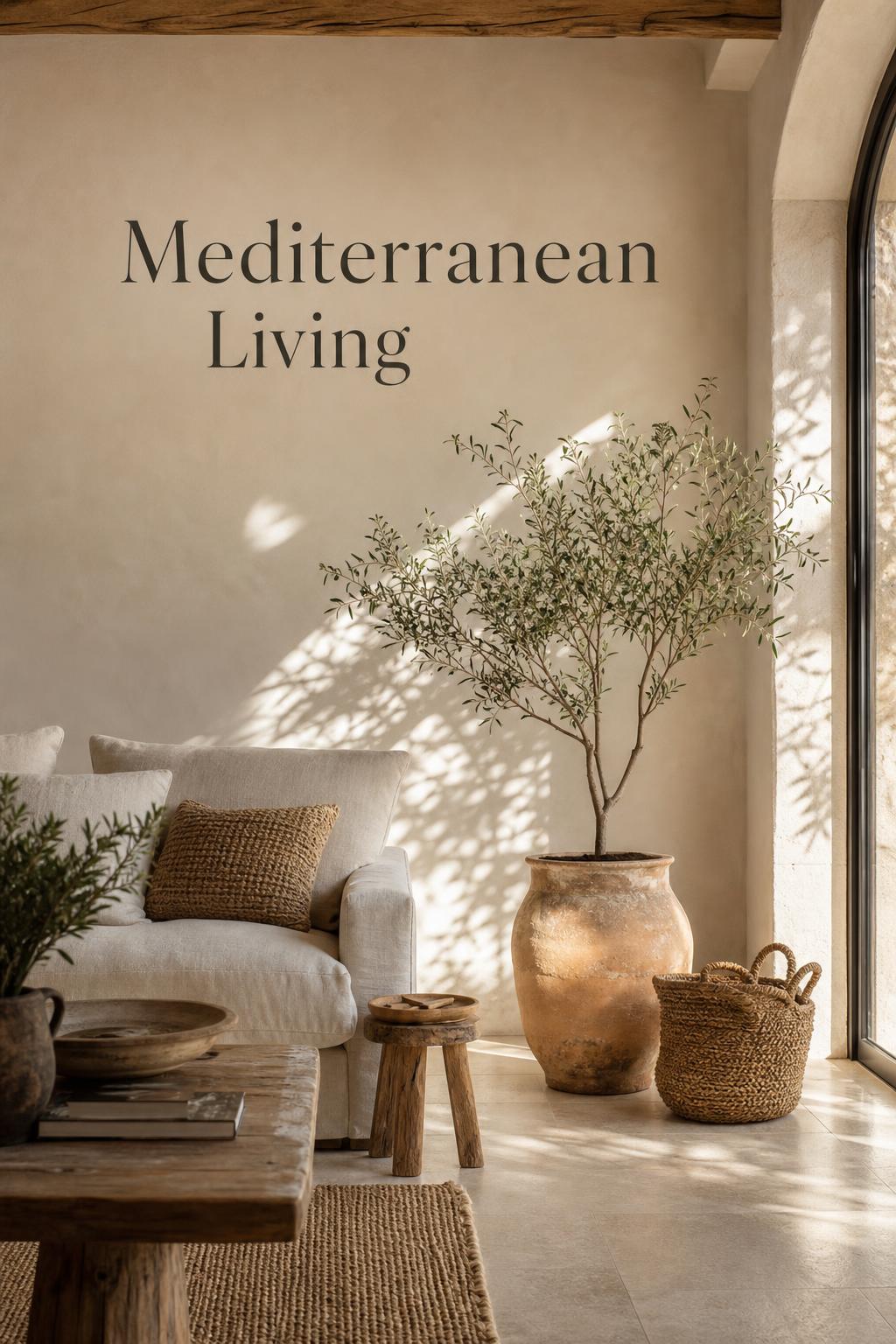
Olive trees are the classic choice, but they are not casual low-light houseplants. Indoors, they need very bright light and careful watering. If your sun is strong and your room is not drafty, an olive in a substantial terracotta pot can anchor a living room corner, dining room window, or bedroom reading area. If your light is weaker, choose a plant with a similar airy structure rather than forcing the exact species.
Citrus for fragrance and color
Small citrus trees bring a southern feeling through glossy leaves and warm fruit color, but they also ask for brightness. They suit a sunroom, breakfast nook, or bright kitchen-adjacent dining area more than a dim hallway. In interiors, citrus looks best when the pot is simple: clay, rustic ceramic, or a plain cachepot that lets the leaves and fruit provide the ornament.
Herbs for windowsills and small rooms
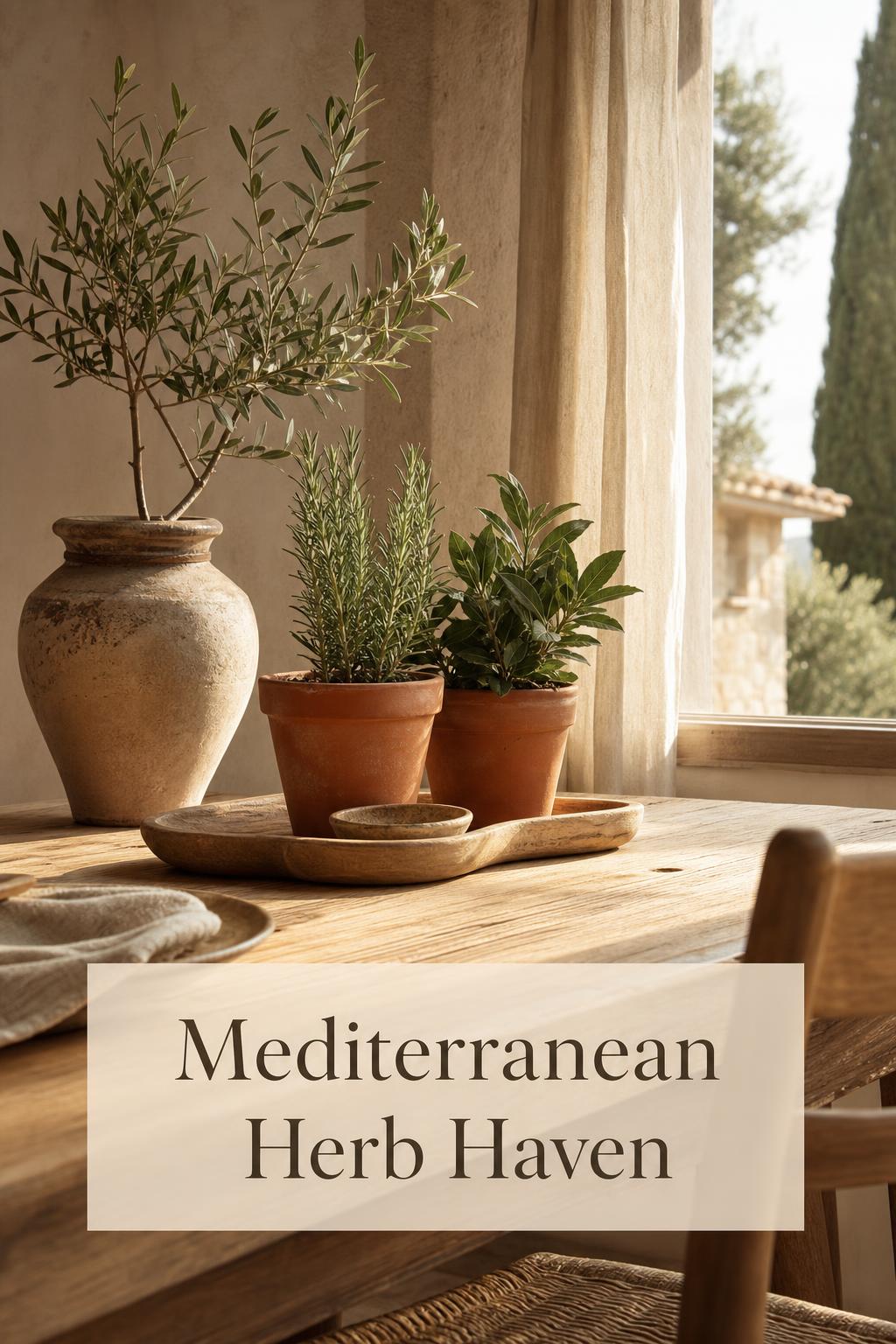
Rosemary, thyme, bay, and lavender connect the room to Mediterranean cooking and garden life. Indoors, they need good light and restrained watering. Instead of scattering herb pots everywhere, gather two or three on a stone, wood, or ceramic tray near a bright window. The grouping reads intentional and keeps water marks away from the sill.
Forgiving foliage when sun is limited
Not every plant in a Mediterranean-inspired room has to be botanically Mediterranean. In lower light, a rubber plant, snake plant, ZZ plant, or trailing pothos can provide greenery while the container, palette, and surrounding materials set the tone. Choose restrained varieties and avoid neon green or overly variegated leaves if you want the room to feel quiet and old-world.
The Container Mix: Clay, Ceramic, and Woven Texture
Containers carry much of the Mediterranean character. The best rooms do not rely on matching pots. They mix related materials in a narrow palette: warm terracotta, chalky ceramic, pale stone, dark iron, woven fibers, and aged wood. The result feels gathered over time, even when the arrangement is simple.
Terracotta is the most immediate choice because its color adds warmth and its matte surface sits naturally beside plaster, limestone, and linen. It is especially good for olive trees, herbs, geraniums, and citrus-style plantings. The trade-off is that terracotta is porous, so soil may dry more quickly than it would in glazed ceramic or plastic nursery pots. It can also leave moisture marks if placed directly on wood or stone without a saucer or protective layer.
Glazed ceramic feels a little more refined. Choose imperfect whites, sand, ochre, soft brown, muted green, or hand-thrown textures rather than glossy, high-contrast colors. Ceramic is useful in bedrooms and living rooms where you want less garden shed and more interior polish.
Woven baskets soften the geometry of plant pots and work beautifully with linen upholstery, rush seats, and wood beams. Use them as cachepots rather than direct planting vessels. Keep the plant in its nursery pot or an inner container, add a waterproof saucer, and leave a little breathing room so moisture does not collect against the fibers.
A simple container decision framework
- Choose terracotta when the room needs warmth, the plant enjoys soil that dries between watering, and the pot will sit on a protected surface.
- Choose rustic ceramic when the plant is part of a more finished interior scheme, such as a bedroom, dining room, or formal living area.
- Choose a woven cachepot when the room needs texture and softness, but keep water fully separated from the basket.
Where Greenery Looks Most Natural
Mediterranean interiors rarely feel convincing when plants are pushed into every empty spot. Negative space matters. A white wall, a cool stone floor, or a simple plaster niche gives leaves room to cast shadows and look sculptural.
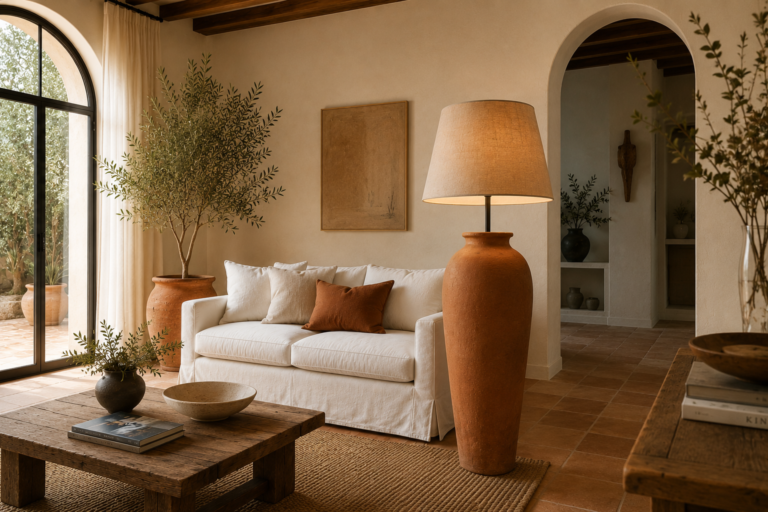
In a living room, place the tallest plant just off the main seating group rather than directly behind a sofa. A corner near a window, beside a low cabinet, or between two arched openings can make the plant feel architectural. Keep the pot large enough to look grounded; a tall tree in a tiny container can make even a beautiful plant look temporary.
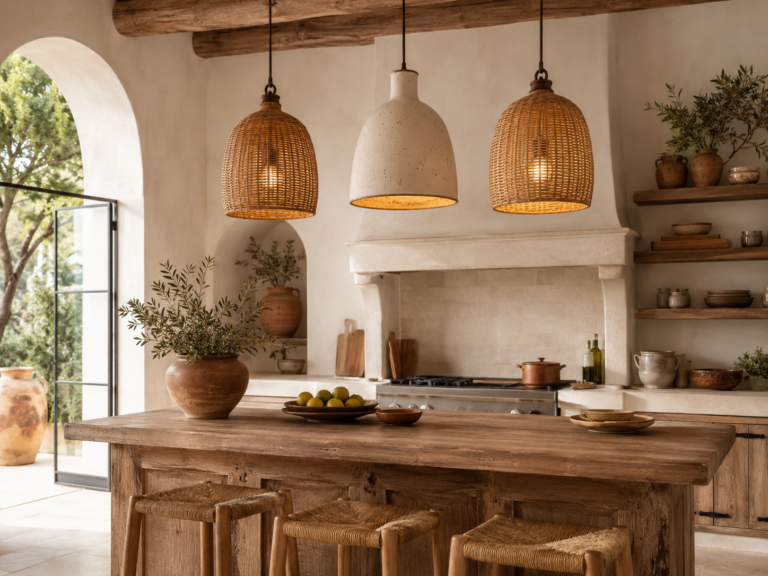
In a dining room, greenery works well near the perimeter rather than on the table itself. A bay tree or olive-style plant near French doors gives the room a garden connection without interrupting conversation. On the table, keep plant material lower: a small herb pot, a shallow bowl of lemons, or a simple vase of branches.
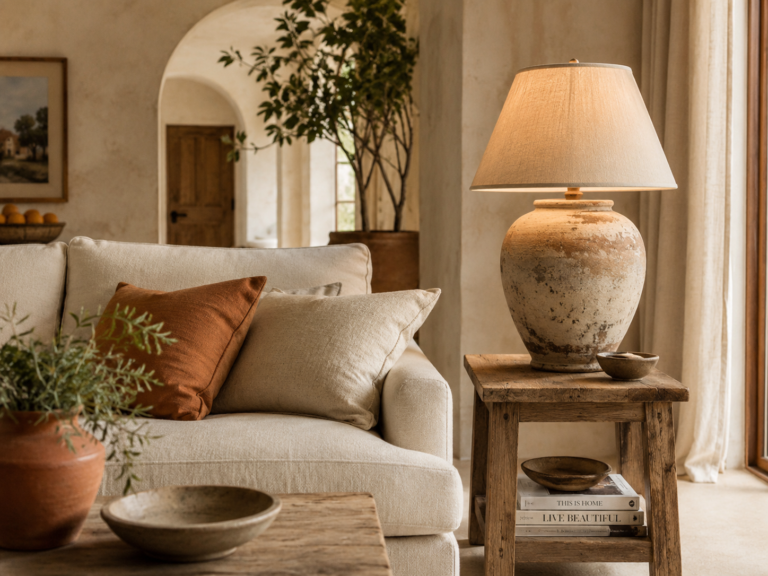
In bedrooms, plants should feel calm, not busy. One substantial plant near a window is usually stronger than several small ones on nightstands. Pair it with linen bedding, a rustic wood stool, and a ceramic lamp or vase so the greenery is part of a quiet material story.
Bathrooms can be tempting because Mediterranean bathrooms often use stone, plaster, and warm metal, but plant choice depends heavily on light. A windowless bathroom is not a good place for a sun-loving herb or olive. If the room has bright natural light, a small plant on a stool or ledge can soften tile. If it does not, use branches in a vase, towels in linen tones, and clay accessories instead of struggling with a living plant.
Soil, Water, and the Problem of Pretty Pots
The most common failure in plant styling is treating the pot as decoration only. Mediterranean containers look lovely, but plants still need drainage, airflow, and access to appropriate soil. If a pot has no drainage hole, use it as a cachepot and keep the plant in an inner nursery pot. Remove the inner pot to water, let it drain fully, and return it only when excess water has stopped dripping.
For woody plants and herbs, avoid keeping soil constantly damp. Many Mediterranean-associated plants come from conditions where the soil dries between watering. Indoors, however, drying depends on pot material, plant size, season, and room temperature. Terracotta speeds drying; glazed ceramic slows it; a black plastic nursery pot inside a basket may hold moisture longer than expected.
Protect your finishes as carefully as your plants. Clay can leave rings on limestone, marble, wood, or painted shelves. Use saucers, cork pads, trays, or plant stands. If you love the look of a pot directly on the floor, choose a hidden barrier beneath it. The room should age gracefully, not collect preventable stains.
Patina is part of the charm, but there is a difference between patina and neglect. Mineral bloom on terracotta can look beautiful in a relaxed room, while algae, standing water, and crumbling soil around the base will make the same pot feel messy. Wipe surfaces, rotate plants occasionally for even growth, and prune dry stems before the arrangement starts to look tired.
Pair Plants With the Materials Already in the Room
Plants should not float as isolated green accents. They work best when tied into the room through repeated materials. If your floor is limestone or pale oak, terracotta brings warmth from the ground up. If your walls are creamy plaster, darker green leaves add contrast without sharpness. If your furniture includes walnut, pine, or reclaimed wood, woven baskets can bridge the plant containers and the furniture texture.
Color restraint is important. Mediterranean rooms often rely on sun-faded tones rather than saturated contrast. Let the plant provide the green and keep containers in earthy shades: clay, sand, cream, tobacco, olive, and soft charcoal. If you want blue, use it sparingly with a ceramic vessel or textile, not every planter in the room.
Scale also matters. A large room with high ceilings can handle an olive tree, ficus, or citrus in a generous pot. A compact apartment may look better with a single rosemary standard on a table, a bay plant by the window, or a snake plant in a woven cachepot. The aim is not to mimic a villa; it is to translate the feeling into the proportions you actually have.
For shelves and consoles, resist the urge to alternate plant, book, plant, candle, plant. A more natural arrangement is one living element, one vessel, and one horizontal piece such as a tray or stack of books. This lets the greenery breathe and keeps the vignette from tipping into clutter.
If Your Home Is Darker Than the Mediterranean Dream
Many homes that love Mediterranean style do not have Mediterranean light. Tall neighboring buildings, deep porches, small windows, and northern exposures can all limit what will thrive indoors. The solution is not to abandon the look, but to separate the botanical ideal from the decorative language.
Use hardier plants in the darkest rooms and let the containers do more of the regional work. A snake plant in an aged clay pot, a ZZ plant in rustic ceramic, or a trailing plant in a woven cachepot can still sit comfortably among plaster walls, linen curtains, and warm wood. Then reserve true sun lovers for the one or two windows that can support them.
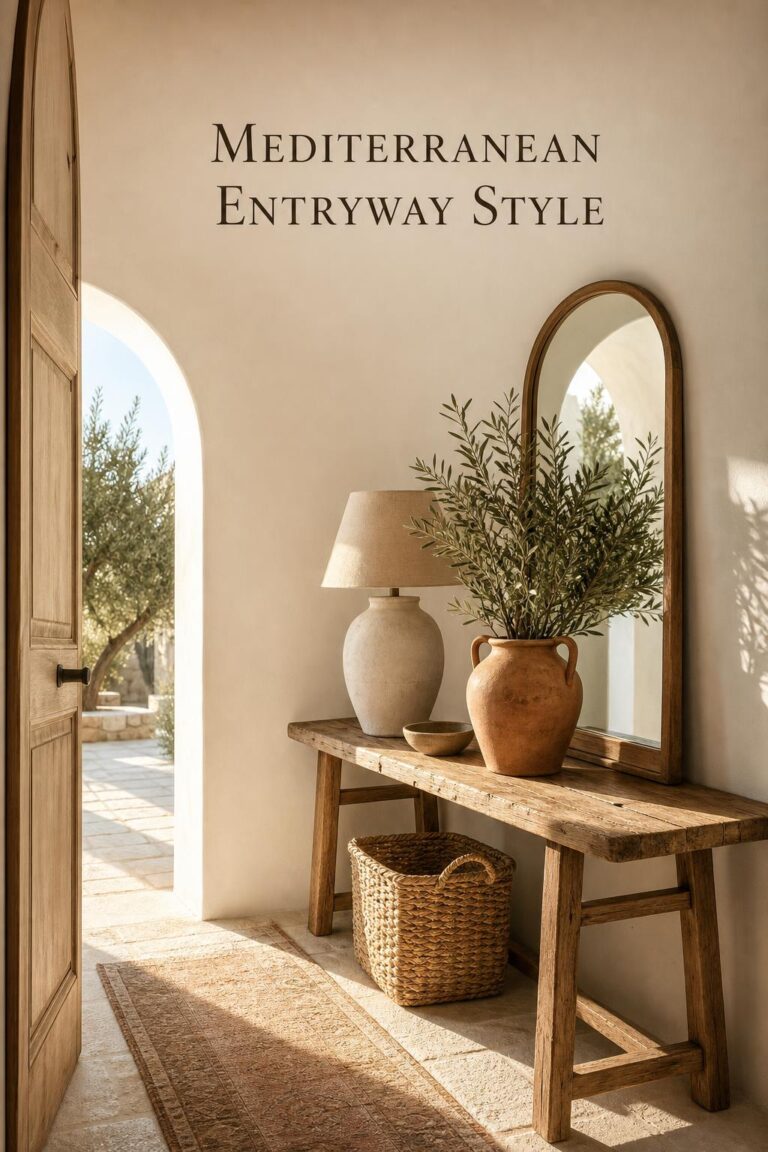
You can also bring in seasonal cut branches rather than permanent plants. Olive branches, eucalyptus, bay, or simple bare branches in a ceramic vase create height and movement without the long-term care requirements of a potted tree. This is especially useful on mantels, entry consoles, and dining room sideboards where soil and watering would be inconvenient.
If you use supplemental grow lighting, keep the fixture visually quiet and integrated. A very technical lamp can disrupt a soft Mediterranean room. Place functional lighting where it is needed, then balance it with warmer ambient lamps, woven shades, and natural textures so the room still feels residential.
Shop the Look
These pieces support the plant scheme without overwhelming it: earthy containers, protective texture, and simple surfaces for grouping herbs or smaller pots.
- warm terracotta pots
- rustic clay pots
- woven storage baskets for cachepots
- rustic ceramic vases
- simple wooden tray
Let the Planting Feel Collected, Not Themed
The most elegant Mediterranean indoor plant schemes are quietly edited. They do not announce themselves with matching pots or too many references. They use a few living forms, honest materials, and enough empty space for light and shadow to do their work.
Begin with the brightest window, choose one plant that can genuinely thrive there, and give it a container with weight and texture. Add herbs or branches only where they make sense. Protect your surfaces, water with restraint, and let clay, ceramic, linen, and wood carry the atmosphere around the plants. The room will feel warmer, slower, and more alive—not because it has been decorated with greenery, but because the greenery belongs.
Affiliate disclosure: La Maison du Sud may earn a commission from qualifying purchases made through links in this article, at no extra cost to you.