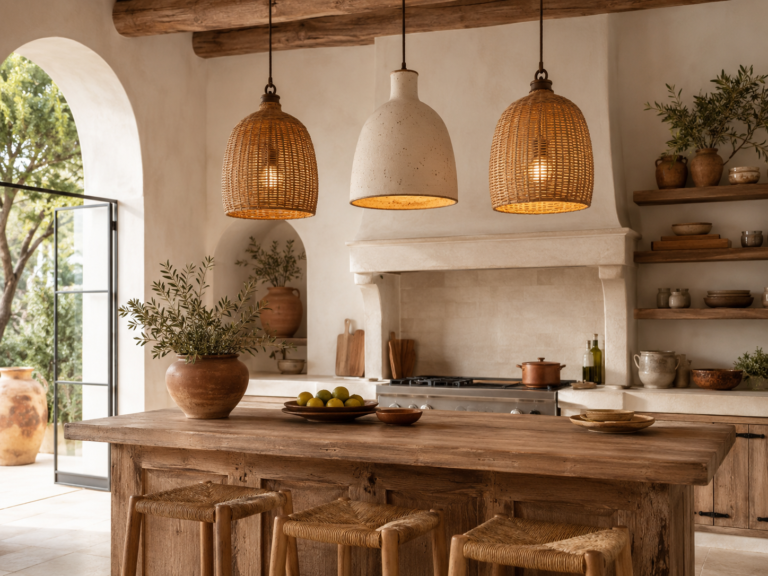
Mediterranean Wall Decor Ideas for Blank Plaster Walls That Still Feel Quiet
A blank plaster wall in a Mediterranean room is not always a problem. In an old village house in Provence, a pale wall might be left nearly bare so the limewash, uneven surface, and afternoon shadows can do their quiet work. The difficulty begins when the wall feels accidental rather than intentional: a sofa floating against emptiness, a console with nothing above it, a dining nook that looks unfinished, or a hallway that has become a corridor instead of a moment.
The answer is rarely to fill every inch. Mediterranean wall decor works best when it feels gathered slowly: a warm sconce, a shallow basket, an aged mirror, a small ceramic piece, a simple rail, or one textile rather than a gallery wall of competing objects. The goal is to give the wall weight, texture, and proportion while preserving the calm that makes limewashed interiors so beautiful.
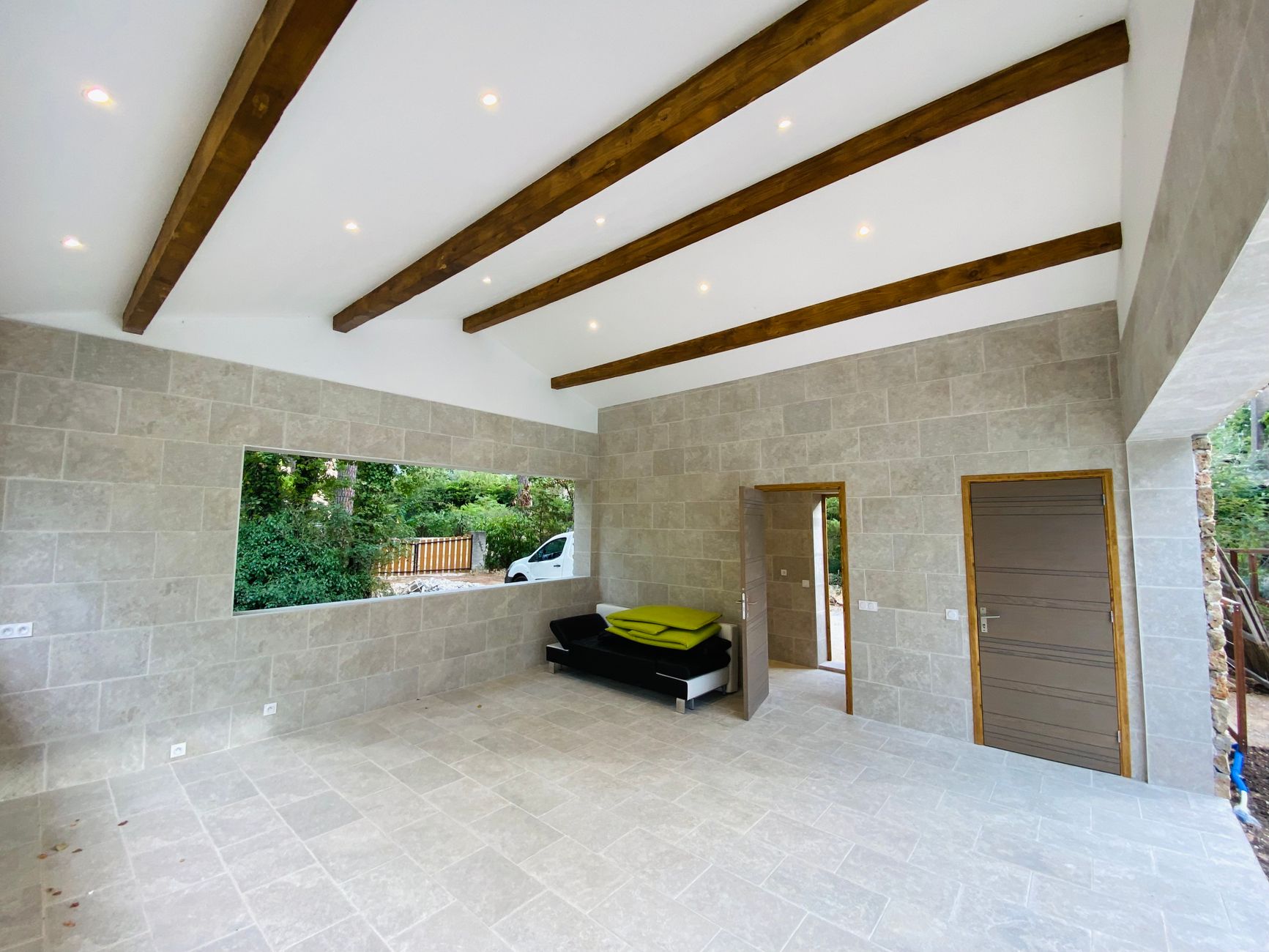
Start by reading the wall, not shopping for it
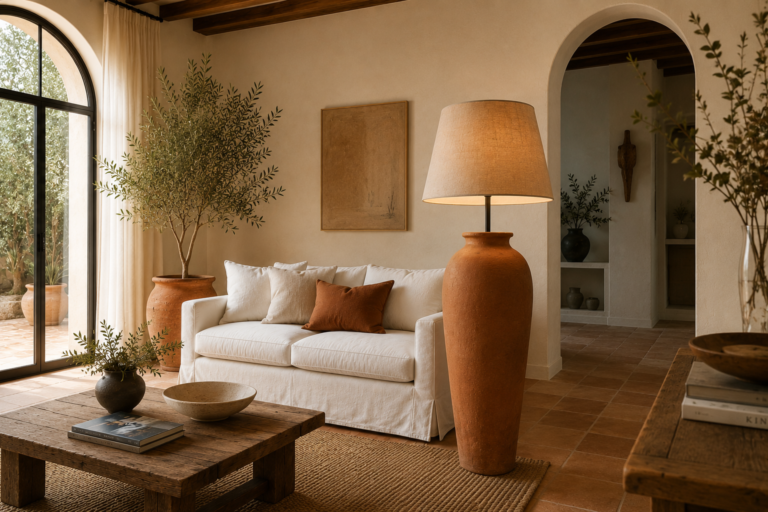
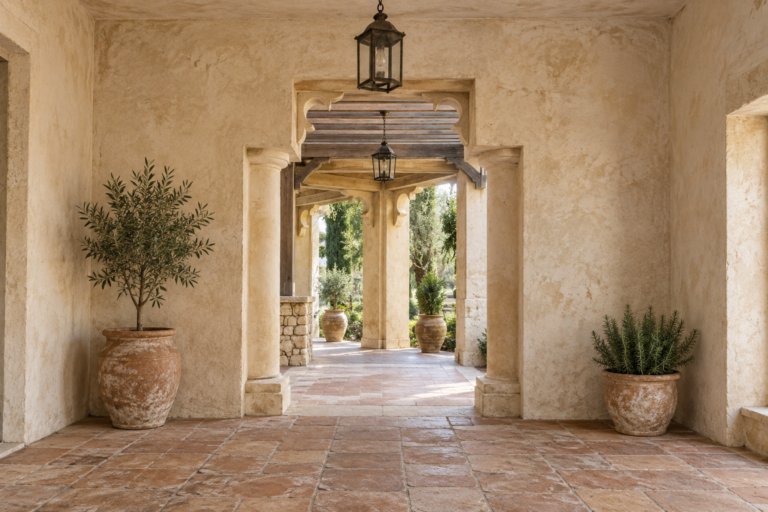
Before choosing anything decorative, look at the wall as part of the room’s architecture. A Mediterranean interior is usually strongest when the wall treatment respects the materials already present: plaster, stone, timber, terracotta, linen, iron, and ceramic. If the wall is smooth drywall painted white, you can still create the feeling of plaster through matte paint, a chalky finish, or a soft off-white with a warm undertone. If the wall is already limewashed or textured, let that surface remain visible.
The size of the wall matters more than the size of the room. A narrow wall between two doorways may need just one object, while a broad wall behind a sofa may need a composition with horizontal weight. A tall wall near a staircase can tolerate a vertical gesture, such as a mirror or a pair of sconces, but a low-ceilinged room usually benefits from keeping decor lower and wider.
Pay attention to use as well. A wall above a bench needs durability and some negative space for jackets, bags, and movement. A wall above a bed should feel soft and restful, not sharp or visually heavy. A dining wall can handle stronger shadow and texture because it is often seen in evening light. A hallway wall needs depth without becoming something people bump into.
The most common mistake: decorating plaster as if it were a flat white box
Plaster, or even a plaster-like painted wall, has a different character from a crisp modern wall. It absorbs light rather than reflecting it sharply. It welcomes matte surfaces, natural fibers, and imperfect silhouettes. When decorated with glossy frames, high-contrast prints, or identical pieces lined up too precisely, it can start to look staged and disconnected from the architecture.
Instead of thinking only in terms of pictures, think in terms of relief. Mediterranean wall decor often works because it casts gentle shadows. A blackened iron sconce, a shallow woven basket, a carved wooden peg rail, or a small niche-like shelf will give the wall dimension without making it busy. Even a restrained mirror can soften a blank wall if the frame is simple and the reflection is considered.
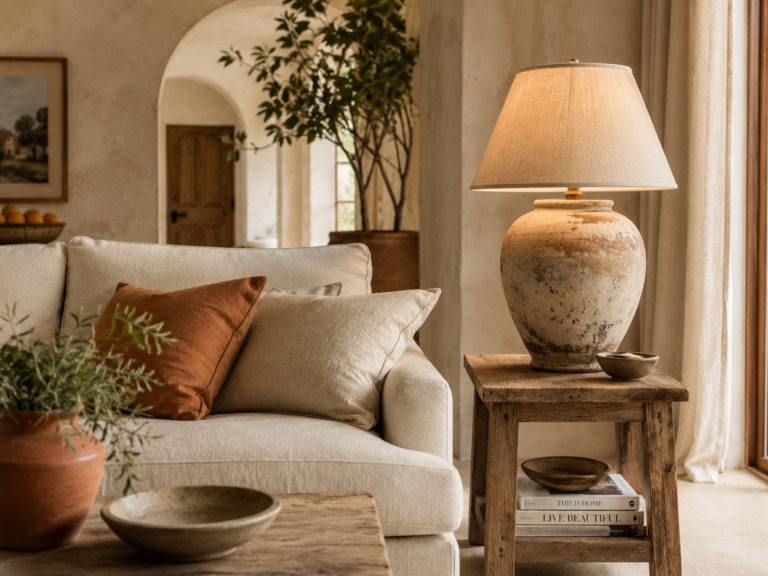
A good rule is to vary surface, not theme. You do not need obvious motifs, coastal clichés, or theatrical Tuscan ornament. A chalky wall, a worn timber table, a linen shade, and one piece of pottery are enough to suggest the South of France if the proportions are right.
A quiet decision framework for choosing what belongs
Use this simple framework when a wall feels empty but you do not want to overdecorate it. It keeps the decision practical and prevents the room from becoming a collection of unrelated Mediterranean references.
- Choose the wall’s job first. Decide whether the wall should bring light, storage, reflection, texture, or visual anchoring. A sconce solves a different problem from a basket or mirror.
- Choose one dominant material. Let one material lead: iron, cane, aged wood, ceramic, linen, or a warm metal. Other pieces should support it quietly rather than compete.
- Leave at least one calm edge. Keep one side, corner, or stretch of plaster undecorated so the composition breathes. Mediterranean rooms need pauses as much as objects.
This framework is especially useful for apartments and newer homes, where the architecture may not already provide arches, niches, beams, or stone. If the bones are plain, the wall decor has to create atmosphere without pretending the room is something it is not.
Where sconces make the wall feel architectural
Lighting is one of the most effective ways to make a blank wall feel intentional. A wall sconce does more than illuminate; it gives the surface rhythm and shadow. In a Mediterranean room, the best effect is usually warm, low-glare, and slightly indirect. The light should graze the wall gently, not blast it like a vanity mirror or hotel corridor.
For a living room, place sconces in relation to furniture rather than centering them on the wall. A sconce above a small side table, beside a bookshelf, or flanking a modest mirror feels natural. In a dining area, one or two wall lights can create evening atmosphere without requiring a dramatic chandelier. In a bedroom, a pair of compact wall lights can free the nightstand and make the bed wall feel finished, but they should be placed low enough to feel intimate.
Finish also matters. Blackened iron is reliable in rustic or village-house settings because it has visual weight without shine. Warm brass can work if it is softened by linen, plaster, or aged wood nearby. Avoid highly polished finishes unless the rest of the room has enough patina to balance them.
If hardwiring is not possible, consider plug-in or surface-mounted options where appropriate, keeping cords discreet and aligned. A visible cord is not automatically wrong, but it should look deliberate, not like a temporary fix. In an old Provençal interior, honest functional details often look better than overly concealed ones.
Mirrors, baskets, and ceramics: choosing texture without clutter
Not every blank wall needs artwork. In Mediterranean and French-country rooms, some of the most convincing wall decor comes from everyday materials: a woven tray, a shallow basket, a small ceramic plate, a simple mirror, an old wooden board, or a linen panel. The key is restraint. One generous piece is usually better than five small ones scattered too widely.
Mirrors should reflect something worth seeing
A mirror is useful in a dim room, but only if it reflects beauty or light. Before hanging one, stand where it will go and check what it will capture. A mirror reflecting a window, a stone wall, linen curtains, or a pendant light can double the room’s atmosphere. A mirror reflecting a television, cluttered shelves, or a doorway to a utility space may make the wall feel more chaotic.
For Mediterranean interiors, frames with quiet presence work best: slim black metal, aged wood, muted brass, or a simple arched form used sparingly. Too many arches can look forced. One arch in a room is often enough, especially if the architecture itself is rectangular.
Woven pieces need breathing room
Flat baskets, cane trays, and woven panels bring warmth to plaster walls, particularly when a room has stone or tile that feels cool underfoot. Hang them as individual pieces or in a small uneven cluster, but avoid arranging them like a perfectly symmetrical showroom display. The charm comes from variation in tone, weave, and scale.
Keep woven decor away from damp areas unless the room is well ventilated. In a bathroom or laundry area, natural fibers can soften the space, but they should not sit where steam or splashes will shorten their life. In dry spaces such as hallways, bedrooms, and dining nooks, they are easier to maintain with occasional dusting.
Ceramic belongs where it feels protected
Ceramic wall pieces can be beautiful, but they need careful placement. Avoid hanging fragile pottery where chairs are pulled back, doors swing open, or children may brush past. A small ceramic object on a shallow wall shelf can be safer than a plate hung directly at shoulder height. Matte, handmade-looking ceramics in chalk, sand, olive, tobacco, or soft ochre tones tend to sit more naturally against plaster than glossy decorative plates with busy motifs.
Scale is what makes restraint look finished
A single object can look elegant or lonely depending on its scale. This is where many Mediterranean wall schemes go wrong. The pieces may be beautiful, but they are too small for the wall, so the room still feels unfinished. A tiny framed print over a large linen sofa will not anchor the seating area. A small basket centered above a long console will look timid. A low sconce on a tall wall may feel misplaced unless it relates to furniture.
When decorating above furniture, let the composition connect to the furniture’s width. It does not need to match exactly, but it should feel related. Above a console, a mirror or basket group should usually occupy enough visual width to hold its own. Above a sofa, a long shelf, pair of sconces, textile, or large quiet artwork can work better than a scattering of small frames.
Height is just as important. Mediterranean rooms often feel best when decor sits slightly lower than in formal interiors. A mirror above a console should feel connected to the tabletop, not floating near the ceiling. Wall lights should relate to seated eye level or the object they illuminate. In rooms with exposed beams, leave space between the top of the decor and the underside of the beam so the wall does not feel squeezed.
If you are unsure, use painter’s tape to mark the outline before making holes. Live with the shape for a day. In changing light, you will quickly see whether the size feels generous, cramped, or oddly high.
Color should come from depth, not decoration alone
A Mediterranean wall does not need a bright palette to feel warm. In fact, the most convincing rooms often rely on tonal depth: chalk, cream, sand, putty, wheat, clay, faded olive, soft brown, and blackened iron. These colors echo stone, soil, linen, shutters, and old timber. They are easy to layer because none of them shouts.
If the room already has terracotta floor tile, keep wall decor calmer. Let the floor carry the warmth and choose pale plaster, aged wood, linen, or iron above. If the room has pale floors and white walls, you may need one or two deeper notes: an ochre ceramic, a dark woven basket, a walnut frame, or a black metal sconce. If the room has heavy beams, avoid adding too much dark decor at eye level or the space can feel low and crowded.
Blue can be beautiful, but it should be used carefully if you want a Provençal rather than coastal cliché mood. A faded slate blue, grey-blue, or muted blue-green is easier to live with than a saturated seaside blue. Olive green, dry rosemary, and warm stone tones usually feel more grounded in a Southern French setting.
Small rooms need fewer pieces with more purpose
In a small bedroom, hallway, or apartment living room, wall decor has to earn its place. The best pieces often do double duty. A wall light provides atmosphere and frees a table. A mirror brings depth and light. A peg rail offers practical storage while adding aged wood. A woven piece warms a cold corner without projecting far into the room.
Depth is a practical constraint. Anything protruding more than a few inches can become irritating in a narrow passage. In compact spaces, choose flat or shallow pieces: slim sconces, low-profile mirrors, textile panels, or baskets with little projection. Avoid thick floating shelves in tight circulation zones unless they are placed above shoulder height and used sparingly.
Small rooms also benefit from repetition, but not duplication. You might repeat blackened iron in a sconce and curtain rod, or repeat woven texture in a basket and chair seat. This creates cohesion without requiring a matched set. A room that looks collected over time will feel more authentic than one furnished entirely from one style category.
Shop the Look
For a quiet Mediterranean wall, focus on texture, warm light, and simple materials rather than filling the surface with unnecessary decor. These pieces suit the restrained plaster-and-patina approach described above.
Let the plaster remain part of the composition
The most elegant Mediterranean wall decor does not try to erase the wall. It frames the plaster, catches the light, and adds a few honest materials that feel as if they belong to the house. A sconce can bring shadow. A basket can bring warmth. A mirror can borrow daylight from another part of the room. A small ceramic detail can add a handmade note without turning the wall into a display.
When in doubt, remove one piece rather than adding another. Leave some limewash showing. Let the edges be imperfect. A wall that feels quiet, useful, and slightly aged will do more for a Mediterranean room than a perfectly filled arrangement. The best result is not an empty wall and not a decorated wall, but a wall that feels settled.
Affiliate disclosure: La Maison du Sud may earn a commission from qualifying purchases made through links in this article, at no extra cost to you.