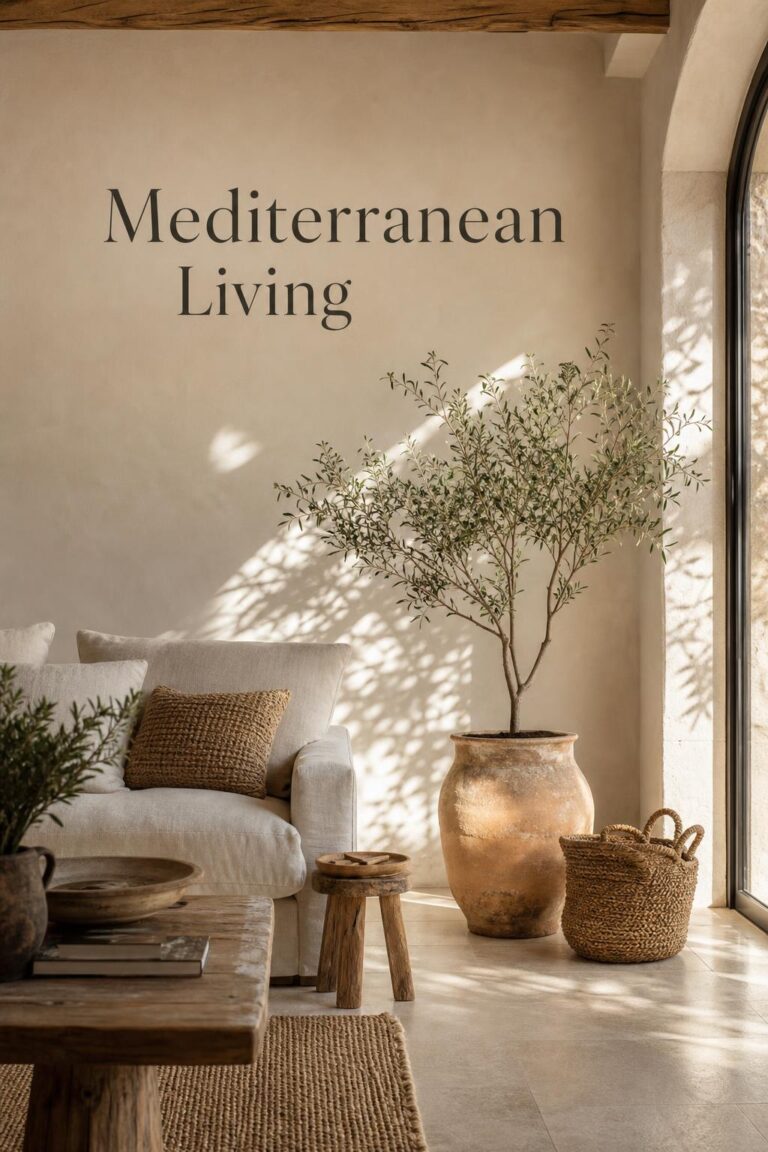
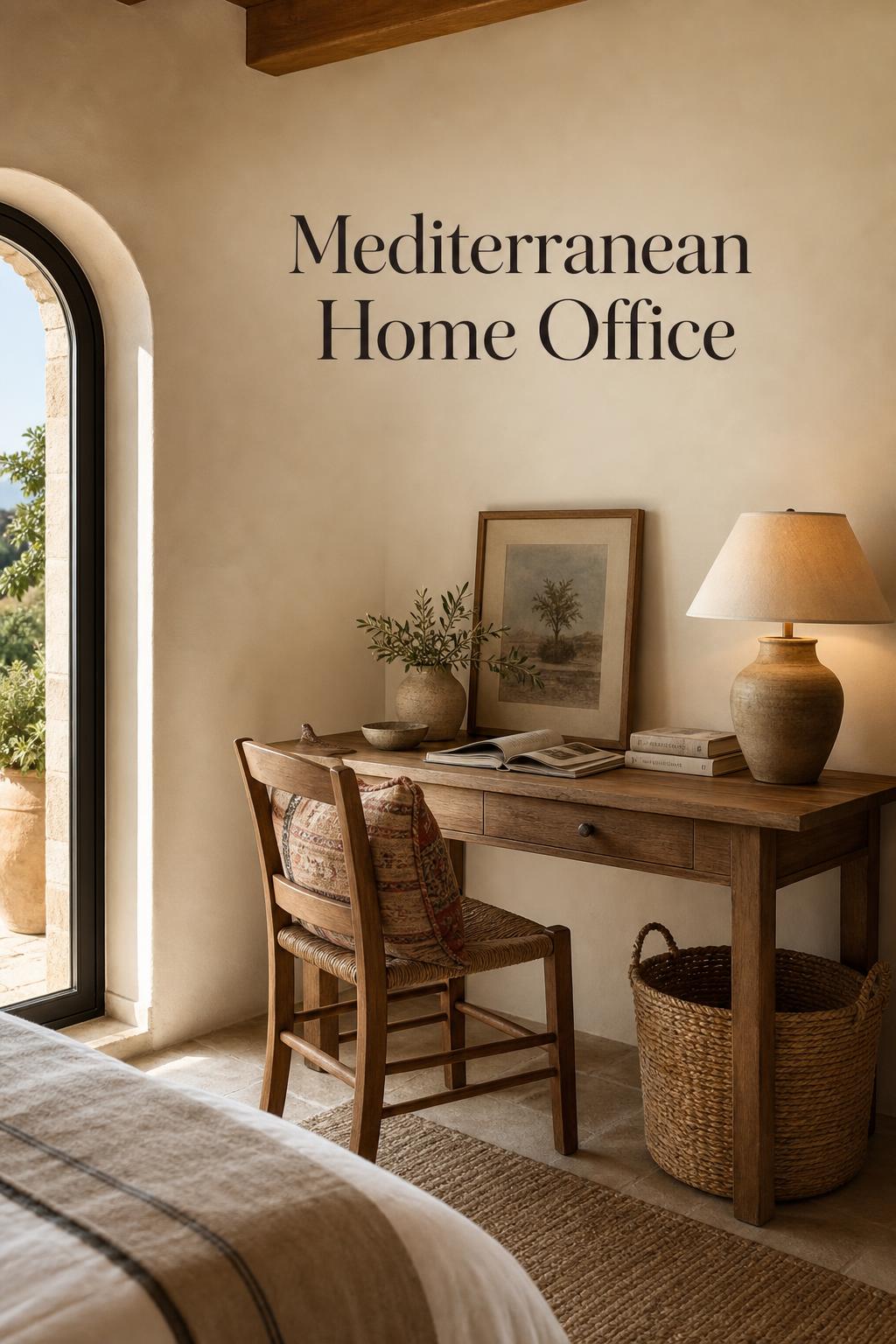
Mediterranean Home Office Ideas for a Spare Corner That Still Feels Serene
A Mediterranean home office does not need a dedicated room with arched windows and built-in bookshelves. More often, it begins as a difficult corner: the end of a guest bedroom, a wide landing, a portion of the living room, or the empty wall beside a dining cabinet. The challenge is making that work zone feel intentional without letting it look like office equipment has drifted into the house.
The best version feels quiet, sun-warmed, and useful. It has enough surface for a laptop and notebook, enough light to work without eye strain, and enough texture to belong with the rest of the home. Instead of glossy white furniture and visible cords, think plaster-like walls, warm wood, ceramic, linen, woven storage, and a few pieces that look collected rather than assembled from a cubicle catalog.
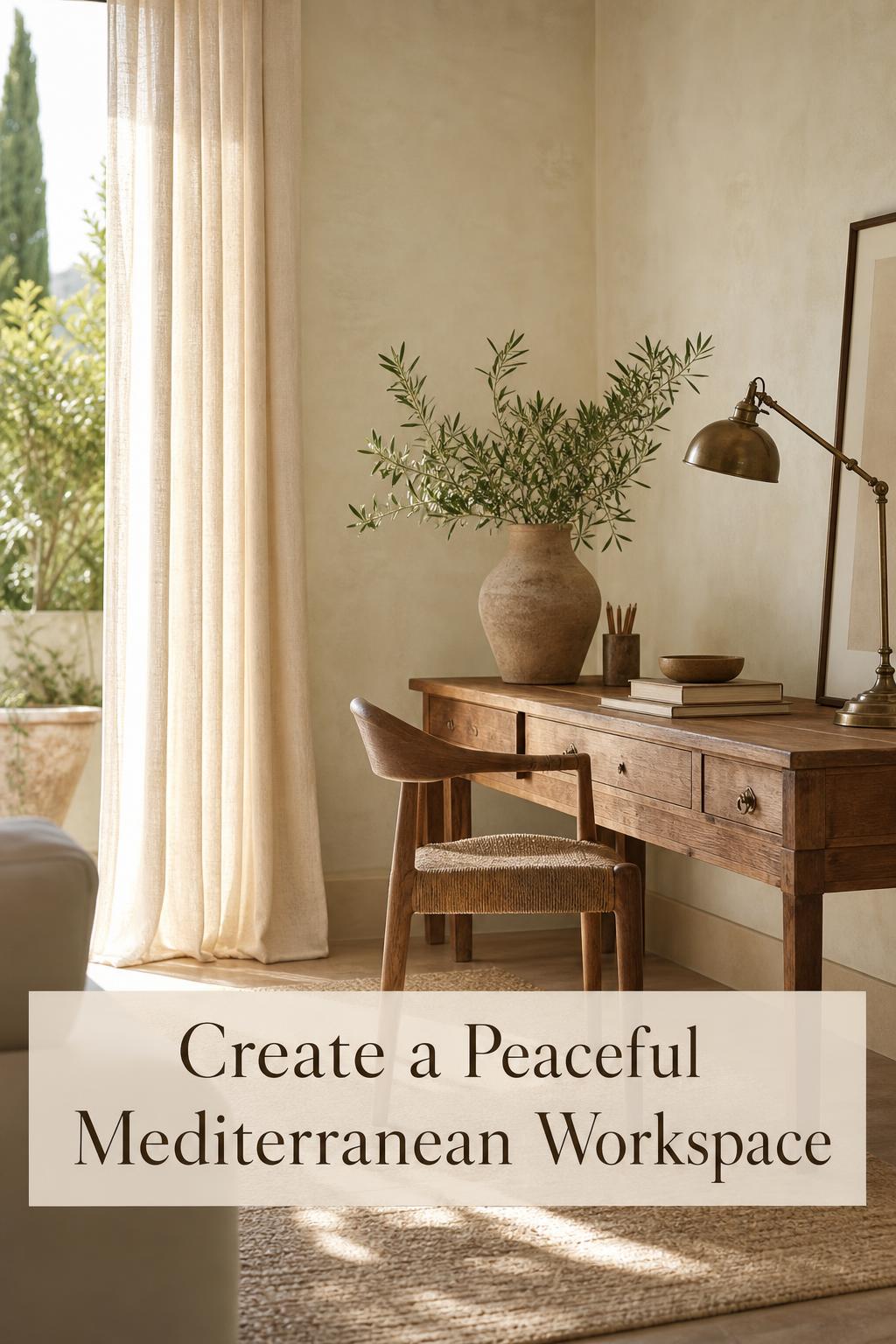
Begin with the work you actually do there
Before choosing a desk or lamp, be honest about the type of work this corner must support. A Mediterranean look can be graceful and relaxed, but a home office still has to handle the practical details: cables, task lighting, paper, chargers, and the visual fatigue that comes from staring at a screen for hours.
If you mainly answer emails, pay bills, or write, you can keep the footprint small and decorative. A shallow desk, upholstered chair, table lamp, and tray for loose papers may be enough. If you spread out samples, sketch, sew, or manage household documents, the desk needs more depth and there should be concealed storage nearby. If the space doubles as a video-call background, the wall behind you matters as much as the furniture in front of you.
A three-decision framework for a better spare-corner office
- Decide what must stay visible. A lamp, notebook, ceramic cup, and one tray can look beautiful. Stacks of mail, tangled cords, and printer paper usually need a closed drawer, basket, or cabinet.
- Decide how permanent the corner should feel. Renters and frequent rearrangers should lean on freestanding pieces, plug-in lighting, and leaned art. Homeowners can consider wall sconces, built-in shelves, or a limewash-style paint treatment.
- Decide whether the office should blend in or gently stand apart. Matching the room palette makes the desk disappear. A darker wood desk, arched mirror, or textured chair can define the zone without making it loud.
This small pause prevents the most common home office problem: buying attractive pieces that do not match the work. A beautiful desk with no cable route will frustrate you. A charming woven chair without back support may be fine for twenty minutes, not for a full morning. Mediterranean design should feel generous, but it should not ask you to work uncomfortably.
Carve out the zone without closing it off
A spare corner office usually benefits from soft boundaries rather than walls. In Mediterranean interiors, separation often comes from shifts in material, light, and proportion. A change in rug texture, a focused pool of lamplight, or a vertical shelf can make the desk area feel settled while keeping the room open.
If the office sits in a living room, place the desk so it relates to existing furniture rather than floating awkwardly. A desk behind a sofa can work if the back of the desk is finished and tidy. A desk perpendicular to a bookcase feels natural because the bookcase becomes part of the workspace. In a bedroom, try to keep the desk out of direct view from the pillow if possible; even a beautiful workspace can add mental clutter at night.
For a corner, avoid pushing every piece tight into the walls. Leaving even a small margin around the desk gives the arrangement breathing room. A compact table lamp on one side, a small vessel or tray on the other, and artwork above will make the desk feel like a vignette rather than a workstation squeezed into leftover space.
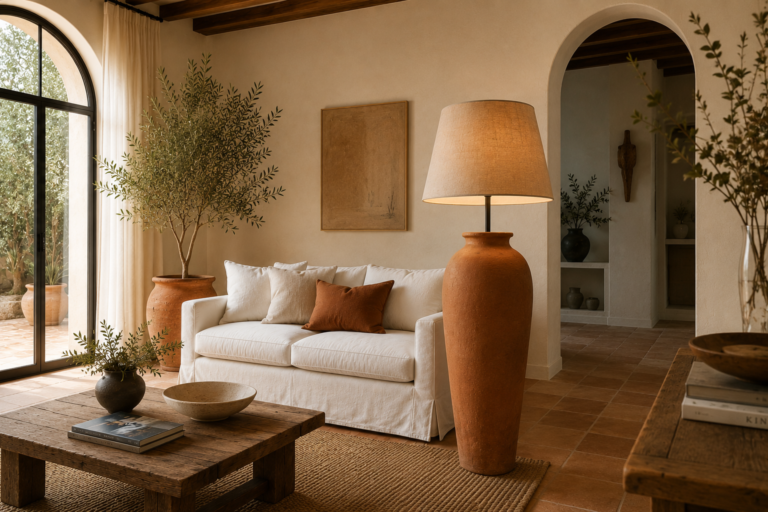
If the home has arched doorways, terracotta floors, exposed beams, or plaster walls, echo one of those elements in the office rather than introducing a completely new style. A rounded chair back, a ceramic lamp base, a warm wood desktop, or a muted clay-colored accessory can connect the corner to the architecture around it.
Use sun-baked neutrals instead of stark office white
Mediterranean rooms are often associated with white walls, but in a home office, the exact white matters. A cold, blue-white wall can make screens feel harsher and wood tones look flat. A warmer white, chalky cream, pale sand, soft putty, or limewash-inspired beige will usually feel more forgiving, especially in a room with mixed natural and artificial light.
If painting is possible, consider a matte or low-sheen finish. High-gloss walls can bounce glare toward a screen, while matte surfaces soften the light. If you are renting, you can still adjust the palette through a linen pinboard, a warm-toned rug, baskets, curtains, or framed art with cream and ochre grounds.
For a Mediterranean color palette that stays focused, keep the largest surfaces quiet. Walls, desk, and chair can live in warm neutrals, while smaller accents carry the regional character: olive green, faded blue, paprika, rust, tobacco leather, or aged brass. The goal is not to theme the corner. It is to create a place that feels naturally connected to stone, sun, clay, and sea air.
Be careful with too much terracotta in a tiny office. A clay lamp, pot, or textile accent is warm and grounding; terracotta walls, rug, accessories, and art together can make the corner feel heavy. Balance clay tones with linen, pale wood, creamy ceramic, and one dark note such as black iron or walnut.
Choose a desk surface that feels like furniture
The desk is the piece most likely to determine whether the corner feels residential or corporate. Mediterranean style favors furniture with presence: wood grain, turned legs, simple iron details, stone-like surfaces, or pieces that could pass as a writing table. A standard office desk can still work, but it needs warmth around it.
For a small corner, a desk with a lighter visual footprint is often better than a bulky unit. Look for open legs, a shallow drawer, or a simple table form. If you need serious storage, place it beside or behind the desk rather than choosing a heavy desk that fills the entire corner. The workspace will feel calmer if the chair can slide in fully and the floor remains visible.
Wood is the easiest material to make Mediterranean. Oak, pine, walnut, and reclaimed-looking finishes all work, depending on the room. Pale oak feels fresh and coastal. Mid-tone wood feels Provençal and relaxed. Darker walnut can look elegant if the walls and textiles stay light. Avoid slick orange stains or overly distressed finishes that look artificial; a simple matte or satin wood surface ages more gracefully.
Stone and stone-look surfaces can be beautiful but require thought. Travertine, marble, or limestone-inspired tops bring weight and refinement, yet they may be cold for long writing sessions and less forgiving with coffee, ink, or acidic spills if the material is porous. A wood desk with a stone tray or ceramic vessel often gives a similar mood with less maintenance.
Layer light for screens, paper, and late afternoons
Lighting is where many spare-corner offices succeed or fail. A ceiling fixture alone is rarely enough. It casts shadows, flattens texture, and often creates glare on a laptop. A Mediterranean home office should have layered, warm light that can shift from daytime work to evening reading.
Start by observing the natural light. If the desk faces a bright window, the view may be lovely but the screen may be difficult to see. If the window is behind you, glare can reflect on the monitor. A side-facing window is often the most comfortable arrangement. Linen curtains or woven shades help filter harsh sun without stealing the relaxed character of the room.
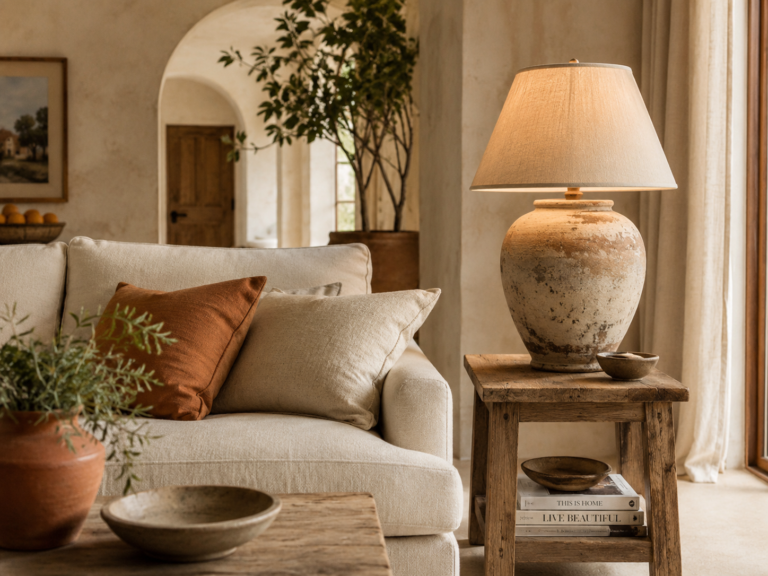
Add a dedicated desk lamp or nearby floor lamp. Ceramic, wood, brass, travertine, and linen shades all fit the Mediterranean mood because they soften the task-oriented nature of office lighting. A shade that diffuses light is more comfortable than a bare exposed bulb near eye level. If you read printed papers, place the task light on the opposite side of your dominant hand to reduce shadows across the page.
Keep color temperature visually consistent. Mixing a cool desk bulb with warm ambient lighting makes a corner feel unsettled. Warm white bulbs usually suit Mediterranean materials best, especially with cream walls, wood furniture, and brass or ceramic accents. If you work after dark, add a second low light in the room so the desk is not the only bright spot. That contrast can tire the eyes and make the corner feel isolated.
Make storage look collected, not corporate
A serene office depends as much on what you hide as what you display. Mediterranean interiors often feel relaxed because practical objects are stored in beautiful, tactile containers: baskets, trays, lidded boxes, wall shelves, old cabinets, and ceramic cups. This approach works especially well in a spare corner, where full office cabinetry may look too heavy.
Use closed storage for items that never look elegant: printer cartridges, cables, chargers, envelopes, batteries, and instruction manuals. A woven basket under the desk can hold a laptop sleeve or extra cords, but choose one with enough structure that it does not collapse into visual clutter. If papers are part of daily life, use a tray for current items only and move older documents into a drawer or box once a week.
Open shelves should be edited. A few books, a ceramic vase, a small framed work, and one basket can look calm. Rows of binders rarely do unless they are concealed in matching boxes. If you need reference materials nearby, consider vertical files in a cabinet, a lidded storage box, or a shelf at the side rather than directly above the desk.
Cords deserve attention. Whenever possible, run cables down the back leg of the desk, collect plugs in one concealed power strip, and keep chargers in a tray or drawer when not in use. Even a beautifully styled Mediterranean office loses its calm if the first thing you notice is a knot of black wires.
Let texture do the decorating
Because a home office is visually busy by nature, Mediterranean styling should be restrained. Texture can carry the atmosphere without crowding the work surface. Linen, rattan, pale wood, terracotta, aged brass, plaster, wool, and ceramic create depth even when the palette is quiet.
A small rug can define the corner, but it needs to suit the chair. Thick, high-pile rugs may catch chair legs and make daily use annoying. A flat-weave wool rug, jute blend, or low-profile patterned rug is usually more practical. If the chair rolls, choose a stable surface or a non-rolling chair with glides. Comfort matters, but so does ease of movement.
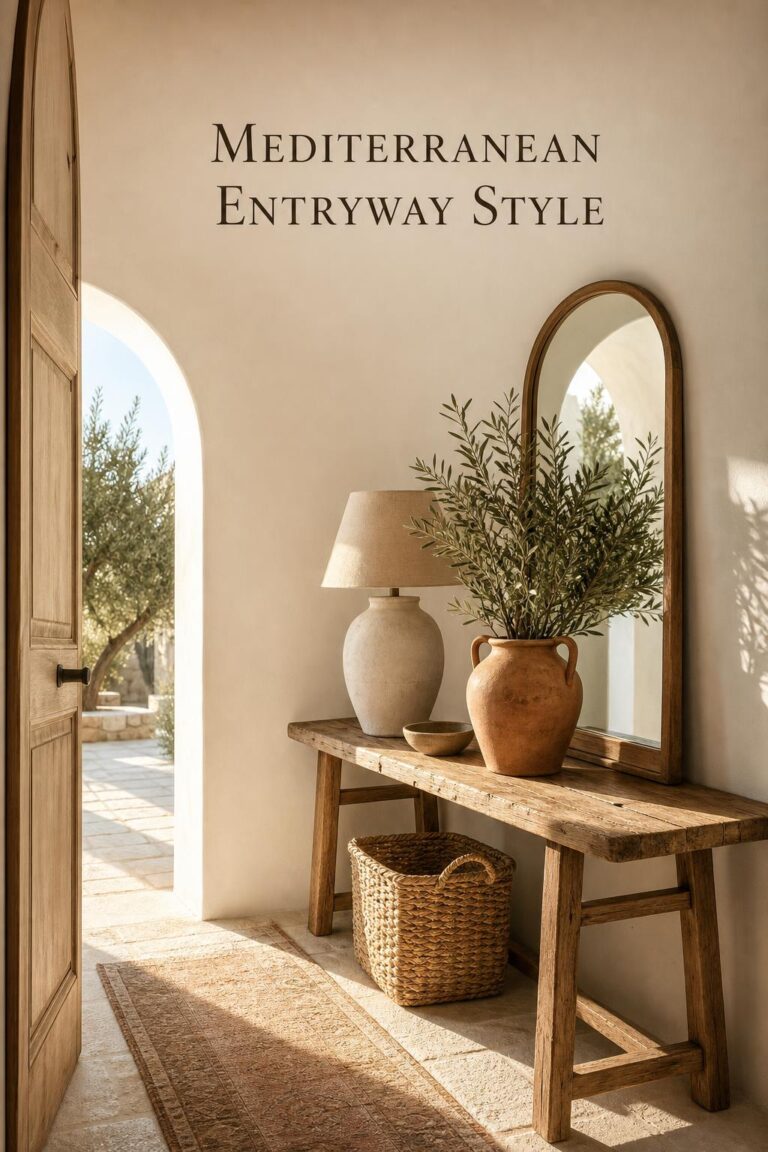
For the wall, one larger piece is often better than many small objects. A framed landscape, abstract in earth tones, vintage-style textile, or simple arched mirror can give the desk a sense of place. If the office is part of a video-call background, avoid placing overly reflective art directly behind you. Matte frames and soft artwork are more forgiving on camera.
Plants suit the Mediterranean mood, but choose them according to the light. Olive trees and rosemary may be evocative, yet they struggle indoors without strong sun. Easier options such as pothos, snake plant, or a compact ficus can provide greenery with less drama. Use a clay, ceramic, or woven planter to keep the look grounded.
On the desktop, edit hard. A lamp, a small tray, a ceramic cup for pens, and perhaps one vase or framed photo is usually enough. If every object is decorative, the desk becomes too precious to use. The most beautiful home office is one where you can actually open a notebook, set down a coffee, and begin.
Shop the Look
These pieces support the quieter side of a Mediterranean home office: warm light, natural texture, and small accents that help a work corner feel connected to the rest of the home.
A corner that feels worth returning to
A Mediterranean home office works best when it feels like part of the home first and a workplace second. The desk should be practical, the light should be comfortable, and the storage should remove visual noise instead of adding more furniture than the room can carry.
Start with the daily task, then build the atmosphere around it: warm walls, real texture, a furniture-like desk, filtered light, and a few objects with weight and softness. The result is not a themed office, but a calm corner with enough character to make work feel less temporary and more rooted.
Affiliate disclosure: La Maison du Sud may earn a commission from qualifying purchases made through links in this article, at no extra cost to you.