Mediterranean Bedroom Ideas for a Low-Ceiling Room That Still Feels Airy
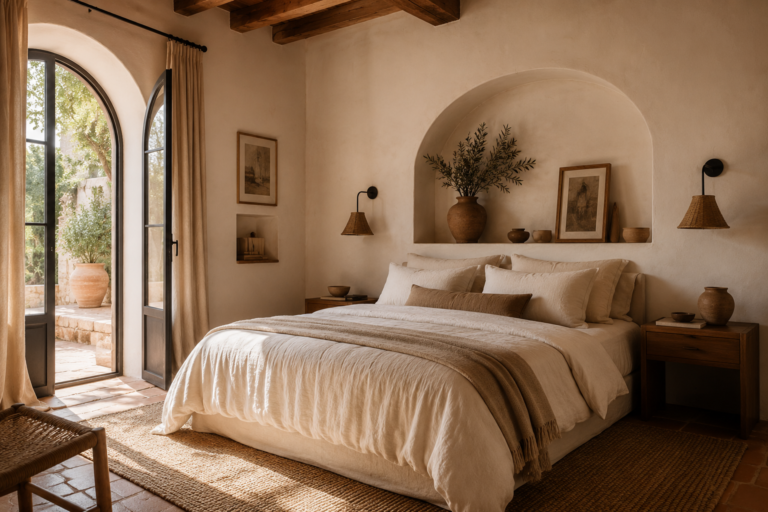
A low-ceiling bedroom asks a different question than a grand Mediterranean suite. It cannot carry a tall carved bed, a heavy chandelier, or rows of decorative objects without feeling pressed down. The charm has to come from restraint: a low bed dressed in linen, a plaster-soft wall color, a small wooden bedside table, and lamplight that glows outward instead of hanging overhead.
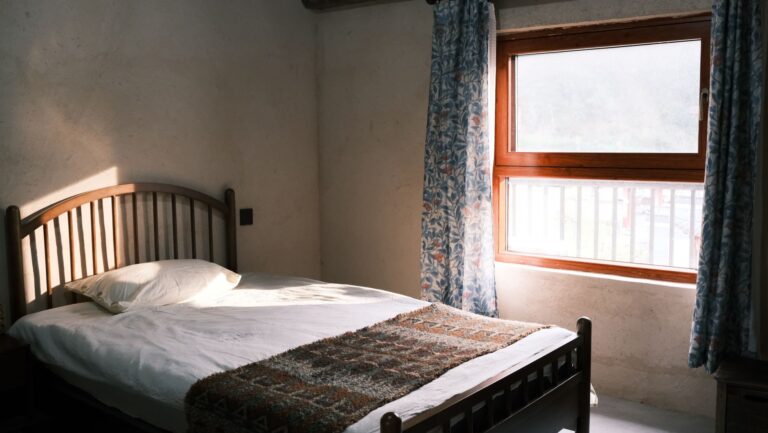
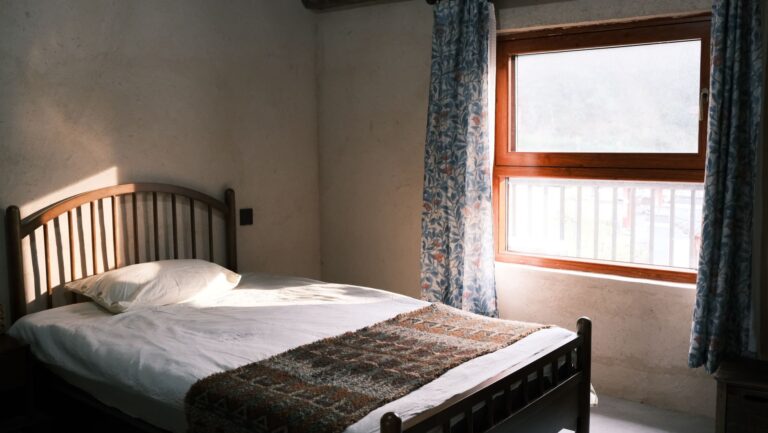
This is where the quieter side of Mediterranean design is most useful. Think of a modest room in a Provençal village house rather than a resort bedroom: uneven plaster, pale stone tones, aged timber, a cotton rug under bare feet, shutters filtering warm daylight, and just enough terracotta or ceramic to keep the room from feeling pale and empty. The goal is not to decorate every surface. It is to make the room breathe.

Read the ceiling before choosing the style
In a low room, the ceiling is not background. It shapes every decision. A flat 8-foot ceiling, a sloped attic ceiling, and a beamed ceiling each need a slightly different Mediterranean approach.
If the ceiling is flat and plain, the safest move is to keep the upper third of the room quiet. Avoid tall wardrobes, dark curtain rods placed too low, and anything that creates a hard horizontal line just under the ceiling. A wall color close to the ceiling color, such as chalk white, warm limestone, or a very pale sand, helps dissolve that boundary.
If the ceiling slopes, let the architecture stay visible. Do not fight the low side with tall storage or a headboard pushed under the steepest angle. In a Provençal attic room, the lowest wall often works better for a bench, a trunk, a low dresser, or books stacked on a small stool. The bed should sit where a person can rise comfortably without ducking.
If the room has beams, treat them as structure rather than decoration. Beautiful aged timber already adds weight. Pair it with lighter walls, low furniture, and unfussy textiles. Painting everything dark for atmosphere may look beguiling in a photograph, but in a genuinely low bedroom it can make morning light feel heavy and reduce the sense of air.
Lower the bed, then soften everything around it
The bed establishes the room’s horizon line. In a low-ceiling Mediterranean bedroom, a lower bed usually feels calmer than a tall upholstered frame. Look for a simple platform, a slim wood frame, or a mattress set on a restrained base. If you want a headboard, choose one that is broad and low rather than tall and architectural.
A headboard in aged oak, pale cane, natural linen, or lightly weathered wood will feel more believable than anything glossy or overly ornate. The best pieces have a useful plainness: visible grain, a matte finish, and a shape that does not pretend the room is larger than it is.
Bedding should add volume without bulk. Linen is especially good here because it looks relaxed even when the bed is simply made. In a small or low room, avoid stacking too many pillows against the wall. Two sleeping pillows, two flatter decorative cushions, and one folded coverlet at the foot are usually enough. The palette can stay close to the materials of the South of France: natural flax, chalk, clay, muted olive, faded ochre, or a soft brown that recalls old shutters.
The temptation in a small bedroom is to choose a very small bed or narrow bedside tables. That can make the room feel mean rather than airy. It is often better to use a properly scaled bed and simplify everything around it: fewer pillows, no tall lampshades, no oversized artwork above the headboard, and no cluttered table surfaces.
Use plaster color instead of busy pattern
Mediterranean bedrooms are often misunderstood as rooms that need patterned tile, wrought iron, saturated color, and many rustic accessories. In a low-ceiling bedroom, those references can quickly become theatrical. A better foundation is a wall finish or paint color that suggests mineral surfaces: limewash white, warm off-white, pale limestone, soft beige, or a faint gray-green.
True limewash has movement and depth, but it is not a requirement. A matte paint in a mineral tone can give a similar quietness if the color is chosen carefully. Stay away from hard blue-white, which can turn cold beside linen and wood. Also be cautious with deep terracotta on all four walls. It can be beautiful in a high room, but under a low ceiling it often closes the space in. Terracotta works better as an accent through a small lamp base, a vase, a cushion stripe, or the color of the floor.
If the walls are uneven, do not overcorrect them visually. Mediterranean rooms gain much of their warmth from imperfection. A slightly irregular plaster wall, a scuffed baseboard, or an old timber beam can be part of the room’s atmosphere. What needs editing is not patina, but clutter.

A simple proportion rule for keeping the room open
Low rooms become uncomfortable when too many elements compete in the upper half of the wall. Use this measurement rule before buying furniture or hanging anything new.
- Keep the main furniture below the lower half of the wall. Beds, bedside tables, benches, and dressers should visually sit low and grounded, leaving the upper wall calm.
- Leave breathing room above the headboard. If you hang art, choose one modest piece or a very quiet textile, and leave enough blank wall so the bed does not feel wedged under the ceiling.
- Choose lamps by shade height, not only by base style. A beautiful lamp can still be wrong if the shade rises too close to the ceiling line or blocks the sightline across the room.
This rule is less about exact inches than about visual weight. When the lower half of the room carries the texture and the upper half remains light, even a modest bedroom starts to feel restful.
Choose lighting that glows sideways, not downward
Ceiling fixtures can be difficult in low Mediterranean bedrooms. A pendant may look charming in theory, but if it hangs too low or casts a strong pool of light, it will emphasize the ceiling height. Flush mounts can work, but they need a warm, diffused glow and a simple profile. Anything shiny, ornate, or too bright will feel out of place against plaster-soft walls and old wood.
Table lamps are often the most graceful solution. A ceramic, terracotta, rustic wood, or linen-shaded lamp brings the light down to human scale. The shade matters as much as the base. Natural linen or a warm off-white fabric shade softens the bulb and spreads light across the bedside area instead of creating harsh shadows on the ceiling.
If the room has only one outlet near the bed, place the lamp on the side where it will be used most and balance the opposite side with a small ceramic bowl, a book stack, or a narrow carafe. Symmetry is pleasant, but identical pairs are not always necessary in a small Provençal room. A lived-in bedroom can feel more authentic when one side holds a lamp and the other a quieter bedside object.
Floor lamps should be used with care. A tall arc lamp is rarely the right answer in a low room. A slim linen-shade floor lamp placed near a reading chair or in a darker corner can work if it does not crowd the ceiling. The base should feel grounded and matte, not polished or visually busy.
Make storage recede instead of pretending it is invisible
Storage is usually the hardest part of a low-ceiling bedroom. Full-height wardrobes may be necessary, but they should not dominate the room if you can avoid it. Painted doors in the wall color, simple hardware, and matte finishes help storage recede. If the wardrobes are freestanding, choose a shallow profile and plain panels over carved or mirrored fronts.
Under-slope storage can be very effective in an attic room. Low drawers, baskets behind a linen curtain, or a long built-in bench with storage beneath can make use of awkward space without raising the visual height of the furniture. Avoid filling every low corner. One empty stretch of wall can do more for the room than another storage piece.
Bedside storage should be modest but functional. A single drawer is useful for the things that make a bedroom look messy quickly: phone chargers, hand cream, notebooks, and reading glasses. Open shelves can look charming when styled, but in a small bedroom they often become visual noise. If you choose an open nightstand, keep only a few objects visible and use a small basket or lidded box for the rest.
Textile storage can also add atmosphere. Woven baskets, a simple wooden trunk, or a folded linen bag on a hook feels more at home in a Mediterranean bedroom than plastic bins or glossy organizers. The key is to keep these practical pieces in the same natural palette so they read as part of the room rather than as clutter.
Let the floor ground the room quietly
In a low-ceiling bedroom, the floor can carry warmth without stealing height. If you already have terracotta tile, natural stone, or old wood, let it be the room’s anchor. Do not cover it completely with a large, thick rug unless the floor is uncomfortable or damaged. A visible border of tile or timber makes the room feel more rooted and less boxed in.
If the floor is plain carpet, laminate, or a finish that does not suit the atmosphere, a flatwoven rug can help. Choose a muted pattern rather than a loud medallion: faded clay, sand, olive, brown, or soft black in a simple stripe or geometric motif. Thick pile rugs can feel cozy, but they may look too heavy in a room that already lacks vertical space.
Beside the bed, comfort matters. A runner on each side can be more flexible than one large rug, especially in a small room with awkward door swings or radiators. Make sure the rug does not bunch under the bed frame or stop exactly at the bedside table legs, which can make the arrangement look cramped. A little visible floor around the rug helps preserve the sense of space.
Add Mediterranean detail in small, useful places
The room should not need many decorative objects to communicate its style. A low-ceiling bedroom benefits from details that are useful first and beautiful second. A ceramic dish for jewelry, a water glass on a wooden tray, a small vase with olive branches, a linen cushion, or a hand-thrown lamp base can say more than a wall full of Mediterranean-themed art.
Keep black metal accents minimal. One small hook, a slim reading sconce, or a dark curtain rod can add definition, but too much black iron can feel heavy under a low ceiling. Brass should also be used sparingly. Aged or unlacquered tones are easier to live with than bright polished finishes.
Curtains deserve particular attention. In a low room, mount the rod as high as practical and choose fabric that falls simply. Natural linen, cotton-linen, or a sheer off-white panel will filter light without building bulk at the window. If privacy is needed, combine a light curtain with an inside-mounted shade rather than using a thick, dark drape that visually shortens the wall.
For artwork, one quiet piece is usually better than a gallery wall. A charcoal sketch, a small landscape, a framed textile fragment, or an old mirror can work if it leaves plenty of plaster visible. The negative space is what keeps the room from feeling decorated to the ceiling.
Shop the Look
For a low-ceiling Mediterranean bedroom, choose pieces that add warmth at bedside height: matte finishes, natural textures, and lamps that create a gentle glow rather than visual weight.
- simple wooden nightstand
- ceramic table lamps
- rustic wood table lamps
- linen shade floor lamps
- kilim pillow cover
When the room finally breathes
A Mediterranean bedroom with a low ceiling should feel humble, sun-warmed, and easy to inhabit. Its beauty comes from proportion more than decoration: low furniture, matte walls, soft linen, grounded wood, and a few ceramic or textile accents that look as though they have always belonged there.
If the room feels unfinished, resist the urge to add height or drama. First remove anything that crowds the upper wall. Then warm the light, simplify the bedding, and let the materials speak. The most convincing Provençal bedrooms are not perfect sets. They are quiet rooms where the ceiling, the bed, and the morning light have all been allowed to find their proper place.
Affiliate disclosure: La Maison du Sud may earn a commission from qualifying purchases made through links in this article, at no extra cost to you.