Mediterranean Bedroom Ideas for a Plain White Rental Room
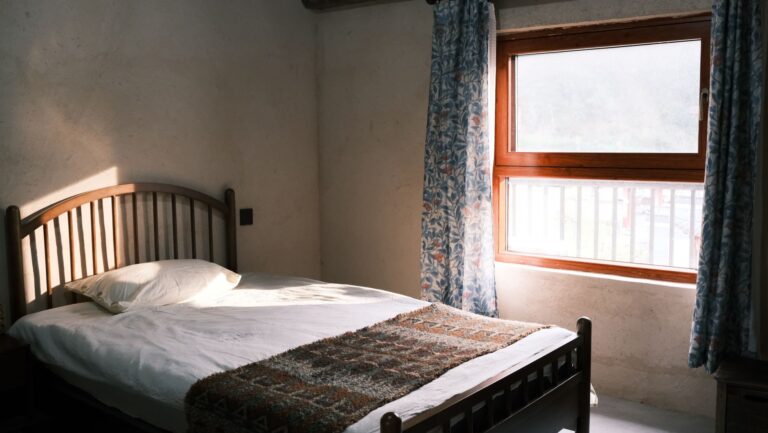
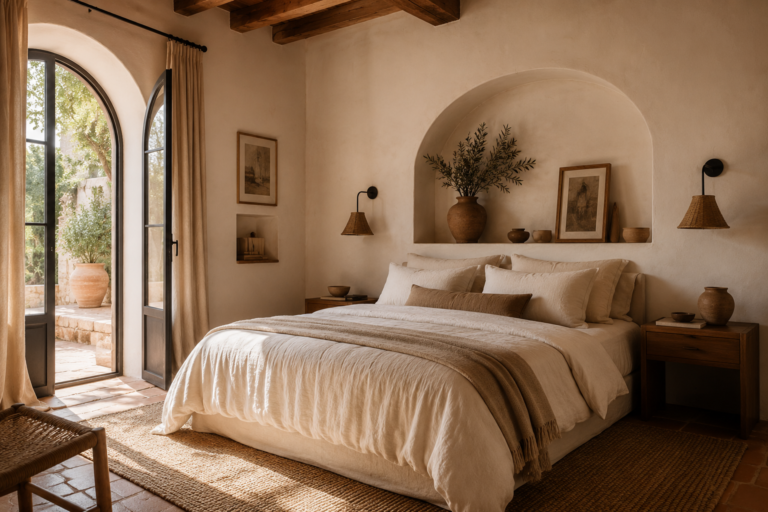
A plain white rental bedroom can feel oddly difficult to decorate. Nothing is technically wrong: the walls are clean, the flooring is serviceable, the window has just enough light. Yet the room can still feel thin, cold, and temporary. The Mediterranean answer is not to cover every surface with pattern or to buy a bedroom set that looks as if it came from a seaside hotel. In a modest Provençal house, warmth usually comes from quieter things: linen that wrinkles beautifully, a timber nightstand with visible grain, a ceramic lamp, a woven shade, a clay vase, and light that falls softly instead of glaring from overhead.
This guide focuses on changes that work in a rental or a room you do not want to renovate. No new plaster, no permanent tile, no hardwired sconces. The goal is a bedroom that feels sun-warmed, restful, and lived-in, while still being practical for a lease, a small footprint, and an ordinary budget.
Start With the Room You Cannot Change
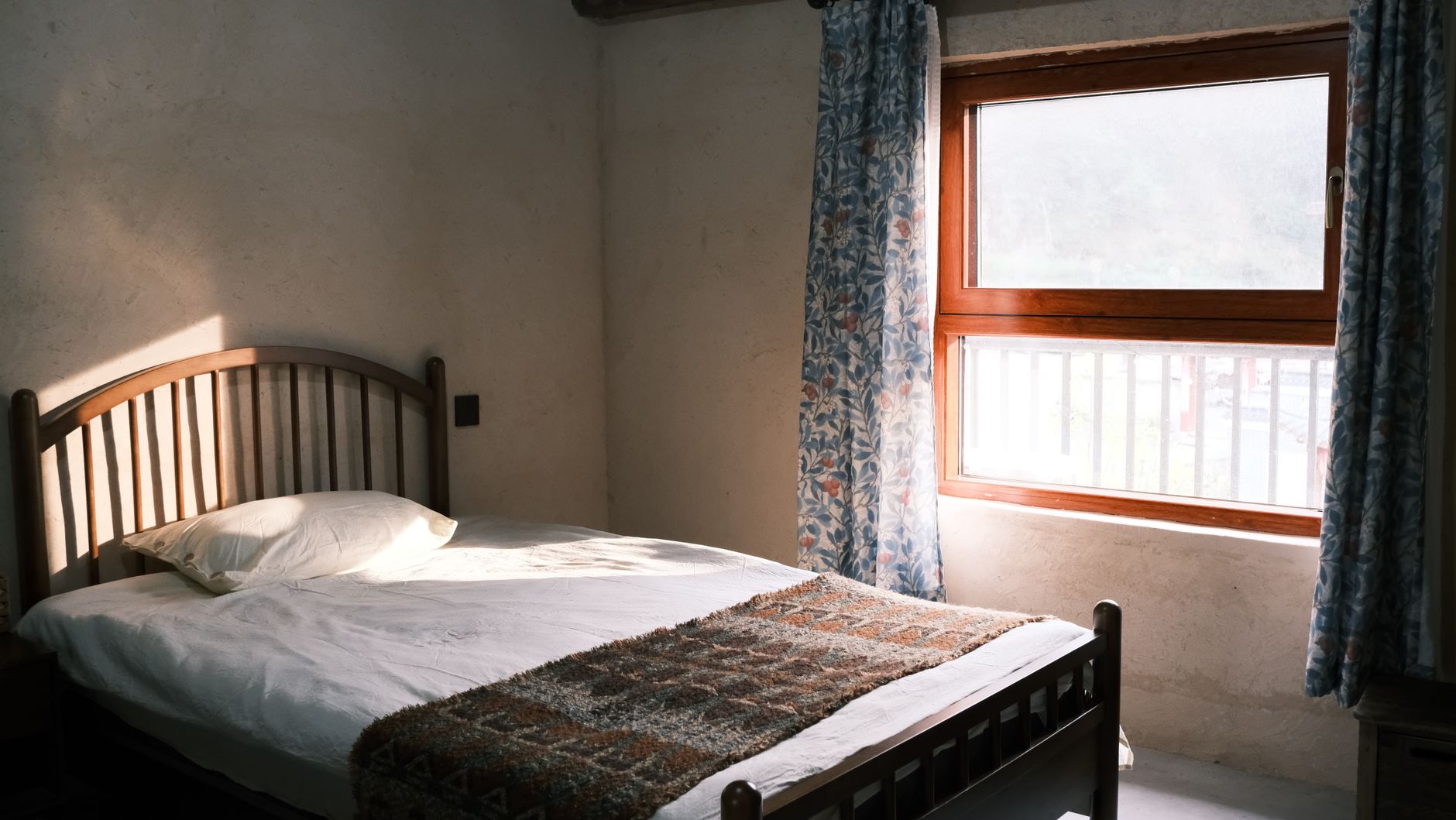
Before buying anything, look at the fixed elements in the bedroom as if they were part of the design brief, not obstacles. Most rental bedrooms have at least one of these conditions: bright white walls, beige carpet, gray laminate, a basic ceiling light, standard blinds, or a closet door that dominates one wall. Mediterranean styling works best when it softens these elements rather than fights them.
If the walls are brilliant white, avoid adding more stark white in large areas. Choose bedding in warm white, oatmeal, flax, sand, chalk, or a pale olive-gray instead. These colors still feel fresh, but they have enough undertone to sit comfortably beside wood, rattan, terracotta, and aged brass.
If the floor is carpeted, especially in beige or gray, keep the lower half of the room calm. A heavy patterned rug on top of carpet can make a small bedroom feel crowded. Instead, bring texture upward through lampshades, pillows, baskets, curtain panels, and a small upholstered bench if space allows.
If the floor is laminate or tile, even better: you can introduce a flatwoven rug beside the bed, not necessarily under the whole bed. In old Southern French bedrooms, rugs are often practical fragments rather than wall-to-wall statements. A runner on the side you step onto in the morning is enough.
The most important rental mindset is this: make the movable layers feel intentional. If your walls, floors, and ceiling are generic, your furniture, textiles, and lighting need to carry the material story.
Build Warmth on Top of White Walls
White walls are not automatically wrong for a Mediterranean bedroom. Many rooms in Provence have pale plaster or limewashed surfaces that reflect light beautifully. The difference is that limewash has depth, shadow, and irregularity; rental paint often has a flat, blank quality. Since you may not be able to repaint, texture becomes your substitute for patina.
Start with the bed, because it is the largest soft surface in the room. Choose bedding that looks natural rather than crisp. Linen, cotton-linen blends, matelassé, washed cotton, and light waffle textures all help. Avoid glossy sateen if the room already feels cool; it reflects light in a way that can make the bed look more hotel-like than home-like.
A Mediterranean bedroom does not need a dramatic color scheme. In fact, the most believable palette is often restrained:
- Base: warm white, ivory, chalk, or pale sand.
- Wood tone: weathered oak, walnut, pine, or rustic reclaimed wood.
- Earth accent: terracotta, clay, tobacco, muted rust, or soft ochre.
- Quiet contrast: blackened iron, aged brass, olive, or faded charcoal.
Use the earth accent sparingly. One clay-colored pillow, a terracotta lamp base, or a small ceramic vessel is usually more elegant than repeating rust and orange around the entire room. The South of France feeling comes from restraint as much as warmth.
For wall decor, avoid filling every blank space. One large piece above the bed can look heavy in a rental bedroom, especially if the headboard is tall. Consider a smaller framed textile, an understated landscape drawing, a plaster-toned print, or a simple wood-framed mirror leaning on a dresser. Use removable hanging strips only where appropriate for the weight, and keep anything above the bed securely mounted.
Choose Furniture That Feels Collected, Not Themed
The fastest way to make a Mediterranean bedroom feel artificial is to buy matching furniture with carved details, dark stains, and oversized proportions. Authentic Provençal rooms often mix eras: a simple wood table beside the bed, a cane chair near the window, a painted wardrobe, a linen-covered headboard, a small ceramic lamp. The pieces relate through material and tone, not through a matching collection.
In a rental, the three most useful furniture upgrades are usually the nightstand, the headboard, and the chair or bench. You do not need all three. Choose the one that will correct the room’s biggest weakness.
If the room feels temporary
Replace a flimsy bedside table with a wood nightstand or a small vintage-style table. Look for pieces with visible grain, a matte or lightly aged finish, and enough surface area for a lamp, book, and glass of water. A nightstand that is slightly imperfect in tone is often better than one with a glossy factory finish.
If the wall behind the bed feels bare
Use the bed itself to create structure. A linen headboard, a cane headboard, or even two large European pillows stacked against the wall can make the room feel finished without a permanent installation. Keep the height proportionate: in a small bedroom, a headboard that rises too high can make the ceiling feel lower. A modest height often looks more convincing and easier to live with.
If the room lacks a resting place
A small chair can be more useful than a bench if the bedroom is narrow. Choose cane, rush, a simple wood frame, or slipcovered upholstery in a washable neutral. Place it near the window rather than at the foot of the bed if circulation is tight. A chair with a folded linen throw instantly adds the relaxed, lived-in quality that many rental rooms lack.
Keep bedside storage honest. Open shelves look pretty only when they are not overloaded. If you read, charge devices, use hand cream, and keep sleep masks or notebooks nearby, choose a nightstand with a drawer. Mediterranean style is not the same as visual clutter.
Layer Light Like a Village House at Dusk
Overhead rental lighting is rarely flattering. It often casts hard shadows and makes the bed feel exposed. A Mediterranean bedroom should have warm, low, indirect light, like a room settling into evening after a hot day. Since hardwiring is usually not an option, portable lamps are essential.
Use at least two light sources besides the ceiling fixture. In a larger room, three is better: two bedside lamps and one floor lamp near a chair or dresser. If the bedroom is small, one good table lamp and one floor lamp can be enough.
Material matters as much as shape. Ceramic, terracotta, travertine, rustic wood, rattan, and linen shades all suit the room because they diffuse light and add texture even when switched off. Avoid shiny chrome bases, bright white drum shades, and exposed cool bulbs. They work against the softness you are trying to create.
Scale the lamps to the bed. A tiny lamp on a tall nightstand looks accidental; a huge lamp beside a low platform bed feels awkward. As a practical guide, the bottom of the shade should sit near seated eye level when you are in bed, so the bulb does not glare directly into your eyes. If your nightstands are small, use narrower lamp bases or consider a floor lamp on one side to free surface space.
Rattan and woven shades create patterned shadows, which can be lovely in moderation. In a bedroom where you read at night, pair one woven lamp with one linen-shaded lamp so the room has both atmosphere and function. If you have only one bedside lamp, choose a linen shade for the most versatile light.
Use Textiles to Add Softness Without Bulk
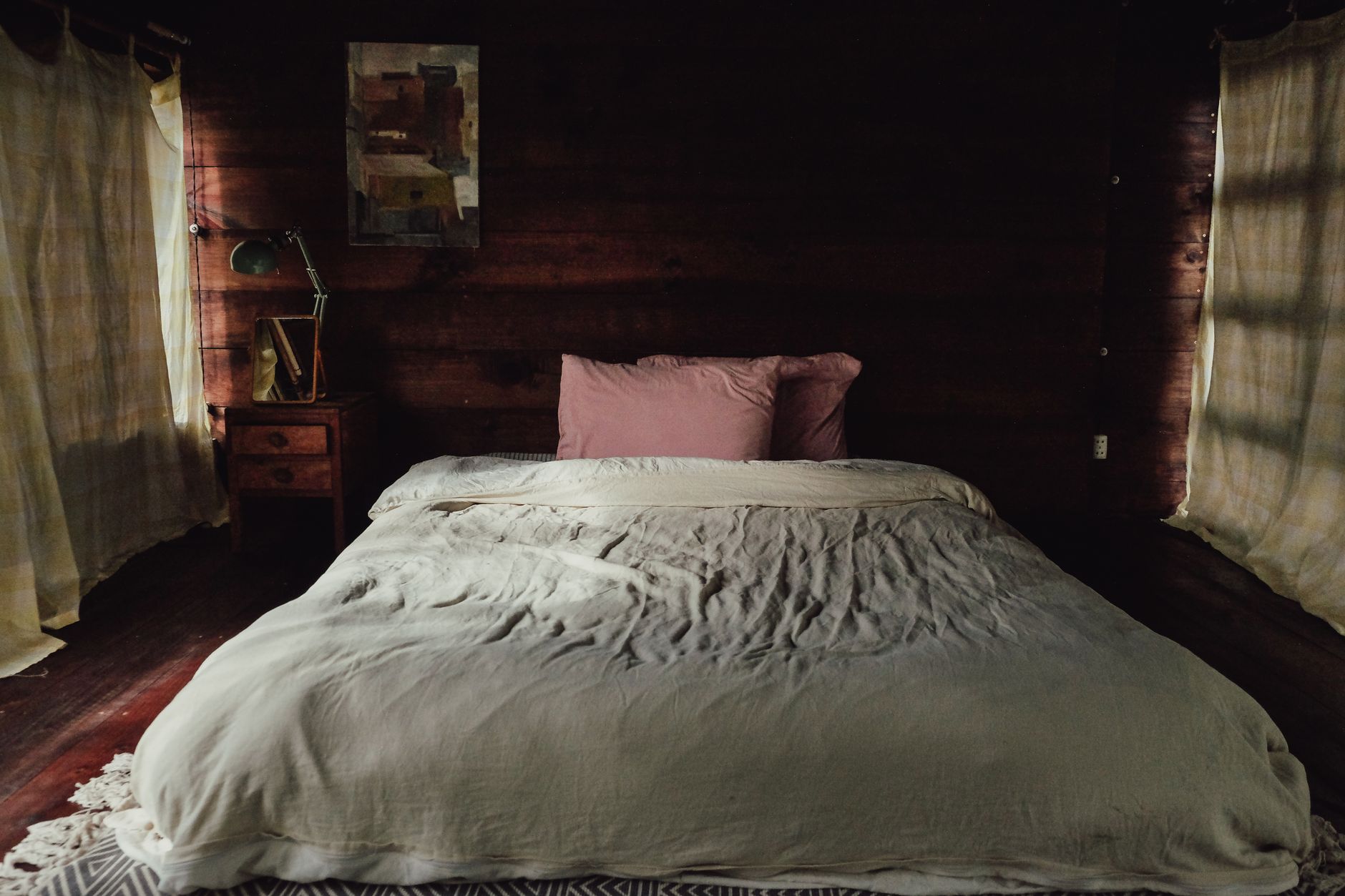
Textiles are where a rental bedroom can become genuinely Mediterranean without looking decorated beyond its means. The right layers give the room weight, tactility, and comfort. The wrong layers make it feel dusty, themed, or cramped.
Start with the bed in three levels: sheet, cover, and relaxed top layer. A simple linen duvet cover or cotton quilt can be the main surface. Then add a folded blanket, light coverlet, or textured throw across the lower third of the bed. This keeps the bed from looking like a flat white rectangle, but it does not create the over-styled mound of pillows that feels more showroom than home.
Pillows should be edited. In a Mediterranean rental bedroom, two sleeping pillows, two larger back pillows, and one small accent pillow are usually enough. If the accent has a kilim-inspired pattern, faded stripe, or earthy woven texture, keep the rest plain. Pattern works best when it has space around it.
For curtains, natural texture matters more than heavy drama. If you can change the window treatment, hang linen or linen-look panels in warm white, oatmeal, or flax. Let them touch the floor or hover just above it; short curtains often make a rental bedroom feel unfinished. If drilling is not allowed, use a tension rod inside the window frame or a renter-friendly rod solution, but keep the fabric generous enough to soften the hard edges of the window.
Be careful with dark blue, bright turquoise, and high-contrast tile motifs in the bedroom. They can quickly push the room toward a vacation-rental version of Mediterranean style. For a calmer, more Provençal mood, use faded olive, clay, straw, cream, and aged wood tones. If you want blue, choose a gray-blue or washed indigo in a small dose, such as a pillow stripe or a framed print.
A Rental-Friendly Room Checklist
Use this checklist to decide what to change first. It is intentionally focused on movable items, so you can build atmosphere without risking your deposit or committing to permanent work.
- One grounding material: Add a visible natural texture, such as wood, cane, rattan, ceramic, terracotta, linen, or stone.
- Two warm light sources: Use table lamps, a floor lamp, or a plug-in lamp arrangement so the ceiling light is not doing all the work.
- Three quiet colors: Keep the main palette to warm white, sand or flax, and one earthy accent like clay, olive, or ochre.
- One useful bedside surface: Make sure the nightstand is large enough for daily life, not just a decorative object.
- One soft window treatment: Replace or disguise harsh blinds with linen-look panels where your lease allows.
- One imperfect accent: Use a handmade-looking ceramic, a rustic tray, a woven pillow, or aged wood to break up the newness of the room.
If you can only do two things, start with lighting and bedding. Those changes affect how the bedroom feels every evening and morning. If you can do a third, upgrade the bedside table or add a textured chair. Accessories should come last, after the room has proper softness and function.
Keep the Styling Spare, Useful, and Personal
A Mediterranean bedroom should not look as if every surface has been styled for a photograph. The beauty of Southern French interiors is that they often leave room for air: a simple lamp, a book, a water glass, a ceramic dish, a linen throw that is folded but not perfectly pressed. That restraint is especially important in a rental, where too many small accents can make the space feel busy rather than warm.
On a nightstand, limit yourself to what you actually use and one object with texture. A ceramic lamp, a small dish, and a book are enough. If the lamp is terracotta or rustic wood, avoid adding more clay pieces right beside it. Spread materials around the room so the eye travels naturally.
On a dresser, use a tray to gather small items. Wood, travertine, ceramic, or woven trays all work, but keep the contents minimal: a small vase, jewelry dish, fragrance bottle, or folded linen cloth. If the dresser becomes a drop zone, the entire bedroom loses its calm.
Plants can help if the room has good light, but choose thoughtfully. A small olive tree may be beautiful in a sunny bedroom, though it needs the right conditions and care. If that is unrealistic, a simple herb pot on a bright sill or a sculptural branch in a ceramic vase can give a similar natural note without turning the bedroom into a garden room.
The most convincing rooms have a little asymmetry. Matching bedside lamps can be elegant, but they are not mandatory. One ceramic table lamp on a nightstand and one linen-shaded floor lamp on the other side can look more collected. Similarly, the two sides of the bed do not need identical tables if their heights and tones feel compatible.
Shop the Look
These pieces support the room’s most important layers: warm bedside light, natural texture, a useful wood surface, and a small accent of pattern or ceramic patina.
- ceramic table lamps
- terracotta table lamps
- linen shade floor lamps
- wooden nightstand
- kilim pillow cover
- ceramic vase
The Quiet Measure of a Finished Bedroom
A plain rental bedroom will not become a stone-walled Provençal farmhouse, and it should not pretend to be one. The better goal is more subtle: a room that feels warmer at night, softer in the morning, and more personal without being overfilled. Mediterranean influence is strongest when it appears through materials rather than motifs.
Choose linen over shine, clay over bright color, aged wood over matching furniture, and warm lamps over harsh overhead light. Leave a little blank space. Let the bedding wrinkle. Keep the palette sun-faded rather than saturated. With those choices, even a white-walled rental can begin to feel like a restful room in the South of France: modest, textured, comfortable, and quietly enduring.
Affiliate disclosure: La Maison du Sud may earn a commission from qualifying purchases made through links in this article, at no extra cost to you.