Mediterranean Fireplace Ideas for a Plain Living Room Wall
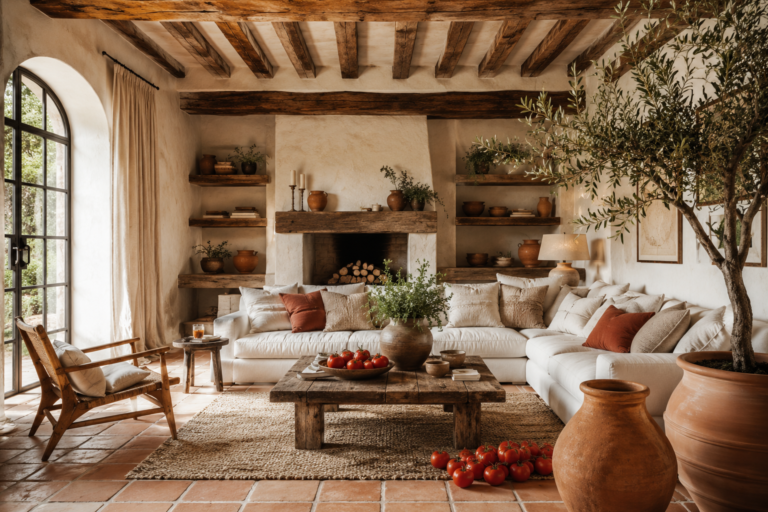
A plain fireplace wall can make the whole living room feel unfinished. The sofa may be comfortable, the rug may be right, and the light may be pleasant, yet the room still lacks a center. In Mediterranean interiors, the fireplace is rarely treated as a flat decorative panel. It feels built into the architecture: thick plaster, stone edges, clay tones, a generous hearth, and objects that look gathered rather than arranged for display.
The goal is not to make every fireplace look like it belongs in a centuries-old villa. It is to give an ordinary living room wall more depth, warmth, and purpose. Whether you have a simple builder-grade surround, a closed gas fireplace, a nonworking firebox, or only a shallow mantel, the same design question applies: how can the fireplace feel permanent, tactile, and easy to live with?
Start with the wall, not the mantel
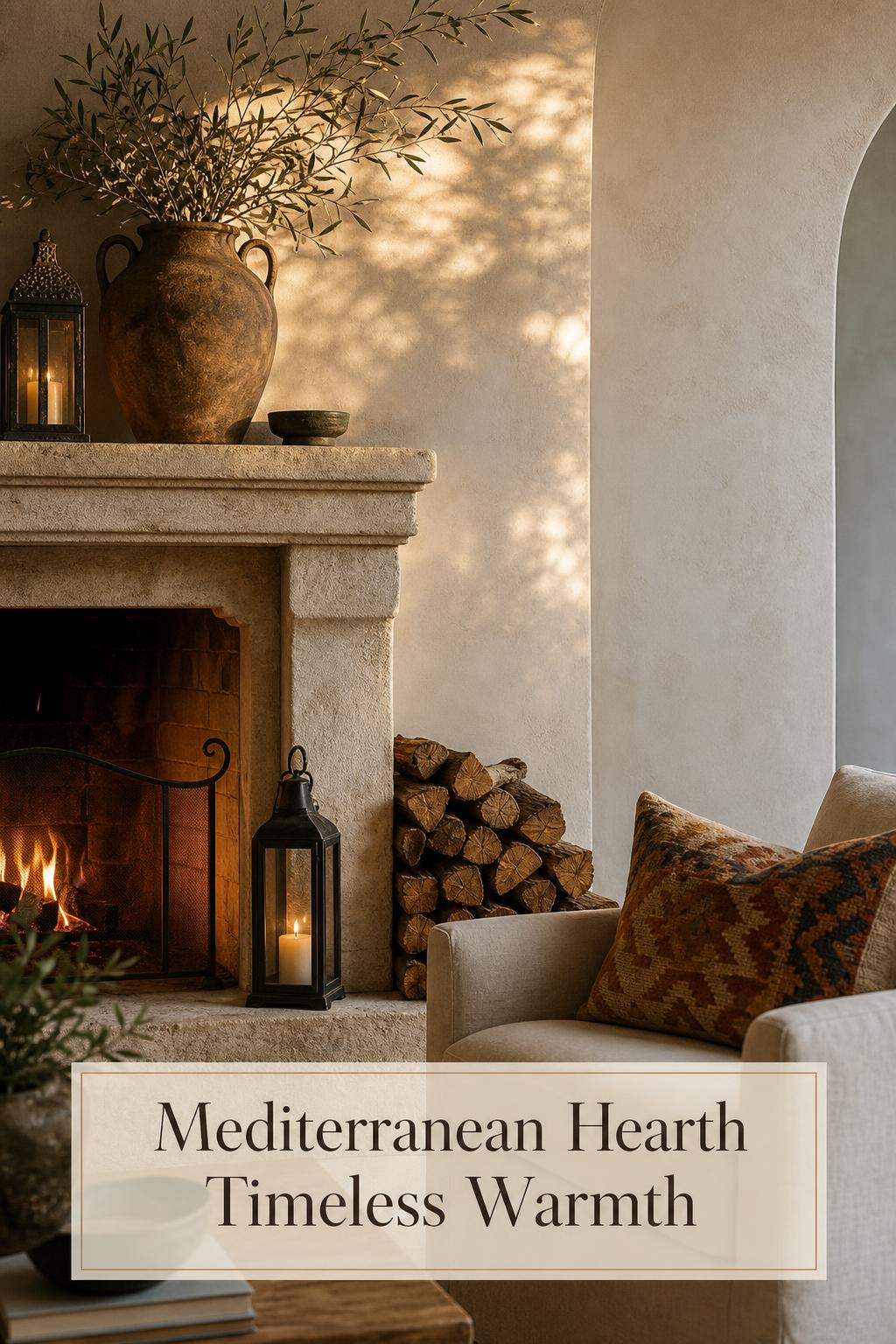
The most convincing Mediterranean fireplace schemes begin beyond the mantel shelf. If the wall around the fireplace is plain drywall, bright white paint, or a narrow strip of tile, placing a few objects on top will not solve the larger issue. The surface needs either texture, depth, or a warmer boundary so the fireplace reads as part of the room.
For a low-disruption update, repaint the fireplace wall in a warm mineral white, soft sand, muted clay, or pale limestone tone. Avoid cold whites with blue undertones; they tend to make stone, wood, and terracotta look disconnected. A matte finish is usually more forgiving than eggshell on an imperfect wall, especially if the room gets side light in the afternoon.
If you are renovating, consider a plaster-style finish around the fireplace. True lime plaster has a softness and variation that suits Mediterranean rooms beautifully, but it requires the right surface preparation and skilled application. For smaller budgets, a mineral paint or plaster-effect finish can create a similar softness without changing the structure. The wall should look quietly uneven, not theatrical. Heavy trowel marks can feel more theme restaurant than old-world home.
Extending the treatment slightly wider than the firebox is often better than surrounding only the opening. A fireplace wall that runs from corner to corner, or from built-in to built-in, creates a calm architectural field. If the fireplace sits off-center, a continuous textured wall can also help disguise the imbalance.
Give the firebox a frame with weight
A Mediterranean fireplace needs a sense of thickness. That can come from stone, tile, plaster returns, a chunky wood beam, or a raised hearth. Without some shadow or edge, the opening can look like a black rectangle in the wall.
Stone is the most timeless route, especially limestone, travertine, honed marble in warm tones, or soft sandstone. Polished stone can feel too formal unless the rest of the room is equally refined. Honed, tumbled, or lightly textured surfaces are easier to combine with linen upholstery, woven shades, and rustic wood.
Tile can also work, but choose it carefully. Zellige-style tile, handmade-look ceramic, or small-format terracotta tile can bring movement to a fireplace face. The trade-off is visual activity. If your living room already has patterned rugs, open shelving, and strong artwork, a heavily patterned tile surround may compete. In that case, use tile only on the hearth or inside the firebox reveal, and keep the main wall plastered.
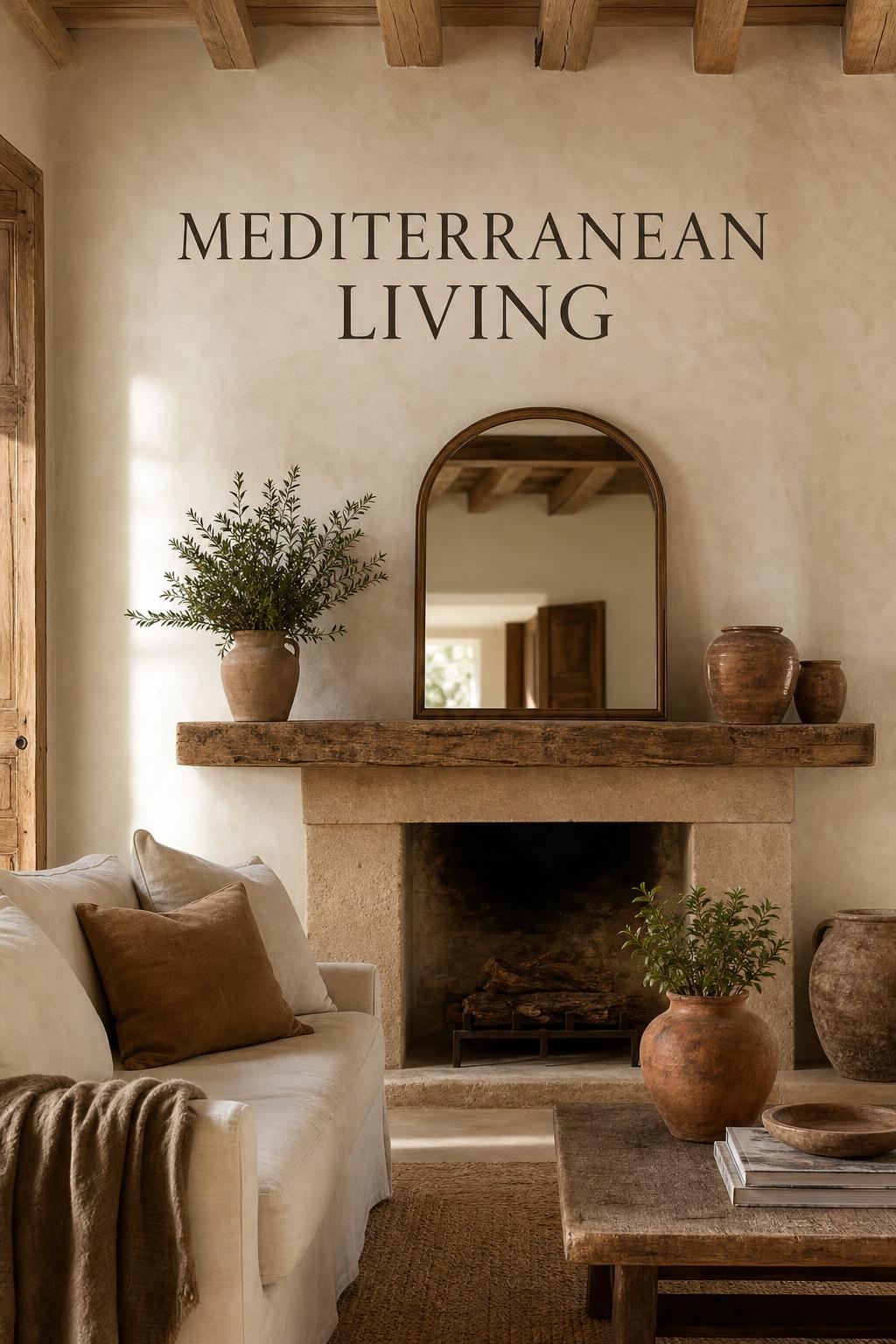
For a simpler update, add depth with a mantel beam. A reclaimed or rustic wood mantel brings immediate warmth, but it should be scaled to the fireplace. Very thin floating shelves tend to look temporary. A beam with visible thickness looks more grounded, especially against plaster or stone. Always follow local code and manufacturer clearances for combustible materials around active fireplaces; placement is not purely aesthetic.
A proportion rule for mantel, mirror, and hearth decor
Fireplace styling often goes wrong because the scale is too small. Tiny candlesticks, a narrow mirror, and a single vase can make the wall feel even larger and emptier. Mediterranean rooms benefit from generous shapes and asymmetry, but the arrangement still needs proportion.
Use this measurement rule:
- Mantel width: keep the main object or grouping to roughly two-thirds of the mantel width, leaving breathing room at both ends.
- Mirror or artwork height: choose a piece tall enough to occupy about half to two-thirds of the space between the mantel and ceiling, unless the ceiling is very low.
- Hearth objects: use one low, wide element and one taller vertical element so the base of the fireplace does not feel scattered.
This rule prevents the mantel from becoming a row of unrelated small accessories. It also leaves enough negative space for the surface materials to matter. In a Mediterranean room, the quiet wall, stone edge, and shadows are part of the composition.
An arched mirror is a natural choice if the fireplace wall has strong straight lines. It softens the geometry and echoes Mediterranean doorways without requiring a full architectural renovation. If the room already has arches, a rectangular antique-style mirror or framed textile may be better; repeating the same curve everywhere can become too literal.
Correct the one-note beige problem with texture
Mediterranean fireplace rooms are often described as warm and neutral, but neutral does not mean flat. A beige wall, beige sofa, beige rug, and beige mantel accessories can quickly turn lifeless. The correction is not necessarily stronger color; it is more material contrast.
Bring in a range of touchable finishes: matte plaster, honed stone, raw or oiled wood, woven rattan, aged brass, linen, wool, and terracotta. These materials catch light differently, which gives a quiet neutral room dimension. The palette can stay restrained while the room becomes richer.
Terracotta is especially useful around a fireplace because it adds warmth without shouting. A large terracotta vase, clay candleholders, or a few earthy vessels on the hearth can make a cool stone surround feel more relaxed. Use terracotta sparingly if your flooring is already orange-toned; too much clay color can overwhelm the room and make it feel dusty rather than elegant.
Black also has a role, but it should feel like an accent. A black iron fireplace screen, slim lanterns, or a dark metal tool set can sharpen a pale plaster wall. If every accessory is black, the look becomes heavy. One or two dark elements are usually enough to define the fireplace without flattening the warmth.
Make the hearth useful when the fireplace is quiet
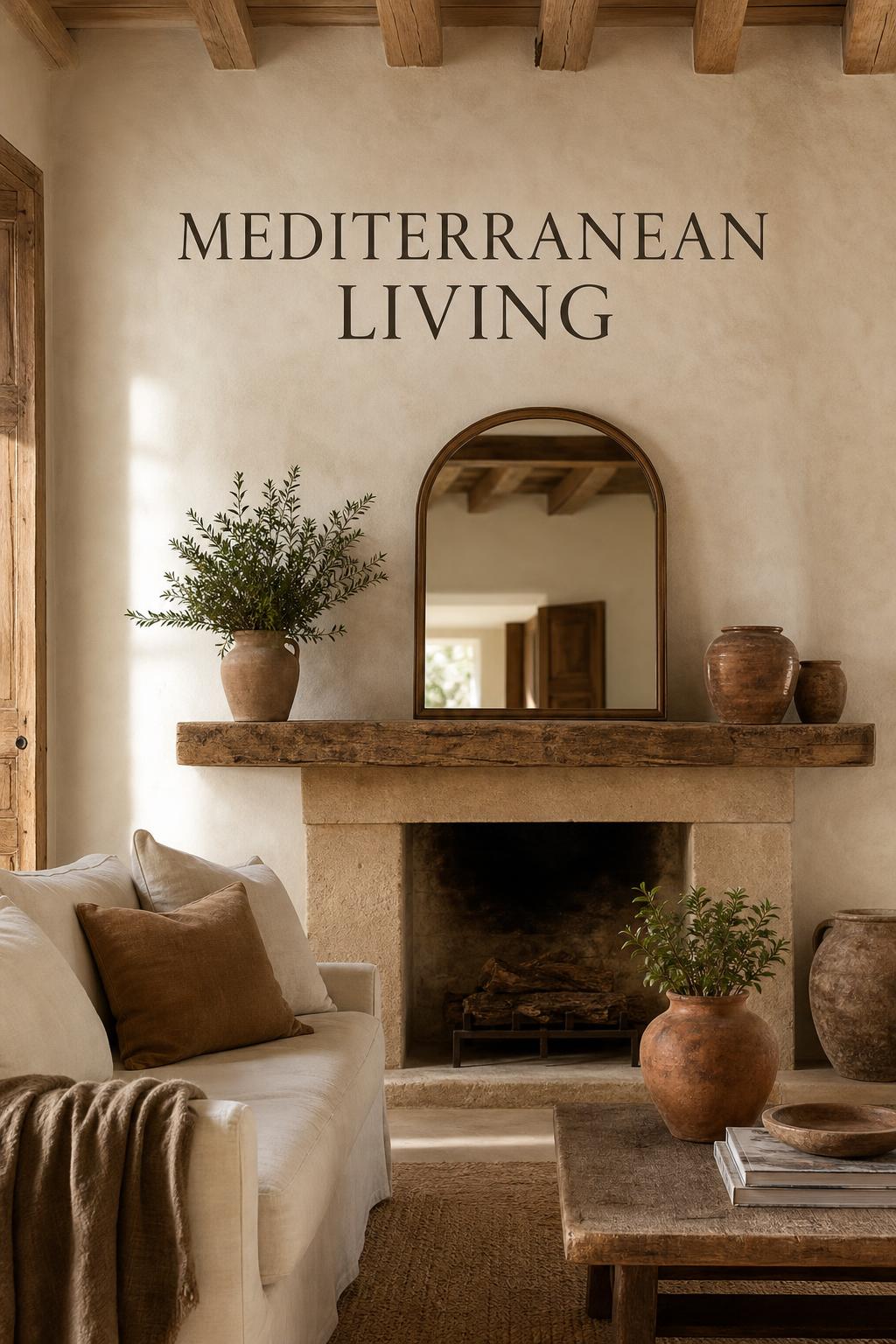
Many fireplaces are used only part of the year, and some are decorative from the beginning. The empty firebox or unused hearth still deserves attention. Mediterranean interiors often handle this beautifully by treating the hearth as a small still life rather than a blank utility zone.
If the fireplace is nonworking, fill the opening with stacked cut wood, oversized pillar candles, a ceramic vessel, or a simple basket. Avoid anything that looks too delicate inside the firebox; the interior is dark and deep, so small accessories disappear. Larger shapes read better from across the room.
For active fireplaces, keep styling practical. Objects should never crowd the opening or make cleaning difficult. A hearth can hold a lantern at one side, a log basket at the other, or a low vessel when the fireplace is not in use. The arrangement should be easy to move, not a fragile display that has to be dismantled every time the fire is lit.
Raised hearths can double as informal seating, especially in older homes or relaxed family rooms. If yours is stone or tile, soften the nearby area with a wool rug, floor cushion, or upholstered stool rather than placing fabric directly where heat or soot could be an issue. The visual message should be comfort, but the practical decisions still need to respect the fireplace itself.
Choose lighting that warms the plaster and stone
Fireplaces look best when the light comes from more than one direction. A single ceiling fixture can make the wall feel flat and cast harsh shadows over the mantel. Mediterranean rooms usually feel more inviting with lower, warmer sources of light: table lamps, floor lamps, shaded sconces, lanterns, and candlelight.
If you are planning electrical work, flank the fireplace with wall sconces or place picture lighting above artwork. Keep the finish warm and understated. Aged brass, bronze, dark iron, or ceramic bases tend to sit comfortably beside stone and plaster. Highly polished chrome usually feels out of step unless the room has a more contemporary coastal direction.
For renters or finished rooms, lamps are the easiest correction. Place a table lamp on a nearby console, a floor lamp beside a lounge chair, or a small shaded lamp on built-ins if they frame the fireplace. The aim is to graze the wall with soft light so the texture becomes visible after sunset.
Candlelight belongs naturally around a Mediterranean fireplace, but it should be edited. A cluster of three substantial candleholders looks calmer than a dozen small votives. If open flame is not practical for your household, warm LED candles can create a similar visual rhythm without requiring the same attention.
Let the seating acknowledge the fireplace
A fireplace cannot become the room’s focal point if all the furniture ignores it. This is common in open-plan living rooms where the television, sliding doors, and circulation paths compete for attention. The solution is not always to face every seat toward the fire, but at least some part of the layout should respond to it.
In a narrow living room, place the sofa parallel to the fireplace wall and add one chair angled toward both the sofa and the hearth. In a square room, two chairs opposite the sofa can create a conversational zone with the fireplace as the quiet anchor. If the television must sit above the mantel, keep the mantel styling minimal and avoid tall objects that fight the screen. A textured wall treatment becomes even more important because it gives the area character when the TV is off.
The rug should help gather the seating around the fireplace. If it stops too far away, the hearth feels detached. Ideally, the front legs of the main seating pieces sit on the rug, and the rug reaches close enough to the fireplace to visually connect the lounge area without creating a safety issue near an active fire.
Textiles can echo the fireplace palette without matching it exactly. A clay stripe in a pillow, an olive throw, or a faded rust note in a rug is enough. Matching every accessory to the stone or tile makes the room look planned in a showroom way. Mediterranean style is more relaxed when colors are related, not identical.
Shop the Look
For a fireplace wall that feels warm rather than crowded, choose a few pieces with real material presence: clay, iron, ceramic, and woven texture near the seating.
- Terracotta candle holders with warm LED candles
- Black iron lanterns for the hearth
- Rustic ceramic vases for mantel styling
- Kilim pillow cover for a warm seating accent
The fireplace should feel gathered, not decorated
The strongest Mediterranean fireplace ideas are usually the quietest ones. A thicker surround, a warmer wall finish, a better-scaled mirror, and a few tactile objects can change the entire mood of the living room without filling every surface.
Before adding more decor, stand at the main entrance to the room and look at the fireplace wall as a whole. If it feels thin, address depth. If it feels cold, address material warmth. If it feels busy, remove the smallest pieces and let the plaster, stone, wood, or tile do more of the work. A Mediterranean fireplace should not look staged for a season; it should feel as though the room has slowly gathered around it.
Affiliate disclosure: La Maison du Sud may earn a commission from qualifying purchases made through links in this article, at no extra cost to you.