Mediterranean Living Room Ideas for a Dark Apartment That Still Feels Warm and Light
A dark apartment living room rarely needs more decoration. It usually needs better reflection, quieter contrast, and a lighting plan that does not flatten the room after sunset. The goal is not to imitate a sun-soaked villa, but to borrow the restraint of a modest Provençal village house: chalky walls, linen that catches what little daylight is available, aged wood, matte stone, and warm lamps placed where life actually happens.
This approach is especially useful when the room has one small window, a shaded street view, or rental finishes that cannot be changed. Instead of fighting the darkness with glossy white furniture and bright overhead bulbs, you create a layered room that feels calm in the morning and generous in the evening. The palette stays pale but not cold; the materials have grain and softness; the furniture sits lightly enough that the room can breathe.
First Diagnose Where the Room Is Losing Light
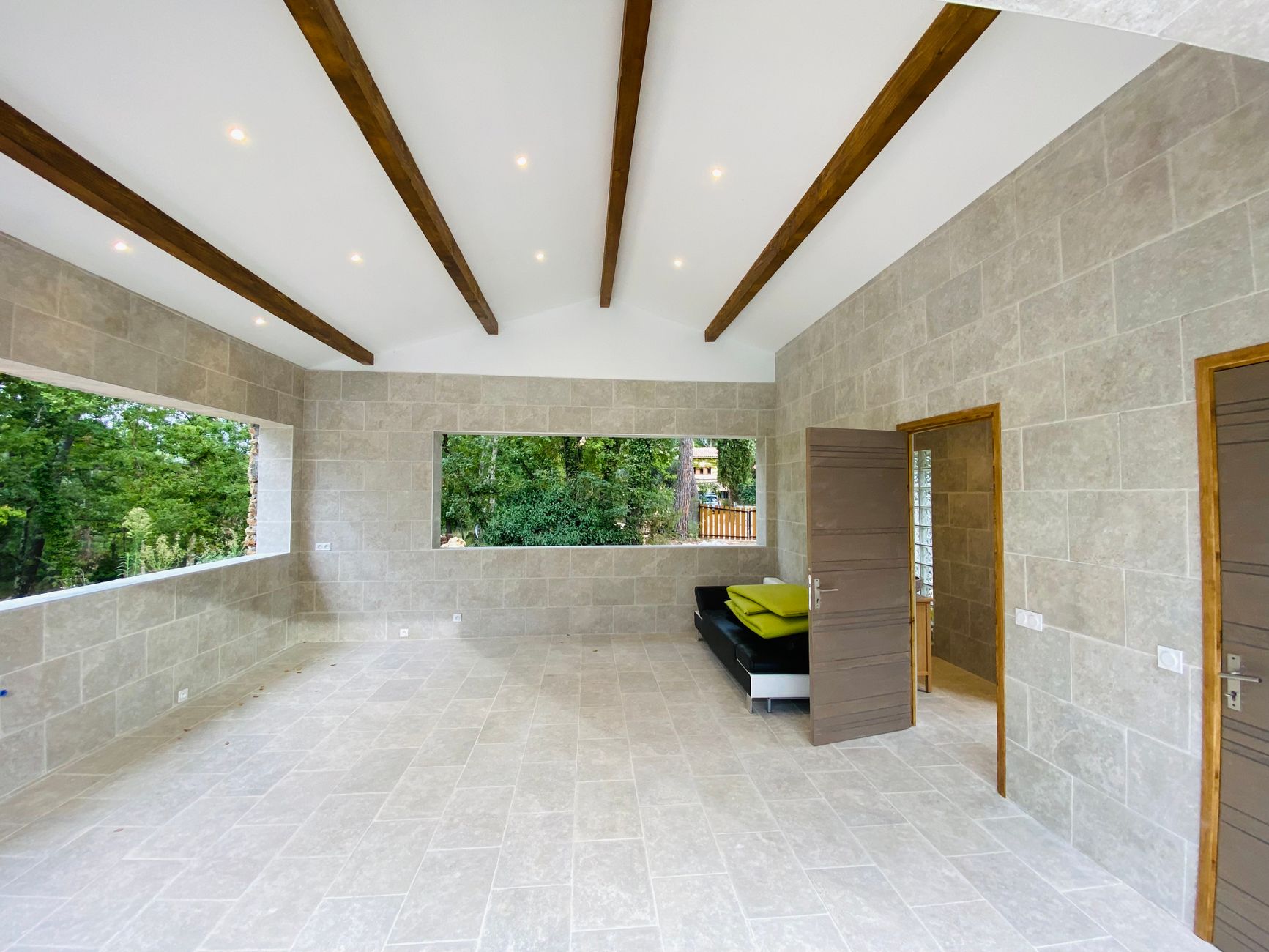
Before choosing a sofa cover or a lamp, look at the room at three different times of day. A Mediterranean-inspired dark living room depends on understanding the kind of darkness you have. Some rooms are dim because the window is small. Others are technically bright at noon but feel heavy because the floor is dark, the furniture is bulky, or the walls have a gray undertone.
Stand at the doorway and notice the first surface that absorbs attention. If it is a black media unit, a deep charcoal sofa, or a large rug with high contrast, that piece is probably making the room feel smaller than it is. In old apartments, the issue is often a sequence of small dark decisions rather than one major mistake: cool white walls, blue-gray upholstery, a shiny dark coffee table, and one ceiling fixture in the center of the room.
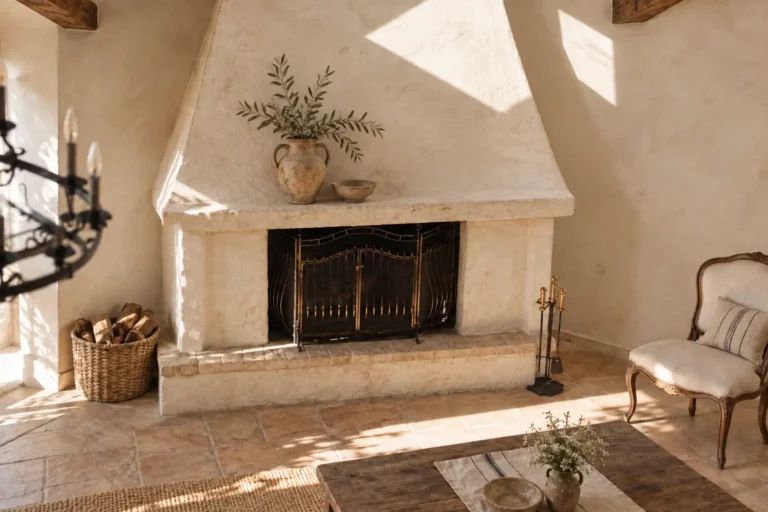
A Provençal room works differently. Even when the architecture is humble, the surfaces tend to be matte, mineral, and forgiving. Light moves across limewashed plaster, pale limestone, faded linen, and terracotta with softness. For an apartment, the lesson is simple: give the available daylight more gentle places to land.
Choose Warm Pale Walls Instead of Bright White
Pure white seems like the obvious answer for a dark room, but in a shaded apartment it can turn flat, blue, or institutional. Mediterranean interiors usually feel light because their pale surfaces are warm, not because they are stark. If you can paint, look for colors that resemble chalk, oat milk, limestone, warm plaster, or very pale sand. The undertone should lean cream, beige, or greige, not icy gray.
Matte finishes are more forgiving than glossy ones. They reduce glare from lamps and make imperfect walls feel intentional rather than neglected. A limewash-style paint can be beautiful, but it is not always practical in a rental or high-traffic home. A matte washable wall paint in a warm neutral can give a similar quiet backdrop with less maintenance.
If you cannot paint, shift the wall temperature with what sits against it. Hang one large natural linen panel as a soft curtain, use open shelves in pale oak or washed wood, or place a tall lamp with a linen shade near the darkest corner. Avoid covering the walls with too many small framed pieces. In a low-light room, scattered art can create visual noise and interrupt the calm surface you need.
Let the Floor Set the Weight of the Room
Dark apartment floors can be handsome, but they need balance. If the floor is espresso wood, gray laminate, or brown tile, do not add a high-contrast rug that chops the room into pieces. Choose a rug or floor textile close to the wall color, with enough texture to hide daily life: undyed wool, flatwoven jute, faded beige, warm ivory, or a muted pattern with sand and clay tones.
In a true Provençal house, you might see aged terracotta or pale limestone underfoot, both of which hold warmth without looking polished. In an apartment, you can echo that feeling through color and finish. A rug with a matte, dry texture will usually feel more Mediterranean than a silky rug with shine. If the room is small, leave a visible border of floor around the rug so the layout does not feel wall-to-wall and heavy.
Furniture legs matter here. Sofas and lounge chairs that sit directly on the floor can make a dim room feel blocked. Raised legs, even modest ones, allow shadow to travel beneath the furniture and keep the room from becoming a single dark mass. This is not about choosing fragile furniture; it is about giving the eye small breaks.
Build a Lower, Quieter Furniture Plan
In a dark room, height and bulk affect mood as much as color. Tall storage units, oversized sectionals, and deep armchairs can turn a modest living room into a cave. A Mediterranean apartment living room feels better when the main pieces sit low, steady, and relaxed, with breathing room between them.
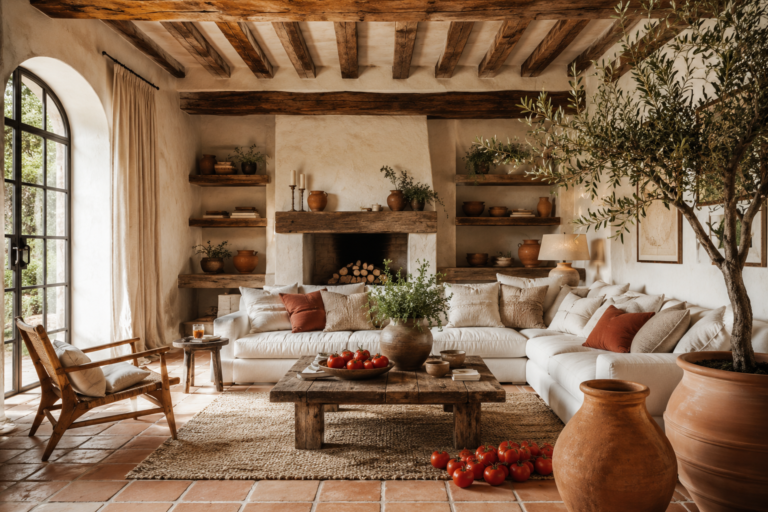
If the sofa is already dark and replacing it is not realistic, cover part of it rather than hiding the whole thing. A natural linen throw across the seat or back can soften the mass without looking forced. Keep cushions in close tones: flax, oatmeal, stone, dusty olive, or faded clay. Too many bright accent pillows will make the room feel busy, while a narrow palette helps the eye read the sofa as one calm shape.
For coffee tables and side tables, matte wood, travertine, cane, and blackened iron all work, but use dark metal sparingly. A black iron base can give definition when paired with a pale stone top or a wooden tray. A large glossy black table, however, will drink in light and show dust. If you want a traditional Mediterranean note, choose patina rather than ornament: aged wood grain, a ceramic bowl, a simple vase, or a stone surface with natural variation.
A Decision Framework for Every New Piece
When a room is dark, every purchase should solve a specific problem. Use this simple framework before adding anything decorative:
- If the room feels cold, add warmth through undertone first: cream walls, linen curtains, terracotta, honeyed wood, or a warm-shaded lamp.
- If the room feels heavy, reduce visual weight: raised legs, paler textiles, fewer dark blocks, and one larger calm surface instead of many small accents.
- If the room feels flat, add texture rather than color: woven cane, matte ceramics, nubby linen, weathered wood, or a stone tray with a natural edge.
This keeps the design from becoming a collection of Mediterranean-looking objects. The best rooms feel as if each piece has a job: to reflect, soften, warm, or ground.
Layer Lamps Where the Room Actually Needs Glow
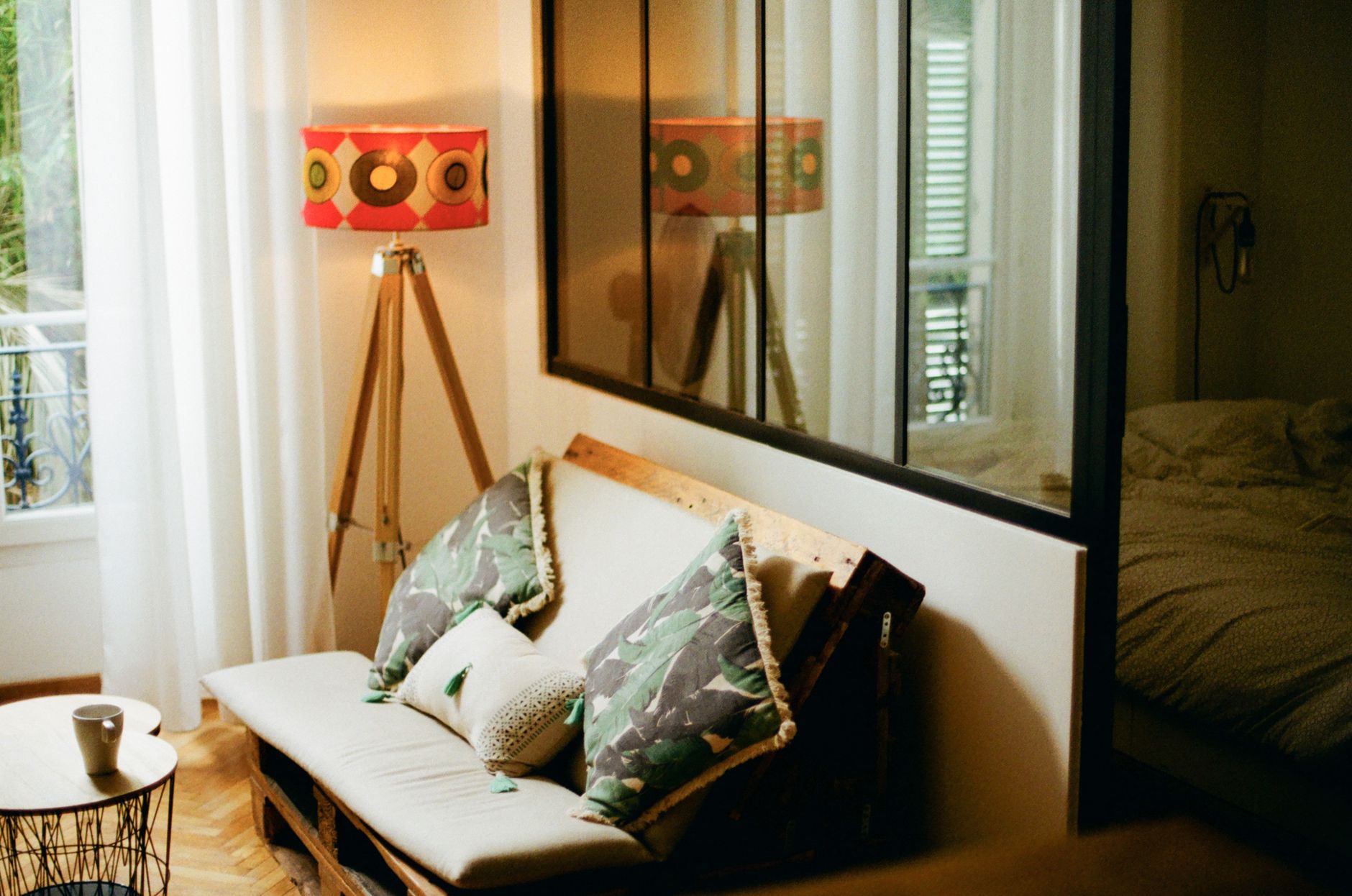
A single ceiling light is rarely kind to a Mediterranean-inspired living room. It creates a bright center and dark corners, which makes the room feel smaller. The better solution is a triangle of lower light: one floor lamp near the sofa, one table lamp on a sideboard or end table, and a smaller glow near books, art, or a plant.
Choose shades that diffuse light warmly. Natural linen, paper, rattan, and lightly textured fabric are more forgiving than opaque metal shades in a dark apartment. Bulbs should be warm rather than cool, especially against cream walls and wood furniture. If you use dimmers or smart bulbs, keep the evening setting soft enough that the room feels candlelit, not yellow.
Placement matters more than quantity. A floor lamp behind the sofa can wash the wall and make the seating area feel deeper. A table lamp on a console can relieve a dark entry into the room. A small lamp beside a reading chair creates an inhabited corner, which is often what dark apartments lack. In Provence, rooms are rarely lit like showrooms; they glow in pockets.
Use Linen and Sheer Layers Without Making the Room Bare
Window treatments are a decisive element in a dark apartment. Heavy curtains can make the room feel private but gloomy. Bare windows can feel harsh, especially if the view is brick, a narrow street, or another building. The middle ground is a sheer or semi-sheer linen panel in a warm natural tone.
Hang curtains higher and wider than the window frame if the lease allows. This makes the opening appear more generous and lets fabric sit beside the glass rather than covering it. Avoid brilliant white sheers, which can look synthetic in low light. Natural, ivory, flax, or chalky beige will feel closer to a southern French interior.
Repeat linen in a few places, not everywhere. A linen curtain, one throw, and two pillow covers are usually enough. If every surface becomes slubby and pale, the room can look unfinished. Balance linen with firmer materials: an aged wooden table, a ceramic lamp, a woven basket, or a stone catchall.
Add Mediterranean Character in Small, Patinated Doses
A dark living room cannot carry too many decorative themes. This is where many Mediterranean schemes go wrong: carved furniture, patterned pillows, bright ceramics, arched mirrors, iron lanterns, and rustic baskets all competing in one space. A South of France mood is more convincing when it feels edited.
Choose one or two character materials and repeat them gently. Terracotta can appear as a small pot or vase rather than a full wall of clay tones. Rattan or cane can appear in a lamp shade, chair detail, or tray. Blackened iron can appear in a slim frame or lamp base, but it should not dominate. Ceramics should look handmade or matte, not glossy and decorative for their own sake.
Plants help, but keep them architectural. An olive tree may not thrive in every apartment, especially away from strong sun, so consider the actual light conditions before buying. In a dimmer living room, a single sculptural plant near the window is better than many struggling pots scattered around. Use terracotta or simple ceramic planters to connect greenery to the rest of the palette.
Spend Where the Room Changes Most
If the budget is limited, start with paint or wall temperature, curtains, and lighting. These three decisions change the room more than small accessories. A warm wall color alters every shadow. Linen panels soften the window and make the room feel taller. Lamps create the evening atmosphere that Mediterranean rooms depend on.
At a middle budget, consider the largest dark object in the room. If it is the rug, replace it with something lighter and quieter. If it is a media console, lighten the area around it with a pale wall, a wooden tray, or a table lamp so the black screen does not become the focal point all day. If it is the sofa, soften it with linen and cushions before assuming it must be replaced.
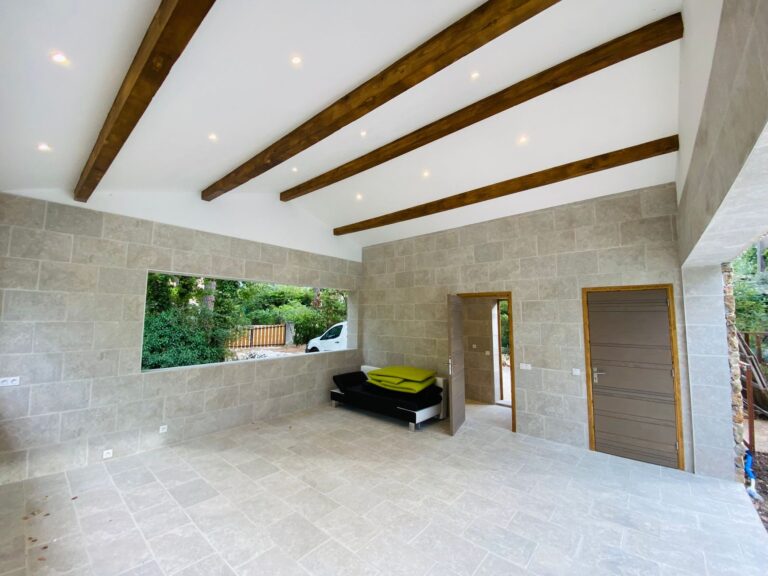
For renovation-level changes, flooring and built-in storage deserve the most thought. Pale oak, matte stone-look tile, or softly toned wood can transform the room, but only if the finish is not too glossy. Built-ins should be shallower and calmer than typical storage walls, with closed lower cabinets and open upper shelves used sparingly. The aim is not to display everything; it is to reduce the sense of clutter that darkness magnifies.
Shop the Look
These pieces suit a dark Mediterranean living room because they add warmth, texture, and low-level light without overwhelming a modest apartment space.
- linen shade floor lamp
- travertine table lamp
- ceramic table lamp
- muted kilim pillow cover
- simple wooden tray
When the Room Feels Like Evening, Not a Cave
The measure of success is not whether the room looks bright at every hour. Some apartments will always be shaded, and that can be beautiful. The goal is a living room that feels intentionally soft rather than underlit: pale warm walls, a grounded floor, low furniture, linen at the window, and lamps that create gentle islands of use.
Mediterranean style is often described through sunlight, but its quieter lesson is how to work with age, shadow, and texture. A dark apartment can still feel connected to that world when the materials are honest and the palette is restrained. Let the room be calm. Let the corners glow. Let the imperfect surfaces do more than the decoration.
Affiliate disclosure: La Maison du Sud may earn a commission from qualifying purchases made through links in this article, at no extra cost to you.