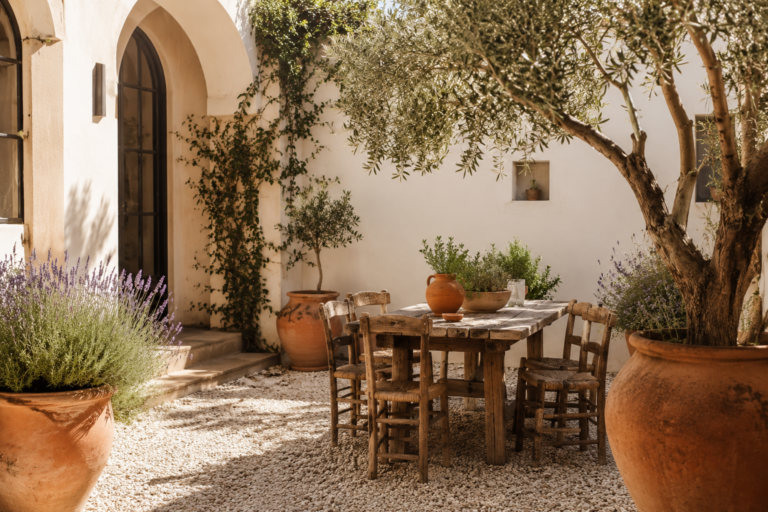
Mediterranean Landscaping Ideas for a Small Front Yard Without a Lawn
A small front yard often fails for one simple reason: it is treated like a miniature lawn with a few plants around the edges. The grass struggles, the walkway feels too narrow, and the entry never quite has the relaxed generosity we associate with Mediterranean homes. A no-lawn approach can solve that, but only if it is designed as a whole landscape rather than a patch of gravel with pots dropped on top.
For a Mediterranean front yard, the goal is not to recreate a villa courtyard on a suburban lot. It is to borrow the useful parts: a warm mineral ground plane, sun-tolerant planting, terracotta, soft thresholds, and lighting that makes the walk to the door feel calm after dark. The best small front yards are simple, but they are not empty. Every surface, edge, pot, and plant has to earn its place.
Start With the Front Yard You Actually Have
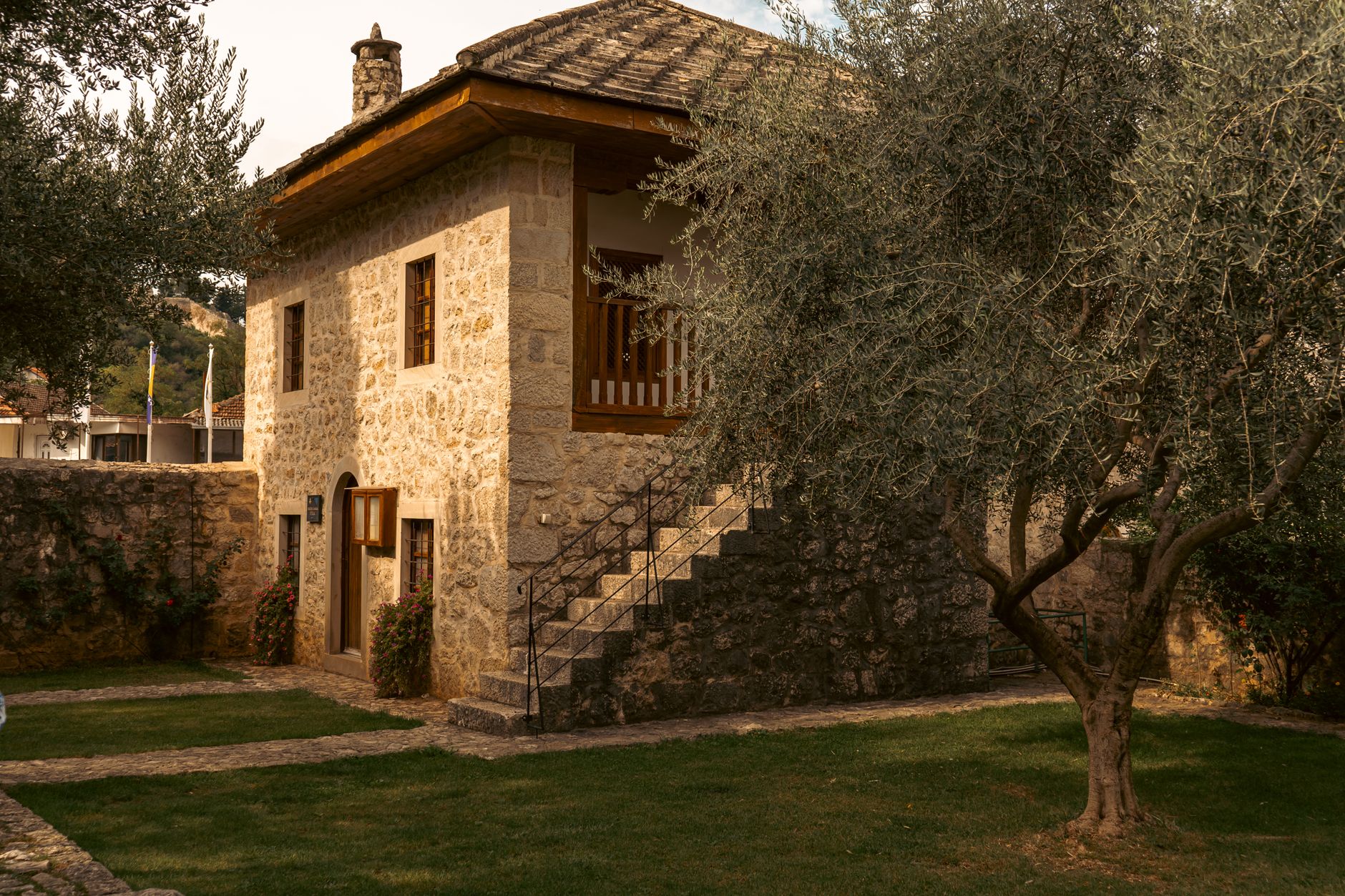
Before choosing gravel color or olive trees, spend a few minutes looking at the daily movement through the space. A compact front yard usually has several jobs competing at once: it must guide guests to the door, keep water moving away from the house, leave room for bins or deliveries, and still look considered from the street.
The most important constraint is the path. A Mediterranean-style landscape can feel loose and romantic, but the route to the entry should be unmistakable. If the path is too narrow, visitors will step into planting beds or kick gravel into the walkway. If it is too wide, the small yard can become all hardscape and no garden. In most homes, a comfortable front walk needs enough width for one person carrying a bag without brushing plants; where possible, allow a little more at the front door so two people can pause without standing in the street.
Notice the sun as well. South- and west-facing yards can handle stronger Mediterranean planting, but they also need materials that will not look bleached and abandoned by midsummer. North-facing yards can still feel Mediterranean, but the palette should lean toward pale stone, warm containers, sculptural evergreens, and lighter foliage rather than sun-baked drama.
A simple three-zone decision framework
- Arrival zone: the path, gate, stoop, or porch area that must stay clear, safe, and easy to read.
- Garden zone: the planted and potted areas that bring texture, height, scent, and seasonal change.
- Glow zone: the few places where lighting should mark steps, edges, the front door, or a beautiful pot after dusk.
Keeping these zones separate prevents the most common small-yard problem: too many decorative objects fighting for attention in the same two square feet.
Replace Patchy Grass With a Mineral Ground Plane
Gravel is one of the most useful Mediterranean landscaping materials for a small no-lawn front yard, but the type and installation matter. Pale gravel can brighten a shaded facade, while warmer tan or buff gravel works beautifully with cream stucco, limestone, brick, and aged wood. Very white gravel can look stark in American front yards, especially beside vinyl siding or bright concrete. Very dark gravel can read more modern than Mediterranean and may emphasize heat in a sunny exposure.
For a settled look, keep the gravel field generous and uninterrupted rather than using it as a thin border. A compact front yard often looks larger when one mineral surface runs beneath pots, stepping stones, and planting islands. The eye reads it as one calm plane instead of several tiny beds.
Installation is not the place to improvise. The cleanest no-lawn yards usually have the grass fully removed, the soil graded away from the house, a compacted base where foot traffic is expected, and a permeable landscape fabric or stabilizing layer suited to the site. Edging is essential. Gravel without a firm edge will migrate into the sidewalk, planting beds, and door threshold. Steel, stone, brick, or concrete edging can all work, depending on the architecture. For a softer French-Mediterranean feeling, brick or lightly irregular stone is often more forgiving than shiny black metal.
Depth also affects the mood. Too little gravel exposes fabric and weeds quickly; too much makes walking feel like trudging through beach sand. In pedestrian areas, a compacted base with a modest gravel layer is usually more comfortable than a deep decorative pour. If anyone in the household uses a cane, stroller, walker, or rolling delivery cart, prioritize firmer paving for the main route and keep loose gravel to the sides.
Use Stepping Stones to Slow the Approach
Mediterranean front yards often feel inviting because the arrival is gradual. You do not jump from sidewalk to door; you cross a few changes in texture. In a small yard, stepping stones can create that feeling without adding clutter.
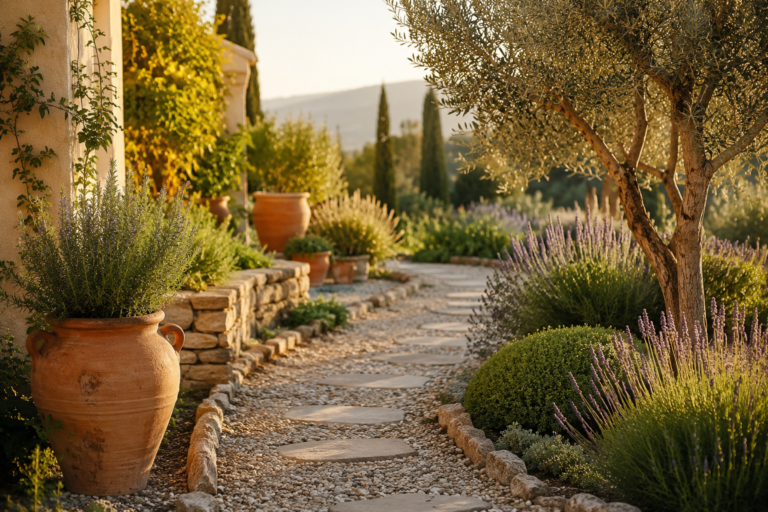
The stones should look related to the gravel but not disappear into it. Limestone-toned pavers, warm concrete slabs, or irregular natural stone can all work. The key is scale. Tiny stepping stones make adults shorten their stride and can feel fussy. Oversized pieces look calmer and give the landscape a more architectural quality. If the front door is used daily, choose stones large enough for secure footing and place them at a comfortable walking rhythm.
There are two good ways to use stones in a small Mediterranean landscape. The first is a straight or gently offset path through gravel, ideal for a narrow yard where clarity matters. The second is a small landing or widened area near the door, where stones create a pause for pots, a bench, or a lantern. Avoid overly curvy paths in a very shallow front yard; they can look forced, as if the design is pretending to have more distance than it does.
Leave enough gravel or planting space around each stone so the path feels embedded, not outlined. When stones are pressed tightly from edge to edge, the yard starts to read as a paved patio rather than a garden.
Let Terracotta Pots Do the Architectural Work
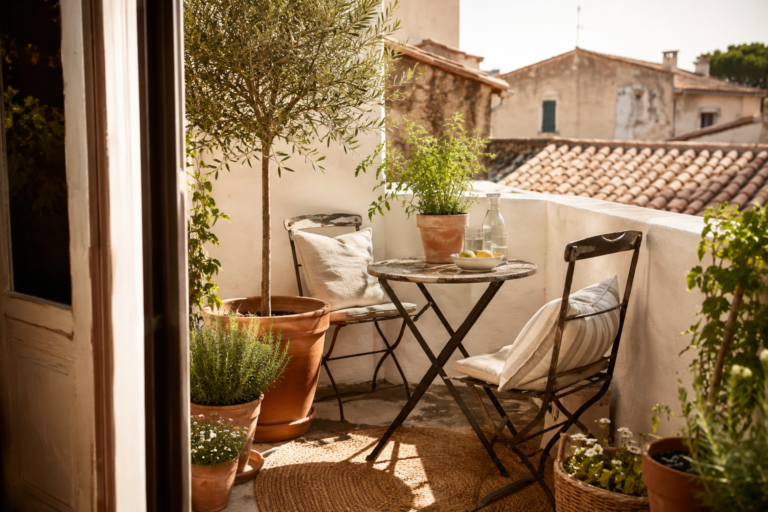
Terracotta is not just a finishing accessory in a Mediterranean front yard. In a small no-lawn landscape, it can provide the vertical rhythm that grass and shrubs once failed to give. A few substantial pots near the entry often look more intentional than many small ones scattered along the foundation.
Choose pot sizes based on visibility from the street, not only from the porch. Small containers can disappear outdoors, especially against textured walls or gravel. A better arrangement is usually one large anchor pot, one medium companion, and one lower bowl or smaller vessel. The difference in height creates a natural grouping without needing bright flowers or seasonal decorations.
Weathering is part of the charm, but drainage is nonnegotiable. Containers placed on gravel still need proper holes so water does not sit around roots. If freeze-thaw cycles are a concern, look for frost-resistant materials or move vulnerable pots to a protected spot during hard winter weather. Pot feet can help with drainage and reduce staining on paving.
Color matters more than novelty. Classic orange terracotta works beautifully beside olive green, lavender gray, rosemary, cream stucco, and aged wood. Deeper clay tones feel richer against brick or dark doors. If your house exterior is cool gray or blue-white, balance terracotta with tan gravel, natural wood, or warm metal so the pots do not look like isolated orange punctuation marks.
Plant for Heat, Scent, and Shape Rather Than Lawn-Like Fullness
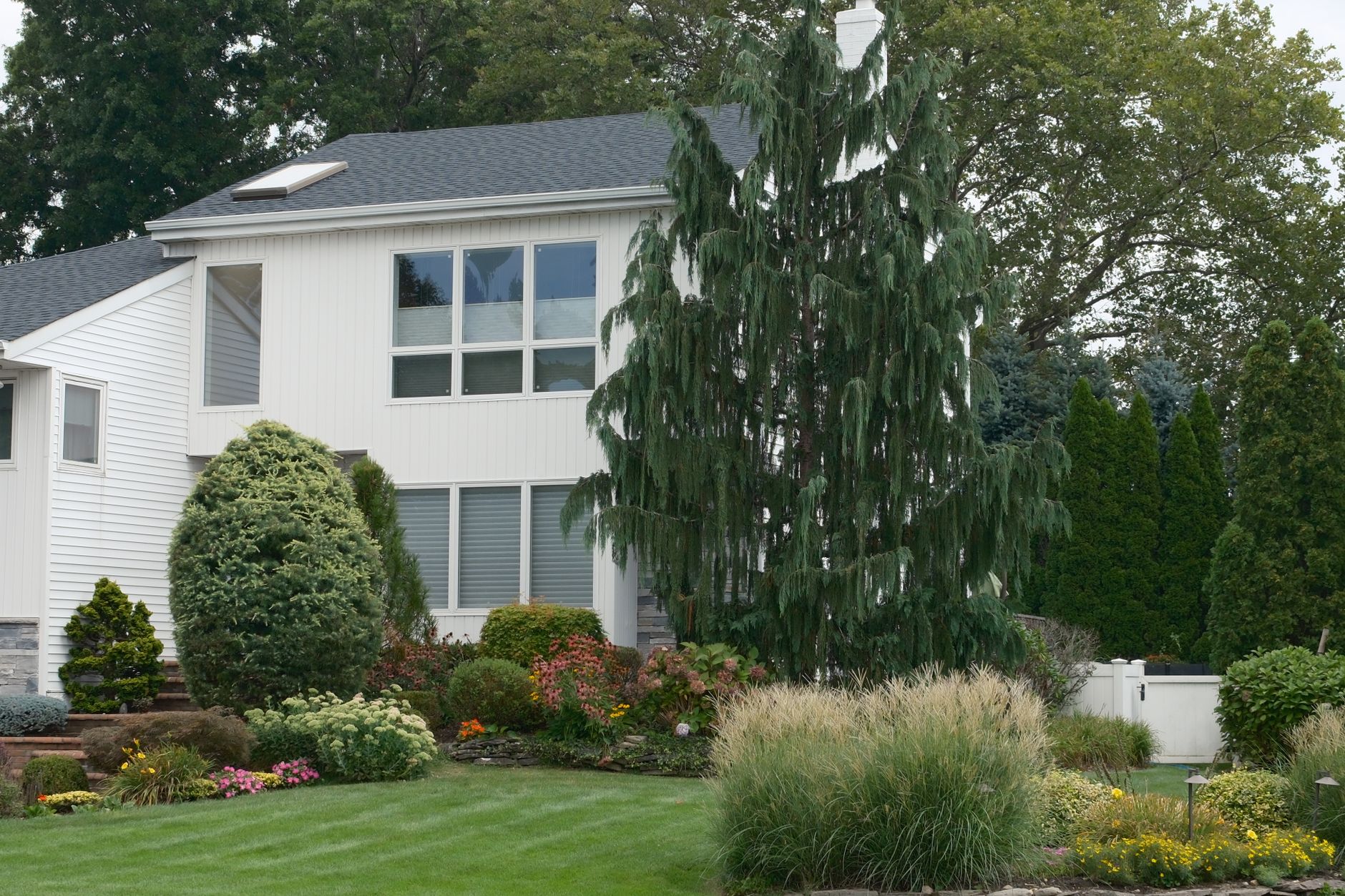
A Mediterranean no-lawn front yard should not be stuffed with plants from edge to edge. The negative space of gravel and stone is part of the design. Planting works best when it brings form, movement, and scent against the mineral background.
Start with structure. In a sunny climate, clipped rosemary, dwarf olive, lavender, santolina, agave, bay, thyme, and ornamental grasses can create a layered Mediterranean feeling. In colder or wetter regions, substitute with plants that give a similar effect: compact evergreens, silver foliage, upright herbs in summer, and grasses that tolerate local conditions. The visual language matters more than using an exact plant list from Provence or the Greek islands.
Think in silhouettes. A small front yard can handle one upright plant form, one mounding plant form, and one spilling or low groundcover form. Too many different shapes look busy. Repeating the same plant in three or five places is calmer than buying one of everything at the nursery.
Scent belongs near the arrival zone, but not where brushing against the plant becomes annoying. Rosemary and lavender near a path can be lovely, but they need room. If the walkway is tight, plant fragrant herbs in pots or low beds just off the main traffic line. Thorny or sharp plants should be kept away from mailboxes, door swings, and places where guests step out of cars.
Water needs should guide placement. Even drought-minded plants require attention while they establish, and containers dry faster than in-ground beds. Group plants with similar watering needs so one thirsty pot does not force you to overwater a dry gravel garden. If irrigation is present, check that spray does not constantly hit the facade, door hardware, or wooden bench.
Bring in a Bench Only If It Improves the Entry
A bench can make a small Mediterranean front yard feel gracious, but it is not automatically the right choice. In very shallow yards, seating can block the path or look decorative rather than usable. The bench should either create a real pause near the entry or balance a blank wall that needs warmth.
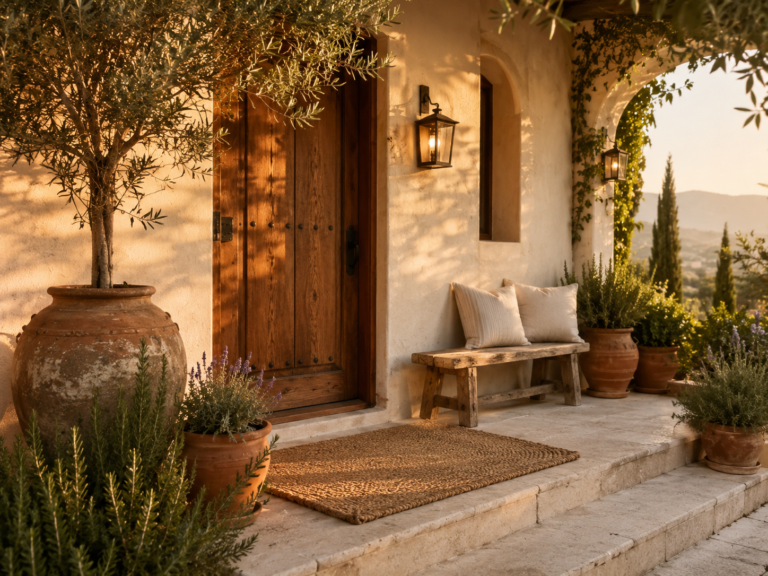
Wood is especially good for softening all the mineral materials: gravel, stone, stucco, tile, and terracotta. A simple wooden bench against a wall or tucked beside a large pot can feel more Mediterranean than ornate metal seating. The proportions should be modest. A long bench may overwhelm a narrow facade, while a very tiny one looks like a prop. Aim for a piece that has enough presence to be seen from the street but still leaves circulation clear.
Comfort is secondary to placement in a front yard. This is not a deep patio lounge; it is a threshold. A cushion can add softness, but choose outdoor fabric in a restrained color such as sand, oatmeal, faded olive, or warm white. Bright blue can be beautiful in coastal Mediterranean settings, but in a front yard it should relate to something permanent, such as the door color, tile, or house trim. Otherwise it may feel like a seasonal accent that never quite belongs.
If there is not room for a bench, use a broad pot, wall light, or tall planting instead. Empty space is better than seating that forces every visitor to turn sideways.
Light the Walk, Not the Whole Yard
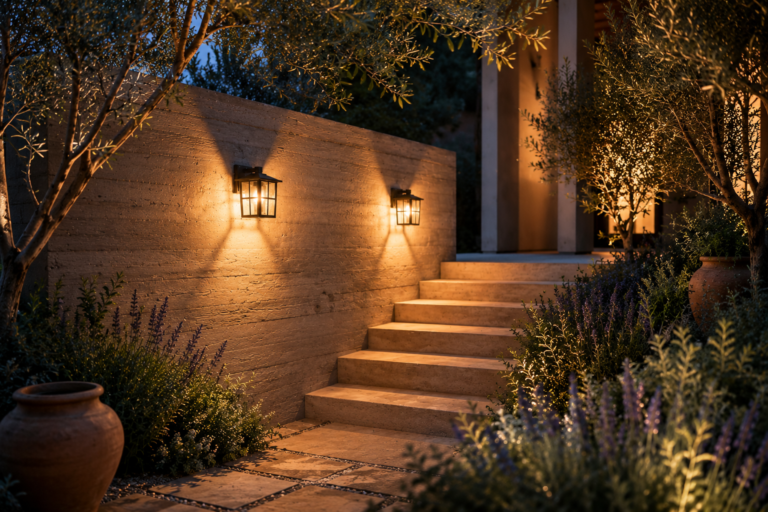
Small front yards are easily overlit. Mediterranean atmosphere comes from warmth, shadow, and a few glowing points, not from turning the entire landscape into a display. The practical goal is to make the path, step edges, and front door easy to read. The aesthetic goal is to let terracotta, leaves, and stone catch just enough light to feel alive at night.
Start at the door. A warm wall sconce or porch light gives orientation and makes the entry feel occupied. Then add low lighting only where it solves a problem: a dark step, a turn in the path, a gate latch, or a planting group worth seeing after sunset. Solar lanterns can be useful in a gravel garden because they do not require visible cords, but they should be placed with restraint. Lining both sides of a tiny path with many identical lights can feel more like a runway than a Mediterranean entrance.
Lantern shape matters. Black metal, aged bronze, and simple glass forms usually sit well with terracotta and stone. Avoid cool, bluish light where possible; it tends to flatten warm materials. Look for a soft warm glow that leaves some shadow around foliage. If the home already has strong security lighting, use the decorative lighting lower and warmer so it does not compete.
Maintenance is part of lighting design. Keep lanterns accessible for cleaning, battery changes, or repositioning. In gravel landscapes, fixtures can tilt after rain or foot traffic, so check their placement occasionally. A slightly imperfect garden is charming; a row of crooked lights is not.
Keep the Palette Quiet From the Street
The most convincing Mediterranean front yards have a limited palette. That does not mean beige on beige. It means the colors come from durable, believable materials: clay, limestone, weathered wood, olive leaves, lavender-gray foliage, iron, and warm plaster.
If your house facade is already warm, stay close to it. Use tan gravel, terracotta pots, olive or rosemary greens, and perhaps a darker lantern or door hardware for contrast. If the facade is cool, introduce warmth through containers and wood but keep the gravel more neutral so the yard does not look disconnected. A cool gray house with bright orange pots and golden gravel can feel abrupt unless there is a bridge color, such as taupe stone or warm gray pavers.
Resist too many decorative themes. A Mediterranean landscape does not need mosaic everything, bright tiles everywhere, and a dozen lanterns. One tiled riser, one beautiful pot cluster, or one wrought-iron detail is usually enough in a small front yard. The rest should feel grounded and useful.
Seasonal color can still have a place. Use it in a pot near the door rather than throughout the whole landscape. Soft white, muted coral, dusty purple, and pale yellow flowers tend to integrate better than high-contrast annuals. When the flowers fade, the yard should still look complete because the structure is carried by gravel, stone, pots, and evergreen form.
Plan for the Unromantic Maintenance
No-lawn does not mean no maintenance. It means the work changes. Instead of mowing, you will be sweeping gravel back from edges, pulling occasional weeds, pruning herbs before they become woody, refreshing container soil, and cleaning mineral dust from the path or threshold.
The best maintenance strategy is to design fewer transitions. Every edge between gravel, soil, paving, steps, and planting is a place that needs attention. Keep the main ground plane simple, use sturdy edging, and limit the number of tiny planting pockets. A larger pot is often easier to manage than a narrow strip of soil that dries out, collects leaves, and never looks full.
Pruning should support the architecture of the yard. Rosemary and lavender, for example, look best when they are kept airy rather than allowed to collapse over a walkway. Structural plants near the front door should not block house numbers, mail slots, lights, or sight lines from inside the home. If a plant needs constant cutting to fit the space, it is the wrong plant for that spot.
Finally, watch how water behaves in the first heavy rain after installation. A Mediterranean-inspired gravel yard still needs practical drainage. If gravel washes toward the sidewalk, collects against the foundation, or exposes bare patches, adjust the grade, edging, or stone size before the problem becomes permanent.
Shop the Look
For a small no-lawn Mediterranean front yard, focus on pieces that support the structure of the landscape: a warm ground plane, substantial pots, a clear path, restrained lighting, and one simple place to pause.
- warm gravel for a Mediterranean ground plane
- terracotta pots for front yard planting
- stepping stones for a clear entry path
- solar lanterns for soft path lighting
- wood bench for a small front yard pause
The Small No-Lawn Front Yard, Settled Over Time
A Mediterranean front yard does not have to be large, expensive, or perfectly symmetrical to feel welcoming. It needs a clear path, a calm mineral base, planting that suits the exposure, pots with enough scale, and lighting that respects the evening rather than overpowering it.
The most successful version will probably look a little spare at first. That is not a flaw. Gravel settles, terracotta weathers, herbs fill out, and the hard edges soften. Design the bones well, leave breathing room, and the front yard can become what a lawn rarely manages to be in a tight space: warm, practical, and quietly beautiful every time you come home.
Affiliate disclosure: La Maison du Sud may earn a commission from qualifying purchases made through links in this article, at no extra cost to you.