Mediterranean House Exterior Ideas for a Plain Stucco Facade
A plain stucco facade can feel oddly unfinished even when the house itself is in good condition. The walls may be smooth and clean, the windows serviceable, the front door perfectly practical, yet the exterior still reads as flat: too much blank surface, not enough shadow, and no clear place for the eye to land.
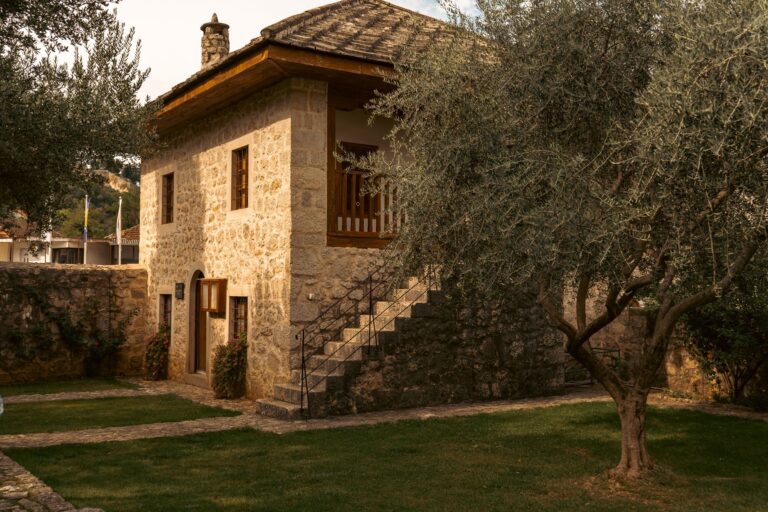
The best Mediterranean exteriors are not busy. They often rely on a few grounded decisions: mineral-looking walls, deeper window reveals or shutters, honest clay and wood, a restrained palette, and warm lighting that makes the house feel inhabited after sunset. If your home has a simple stucco face, the goal is not to paste on every Mediterranean detail at once. It is to add depth, rhythm, and weather-friendly texture in the places where the architecture can support it.
Start with what the facade is actually missing
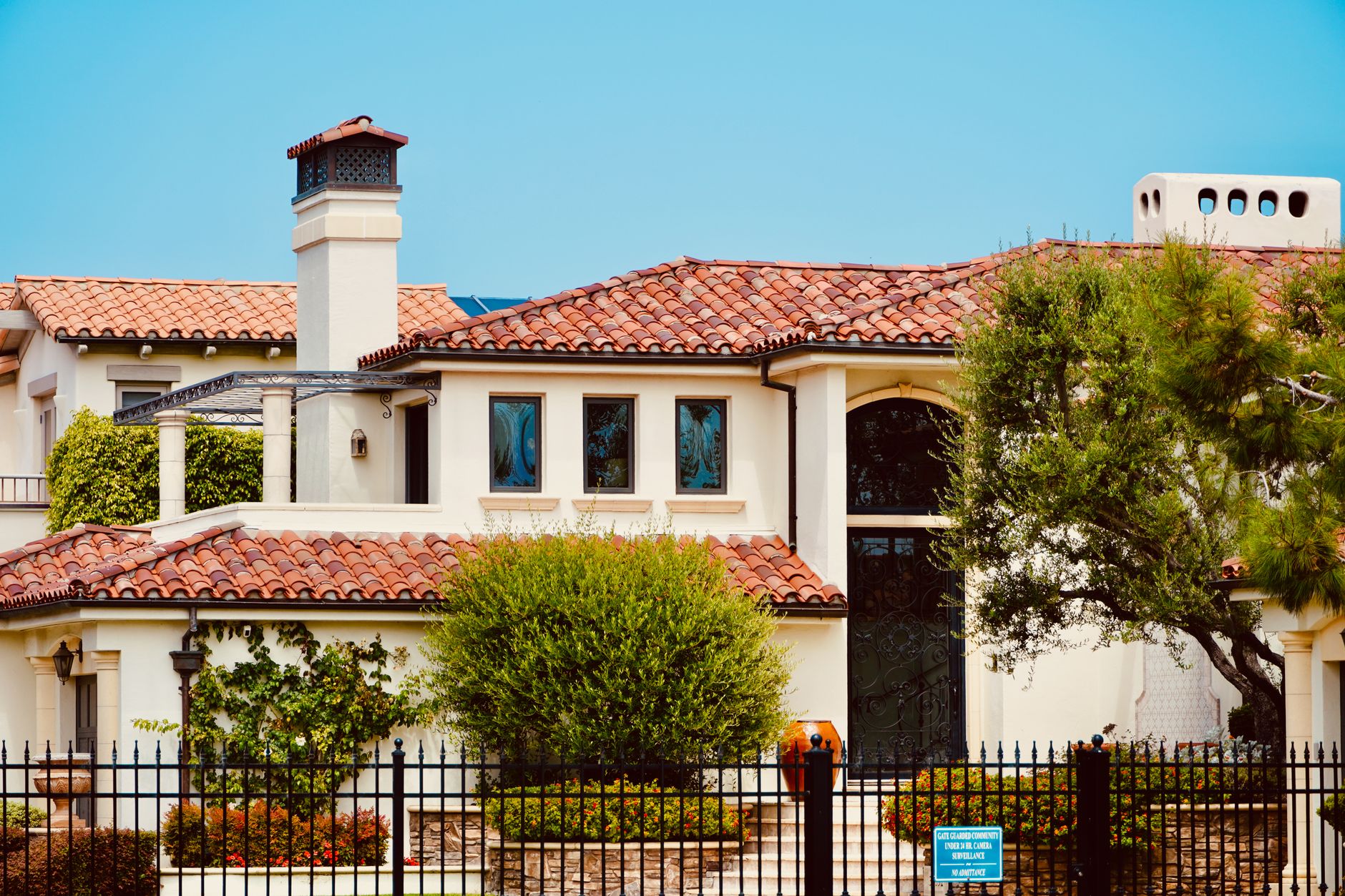
Before choosing planters or lanterns, stand across the street and look at the house as a composition. A Mediterranean-style exterior usually feels balanced because it has a strong relationship between wall, opening, shadow, and earth. A flat facade often lacks one of those layers.
If the wall color is too cool or too bright, the stucco may look thin rather than sun-washed. If the windows have no trim, shutters, or deep reveals, they can look like dark holes cut into a flat plane. If the front door is small or visually weak, the eye has nowhere to settle. If the foundation planting is sparse or overly manicured, the house may appear disconnected from the ground.
Not every issue needs a construction project. A plain stucco house can gain Mediterranean warmth through exterior paint, clay pots, a more substantial door color, sconces, iron hardware, climbing greenery, or a better-scaled path. The important part is diagnosing the absence before buying decorative pieces. When the missing element is shadow, add depth. When it is warmth, adjust color and material. When it is scale, work with larger pieces instead of many small ones.
A facade decision framework before you buy anything
Use this simple framework to decide where your effort will have the most impact. It keeps the project from becoming a collection of unrelated Mediterranean accents.
- If the house looks cold: begin with wall color, door color, warm metal finishes, clay, wood, and planting. Avoid starting with bright blue accents unless the rest of the palette is already soft and mineral.
- If the house looks flat: focus on shadows through shutters, deeper trim color, wall sconces, larger planters, trellises, or a covered entry element. Texture alone will not solve a lack of depth.
- If the house looks cluttered: remove undersized decor and repeat fewer materials. Choose one clay tone, one metal finish, and one main planting style rather than mixing every rustic element available.
- If the entry feels invisible: concentrate the strongest details at the door. A pair of planters, a warm light, an upgraded handle, and a grounded mat can do more than scattered decoration along the entire facade.
Wall color should look mineral, not freshly frosted
Color is often the difference between stucco that feels Mediterranean and stucco that feels generic. Pure white can be beautiful in coastal light, but on many suburban facades it becomes stark, especially beside black windows, gray roofs, or cool concrete. Softer whites, warm limestone, pale sand, chalky cream, and muted greige usually sit more naturally with clay pots, olive-green planting, and aged metal.
If the stucco has heavy texture, test paint colors directly on different sides of the house. Texture catches light unevenly, so a color that looks creamy on a sample card may turn yellow in afternoon sun or gray in shade. View samples near the roofline, beside windows, and close to hardscape. The roof color matters: a red clay or brown roof can handle warmer walls, while a charcoal or gray roof may need a more restrained neutral so the exterior does not look mismatched.
Avoid high-contrast trim unless the architecture is strong enough to carry it. Mediterranean exteriors often use contrast carefully: dark wood beams under a roofline, iron at balconies, or an earthy door against pale stucco. Painting every trim line a sharp dark color can make a simple facade look outlined rather than timeless.
Windows need depth, but shutters are not always the answer
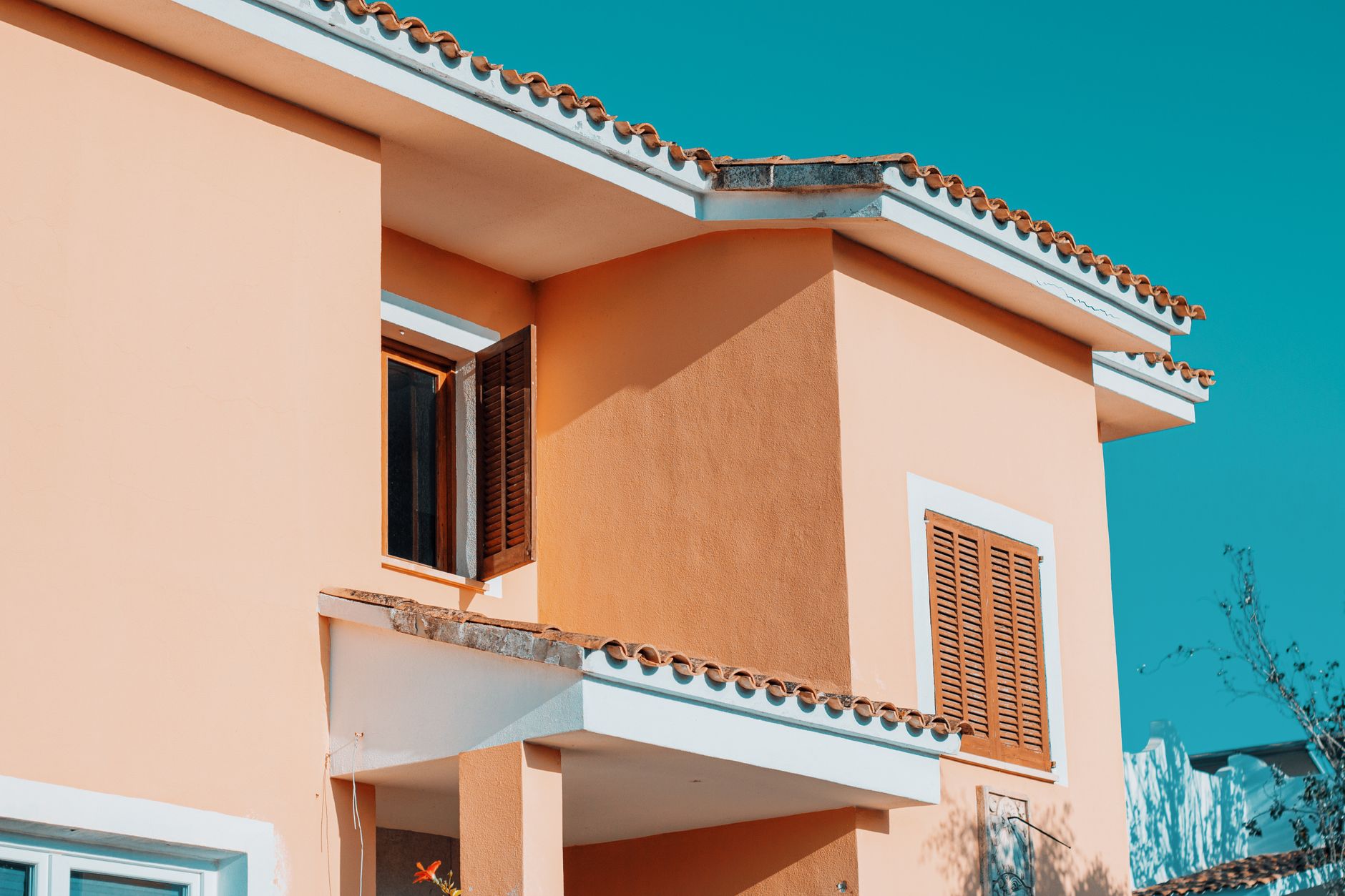
Shutters can be one of the quickest ways to give a stucco facade Mediterranean character, but only when they look plausible. They should appear tall enough to cover the window if closed, even if they are fixed. Too-narrow shutters make the house look dressed up rather than designed.
Wood or wood-look shutters in warm brown, faded umber, olive, or muted charcoal can soften plain windows. On a small house, choose a restrained shutter profile instead of ornate cutouts or distressed finishes. Let the material and proportion do the work.
If shutters do not suit your windows, consider other ways to create depth. A slightly darker trim color around recessed windows can suggest shadow. A climbing vine on a simple trellis near one side of the facade can break up blank stucco without covering the house. Window boxes can work, but they require regular watering and editing; dried-out boxes quickly make an exterior feel neglected. In hot exposures, use plantings that tolerate the light and do not need constant replacement.
When to skip shutters
Skip shutters on very wide picture windows, arched feature windows, clustered modern windows, or places where a shutter would have no believable room to operate. Mediterranean style does not require shutters on every opening. In many cases, one well-treated entry, better lighting, and substantial planters will look more authentic than forced shutters.
The front door should carry more visual weight
On a plain stucco house, the door often needs to become the anchor. That does not always mean replacing it. Sometimes a deeper paint or stain color, new hardware, a better-scaled lantern, and larger planters can shift the entire facade.
Warm wood is the classic choice, especially when paired with pale stucco and terracotta. If a real wood door is not practical, an earthy painted color can still work: muted olive, deep clay, tobacco brown, warm charcoal, or a softened blue-green. The color should connect to something else on the exterior, such as the roof, pots, ironwork, or planting. A door color chosen in isolation may look charming up close but disconnected from the curb.
Hardware matters because it is one of the few details people see at hand level. Aged brass, dark bronze, and black iron finishes usually sit comfortably with Mediterranean materials. Highly polished hardware can feel too new unless the facade has a more formal direction. If you add a door knocker, choose one strong piece rather than several decorative elements competing on the door.
Use terracotta and planting to connect the house to the ground
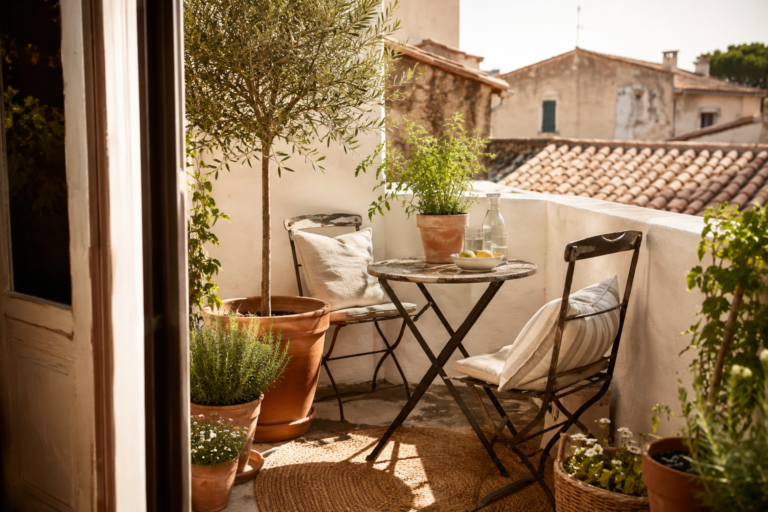
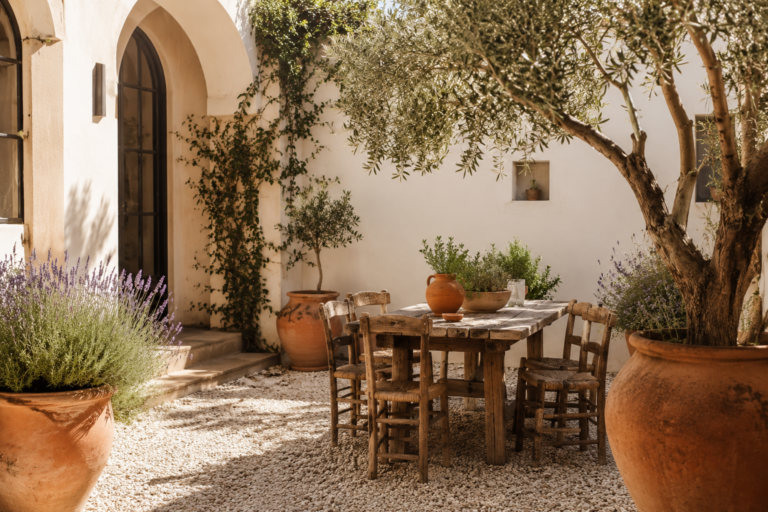
Mediterranean exteriors feel rooted because the house, hardscape, and planting relate to each other. Terracotta pots are useful because they bring warmth and mass to the base of a stucco wall. The mistake is using pieces that are too small. A scatter of little pots can look charming on a courtyard stair, but across a front elevation they often disappear.
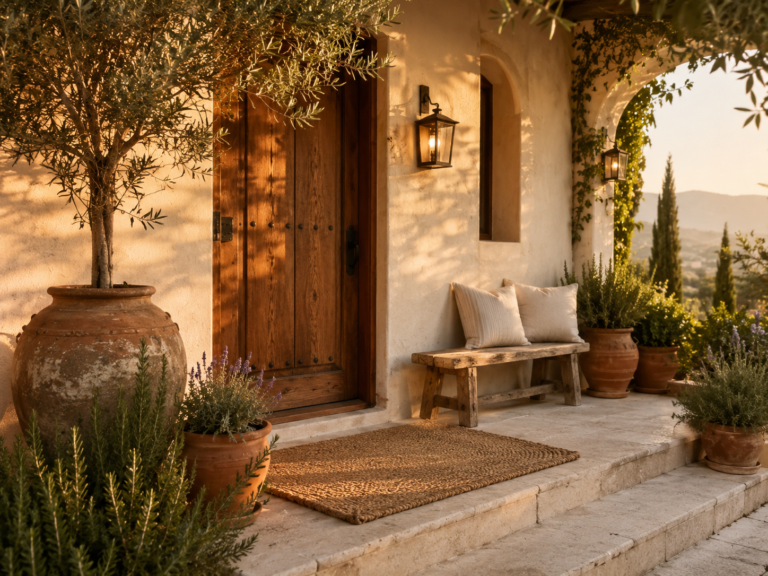
For a front entry, one large pot on each side of the door usually reads better than six small ones. If the door is off-center, use asymmetry intentionally: a tall pot and lantern on the wider side, with a lower vessel or bench on the other. The arrangement should balance visually rather than mirror perfectly.
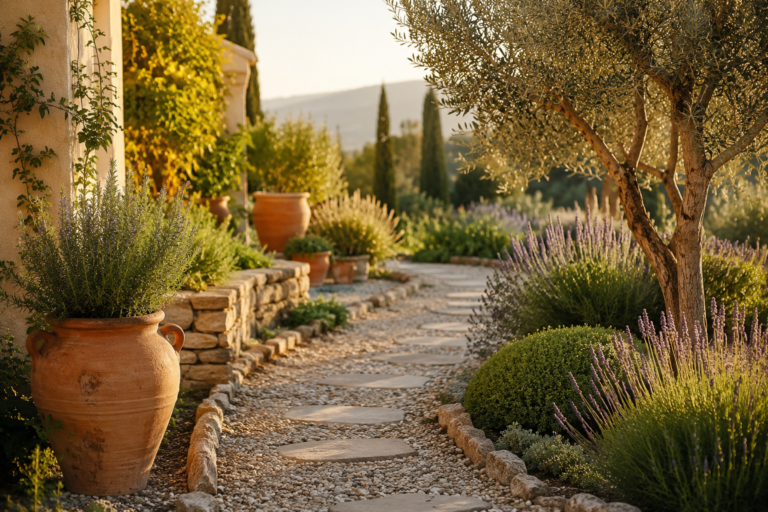
Choose plants that match your exposure and maintenance habits. Olive trees, rosemary, lavender, bay, citrus, agave, and soft grasses all evoke Mediterranean landscapes, but climate and light should decide the final list. If winters are cold, use pots for seasonal structure and choose hardy evergreens or move tender plants as needed. If summers are hot and dry, prioritize drought-tolerant planting and larger pots that do not dry out immediately.
Clay develops character outdoors, but it also needs realistic care. Terracotta can absorb moisture, so freezing conditions may cause cracking if pots remain saturated. Use drainage holes, raise pots slightly off surfaces where appropriate, and avoid placing them where constant irrigation stains the stucco. A little weathering is beautiful; neglected runoff is not.
Lighting should create warmth and shadow, not glare
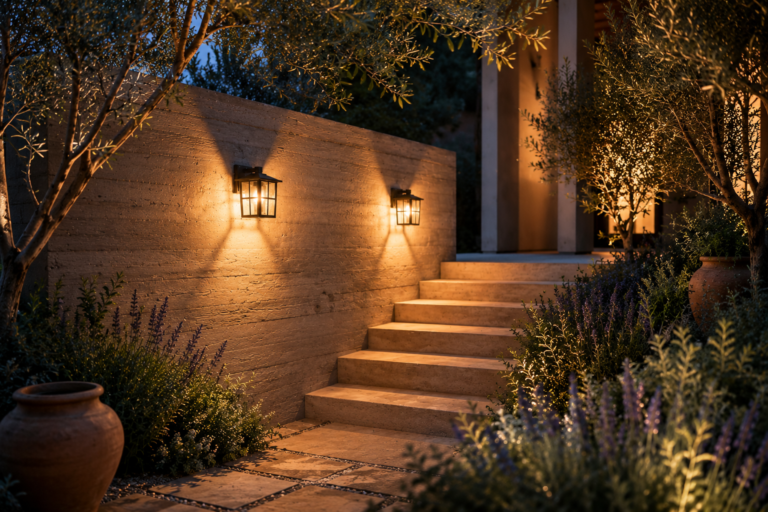
Exterior lighting is one of the most effective corrections for a flat facade because it adds dimension after dark. Mediterranean-style lighting tends to look best when it is warm, low-glare, and placed with purpose. A sconce beside a door, a pair of lanterns near steps, or subtle wall lights can make stucco appear deeper and more textured.
Scale is important. A small builder-grade sconce beside a tall entry door often looks timid. A fixture should relate to the height of the door and the amount of wall surrounding it. If there is only one sconce, it needs enough presence to feel intentional. If there are two, they should not crowd the trim or sit too high.
Choose finishes that age gracefully with the rest of the exterior. Black iron, dark bronze, aged brass, and weathered metal can all work. Glass should not be so clear and bright that the bulb becomes the main feature. Frosted, seeded, or shaded glass often gives a softer effect.
Be careful with path lighting. A runway of evenly spaced stakes rarely feels Mediterranean. It can make the entry look commercial. Use fewer lights at meaningful points: a step transition, a bend in the path, a planting pocket, or a dark side of the entry. The result should feel like gentle guidance rather than a lit border.
Iron, wood, and stone should be repeated with restraint
Mediterranean homes often use strong materials, but repetition is what makes them feel calm. If you add black iron at the lights, consider repeating it at the house numbers, mailbox, railing, or door hardware. If you introduce warm wood at a bench or door, avoid adding several unrelated wood tones nearby. If stone appears in the path, planter plinths, or steps, let it speak without competing with patterned tile, bright pots, and ornate metal all at once.
Decorative tile can be beautiful on risers, around a fountain, or as a small inset near an entry, but it is easy to overuse on a plain facade. A little pattern is most successful when the surrounding surfaces are quiet. If the house already has a patterned walkway or busy brick, additional tile may make the exterior feel fragmented.
For stucco facades with garage doors facing the street, material restraint becomes even more important. A garage door can dominate the elevation. Painting it close to the wall color usually reduces its visual weight. Save contrast for the pedestrian entry, shutters, or lighting. If the garage door is wood or wood-look, repeat that warmth subtly at the front door or bench so it looks intentional rather than isolated.
Give the entry a lived-in layer without crowding it
A Mediterranean exterior should feel welcoming, but not staged. An outdoor bench can soften a blank wall near the door, especially when there is a recessed entry, wide porch, or sheltered side wall. The bench does not need many pillows to make its point. In fact, outdoor textiles should be used carefully at the front of the house, where sun, rain, dust, and pollen quickly show.
If you add cushions, choose weather-appropriate fabrics in quiet neutrals, faded stripes, or soft earth tones. Bright white cushions look crisp for a moment but can be unforgiving outdoors. Beige, flax, olive, muted blue, rust, and clay tones usually age more gracefully in a Mediterranean palette.
Keep the entry practical. The door should open fully. Visitors should have a clear place to stand. Lanterns and pots should not narrow a walkway or create a tripping hazard. If the porch is shallow, use wall-mounted elements and one strong pot rather than floor pieces on both sides. If the entry is deep and shaded, larger clay vessels, a bench, and a lantern can make the space feel intentional instead of empty.
Shop the Look
These pieces support the facade approach above: warm lighting, grounded clay, and a few substantial outdoor details rather than scattered decoration.
- Mediterranean-style wall sconces
- terracotta planters for the entry
- black iron outdoor lanterns
- simple outdoor wooden bench
A facade that feels settled rather than decorated
The most convincing Mediterranean house exterior is not the one with the most recognizable motifs. It is the one where every addition seems to belong to the wall, the climate, and the entry sequence. A clay pot should feel heavy enough for the stucco. A light should cast warmth rather than glare. A door color should relate to the roof, path, and planting. A bench should make sense where someone might actually pause.
If you are working with a plain stucco facade, resist the urge to solve everything at once. Begin with the largest visual corrections: wall color, entry weight, window depth, and lighting scale. Then add texture through terracotta, iron, wood, and planting. Mediterranean style is generous, but it is also disciplined. The beauty comes from sun-warmed materials, honest proportions, and a sense that the house has slowly gathered its details over time.
Affiliate disclosure: La Maison du Sud may earn a commission from qualifying purchases made through links in this article, at no extra cost to you.