Mediterranean Balcony Ideas for a Tiny Rental Breakfast Spot
A tiny balcony is rarely as romantic as the photographs suggest. There is usually a door that swings the wrong way, a railing that feels too exposed, a hard floor that echoes every chair leg, and barely enough room for coffee, knees, and a pot of herbs. The challenge is not to decorate every inch. It is to make one small outdoor ritual feel natural: opening the door in the morning, stepping outside barefoot, and sitting down with a cup, a plate, and a little shade.
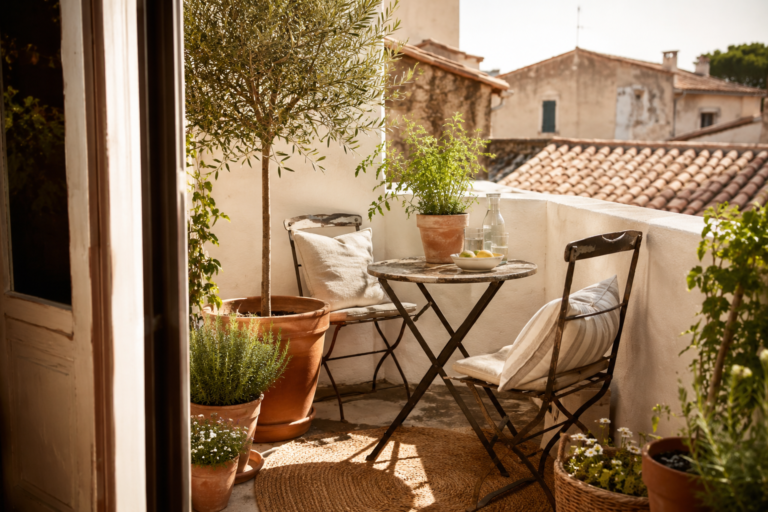
For a Mediterranean balcony, especially one inspired by the modest village apartments and narrow terraces of Provence, the best approach is restrained. Think a small bistro table rather than a lounge set, terracotta rather than plastic planters, linen-colored cushions instead of bright pattern, and lantern light that feels believable after sunset. The goal is not a themed balcony. It is a practical breakfast spot that looks settled, sun-warmed, and easy to maintain in a rental.
Begin With the Balcony’s Real Limits
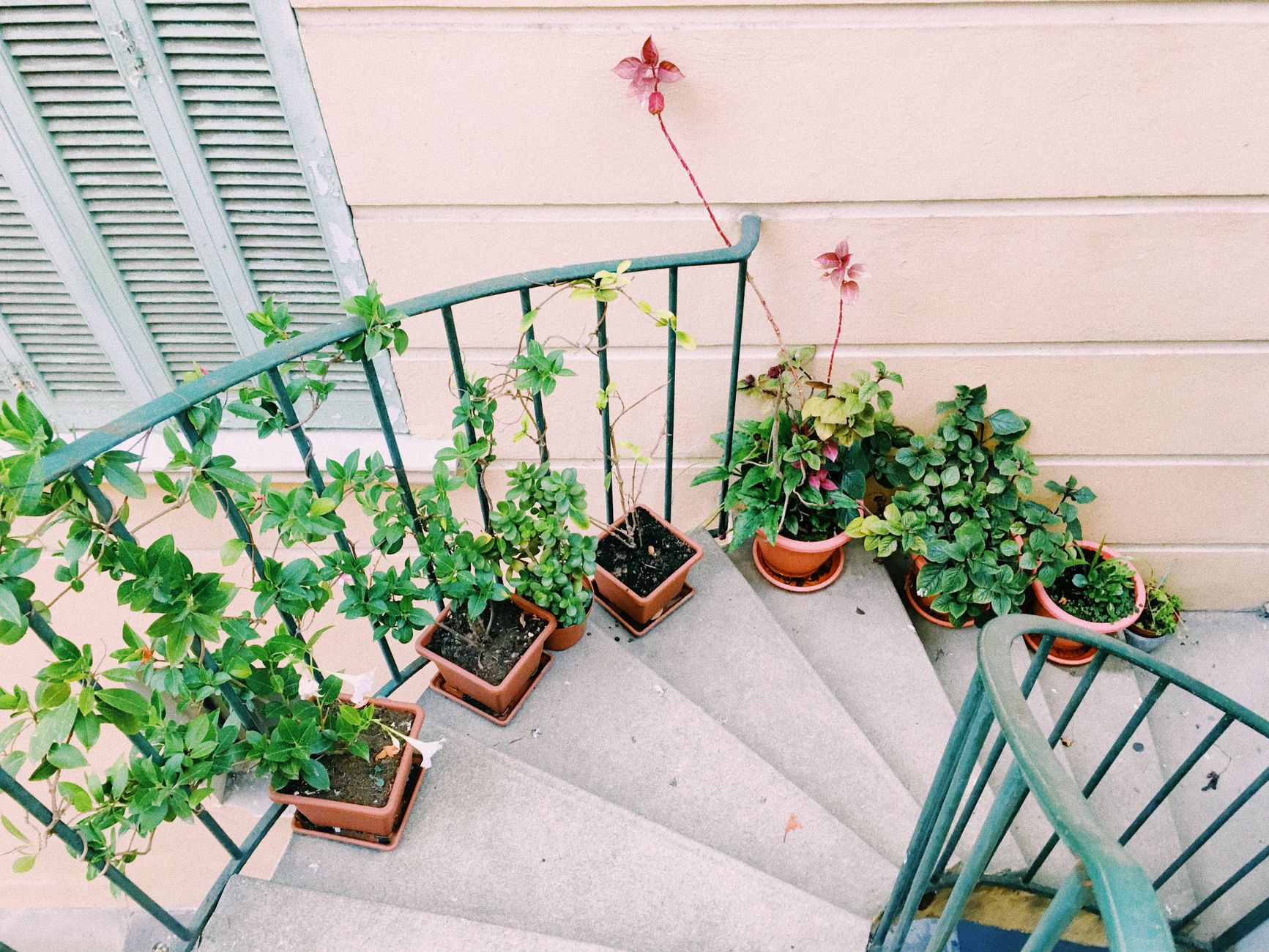
Before choosing furniture, look at the balcony as a working space. Measure the clear floor area, but also note the awkward parts: the door swing, the drip line from above, the height of the railing, the direction of wind, and where water collects after rain. Mediterranean style often depends on simple materials, but small balconies depend on precision. A chair that is charming in a courtyard can become unusable if you cannot pull it out.
If the balcony is less than five feet deep, avoid placing furniture squarely in the center. Push the table toward one end or choose a half-round or compact bistro table that allows a diagonal sitting position. The diagonal is often more comfortable than facing the railing straight on because it gives knees somewhere to go and makes a small balcony feel less like a ledge.
Pay attention to the threshold. Many rental balconies have a raised sill or sliding door track. Leave a clear path from the interior door to the seat, even if that means using fewer plants. A breakfast balcony that requires lifting a chair every morning will gradually become visual storage rather than a place you use.
The 30-Inch Breakfast Balcony Rule
For a balcony meant for coffee, toast, reading, or an aperitif for two, proportions matter more than the number of pieces. A useful rule is to protect a minimum 30-inch clear sitting zone around the chair you use most often. This is not a luxury measurement; it is the difference between a balcony that looks styled and one where a person can actually sit down.
- Table width: Choose a small round, square, or folding table that holds two cups and small plates without blocking the door.
- Chair movement: Allow enough space to pull one chair back without scraping the wall, railing, or planter.
- Plant placement: Keep larger pots at the corners or along the least-used edge rather than around the table legs.
- Serving surface: If the table is very small, add a tray that can move with you from kitchen to balcony.
This single measurement keeps the layout honest. It also helps prevent the most common small-balcony mistake: buying furniture for an imagined terrace rather than for the square footage you actually have.
Choose Furniture That Feels Provençal, Not Overscaled
In the South of France, small outdoor spaces are often furnished with pieces that look light enough to move: a painted metal bistro chair, a woven seat, a narrow bench, or a small table tucked near a wall. The feeling is casual but not flimsy. For a rental balcony, this is exactly the right direction.
A bistro set is usually the simplest starting point. Look for a table that visually disappears a little: slender legs, a modest top, and a finish that works with the railing rather than fighting it. Black, warm gray, muted green, weathered wood, and natural woven textures all suit a Mediterranean balcony better than glossy white or oversized faux-stone tops.
If two chairs are too much, use one proper chair and one occasional stool. The balcony will feel calmer, and the second seat can move indoors when not needed. A narrow folding chair is also useful if guests are occasional rather than daily. The more compact the balcony, the more each piece should earn its place.
When a bench works better than two chairs
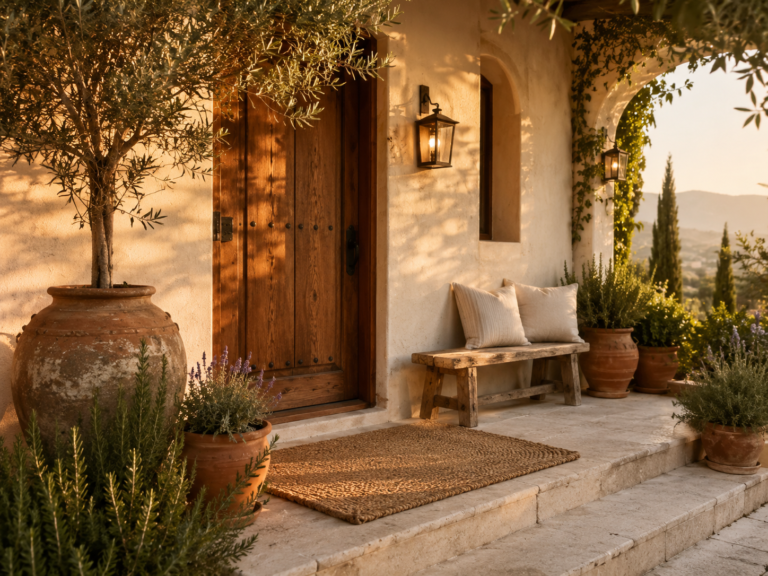
A bench can be efficient if the balcony is long and narrow, but only if it does not block the door or turn the space into a corridor. A wooden bench against a side wall creates a softer, more built-in feeling without actually installing anything. Add one thin cushion in beige, flax, or faded olive rather than a pile of pillows. Too many cushions absorb space and require constant storing in bad weather.
Use Terracotta Pots to Build the Mediterranean Mood
Terracotta is the fastest way to bring Mediterranean warmth to a small balcony, but it needs to be used thoughtfully. A clutter of tiny pots can look busy and dry out quickly. Instead, choose a few slightly larger vessels and repeat them. Three pots in related shapes will feel more intentional than ten mismatched containers squeezed along the railing.
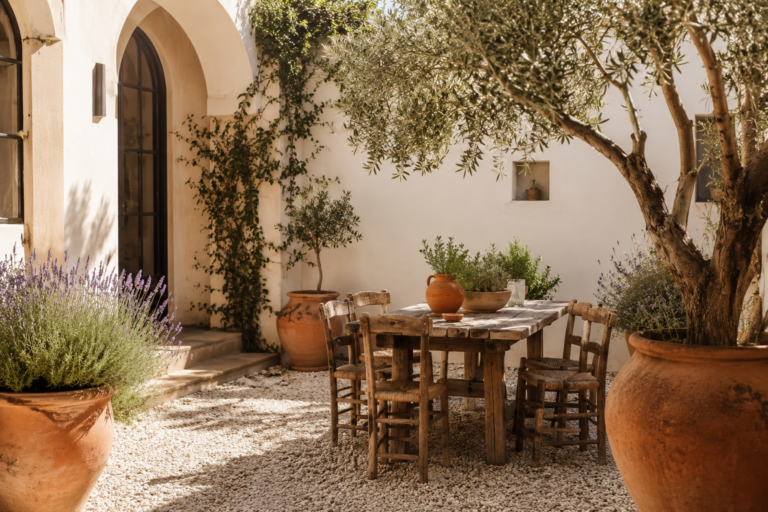
On a Provençal-inspired balcony, terracotta should look earthy rather than orange and shiny. Matte clay, aged surfaces, and simple silhouettes are best. Let the pots develop mineral marks over time. That patina is part of the charm, especially against limestone-colored walls, old render, painted shutters, or blackened iron railings.
For planting, favor herbs and compact Mediterranean greenery if your climate allows: rosemary, thyme, oregano, dwarf olive, lavender, bay, or pelargoniums in soft red or pale pink. If your balcony is shaded, adapt the plant list rather than forcing sun-loving herbs to struggle. A Mediterranean feeling can come from material and proportion even when the plants are practical for your exposure.
Drainage and saucers matter in rentals
Always protect the balcony floor and neighbors below. Use saucers, feet, or risers so water does not sit under the pot and stain the surface. Avoid overfilling pots with soil right to the rim; a little watering space prevents runoff. If the balcony has a strict rule against dripping, use fewer pots and water them slowly with a small can rather than a hose.
Soften the Floor Without Pretending It Is a Patio
Many rental balconies have concrete, metal decking, or a tired tile floor that makes every piece of furniture feel exposed. A small outdoor rug can soften the sound and define the breakfast area, but it should not try to imitate a grand terrace. Choose a flat, low-profile rug in sand, oatmeal, washed charcoal, or muted stripe. Avoid thick pile, high contrast pattern, or anything too bright, which can make a tight balcony feel smaller.
If your balcony gets strong rain, think carefully before covering the entire floor. A rug that never dries becomes unpleasant quickly. In damp climates, it is often better to use a smaller rug under the table and chair, leaving the edges of the floor open for airflow. Outdoor deck tiles can work too, but they add height and may interfere with a door track, so check clearance first.
The best Mediterranean small balcony floors feel honest: a woven texture underfoot, a clay pot in the corner, a slight irregularity in tone. The aim is comfort, not disguise.
Create Privacy With Height, Not Bulk
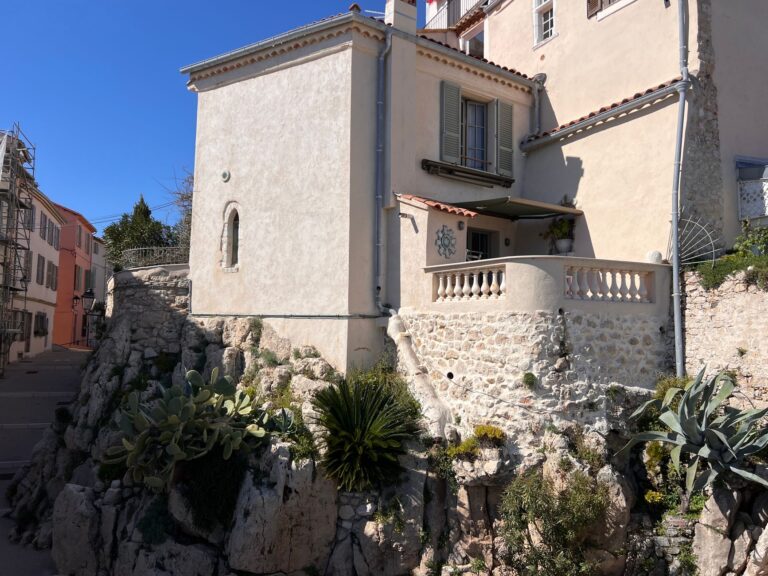
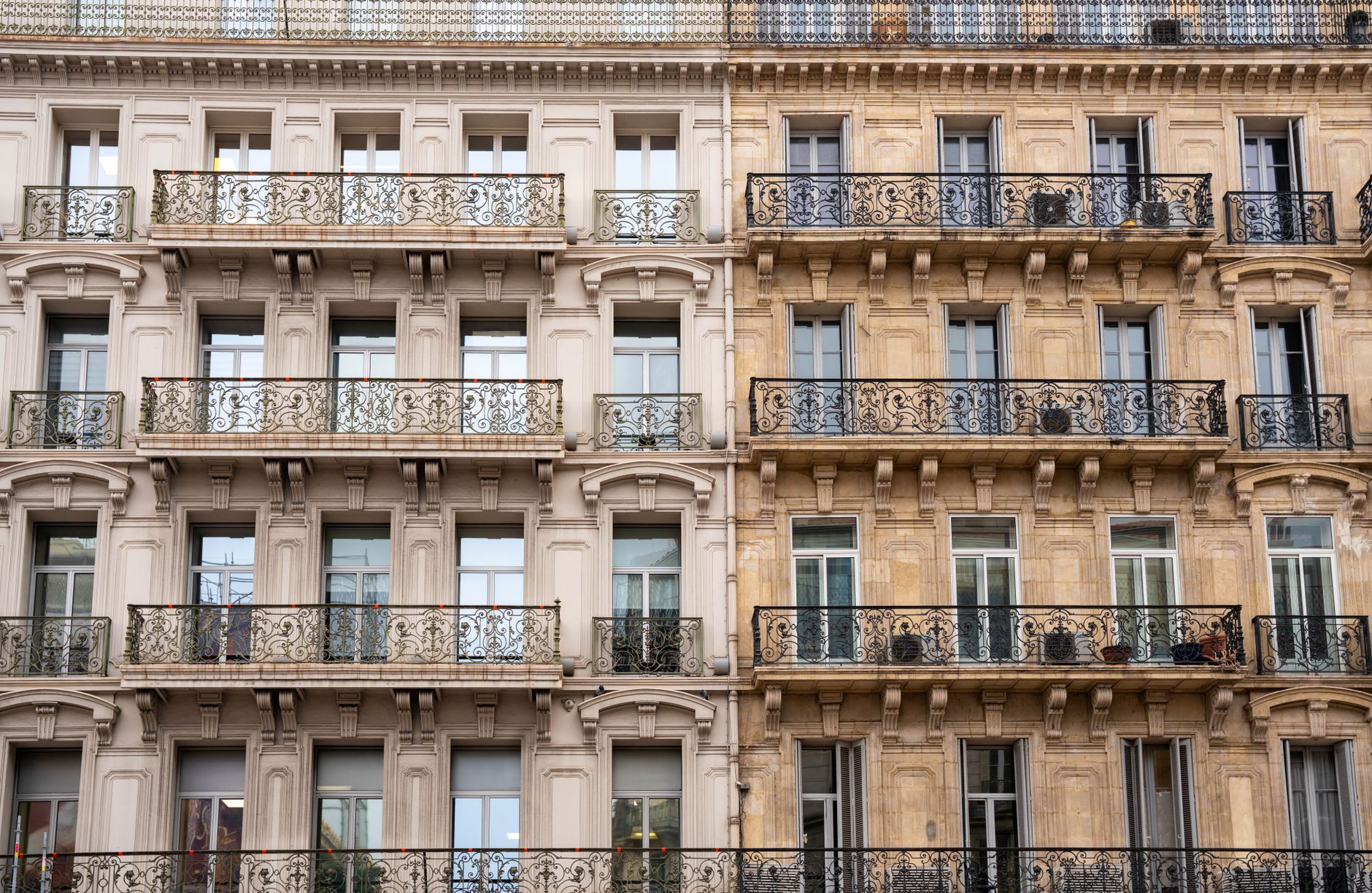
A breakfast balcony should feel sheltered enough to use in a robe or sweater, but privacy screens can quickly become heavy. In a Provençal village house, the sense of privacy often comes from shutters, plants, ironwork, and shadow rather than solid barriers. Recreate that feeling with height and layering instead of a single wall of screening.
Start with the existing railing. If it is visually harsh, soften it from the inside with pots of herbs or one taller plant at the corner. A slim plant stand can lift greenery without consuming floor space, but keep weight in mind. Heavy pots should sit on the floor, ideally near structural edges rather than hanging from railings unless your lease and building rules clearly allow it.
Natural reed or fabric screens can look appropriate, but they are not always the most durable choice in wind. If you use one, keep it modest in height and color. A screen in a warm neutral or weathered natural tone will blend better than crisp bright fabric. Secure anything lightweight carefully and remove it before storms.
Keep the Palette Sun-Faded and Quiet
Tiny balconies become visually crowded quickly, so the color palette should do some of the calming work. Mediterranean does not have to mean saturated cobalt, bright yellow, or patterned tile. For a Provence-leaning balcony, begin with sun-faded neutrals: chalk, sand, limestone, flax, weathered wood, and muted terracotta. Then add one quiet accent such as olive green, soft ochre, dusty rose, or blackened iron.
This palette helps a small outdoor space relate to the interior. If the room inside the balcony has linen curtains, pale walls, or wood furniture, repeat one of those tones outside. The balcony will feel like an extension of the home rather than a separate decorated box.
Use pattern sparingly. A single striped cushion or small woven rug is often enough. If everything is patterned—the seat pads, rug, tablecloth, planters, and lanterns—the balcony loses the quiet morning quality that makes it pleasant. Texture is more useful than pattern here: matte clay, woven fiber, slubbed fabric, brushed metal, and weathered wood.
Light the Balcony for Early Morning and Late Evening
A breakfast spot still needs evening light. The most useful small-balcony lighting is portable, warm, and low. Think lanterns on the floor or table, small solar lights, or battery candles in glass. Avoid cold bulbs and bright overhead fixtures, which flatten the atmosphere and make the balcony feel exposed to neighbors.
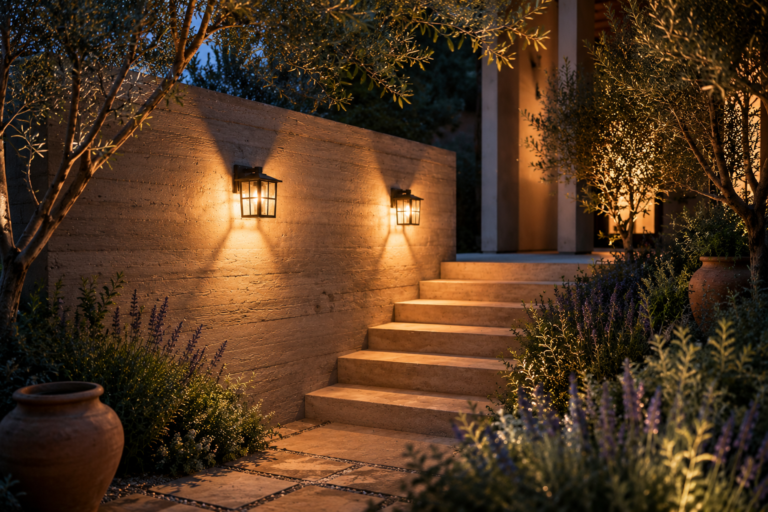
One or two black metal lanterns can add structure against pale walls and terracotta pots. Place them where they can be seen from inside the room as well as from the balcony. This is a simple trick: when the balcony looks softly lit through the window or door, the interior feels deeper and more layered at night.
If using solar lighting, place panels where they receive enough sun and keep the look discreet. Strings of lights can be charming, but on a tiny balcony they often become visually busy. If you use them, choose a warm tone, keep the run short, and avoid zigzagging across the entire ceiling unless the balcony is deep enough to handle it.
Make the Breakfast Ritual Easy to Maintain
The most beautiful small balcony will not work if it takes effort every time you use it. For a rental breakfast spot, maintenance should be part of the design. Keep a tray near the kitchen door so cups, fruit, and napkins can travel outside in one trip. Choose cushions that can be brought inside quickly or stored in a waterproof box if space allows. Use a small brush to keep leaves and soil from collecting around pots.
Do not overcrowd the table with permanent decor. A candle, a small vase, or a folded cloth is enough. Breakfast needs space for real things: a coffee pot, a plate, a book, sunglasses. Mediterranean style is strongest when the objects look like they belong to daily life rather than a display.
Seasonal changes can be simple. In spring, herbs and pale cushions feel fresh. In summer, add shade where possible and water plants early. In autumn, lean into lanterns, a warmer throw, and darker terracotta tones. In winter, remove anything that will mildew, corrode, or blow away. The balcony should not feel abandoned when it is out of season; even two tidy pots and a lantern can keep it visually alive.
Shop the Look
For a tiny rental balcony, choose compact pieces that support the morning ritual: somewhere to sit, a few clay pots, a soft surface underfoot, and low warm light after sunset.
- compact bistro table set
- terracotta pots for balcony herbs
- black metal lanterns
- neutral outdoor cushions
- small outdoor rug
A Small Balcony That Feels Used, Not Staged
The best Mediterranean balcony ideas for a rental do not depend on renovation, elaborate built-ins, or a perfect view. They depend on choosing fewer things with better proportions: a small table that fits, seating that can move, terracotta pots that age well, and lighting that makes the balcony inviting from inside the home.
When the materials are honest and the layout respects the limits of the space, even a narrow balcony can become a daily pleasure. It can hold morning coffee, a pot of rosemary, a cushion faded by sun, and the quiet feeling of a Provençal window opened to the day.
Affiliate disclosure: La Maison du Sud may earn a commission from qualifying purchases made through links in this article, at no extra cost to you.