Mediterranean Bathroom Ideas for a Builder-Grade Vanity Without Renovating
A builder-grade bathroom vanity usually fails quietly. The sink works, the cabinet doors close, the mirror reflects, and yet the whole corner feels thin: glossy white counter, chrome faucet, plastic pump bottle, harsh light, maybe a frameless sheet mirror that stops abruptly at the wall. In a Mediterranean or Provençal home, the sink area does not need to be grand. It needs warmth, texture, and a little age — even if the bones are not old at all.
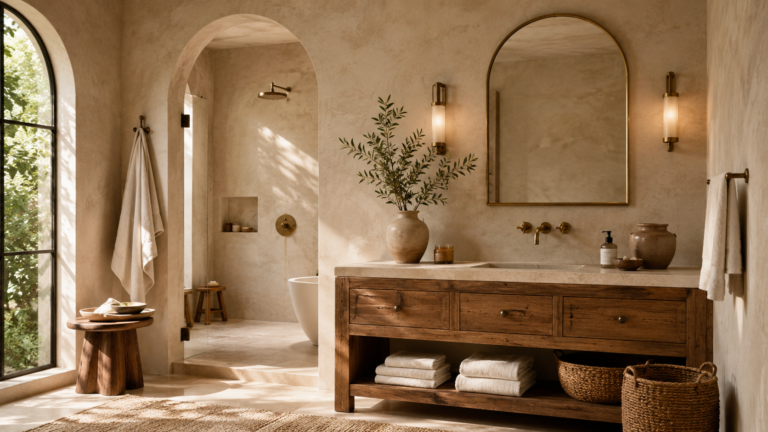
The good news is that a vanity is one of the easiest bathroom areas to improve without touching plumbing, replacing tile, or committing to a full renovation. If you focus on proportion, materials, storage, and the small objects you touch every day, a plain sink can feel more like a calm washstand in a village house in Provence: linen at hand, ceramic by the basin, a warmer mirror, and useful storage that does not look like an afterthought.
Start With the Sink Zone, Not the Whole Bathroom
When a bathroom feels wrong, it is tempting to think everything has to change: floors, tile, cabinet, shower, fixtures. But the vanity is usually the visual center because it is where the eye lands first and where the most clutter gathers. Treat it as a small composition rather than a renovation project.
Stand in the doorway and look only at the sink wall. Notice three things: the largest flat surface, the coldest finish, and the busiest spot. In many builder-grade bathrooms, the largest surface is the mirror, the coldest finish is chrome or shiny white laminate, and the busiest spot is the edge of the counter where toothbrushes, skincare, hand soap, and folded towels compete for space.
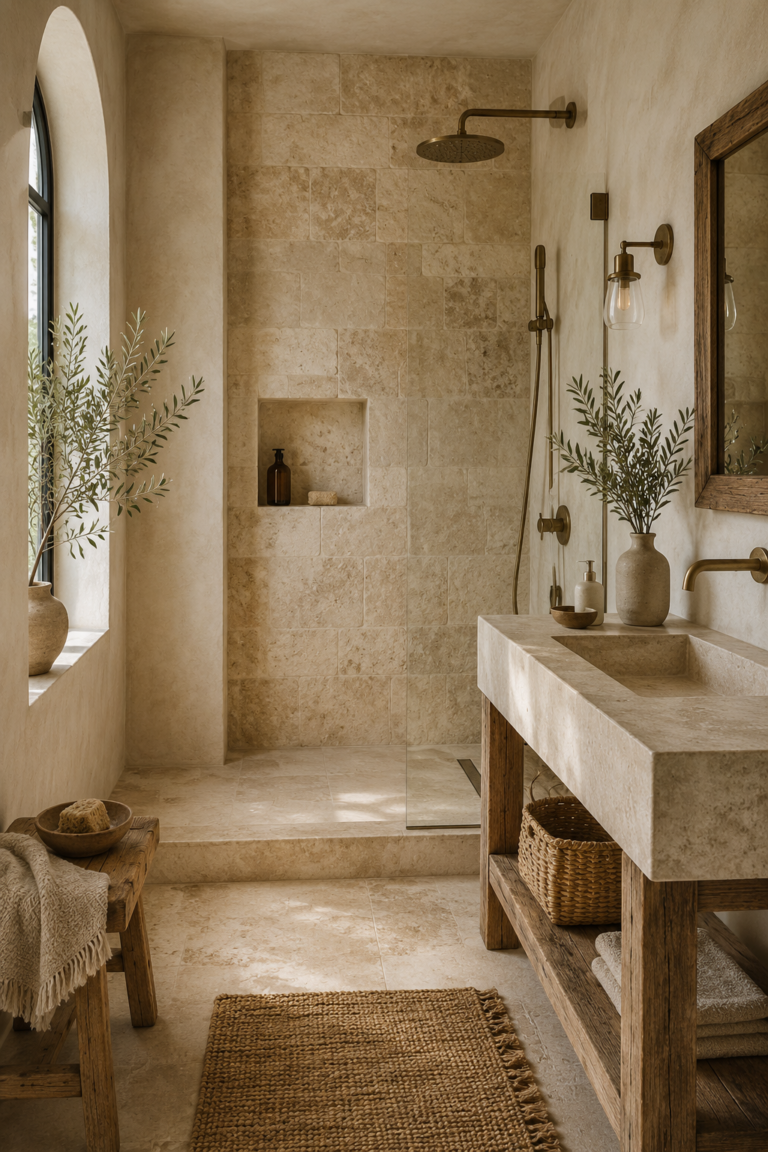
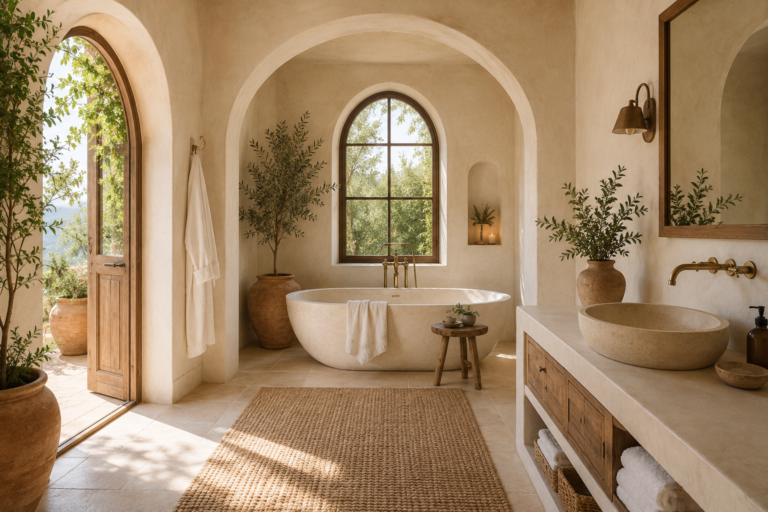
A Mediterranean direction is not achieved by adding many decorative pieces. It comes from editing what is visible and replacing thin, shiny, or plastic-looking items with tactile materials: linen, ceramic, wood, wicker, brass, stone, and terracotta in small quantities. The effect should be quiet, not themed.
If the vanity cabinet itself is plain but in good condition, leave it alone at first. A simple white, cream, greige, taupe, or pale wood vanity can become a neutral base once the surrounding pieces are warmer. If the cabinet is dark espresso, high-gloss gray, or strongly modern, soften it with natural towels, baskets, and a less clinical mirror before considering paint or hardware.
Work With Rental Limits Instead of Fighting Them
In a rental or low-commitment update, the smartest Mediterranean bathroom ideas are reversible. They respect moisture, avoid permanent damage, and do not depend on hidden construction. That means no risky adhesive tile behind the sink if the wall is textured or poorly painted, no heavy mirror installed without proper anchors, and no electrical changes unless a qualified person is involved and the lease allows it.
Focus first on elements that can move with you:
- A framed mirror in wood, brass, blackened metal, or a soft arch, sized correctly for the vanity.
- Countertop accessories in ceramic, stone, or muted glass rather than plastic.
- Towels in linen or cotton-linen textures, preferably in chalk, oat, sand, stone, flax, olive, or soft ochre.
- Storage baskets that hide refills, hair tools, and extra paper without making the room feel busy.
- Hooks that add a warmer metal note and make daily towels easier to hang neatly.
If you own the home, you can go further with a new faucet, skim-coated plaster-look walls, limewash-style paint, handmade tile, or a stone countertop. But none of those are required for the vanity to feel more Mediterranean. In fact, the restrained approach is often more convincing. Southern French bathrooms are rarely overdecorated; their character comes from useful things made of good materials.
Replace the Mirror Mood Before You Replace the Cabinet
The mirror has more influence than most people expect. A frameless sheet mirror can make a small bathroom feel larger, but it can also make the vanity look unfinished. A heavy ornate mirror can swing too far in the other direction, especially in a modest bathroom. The sweet spot is a frame that has weight without theatricality.
For a single vanity, choose a mirror that is slightly narrower than the vanity top. Leaving a little wall visible on each side helps the sink area breathe. If the vanity is 30 inches wide, a mirror in the mid-20-inch range usually feels calmer than one that matches the full width. For a 36-inch vanity, a mirror around 28 to 32 inches wide often works well. The exact size depends on the faucet height, light fixture, and ceiling, but avoid a mirror that crowds the backsplash and light at the same time.
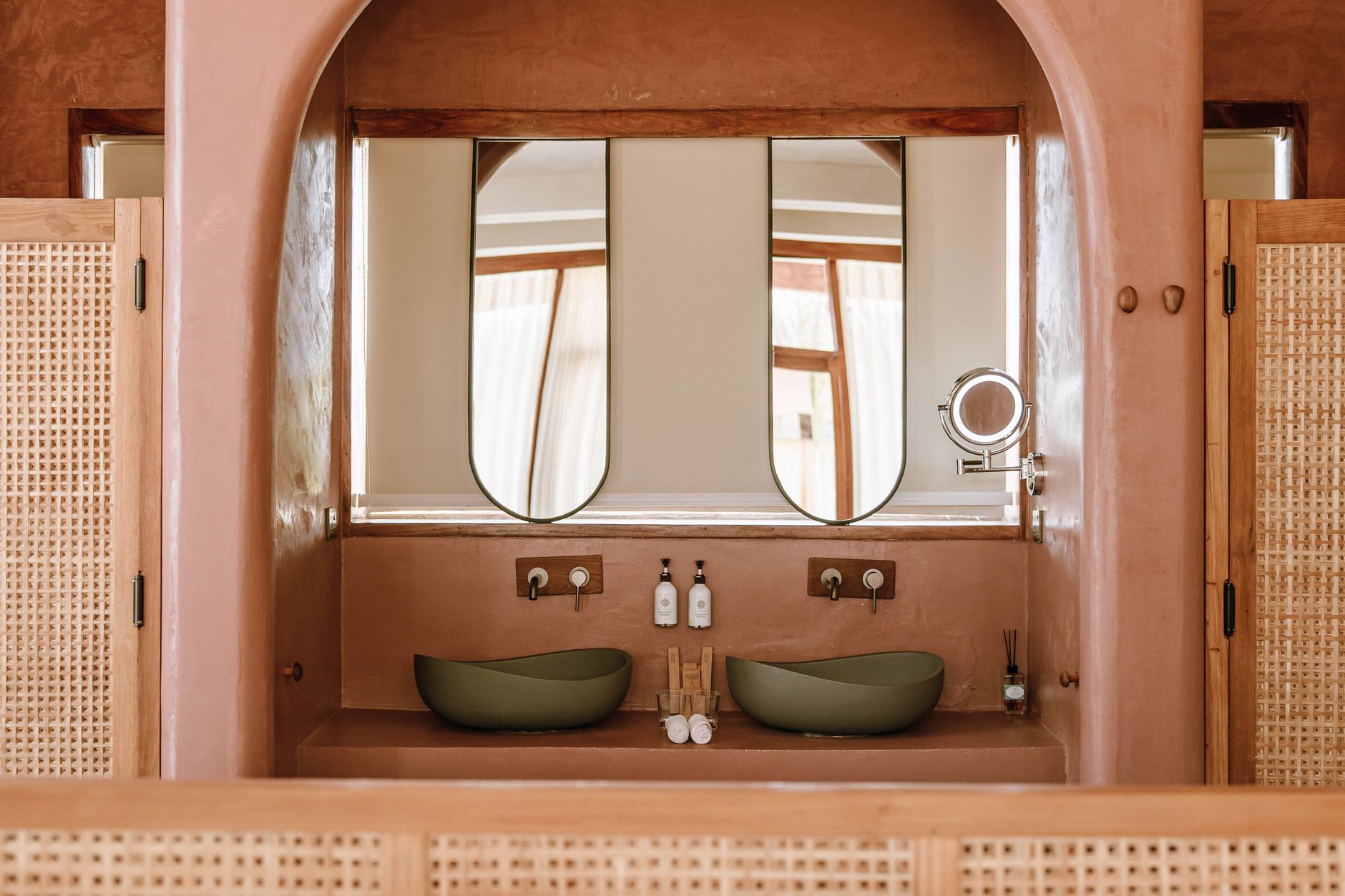
An arched mirror is a natural fit when the bathroom has many hard rectangles: cabinet doors, tile grid, shower glass, and countertop edges. The arch should be simple, not overly ornate. In a Provençal mood, it can suggest old shutters or a village doorway without turning the sink into a stage set.
If you cannot remove the existing mirror, adjust what surrounds it. A pair of warm-toned towels, a ceramic soap dish, and a basket below the vanity can pull attention away from the glass. If the mirror is clipped to the wall, do not force a frame over it unless you are confident the solution is safe in a damp room. A clean existing mirror with better lighting and accessories is preferable to a DIY frame that warps or traps moisture.
Use Storage That Looks Like Furniture, Not Bathroom Overflow
Mediterranean bathrooms often feel relaxed because practical items are not all visible at once. A builder-grade vanity, by contrast, tends to invite clutter onto the counter because the drawers are too shallow, the cabinet interior is awkward, or there is no linen closet nearby.
Begin by sorting bathroom items into three groups. Daily-use items can stay near the sink, but only if they are contained. Weekly items belong in a drawer, cabinet, or basket. Backups and bulk packaging should leave the vanity area entirely if there is another closet available.
Open baskets are useful on an exposed lower shelf or beside a pedestal-style sink, but they need to be chosen carefully. Very pale baskets can look beachy; very dark baskets can feel heavy in a small bathroom. Look for natural wicker, cane, seagrass, or water-hyacinth tones that sit between straw and aged wood. The basket should be large enough to hold real things, not just one rolled towel for display.
Inside a vanity cabinet, baskets also help soften the experience of opening the doors. Use one for extra hand towels, one for refills, and one for tools or bottles that do not need to appear on the counter. In a humid bathroom, avoid packing baskets so tightly that damp towels cannot dry. Linen and cotton towels should be fully dry before being stored away.
If the vanity top is small, avoid adding a decorative tray that consumes the only landing space. A tray is helpful when it gathers two or three objects; it becomes a problem when it holds everything. On a narrow counter, use the wall instead: a towel hook, a small shelf if allowed, or a medicine cabinet with a warmer frame.
Bring in Linen, Ceramic, and Brass Where Plastic Usually Collects
The fastest way to shift a vanity toward a Mediterranean atmosphere is to change the objects that are touched every day. This is where plastic packaging, bright labels, and mismatched towels tend to undo even a beautiful bathroom.
Start with hand towels. Linen has the right dry, relaxed texture for this style, especially in muted neutrals. It does wrinkle, and that is part of its charm, but it should not look abandoned. Hang it from a hook or rail rather than folding it into a stiff hotel stack. If pure linen feels too casual for your household, a linen-cotton blend can still give a softer, less plush look than a thick spa towel.
Next, replace the soap area. A handmade-looking ceramic soap dish or a simple ceramic pump can make the sink feel more grounded. Choose off-white, clay, sand, olive, or pale ochre rather than bright blue-and-white motifs. The goal is not to imitate a Mediterranean souvenir shop; it is to make the sink feel as if it belongs in a room with plaster walls, terracotta floors, and morning light.
Brass is useful in small amounts. One or two brass towel hooks can warm up a bathroom full of chrome without requiring every fixture to match. Mixing metals is acceptable when it looks intentional: keep chrome on the faucet and shower if replacing them is not practical, then repeat brass in hooks, a mirror frame, or a small accessory. Avoid scattering many metal finishes across a tiny vanity. Two finishes are usually enough.
Maintenance matters in the bathroom. Ceramic dishes need regular rinsing so soap residue does not build up. Brass or brass-toned pieces should be wiped dry if they sit near splashing water. Linen towels dry best when hung with enough air around them, not bunched on a ring behind the door. These small habits keep natural materials from looking tired too quickly.
Soften the Light Around the Face
Even a well-styled vanity can feel cold under the wrong light. Many builder-grade bathrooms use a bar light above the mirror with bulbs that are too bright, too cool, or too exposed. The result is practical but unforgiving. A Mediterranean bathroom benefits from warmer, more diffused light that flatters plaster, linen, ceramic, and skin.
If you can change only the bulbs, choose warm bulbs rather than cool white ones. Avoid going so amber that the bathroom becomes dim or inaccurate for grooming. Frosted bulbs often look gentler than clear exposed bulbs, especially above a mirror.
If you are able to replace a fixture, keep scale in mind. A light that is wider than a small mirror can look top-heavy, while a tiny fixture above a broad mirror looks accidental. For a modest vanity, a simple wall light in warm metal, opal glass, plaster-like white, or blackened iron can feel more authentic than a shiny multi-bulb strip.
Side lighting is often more flattering than light from above, but it is not always possible in a rental or narrow bathroom. If the wall allows sconces, place them at face height rather than high near the ceiling. If not, improve the overhead light and use reflective warmth elsewhere: a warmer mirror frame, pale wall color, and textiles that bounce light softly instead of absorbing it.
Do not rely on candles as the main mood solution for a bathroom vanity. They can be lovely for a bath, but daily lighting should be safe, easy, and functional. Mediterranean warmth should come from material and tone, not from a bathroom that is too dim to use well.
The 12-Inch Rule for a Calm Vanity Counter
A Mediterranean vanity should feel useful, not styled beyond daily life. The simplest way to keep that balance is to protect a clear working zone on the counter.
The 12-inch rule: keep at least 12 inches of uninterrupted counter space beside the sink, or directly in front of you if the vanity is very small. This clear area is for setting down a glass, opening a cosmetic bag, washing your face, or placing a folded towel for a guest. Everything decorative has to earn its place outside that zone.
- On a narrow vanity, limit the counter to soap and one small dish or cup. Move towels to a hook and extras to a basket.
- On a standard single vanity, use one tray or shallow dish for two to three items, then leave the rest of the surface open.
- On a double vanity, avoid duplicating every object on both sides. Use symmetry for mirrors or lights, but let accessories be sparse.
This rule prevents the most common vanity problem: a row of attractive objects that leaves no room to live. Mediterranean rooms often feel generous because surfaces are not crowded. A little empty space is part of the design.
Let the Walls Stay Quiet
A builder-grade vanity can be improved without turning the wall behind it into a feature wall. In fact, restraint usually looks more authentic. If the walls are painted in a flat, cool white, consider a warmer off-white, stone, chalk, or pale sand if painting is allowed. A matte or eggshell finish is usually more forgiving than glossy paint, but bathrooms need a finish that can handle moisture and cleaning.
If you love the look of limewash, be careful in splash zones. True limewash and mineral finishes can be beautiful, but not every product or wall condition suits a bathroom vanity. For a low-risk approach, choose a paint color that suggests plaster rather than trying to fake heavy texture. Imperfect plaster is charming in an old mas; lumpy DIY texture behind a sink can look messy and be difficult to clean.
Artwork near a vanity should be minimal and protected from moisture. A small framed sketch, a simple landscape, or a quiet textile can work if it is away from direct splashing. Avoid filling the wall with many small frames. Bathroom walls already contain mirror, light, towel, switch plates, and tile edges; too much art can make the vanity feel restless.
Shop the Look
These pieces support the vanity update in a practical way: warmer materials, better storage, and small daily-use details that do not require a renovation.
- brass towel hooks
- handmade ceramic soap dish
- linen towels
- woven storage baskets
- arched bathroom mirror
A Warmer Vanity Without Pretending It Is Old
The best version of this update does not hide every builder-grade element. It simply gives the sink area better company. A plain cabinet can feel calmer beneath a well-sized mirror. A basic countertop can look more intentional when the soap dish is ceramic, the towel is linen, and the clutter is stored in a real basket. Chrome can feel less cold when brass appears in one or two thoughtful places.
Mediterranean style, especially with a Provençal sensibility, is less about decoration than atmosphere: dry textures, muted color, warm light, and useful objects that age gracefully. If you keep the vanity edited and let each material do its work, even a standard bathroom can feel softer, more grounded, and much more pleasant to use every morning.
Affiliate disclosure: La Maison du Sud may earn a commission from qualifying purchases made through links in this article, at no extra cost to you.