Mediterranean Outdoor Lighting Ideas for Gravel Paths and Small Courtyards
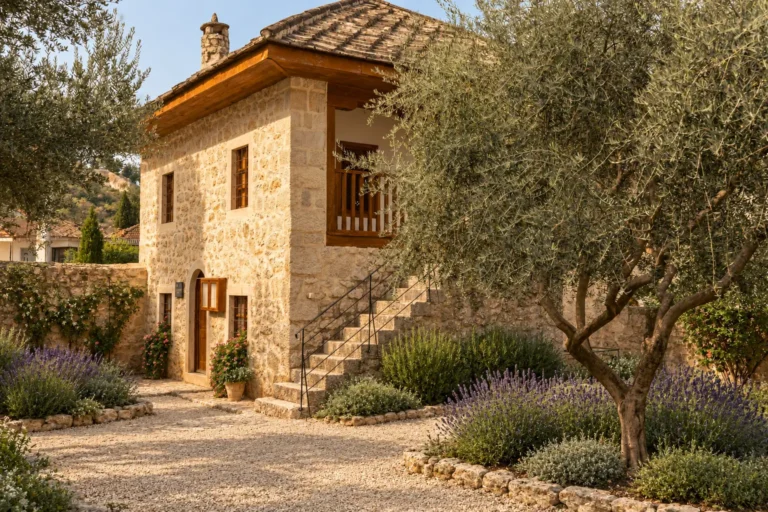
A gravel path can look beautiful at four in the afternoon and strangely unfinished after dinner. The limestone edges disappear, terracotta pots become dark shapes, and a charming courtyard begins to feel less like an outdoor room and more like a place to cross quickly on the way back inside.
The best Mediterranean outdoor lighting does not flood the garden. In Provence, evening light is usually modest: a wall sconce beside the door, a lantern on a low table, a few candles protected from the mistral, and just enough glow along the path to make stone and planting legible. The aim is not brightness for its own sake; it is orientation, warmth, and a sense that the courtyard belongs to the house.
Begin with the walk, not the fixture
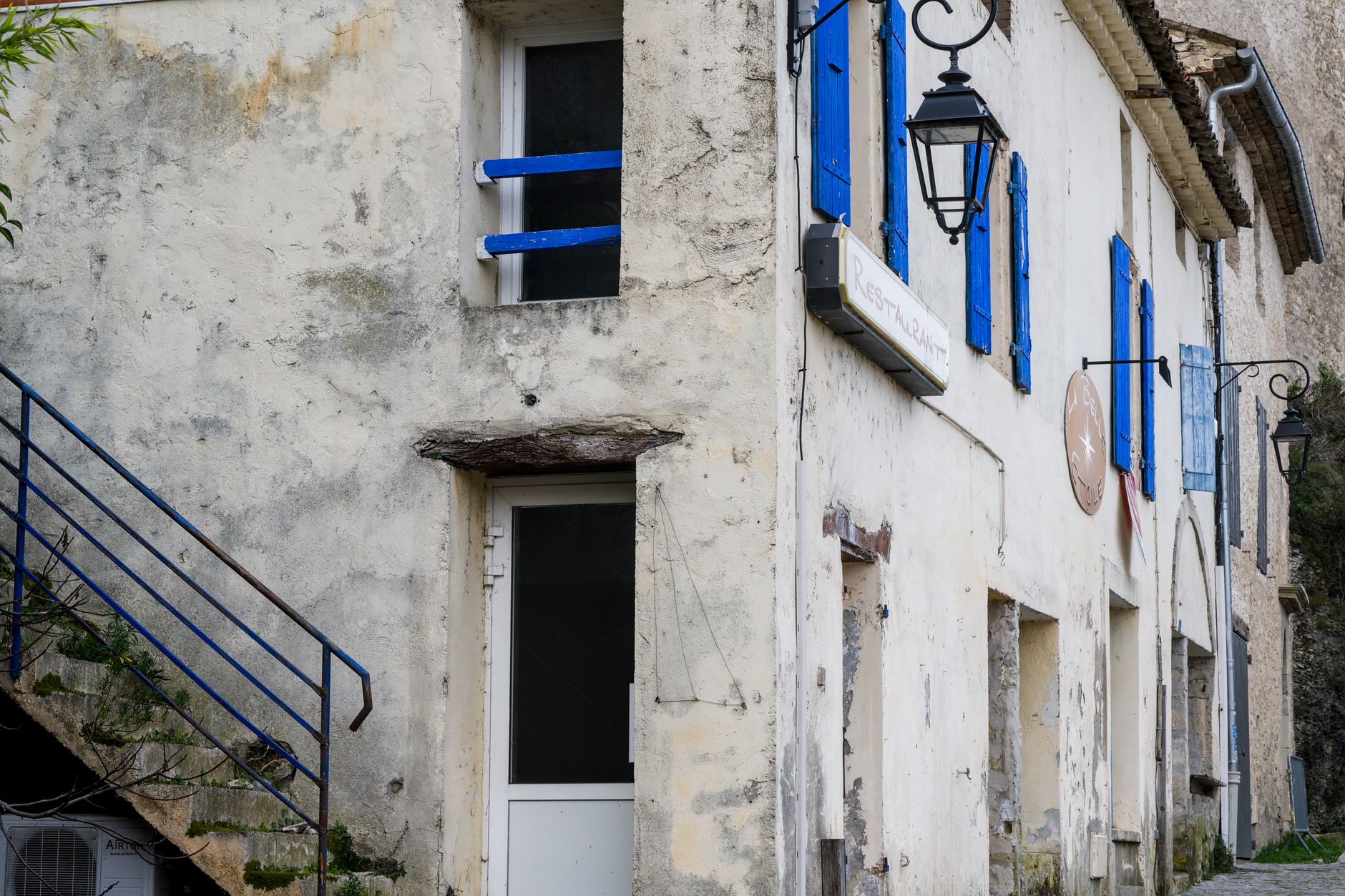
Before choosing lanterns or sconces, stand at the place where the path begins and walk it as you would after dark. Notice where your foot hesitates. Is there a change from gravel to stone? A shallow step? A loose edge near planting? A turn that vanishes behind a pot of rosemary? Those moments should guide the lighting plan.
For a Mediterranean garden, especially one with gravel, old stone, or handmade terracotta underfoot, it is better to mark transitions than to outline every inch. A path that is too evenly lit can feel like a commercial walkway. A path with a few thoughtful pools of warm light feels more natural and more lived-in.
Think in three zones:
- The threshold: the door, gate, or arch where the garden begins.
- The route: the gravel path, stepping stones, or narrow passage between pots.
- The pause: a bench, small dining table, fountain, or wall where the eye can rest.
If your courtyard is very small, one fixture may serve two zones. A blackened iron wall sconce beside a kitchen door can light both the threshold and part of a bistro table. A lantern near a bench can make the seating useful while also showing where the path turns.
Trade harsh security light for low, layered glow
The most common problem in small courtyards is a single bright fixture mounted high on a wall. It may be practical, but it flattens the texture of limewashed plaster, throws hard shadows across gravel, and makes dining feel exposed. Mediterranean outdoor lighting is more forgiving when it is layered at different heights.
Use wall-mounted light for orientation, lanterns for atmosphere, and candles or small tabletop lights for intimacy. Each layer should do a different job. The wall light helps you unlock the door or see a step. A lantern beside a pot gives depth. A candle on the table makes faces look softer and keeps the evening centered around the meal.
For a restrained Provençal effect, choose finishes that can sit quietly with stone and terracotta: blackened iron, aged brass, matte ceramic, clear glass, or woven natural fibers used sparingly. Avoid glossy chrome outdoors unless the house already has that language; it tends to look detached from rustic plaster and gravel.
A practical spacing rule for gravel paths
Use this simple rule when placing lights along a gravel path or compact courtyard route:
- Light every change, not every step. Place light near gates, corners, level changes, seating stops, and doorways rather than spacing identical fixtures in a rigid line.
- Keep low lights roughly knee height or below. Low placement skims across gravel and stone, showing texture without shining into the eyes.
- Leave darker breathing space between pools of light. A Mediterranean garden should have shadow; it makes olive leaves, pots, and walls feel dimensional.
This rule works especially well for pea gravel, decomposed stone, and irregular stepping stones. Instead of trying to make the entire path bright, let the light explain the path. The result is calmer, more natural, and closer to the atmosphere of an old village courtyard.
Use walls as quiet reflectors
Small courtyards often have one great advantage: walls. Limewashed plaster, pale limestone, and soft ochre render all catch warm light beautifully. Rather than adding too many freestanding fixtures, use the walls to bounce and soften the glow.
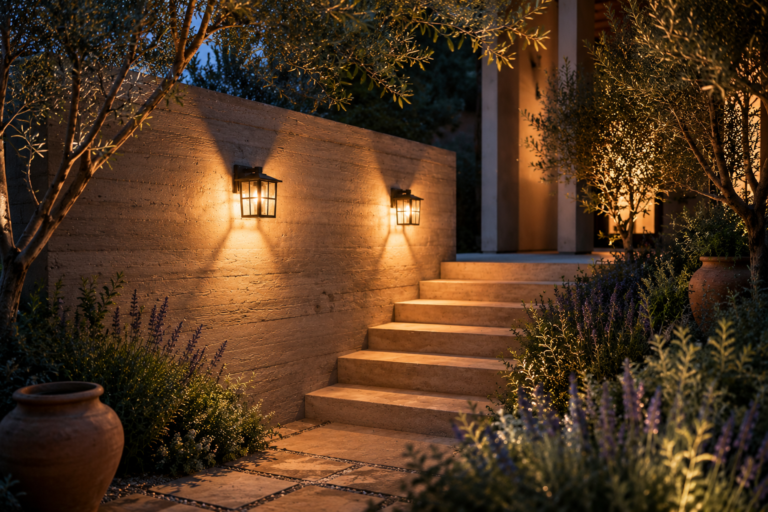
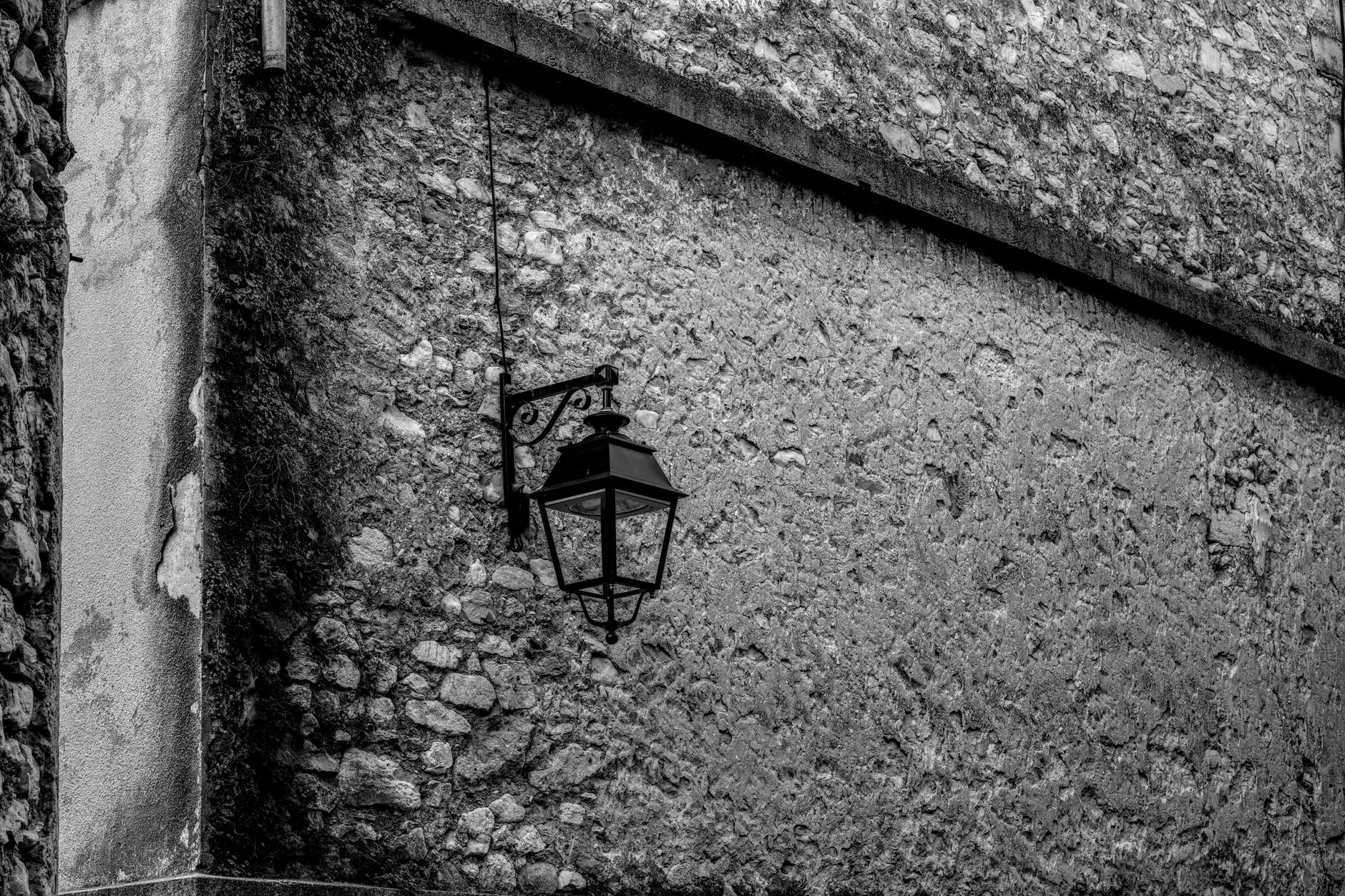
A sconce mounted beside a door or on a garden wall can make the whole area feel warmer if the wall surface has texture. Choose a shape with a modest silhouette. In a South of France setting, a small shielded sconce, a lantern-style wall light, or a simple downward fixture usually feels more believable than a large decorative statement piece.
Placement matters. A sconce mounted too high can feel severe, while one placed too low may create glare at eye level when seated. In a courtyard dining corner, mount wall lights where they help define the space without shining directly into faces. If you are installing wired fixtures, confirm outdoor suitability and local installation requirements before committing to placement.
Color temperature is another quiet decision. Very cool light can make limestone look gray and terracotta look dull. A warm white bulb generally sits better with plaster, gravel, olives, and aged wood. The effect should feel like late sun holding on for a little longer, not like a utility area.
Make lanterns do the flexible work
Lanterns are useful because Mediterranean gardens change from day to day. The dining table moves under the wall when it is windy. Chairs shift toward the shade. A pot of lavender gets replaced by a bay tree. Portable lighting lets the courtyard adapt without becoming visually busy.
Set lanterns where they have a reason to be: at the foot of a stone wall, beside a bench, on a low step, or grouped near a cluster of terracotta pots. One larger lantern often looks calmer than several small ones scattered everywhere. If you use a pair, avoid making the arrangement too symmetrical unless the architecture is formal. A village house courtyard usually feels better with a slightly relaxed composition.
Lantern materials that age well visually
Black metal is dependable against pale walls and gravel. Terracotta or ceramic brings warmth but can become visually heavy if every accessory is clay. Glass protects candlelight and suits dining tables, though it needs wiping if the courtyard is dusty. Woven shades can be beautiful under cover, but they should be used where weather exposure is limited and where the texture does not turn the scheme into a generic beach look.
For a small courtyard, limit the palette to two main lighting materials. For example, blackened iron sconces with terracotta candle holders, or glass table lanterns with a warm metal wall light. This restraint allows pots, plants, and stone to remain the main character.
Light the table from the side, not only from above
Many small Mediterranean courtyards do not have a pergola or overhead beam for pendant lighting. That is not a problem. Side light is often more flattering and more atmospheric outdoors.
Place a lantern on the table, a second low light on a nearby stool or ledge, and a wall sconce behind or beside the dining area. This creates a soft triangle of light. The table is usable, the surrounding wall glows, and the courtyard still has depth. If the only light sits directly above the table, the corners of the courtyard may fall away completely, making the space feel smaller.
For table styling, keep the surface practical. A linen runner, ceramic plates, clear glasses, and one small bowl of olives or apricots are enough. If you add candles, choose holders with some weight so they do not feel fragile outdoors. In windy spaces, enclosed lanterns or LED candles can be more manageable than exposed tapers.
Let planting cast shadows instead of hiding it
Outdoor lights should not make plants look like stage props. Mediterranean planting is often sculptural: olive, bay, rosemary, lavender, cypress, fig, agave in warmer climates, or potted citrus where conditions allow. These forms become more interesting when light grazes them from the side.
Set a lantern or low garden light near the base of a pot, angled so it catches the stem, leaves, and wall behind it. The point is not to spotlight every leaf. It is to create a gentle silhouette. A single olive in a terracotta pot can become the evening anchor of a courtyard if the light is patient and indirect.
Be careful with too much uplighting. Used sparingly, it adds drama to a stone wall or tree. Overused, it can feel theatrical and far from the modest character of a Provençal home. If the garden is small, one softly lit plant is usually enough.
Keep the maintenance realistic
Outdoor lighting is only beautiful if it remains easy to live with. Gravel dust settles on glass. Terracotta can shed powder. Leaves collect around cables and lantern bases. Before building a complicated scheme, consider who will clean, charge, move, or store each piece.
Solar lights are convenient for paths and gardens where wiring would be disruptive, but their placement should still be deliberate. Avoid scattering them in a straight runway unless the architecture calls for formality. Use them to mark decisions: the turn, the step, the gate, the bench.
For lanterns and candle holders, create a small storage habit. A shelf just inside the door, a covered niche, or a basket in a utility corner can keep loose pieces from feeling like clutter. In winter or during heavy rain, protect anything that is not suited to constant exposure. Patina is welcome; neglect is not the same thing.
Shop the Look
Choose only the pieces that solve a real lighting job in your courtyard: a route marker, a wall glow, a table accent, or a flexible lantern you can move with the evening.
- rustic outdoor lanterns with LED pillar candles
- terracotta candle holders for warm outdoor tables
- Mediterranean wall sconces for exterior walls
- warm outdoor string lights for sheltered courtyards
- solar garden lights for paths and planting
The evening test
When the lights are in place, judge the courtyard from inside the house as well as outside. A Mediterranean garden should draw you toward it. From the kitchen or sitting room, you should see a soft wall, a warm pot, a legible path, or a table that looks ready for one more glass of wine.
If the space still feels flat, remove one harsh light before adding another decorative piece. If it feels cluttered, reduce the number of materials. If the path feels uncertain, move light toward the transition points. The best scheme is usually quieter than expected: a few warm pools, beautiful shadows, and materials that look at home after sunset.
Affiliate disclosure: La Maison du Sud may earn a commission from qualifying purchases made through links in this article, at no extra cost to you.