Mediterranean Patio Ideas for a Shaded Stone Space Without Built-In Seating
A shaded stone patio can be beautiful in theory and oddly difficult in daily life. The floor has character, the walls hold a little history, and the air stays cooler than the street beyond the gate. Yet without built-in benches, a generous pergola, or a view doing the work for you, the space can feel more like a passage than a place to sit.
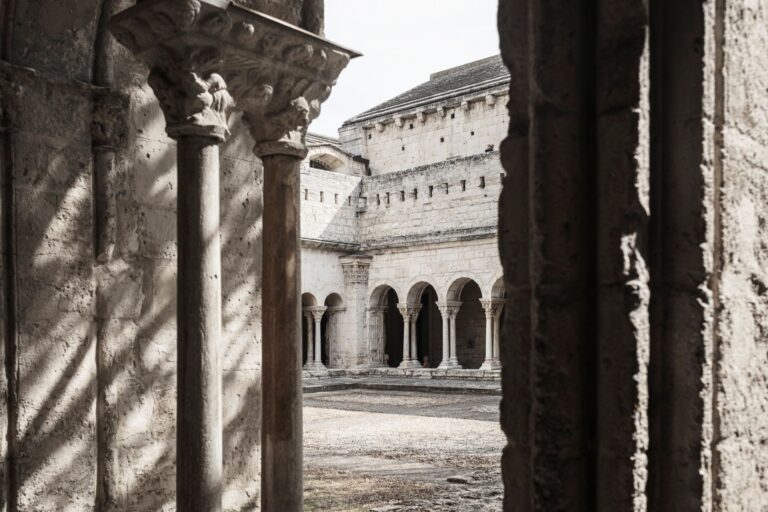
This is a common problem in older village houses and modest mas-style homes in the South of France: a rectangle of limestone, terracotta, or worn concrete just outside the kitchen door, enclosed by pale plaster or rough stone. It may receive only a few hours of sun, and there may be practical annoyances too: a door that swings outward, a drain cover in the wrong place, uneven paving, or a wall that leaves powdery lime on anything pushed too close.
The best Mediterranean patio ideas for this kind of space are not about making it grand. They are about making it usable, warm, and visually settled without pretending it is a resort terrace. Loose furniture, terracotta planters, restrained textiles, and low evening light can do more for a small shaded patio than a permanent built-in scheme that fights the scale of the architecture.
Start by reading the shaded patio as it is
Before choosing chairs or pots, spend a little time noticing how the patio behaves through the day. Shaded stone changes character depending on moisture, wall color, and reflected light. Pale limestone can feel luminous in the morning and cool gray by late afternoon. Handmade terracotta tiles may add warmth but can also show marks, dust, and plant water. Old plaster walls often look best when they are not crowded by tall furniture.
The most useful first question is not What style should this patio be? but Where does the space naturally invite someone to pause? In a small patio, the answer is rarely the exact center. A better sitting area often belongs slightly to one side, where chairs can face a wall with pots, a small table, or a doorway rather than blocking the whole floor.
Look at the practical constraints as part of the design. If the kitchen door opens outward, leave that swing completely clear. If there is a drain, avoid placing table legs or heavy pots over it. If one wall is damp or shaded most of the year, keep textiles away from it and use terracotta or ceramic there instead. These small decisions are what make the patio feel lived-in rather than staged.
Choose loose seating before you think about built-ins
Built-in masonry benches can be beautiful in a large courtyard, but they are not always the right answer for a small shaded patio. They reduce flexibility, can make a narrow footprint feel rigid, and often require cushions that need to be stored during wet weather. Loose pieces are more forgiving. They allow the patio to become a quiet breakfast corner, a place for two glasses in the evening, or an overflow spot when friends gather by the kitchen.
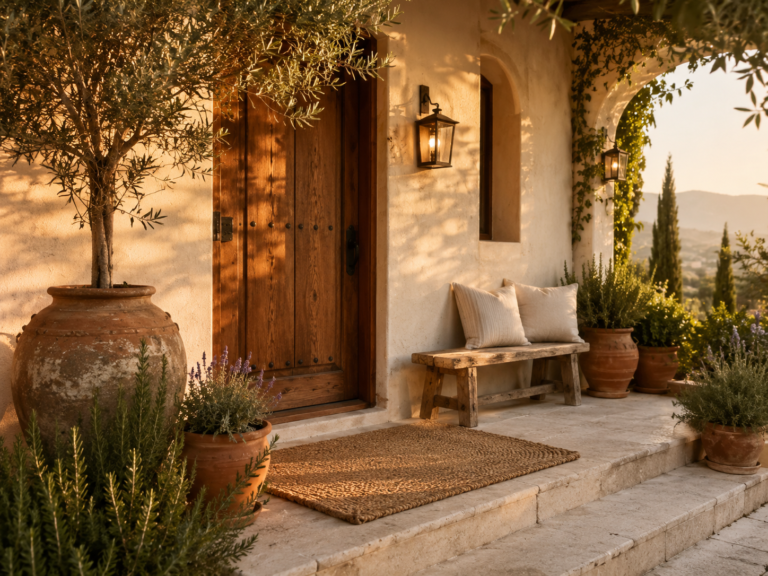
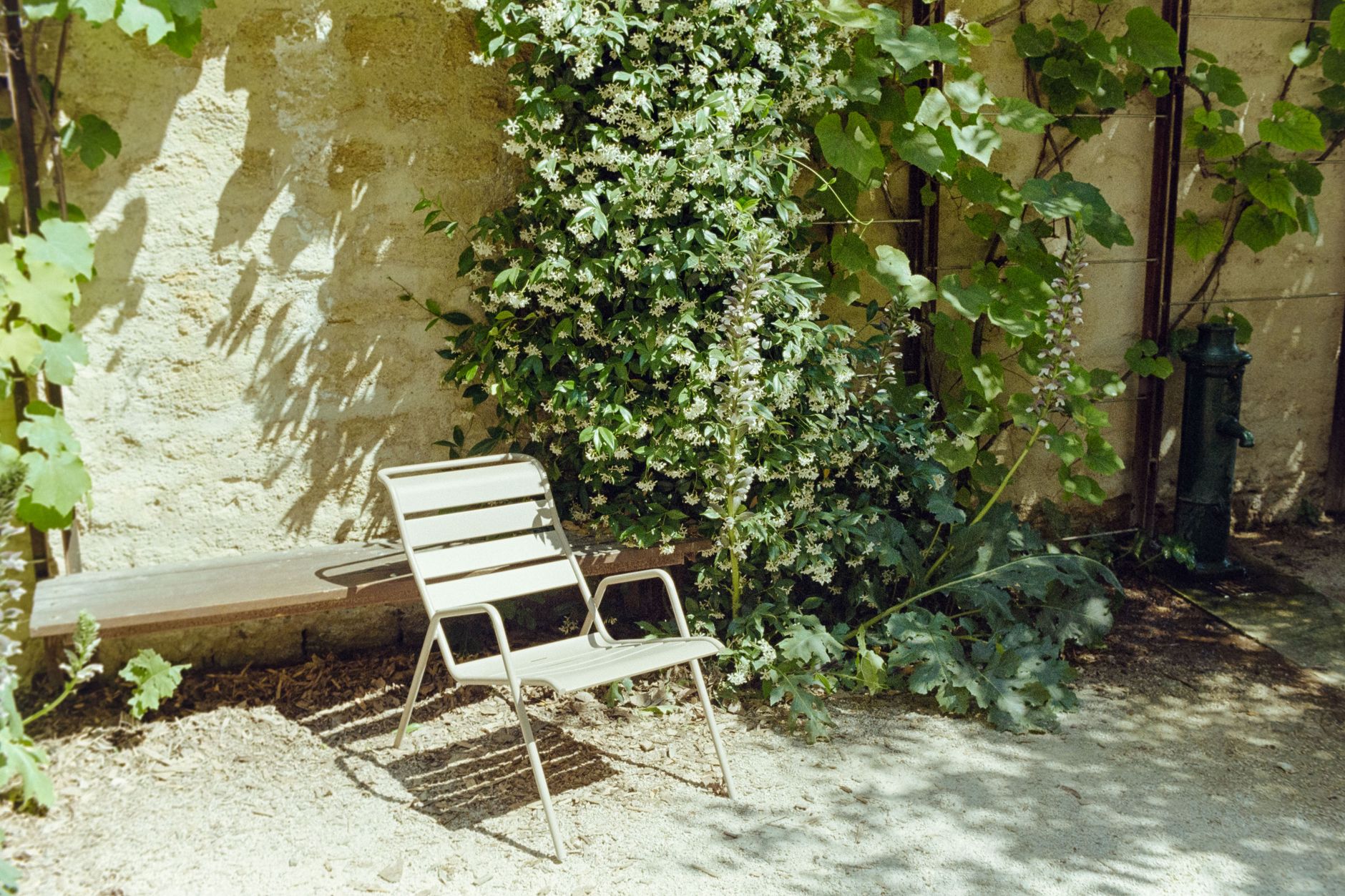
For a Provençal mood with a lighter hand, look for seating that has texture without bulk. Woven chairs, simple wooden chairs, or a slender outdoor bench can bring enough warmth to balance stone. Avoid pieces that are too deep for the footprint. A lounge chair that looks inviting online may leave no room for knees, a table, or someone passing with a basket of laundry.
If the patio is very compact, two chairs and a small round or square table are usually more useful than a sofa. Chairs can be angled toward each other when you want conversation and pushed back against the wall when the space needs to breathe. If you prefer a bench, choose one with a simple line and keep it visually light with plain cushions rather than a pile of patterned pillows.
Materials matter in a shaded setting. Very dark furniture can make the corner feel heavy. Very pale furniture can look stark against old stone unless it has texture. Mid-toned wood, discreet wicker, blackened iron used sparingly, and weathered natural fibers tend to sit more comfortably in Southern French architecture.
The measurement rule that keeps the patio breathable
Small patios fail when every item is chosen independently. A handsome chair, a heavy pot, and a generous lantern may all be beautiful, but together they can leave no usable floor. Use one simple measurement rule before buying or rearranging anything.
- Keep at least 30 inches for the main path. This should run from the door to the most-used exit or gate, even if the path bends slightly around the seating.
- Allow about 18 inches between a chair and a small table. This gives enough space to sit down, set a glass, and move without dragging furniture every time.
- Leave 4 to 6 inches between pots and old plaster walls. The gap helps air circulate, reduces staining, and makes the arrangement look intentional rather than pushed aside.
This rule is deliberately modest. It does not turn the patio into a diagram; it simply protects the parts of the space that make it usable. If you cannot maintain those clearances, choose fewer pieces rather than smaller versions of everything. A patio with two comfortable chairs and three good pots will feel more generous than one crowded with miniature furniture.
Warm the stone with textiles you can actually maintain
In a shaded patio, textiles have to work harder and live a little more honestly. They bring softness to stone, but they may also pick up dust, pollen, and moisture. This is why the best outdoor textiles here are not precious. Choose cushions with removable covers where possible, and think in terms of lift-and-store rather than permanent upholstery.
Linen-look cushions in sand, flax, chalk, muted olive, or faded ochre are especially useful because they echo the tones of Provence without becoming theatrical. A few cushions are enough. Too many soft layers can make an outdoor space feel oddly indoor, especially beside old walls or handmade paving.
Outdoor rugs are more complicated on a shaded stone patio. They can define a seating area, but they also trap moisture if the floor does not dry quickly. If your patio stays damp after rain, skip the rug and let cushions, chair seats, and a table linen bring the softness instead. If the floor dries well, choose a flat, low-profile rug in a quiet natural tone and lift it regularly to clean underneath.
The most overlooked textile is often the table cloth or runner. On a small café table, a folded linen cloth can soften the entire setting for dinner, then disappear into a drawer. It is a better solution than keeping the patio permanently dressed, especially if the space is exposed to wind, dust, or neighborhood cats.
Use terracotta pots as structure, not scattered decoration
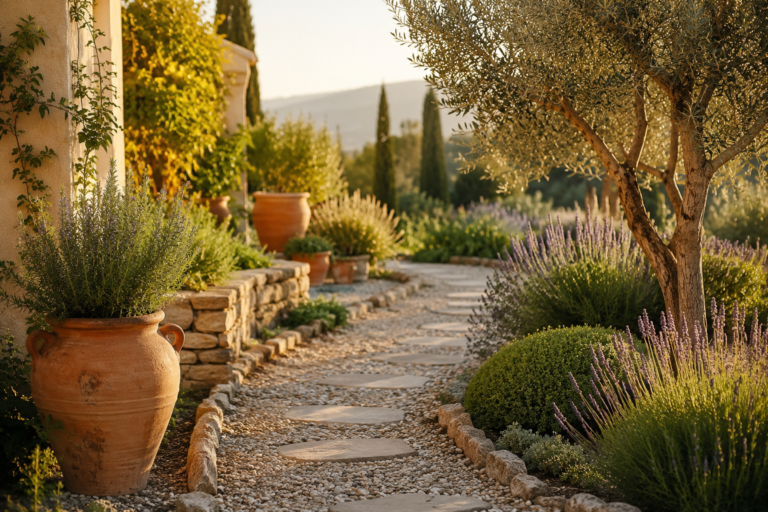
Terracotta is one of the quickest ways to warm a shaded patio, but the placement matters. A line of small pots can look cluttered, while a few larger vessels can give the space architecture. Think of pots as a low wall, a soft screen, or a focal point rather than accessories sprinkled wherever there is a gap.
In a shaded patio, you may not be able to rely on sun-loving lavender or rosemary in every corner. Instead, match plants to the actual light. Bay, myrtle, certain ferns, jasmine in brighter shade, or herbs placed only where the sun reaches can all feel appropriate without forcing a dry hillside look into the wrong conditions. If you like the fragrance of Mediterranean planting, keep the most aromatic herbs in the brightest, driest area rather than expecting them to thrive against a cool wall.
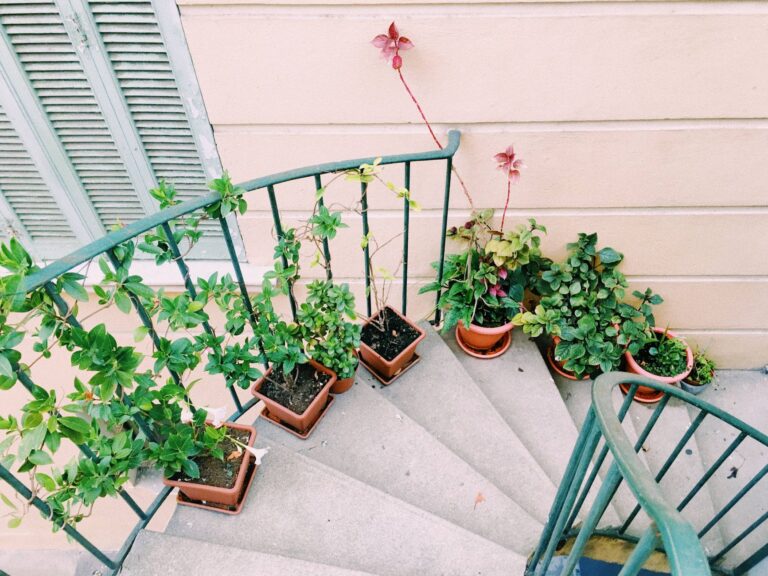
Varying pot size is more important than varying color. Use terracotta in related tones, from pale clay to deeper fired orange, and avoid overly glossy finishes if the patio itself has age. A good composition might include one tall pot near a doorway, two medium pots clustered by a wall, and a smaller vessel on a table. The result feels collected over time, not installed in a single afternoon.
Always protect the surface beneath pots. Old stone can stain from water and soil, while terracotta can leave mineral rings. Pot feet, saucers, or small hidden risers help air move underneath. They also make it easier to sweep leaves and grit, which is one of the simplest ways to keep a small patio from feeling neglected.
Light the edges, not just the table
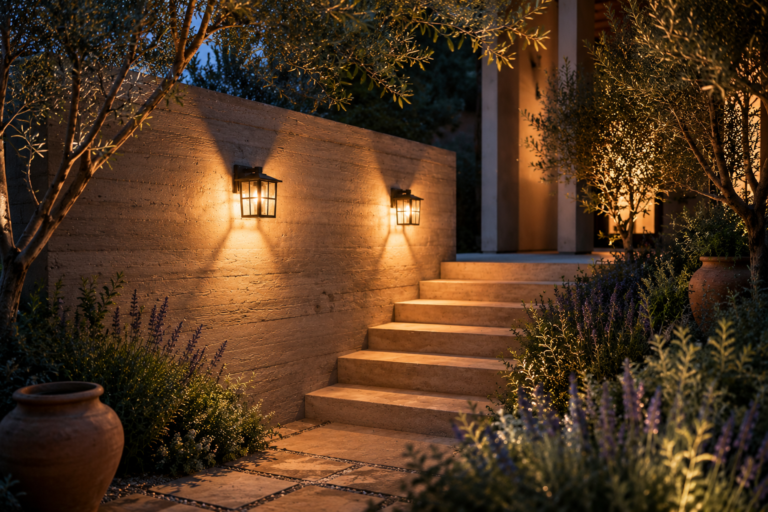
A shaded patio often becomes more charming at dusk than at noon, but only if the lighting is gentle and well placed. One bright overhead fixture can flatten old stone and make everyone feel as if they are sitting in a service yard. Edge lighting is more flattering. It catches the texture of plaster, gives pots a silhouette, and leaves the center of the patio calm.
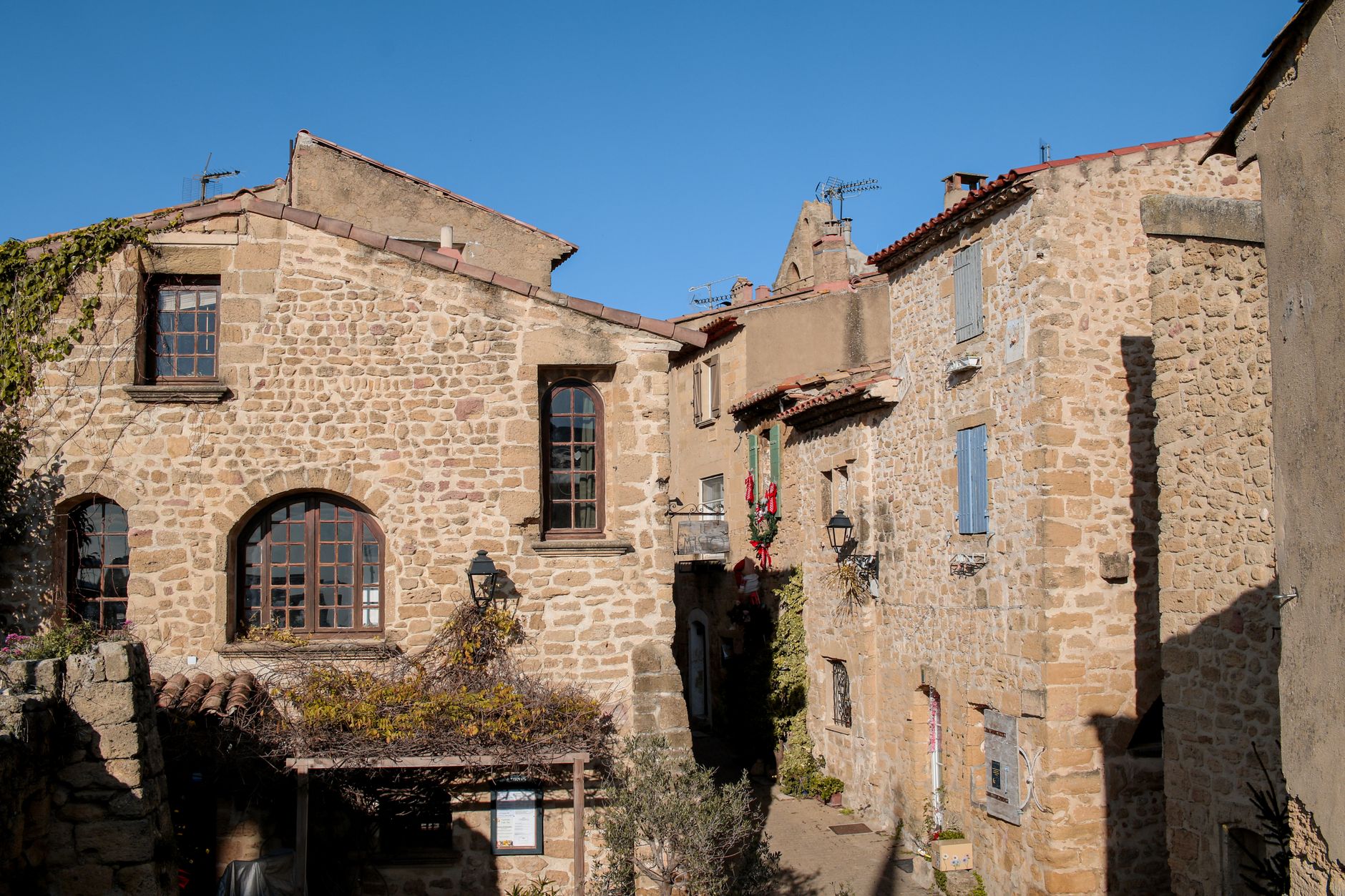
If there is an existing wall light, use it as a practical layer rather than the whole atmosphere. A warm bulb behind a simple shade or sconce can make the doorway safe, while lanterns at floor or table level create intimacy. Blackened iron lanterns look especially good against limestone or limewash because they add a fine dark line without demanding attention.
Battery or solar lighting can be useful where wiring is not possible, but keep the look restrained. Choose warm light rather than icy white, and avoid scattering tiny lights everywhere. Two lanterns near the seating and one lower light by the pots usually feel more believable than a patio outlined like a party venue.
For dining, place light slightly off to the side rather than directly in the middle of the table. This avoids glare and keeps the food, ceramics, and linen looking soft. If you use candles, put them inside lanterns or glass holders so the flame does not disappear with the first evening breeze.
Keep the palette sun-faded, even when the patio is shaded
The temptation with a shaded patio is to add strong color because the space feels dim. In practice, saturated colors can look harsh against old stone, especially in a small enclosure. A sun-faded palette is usually better: chalk, sand, warm gray, flax, pale olive, weathered wood, dry clay, and a little black iron.
This does not mean the patio should be beige from end to end. The warmth comes from material variation. Terracotta has one kind of color; aged wood another; natural linen another. When those tones sit together, the space gains depth without needing a loud accent.
If you want pattern, keep it small and useful. A striped cushion, a simple woven seat, or a ceramic dish on the table can add rhythm. Avoid filling the patio with themed motifs. The most convincing South of France spaces rarely announce themselves. They rely on honest material, shade, meals, plants, and time.
Spend first on the pieces that change how you use the patio
When a patio feels unfinished, it is easy to buy decorative objects first because they are quick. But the pieces that matter most are the ones that change the daily use of the space. A comfortable chair does more than a wall ornament. A properly scaled table does more than a cluster of small accessories. A single large terracotta pot can be more effective than six tiny ones.
If you are improving the patio gradually, begin with seating and one surface for eating or setting down a cup. Next, add pots large enough to shape the perimeter. After that, bring in cushions and lighting. Decorative ceramics, trays, and small vases are best saved for the final layer, once you know where the eye naturally rests.
Maintenance should guide spending too. Textiles may need replacing sooner than furniture or pots. Lanterns should be simple enough to wipe clean. Wooden pieces need enough care to keep them from looking abandoned rather than weathered. In a shaded patio, patina is welcome; mildew and clutter are not.
Shop the Look
For a shaded stone patio, choose pieces that add warmth without crowding the footprint: tactile seating, clay-toned planters, quiet cushions, and low lantern light.
- woven outdoor chairs
- terracotta planters
- linen outdoor cushions
- black iron lanterns
- rustic ceramic vases
A quiet patio that feels earned, not decorated
The most successful shaded Mediterranean patios do not try to overcome their limitations completely. They accept the cool stone, the uneven light, the practical doorway, and the modest footprint, then add just enough warmth to make the space part of everyday life.
With loose seating, breathable circulation, terracotta used as structure, and lighting placed along the edges, even a plain stone rectangle can become a graceful outdoor room. It does not need built-in benches or elaborate renovation. It needs proportion, honest materials, and a little restraint.
Affiliate disclosure: La Maison du Sud may earn a commission from qualifying purchases made through links in this article, at no extra cost to you.