Mediterranean Bathroom Materials: Stone, Tile, Wood and Plaster
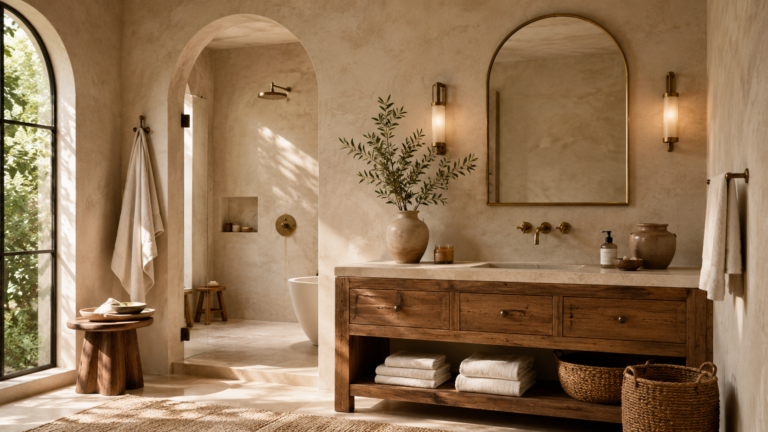
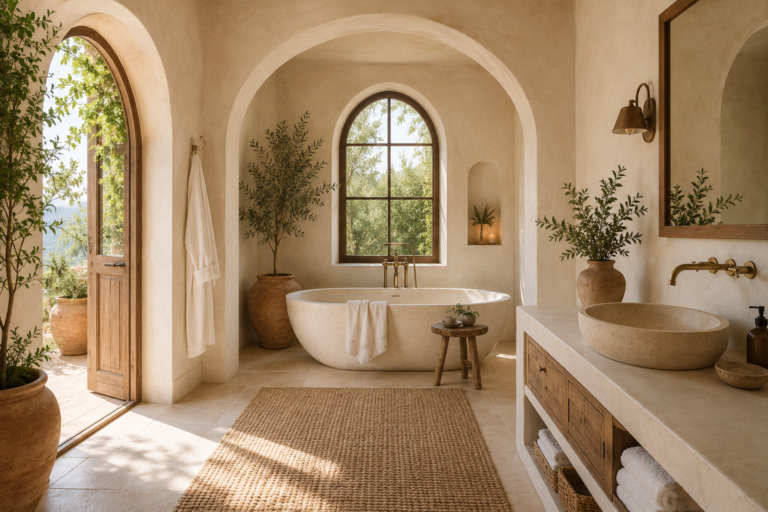
Mediterranean bathroom materials create warmth through texture rather than decoration. Travertine, limewash, handmade tile, timber, brass, terracotta and linen all age differently, react differently to moisture and require different levels of maintenance. Choosing them well matters more than simply combining as many rustic finishes as possible.
This guide compares the materials that give a Mediterranean bathroom its character and explains where each one works best. The goal is a room that feels tactile and timeless while remaining practical enough for daily use.
For a complete design overview, begin with our pillar guide to Mediterranean bathroom ideas. If space is limited, use these materials alongside our small Mediterranean bathroom ideas.
1. Travertine and Limestone
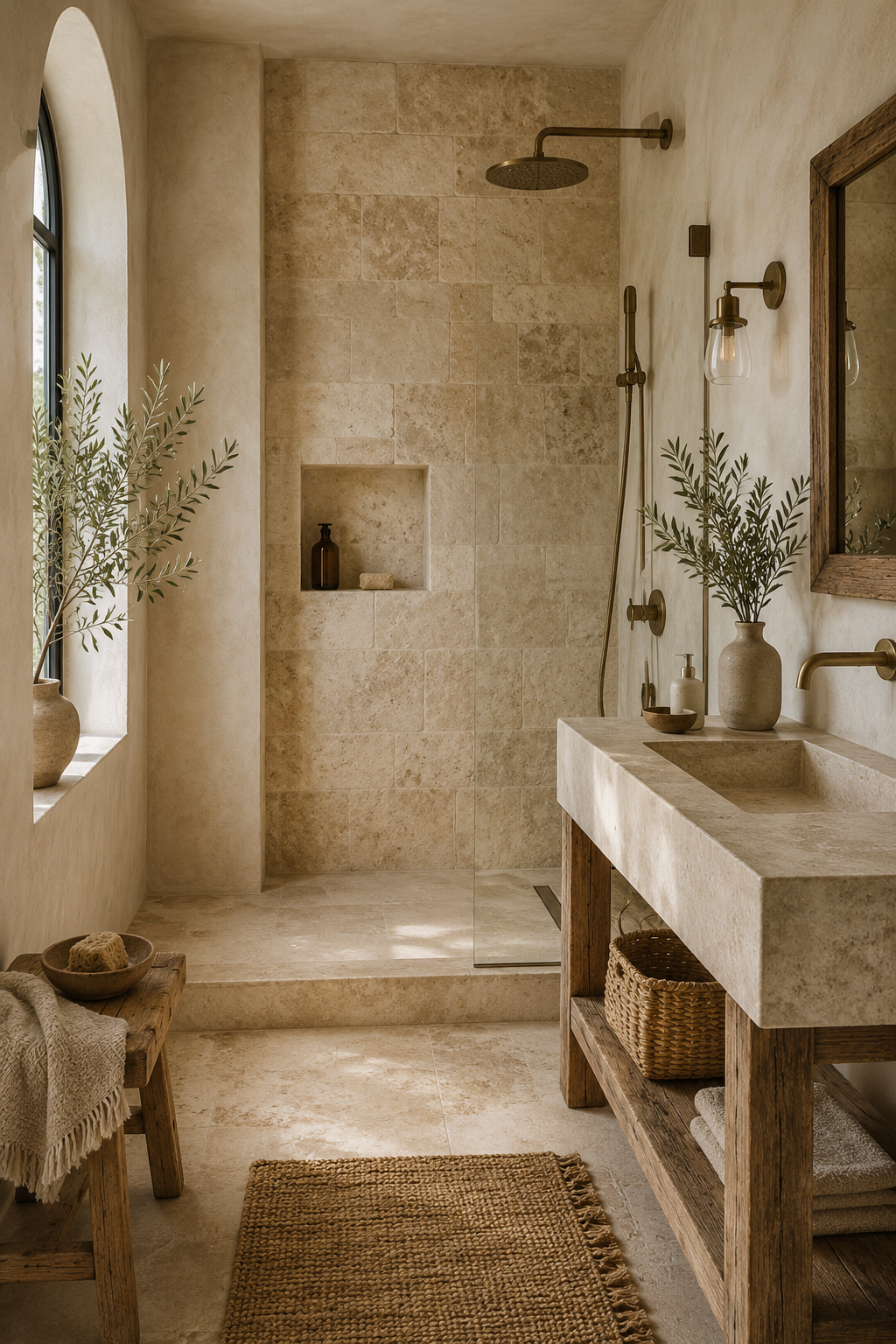
Travertine and limestone bring soft colour, natural variation and the sense of permanence associated with old Southern European homes. Honed finishes usually feel calmer and provide more grip than highly polished stone. They work well on vanity tops, shower walls, floors and small architectural details.
Both stones are porous and need appropriate sealing in a bathroom. Ask the supplier which finish and treatment suit the exact wet area, then follow the recommended maintenance schedule. Avoid strongly acidic cleaners, which can mark calcium-based stone. If natural stone is impractical, a good porcelain interpretation can provide a similar visual effect with easier care.
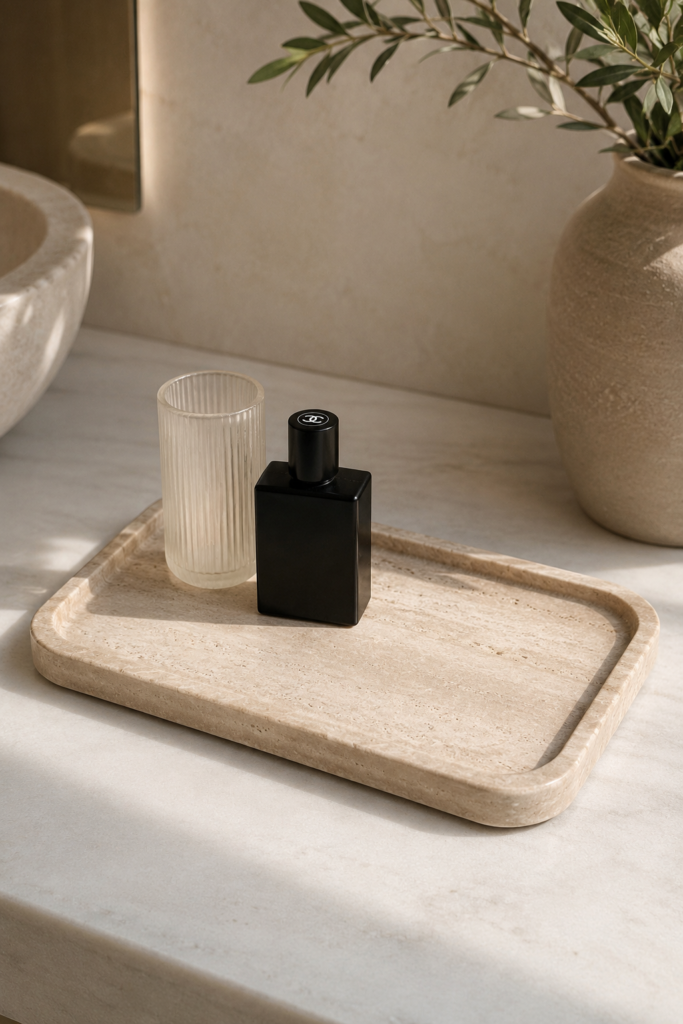
A small travertine tray can introduce the material without committing to a permanent stone installation.
2. Limewash, Mineral Paint and Plaster
Limewash and mineral finishes create the soft, clouded walls often associated with Mediterranean interiors. Their subtle tonal movement reflects light more gently than flat synthetic paint. Warm white, sand, clay and pale stone shades make a useful background for timber and aged metal.
Not every decorative plaster is suitable inside a shower or around a bath. Wet areas require a system designed for water exposure, installed and sealed according to the manufacturer. In lower-risk areas, a bathroom-rated mineral paint may offer the look with simpler application. Ventilation remains essential whatever finish is chosen.
3. Handmade and Zellige-Style Tile
Handmade tile adds variation in surface, edge and colour. That irregularity can make a simple backsplash or shower niche feel crafted rather than mass-produced. Cream, muted blue, olive and terracotta tones fit naturally into a Mediterranean palette.
Use glossy handmade tile selectively because every uneven surface catches light. In a compact bathroom, one tiled zone is usually stronger than several competing patterns. Confirm slip resistance before using any tile on the floor and ask whether the material needs sealing. A grout colour close to the tile creates a quieter result and reduces the appearance of a grid.
4. Warm Wood
Wood balances the hardness of tile, stone and glass. Oak, walnut and reclaimed-looking finishes work particularly well for vanities, mirror frames, shelves and stools. A matte finish generally feels more authentic than a thick glossy coating.
Bathrooms are demanding environments, so choose stable construction and a finish intended for humidity. Wipe standing water promptly and maintain ventilation. Solid timber is not the only option: a well-made veneered vanity can provide warmth with greater dimensional stability. Keep vulnerable wood away from direct, repeated shower spray unless the system is specifically designed for it.
5. Brass and Bronze
Brass and bronze add a warm metallic note that suits stone and earthy colours. They can appear in taps, shower controls, mirror frames, hooks and lighting. Brushed, aged or unlacquered finishes usually feel less formal than bright polished metal.
Decide whether you want the finish to remain consistent or develop a patina. Unlacquered brass naturally changes with use, while coated finishes are designed to stay closer to their original colour. Do not assume products described as brass-coloured are solid brass; compare the base material, warranty and cleaning instructions before buying.
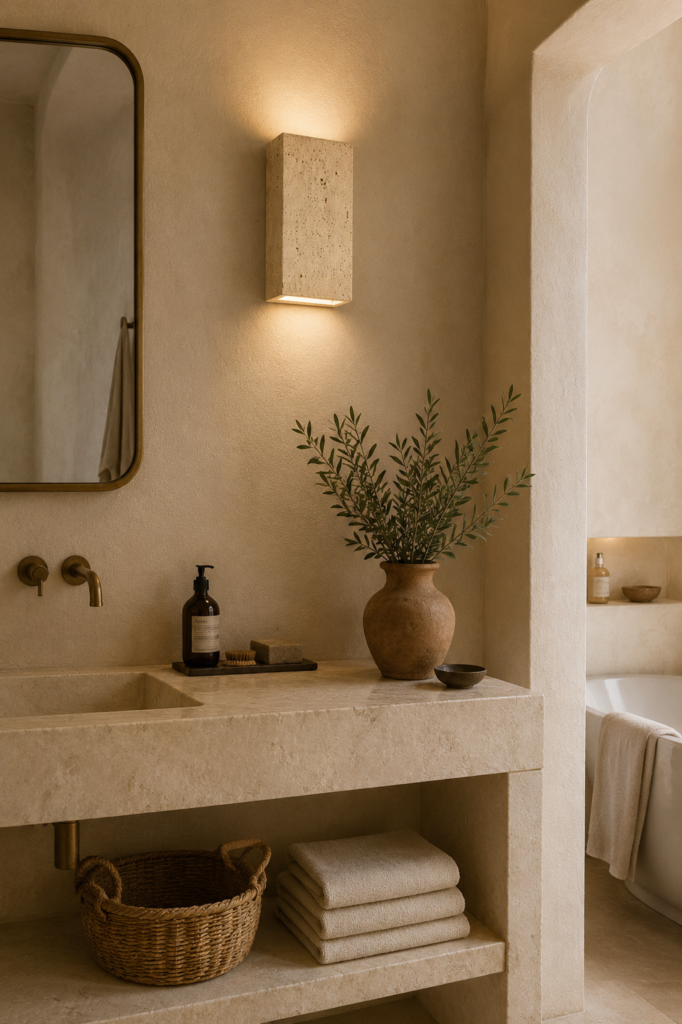
A textured Mediterranean wall light can add material contrast and a softer evening atmosphere. Use only fixtures with an appropriate bathroom safety rating for their intended position.
6. Terracotta and Handmade Ceramics
Terracotta and ceramics introduce earthy colour on a smaller scale. Soap dishes, trays, cups, planters and vases can soften a practical room without requiring renovation. Slight variation in glaze or shape gives each piece more presence than a perfectly matched accessory set.
Unglazed terracotta absorbs moisture and may stain, so use it thoughtfully around sinks and showers. Glazed ceramics are easier to wipe clean. One or two pieces are enough: repeated clay tones will have more impact when the surrounding surfaces remain restrained.
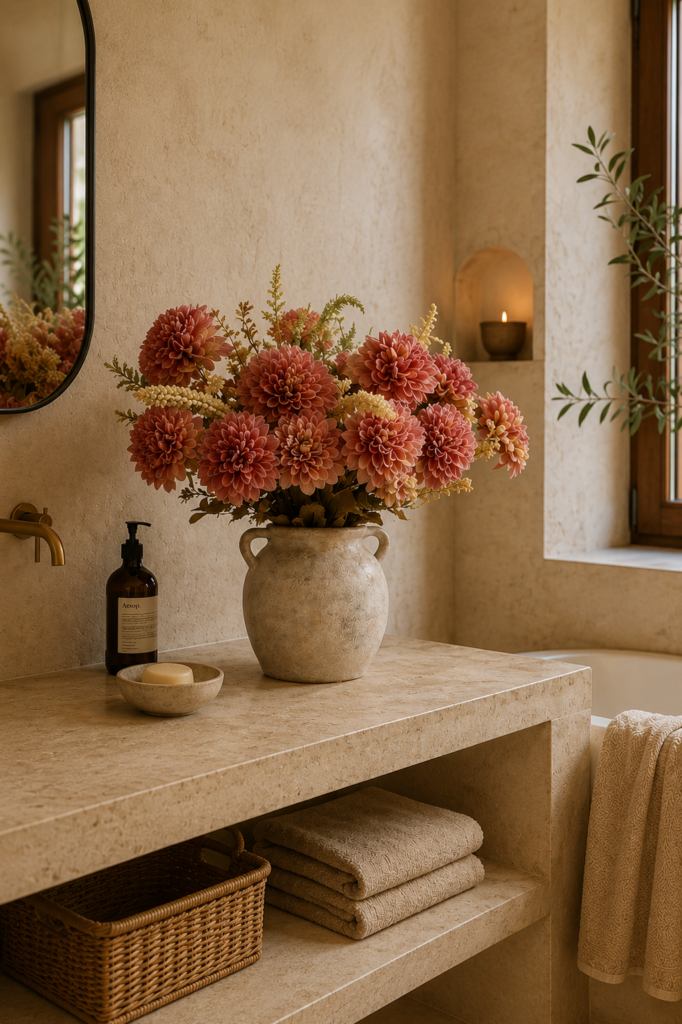
A simple terracotta vase provides a warm accent for an olive branch or dried stem.
7. Linen and Woven Fibres
Linen, cotton, jute and seagrass introduce softness and help a bathroom feel lived in. Use absorbent, washable textiles for towels and curtains, while baskets should stay away from regularly wet floors. Oatmeal, warm white and sand tones are easy to combine with stone and timber.
Natural-looking does not always mean practical. Check care labels, drying time and resistance to mildew before choosing a shower curtain or bath mat. A relaxed texture is useful, but the material must still cope with frequent washing and humid conditions.
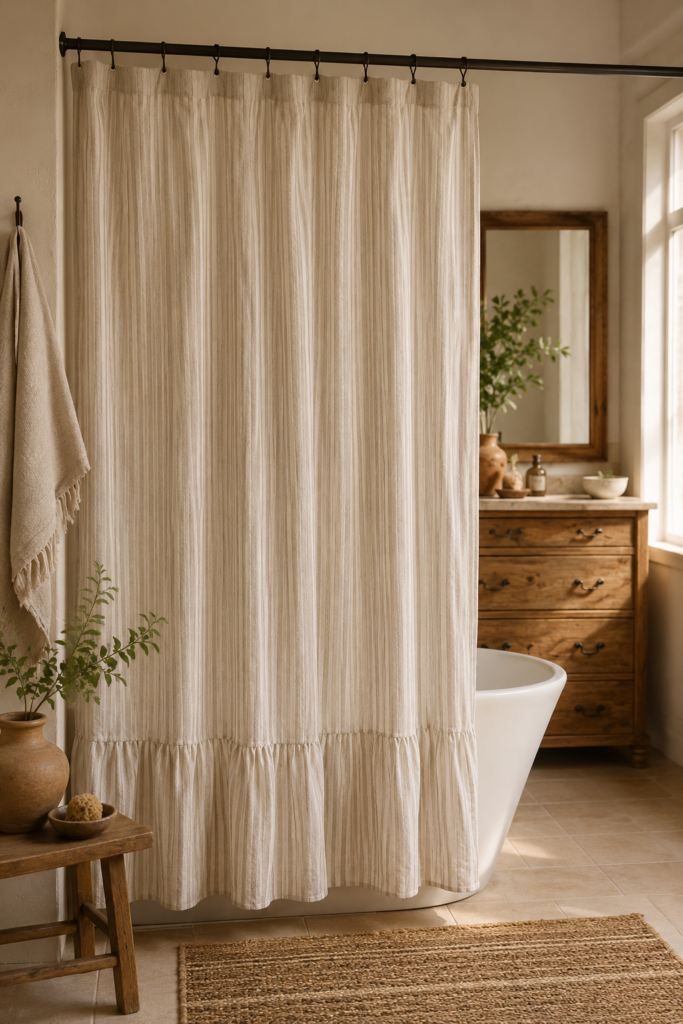
A linen-style shower curtain is a reversible way to soften a plain bathroom without changing permanent finishes.
8. How to Combine Mediterranean Bathroom Materials
Limit the main palette to three material families. A balanced scheme might combine pale stone, warm oak and aged brass, with linen and ceramics used as smaller accents. Another could pair mineral walls with handmade blue tile and dark bronze hardware.
Repeat each important finish at least twice so the room feels intentional. The vanity and mirror can share a wood tone; taps and hooks can share a metal finish. Avoid choosing every item as a statement piece. Texture needs quiet surfaces around it to be noticed.
Practical Selection Checklist
- Confirm that finishes are approved for the exact wet or dry zone.
- Check sealing and cleaning requirements before installation.
- Use slip-rated materials on bathroom floors.
- Keep permanent surfaces restrained and add colour through replaceable details.
- Plan ventilation alongside decorative finishes.
- Order samples and compare them under the room’s actual light.
The best Mediterranean bathroom materials are not simply the most expensive or the most rustic. They are the finishes that suit the room’s moisture, scale and maintenance needs while adding natural variation and warmth. When stone, wood, tile and metal are chosen with restraint, the bathroom can feel timeless without becoming difficult to live with.
Affiliate disclosure: this article contains affiliate links. La Maison du Sud may earn a commission from qualifying purchases at no additional cost to you. Product mentions are not personal test results unless explicitly stated.