Mediterranean Dining Table Decor for Everyday Meals, Not Just Dinner Parties
The dining table is often where Mediterranean style either comes alive or starts to feel staged. A beautiful room can still look unfinished if the table is bare, too formal, or crowded with objects that have to be moved every time someone eats. The goal is not to create a tablescape that only works for guests. It is to build a setting that can handle breakfast plates, homework, late dinners, and a bowl of fruit without losing its warmth.
For an everyday Mediterranean dining table, the best choices tend to be humble: slubby linen, simple ceramic plates, a low bowl, one or two vessels, warm metal, and light that flatters food rather than flooding the room. The finish of each piece matters more than the number of accessories. Matte, handmade-looking, or gently irregular surfaces feel more natural than anything too glossy or perfectly matched.
This approach works especially well if your dining room already has wood floors, plaster or painted walls, a rustic table, woven chairs, or tile nearby. But it can also soften a newer home with flat drywall and a standard dining set. The table becomes the texture layer the architecture may be missing.
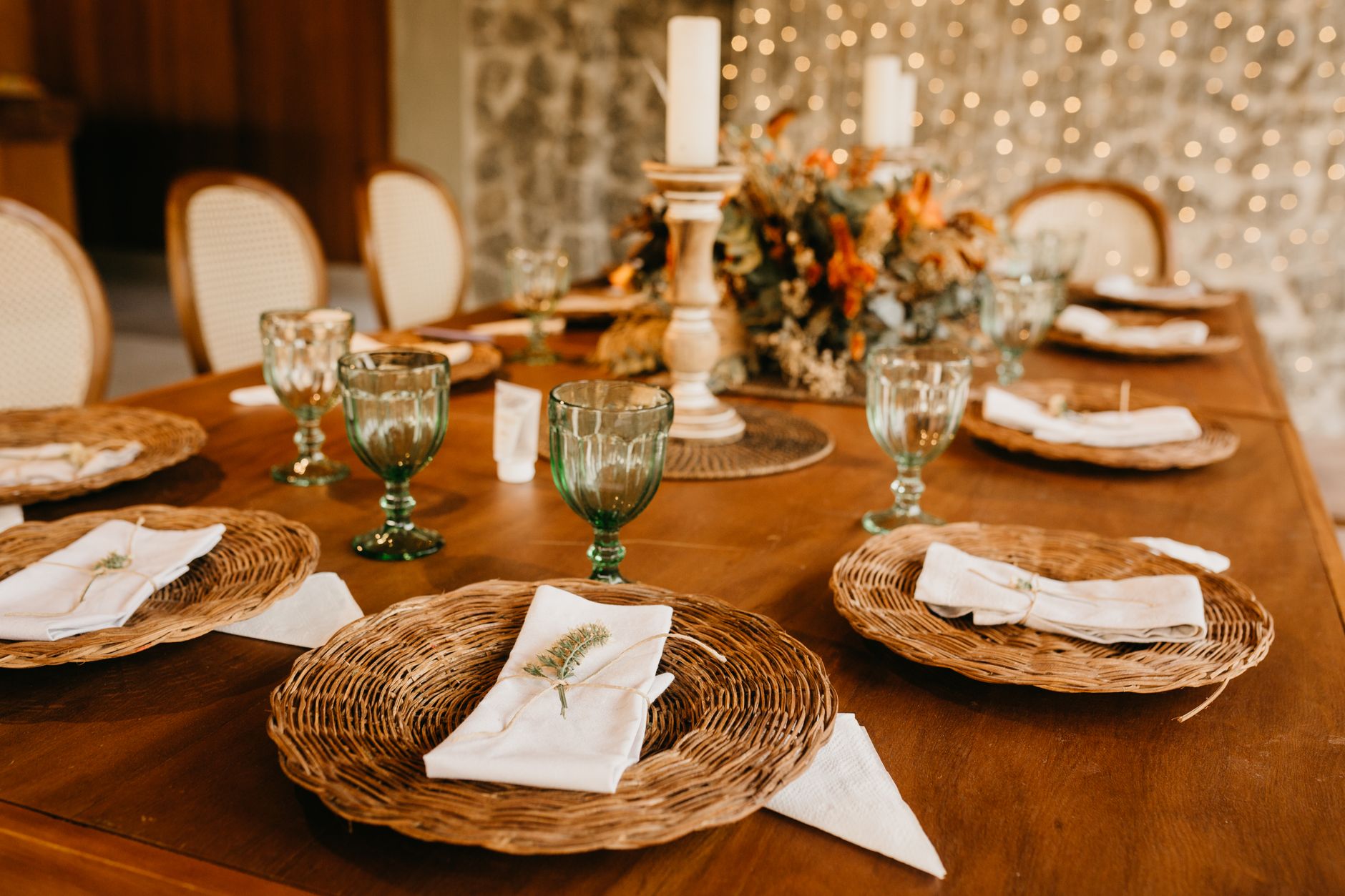
Start by correcting the table’s proportions
Before choosing linens or ceramics, look at the table itself. Mediterranean dining rooms usually feel generous, but not because they are overloaded. They rely on proportion: enough surface left visible, enough height to create interest, and enough breathing room for elbows, serving dishes, and conversation.
A long rectangular table can take a runner, a low centerpiece, and perhaps a small lamp or vessel on a nearby sideboard. A round table needs fewer pieces because everything competes for the center. A square table often looks best with one strong central object rather than several small ones.
The useful spacing rule
Keep the central decorative zone to roughly the middle third of the table. On a narrow table, that might mean a slim runner and one low bowl. On a wide farmhouse table, the center can hold a runner, a ceramic vase, and a small dish for lemons or olives. If the decor spreads too close to the place settings, the table stops feeling easy to use.
Height needs the same restraint. A centerpiece should generally sit low enough that seated guests can see over it without leaning around. Tall branches can be beautiful for a special dinner, but for daily life, they are better placed on a buffet, console, or windowsill where they can add vertical movement without blocking conversation.
Choose materials that look better with use
The strongest Mediterranean tables are not built from shiny perfection. They come from a mix of mineral, fiber, wood, clay, and metal. These materials age gracefully and can tolerate a little disorder: a bread crumb on linen, a water ring on stone, a stack of mismatched plates waiting to be cleared.
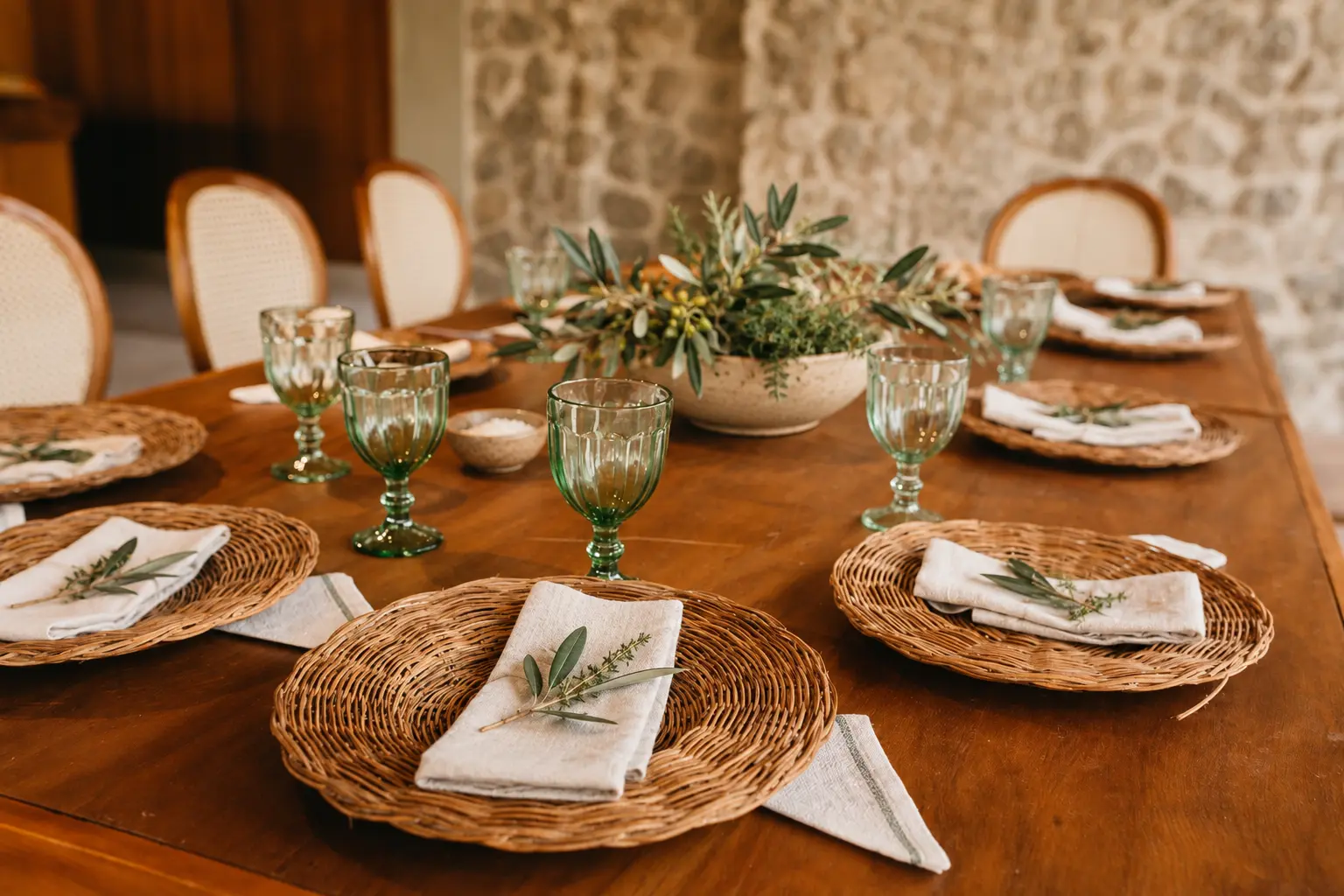
Linen is the easiest starting point. A runner softens a wood or stone table without hiding the surface. For everyday use, choose natural shades such as oat, flax, ivory, warm gray, or faded clay. Very crisp white can look elegant, but it also reads more formal and shows marks quickly. A slightly rumpled linen runner feels more in keeping with the relaxed Mediterranean mood.
Ceramic dinnerware brings the table back down to earth. Look for plates with a simple shape, a soft white or sand glaze, or a subtly irregular edge. Strong patterns can be beautiful, especially blue or ochre motifs, but they are easiest to live with when the rest of the table is quiet. If you already have patterned tile in the room, plain ceramics may be the more restful choice.
Wood should be allowed to show. Avoid covering a handsome dining table from end to end unless the surface is damaged or visually distracting. Mediterranean rooms often feel layered because you see the wood grain, the linen weave, and the ceramic glaze at the same time.
Warm metal belongs in small amounts. A brass lamp on a sideboard, antique brass candlesticks, or a dark bronze picture light can add warmth without looking ornate. Too much polished metal can push the room into hotel dining territory, so keep the finish softened and the shape simple.
A three-step formula for an everyday Mediterranean table
Use this simple formula when the table feels either bare or overdone. It gives the room structure without turning dinner into a production.
- Step 1: Lay one soft foundation. Use a linen runner, two overlapping linen squares, or woven placemats. The foundation should introduce texture, not dominate the table.
- Step 2: Add one useful ceramic anchor. Choose a low bowl, a serving dish, or a small cluster of plates. Fill it only if the contents feel natural: citrus, figs, walnuts, garlic, or nothing at all.
- Step 3: Finish with one vertical accent nearby. Place a vase, lamp, or framed piece on a sideboard, shelf, or corner of the table if space allows. This keeps the setting from feeling flat while preserving room to eat.
The restraint is important. Mediterranean style is often associated with abundance, but abundance does not mean clutter. It means the pieces feel substantial, tactile, and useful. A heavy ceramic bowl can do more for the table than six small decorative objects.
Light the room for faces, food, and evening warmth
Dining room lighting is where many Mediterranean schemes become too harsh. A bright overhead fixture may be useful for cleaning, but it rarely creates the softness associated with southern European interiors. The table should be lit clearly enough for dining, while the edges of the room remain warm and lower in contrast.
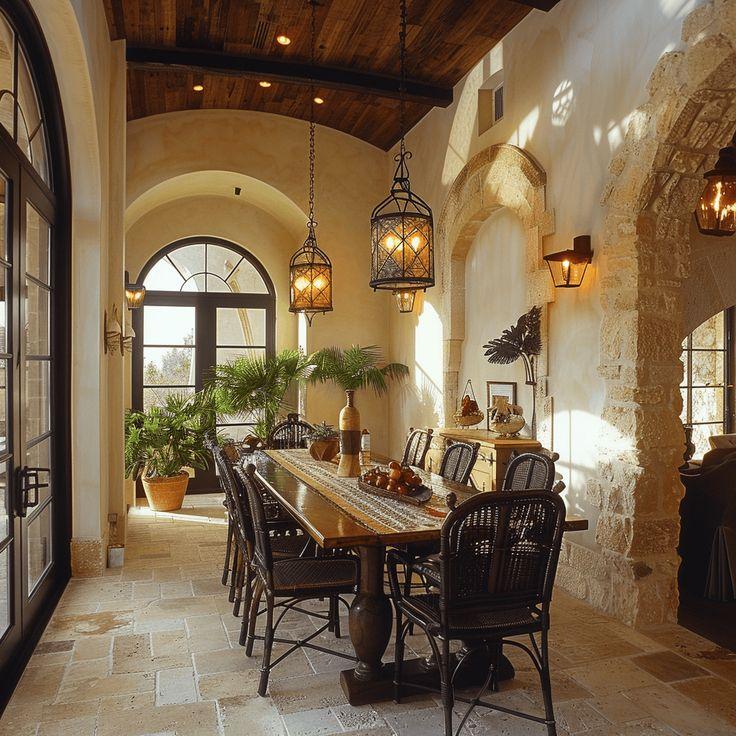
If you have a pendant or chandelier, pay attention to both height and shade material. A fixture that hangs too high can make the table feel disconnected from the room. A fixture that hangs too low can interrupt sightlines. In most dining rooms, the light should feel visually tied to the tabletop without becoming an obstacle.
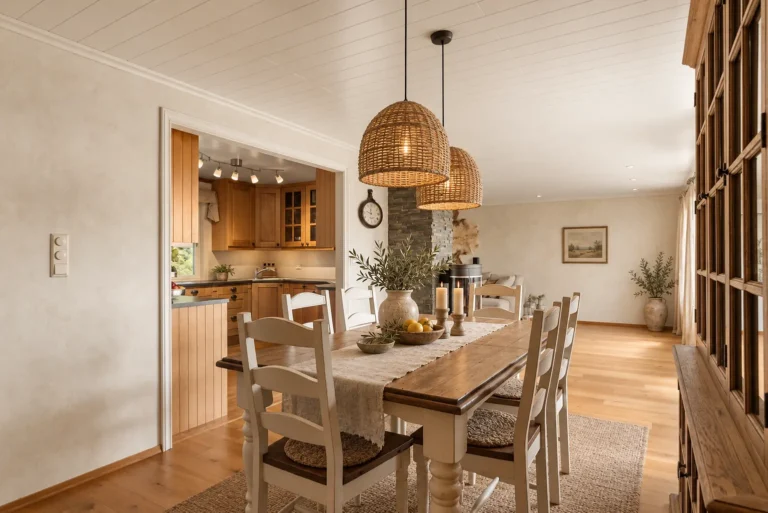
Material matters as much as placement. Woven shades blur light beautifully but can cast patterned shadows. Brass adds warmth, especially in rooms with cool painted walls. Ceramic or plaster-like shades feel quiet and architectural. Clear glass can work, but only if the bulb is warm and not glaring.
Do not rely on one ceiling source if the room feels flat at night. A small table lamp on a buffet, a pair of wall sconces, or a lamp on a console can make the entire dining area feel more settled. This is especially useful in open-plan homes, where the dining table has to hold its own between the kitchen and living room.
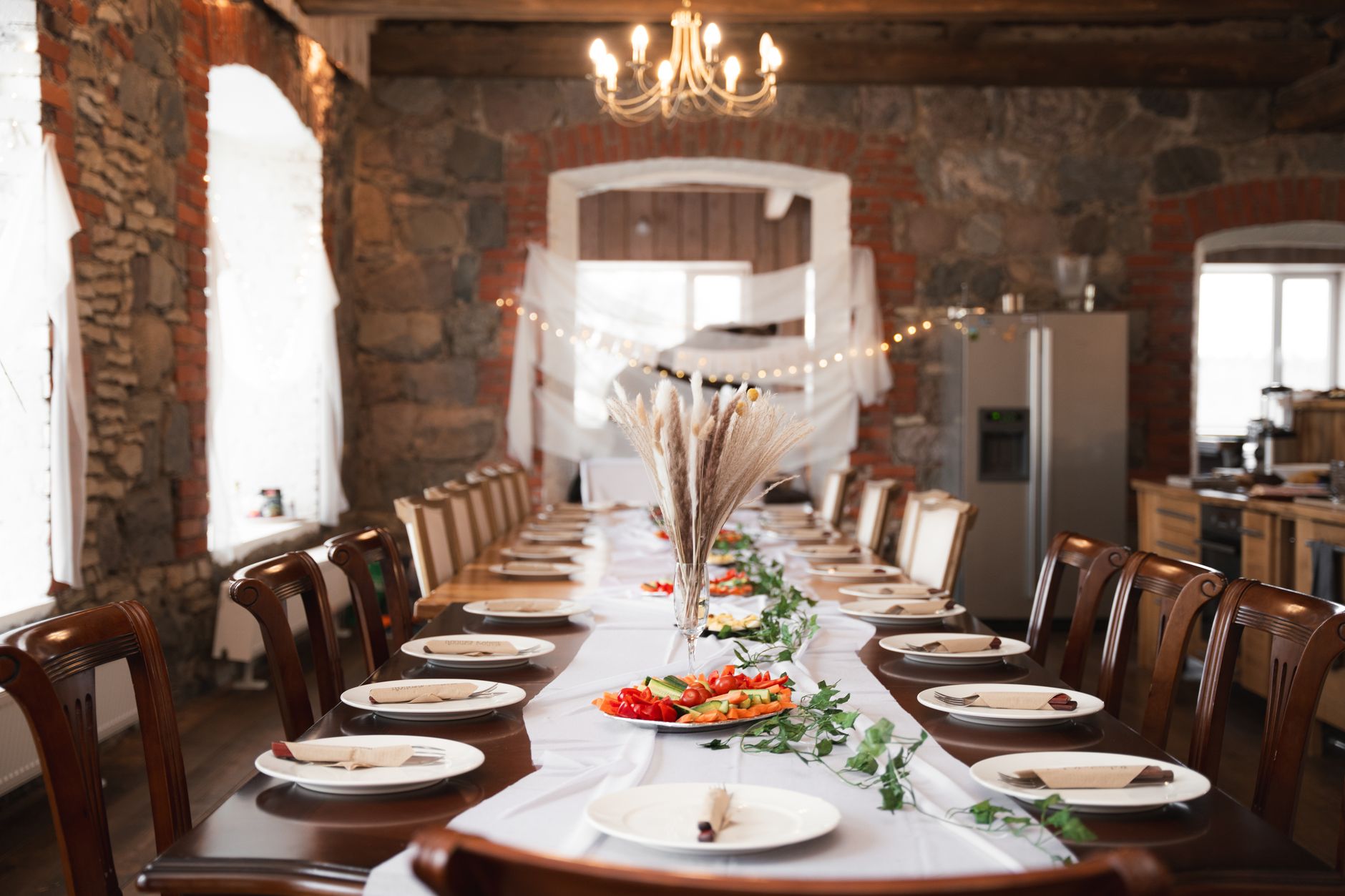
Keep the centerpiece low, edible, or sculptural
The centerpiece should make the table feel cared for, not decorated for a photo. Mediterranean rooms tend to look best when the tabletop objects have a relationship to food, craft, or landscape. That might be a ceramic bowl of lemons, a rough vase with olive branches, a shallow dish of almonds, or a simple pitcher left where water is served.
Fresh flowers can work, but avoid arrangements that feel too tight or florist-polished. A few stems in a rustic vessel usually look more at home than a dense bouquet. Greenery should be loose and slightly asymmetrical. Olive, bay, rosemary, or eucalyptus-like branches suit the mood, though any local branch with a graceful shape can work.
When the table is small
Use one shallow bowl or one narrow vase, not both. A small dining table becomes frustrating quickly if the centerpiece has to be moved at every meal. Choose an object with enough presence to stand alone, then keep salt, pepper, napkins, and serving pieces off the table until needed.
When the table is large
A large table can make a single small object look stranded. Instead of adding many unrelated accessories, stretch the composition horizontally. A runner, a low bowl, and one vase placed slightly off center will look more natural than a line of matching jars down the middle. Leave clear landing zones for serving platters at both ends.
Adapt the look to the room you actually have
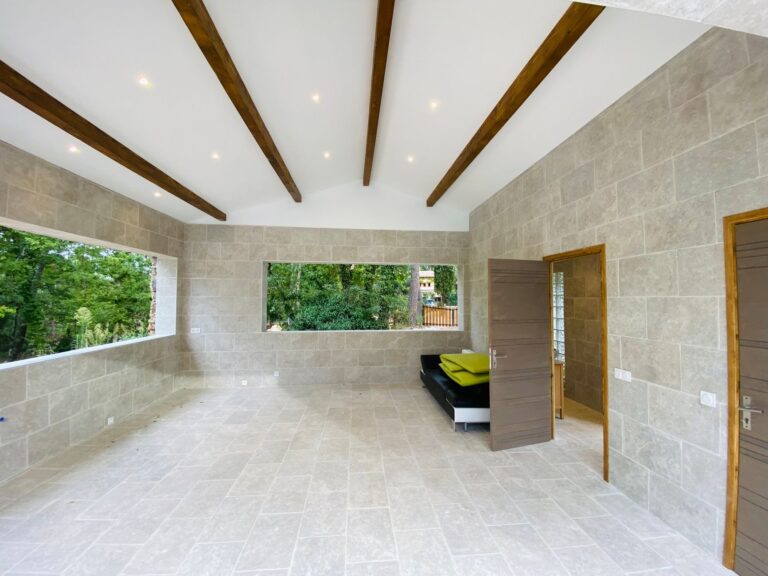
A Mediterranean dining table should respond to the architecture around it. The same linens and ceramics will feel different in a small apartment dining nook than in a separate dining room with tall windows. The trick is to edit the table according to the room’s limits rather than copying a grand villa setting.
In a small dining nook, keep the palette tight. Use a pale linen foundation, light ceramic plates, and one warm wood or clay accent. Chairs with slim legs, woven seats, or a light finish will help the table breathe. Avoid heavy centerpieces and large chargers, which can make the table feel crowded before food is even served.
In an open-plan dining area, the table needs to connect with the kitchen and living zone without matching them too literally. Repeat one material from each nearby space: wood from the kitchen stools, brass from a lamp, ceramic from open shelving, or linen from sofa pillows. This creates continuity while letting the dining table have its own identity.
In a formal dining room, the risk is stiffness. If the room has dark wood furniture, a symmetrical layout, or traditional molding, soften it with relaxed linen and handmade-looking ceramics. Leave some imperfection visible. Fold napkins simply, avoid overly polished centerpieces, and let the table feel ready for use rather than preserved for an occasion.
In a rental or newer build, use the table to add the texture the walls may lack. A linen runner, clay-colored ceramics, a woven chair seat, and a warm sideboard lamp can shift the mood without changing the architecture. If the overhead light is cool or unflattering, keep it dim when possible and add warm secondary lighting at the room’s edge.
Make storage part of the design
The table will only stay beautiful if the useful pieces have somewhere to go. Mediterranean style looks effortless, but it works best with simple routines. If every meal requires clearing a fragile arrangement, the table will eventually become either bare or messy.
Store the pieces you use daily within reach. Linen napkins can live in a shallow drawer, a basket, or a sideboard cabinet. Ceramic plates should be easy to access, not reserved on a high shelf. A serving bowl that doubles as a centerpiece earns its place because it is both decorative and practical.
If you like changing the table seasonally, keep the base consistent. A natural runner, simple plates, and a low bowl can stay year-round. In spring, add green branches or pale ceramics. In summer, use citrus, terracotta, and lighter linens. In autumn, bring in walnuts, olive tones, or deeper ochre. In winter, rely more on candlelight, brass, and heavier woven texture.
Care is part of the choice. Linen will wrinkle, and that is not a flaw in this style. Ceramic pieces may vary slightly in glaze, which often adds character. Wood needs protection from heat and standing water. If your household includes children, frequent entertaining, or multipurpose dining, choose fewer, sturdier objects and let the atmosphere come from texture and lighting rather than delicate accessories.
Shop the Look
These pieces support an everyday Mediterranean table: tactile, useful, and easy to layer without making the room feel overly styled.
- natural linen table runner
- simple ceramic dinner plates
- ceramic bowl for fruit or serving
- rustic ceramic vases
- brass table lamps for a sideboard
The finished table should be easy to return to
A good Mediterranean dining table does not need to announce itself. It should feel ready: a place where a loaf of bread, a bowl of olives, a stack of plates, or a vase of branches belongs without much rearranging. The beauty comes from the way the materials work together over time.
If the table feels too plain, add texture before adding more objects. If it feels too busy, remove anything that is not useful, tactile, or strongly connected to the room. Let the wood show, let the linen crease, and let the ceramics bring weight to the setting. The most convincing Mediterranean dining rooms are not perfect; they are composed enough to feel intentional and relaxed enough to welcome daily life.
Affiliate disclosure: La Maison du Sud may earn a commission from qualifying purchases made through links in this article, at no extra cost to you.