Mediterranean Dining Room Ideas for a North-Facing Room That Feels Too Cool
A north-facing dining room has a particular kind of difficulty. It may have decent daylight, but the light is blue, flat, and unforgiving. Pale walls can look gray by midafternoon. A stone or tile floor that felt elegant in a photo can feel chilly underfoot. Dark wood, if used too heavily, can make the room feel closed rather than warm.
The answer is not to force a sunny fantasy onto the room. A Mediterranean dining room can feel deeply warm without pretending to be bright. The most convincing rooms in Provence often work with shade: limewashed walls, old timber, terracotta, candlelight, thick linen, and a few quiet objects that have earned their place. For a cool dining room, the goal is to build warmth through texture, undertone, and scale rather than through loud color or decorative excess.
Start with the real problem: cool light, not lack of style
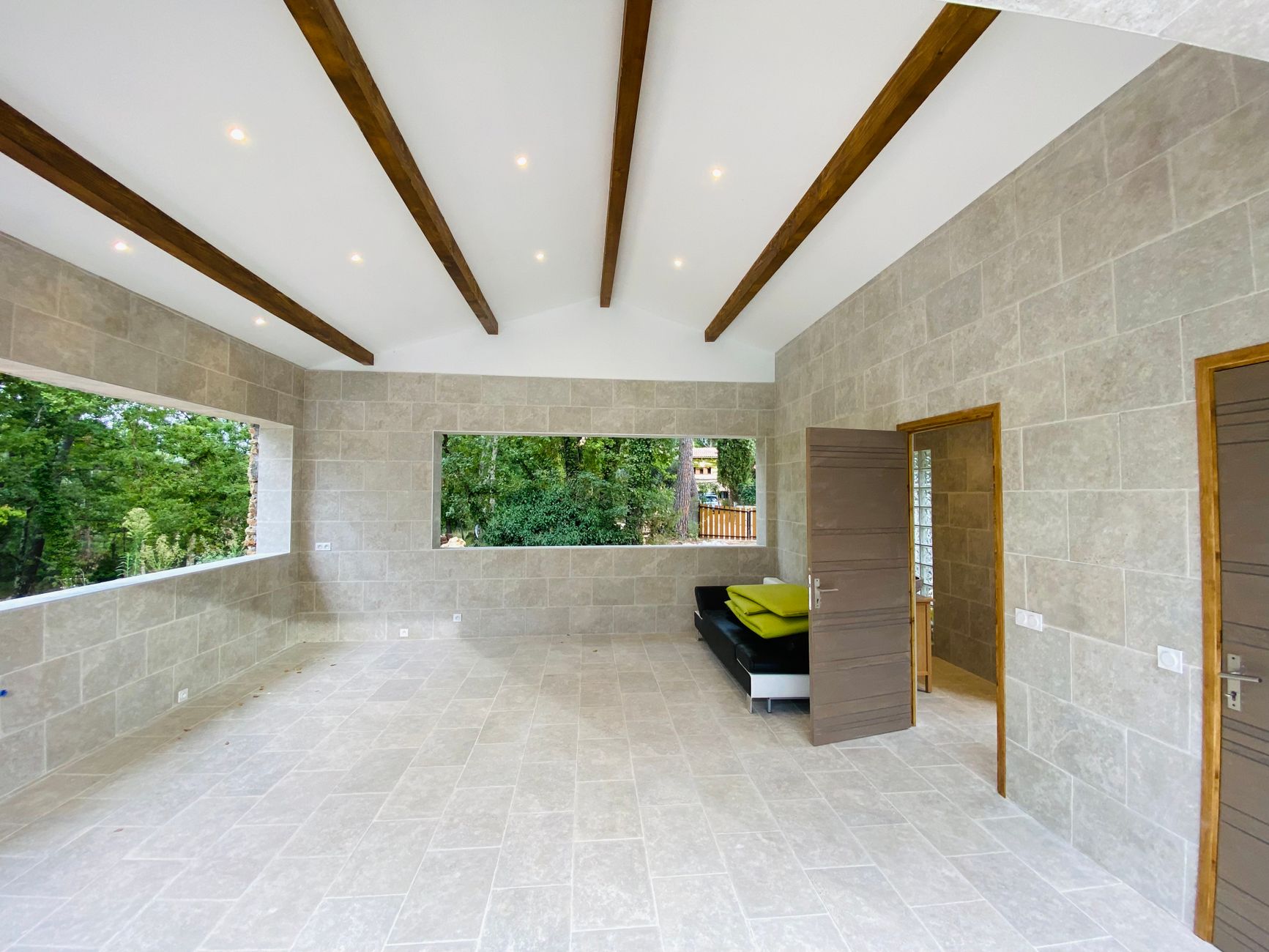
Before changing furniture or buying new decor, look at the room at three moments: morning, late afternoon, and after dark. A north-facing dining room often changes less dramatically than a south-facing one, but it reveals every undertone. Bright white paint may turn icy. Gray upholstery may feel cement-like. Chrome or polished nickel can look sharp. Even beige can fall flat if it has a pink or green cast.
In Mediterranean interiors, warmth usually comes from materials that absorb light softly: matte plaster, oiled or aged wood, terracotta, linen, cane, ceramic, and iron that has lost its shine. These elements help a cool room feel grounded because they do not rely on direct sun. They look good in shadow.
If the room already has a dining table, begin there. Is the table too glossy? Too dark? Too small for the room, leaving the edges feeling empty? A rustic wood table with a matte finish is often more forgiving than a polished surface. If replacing the table is not realistic, soften it with linen, ceramic, and low lighting rather than covering it completely. Mediterranean dining rooms are rarely convincing when every practical surface disappears under styling.
A warmer wall color is useful, but undertone matters more than depth
Many cool dining rooms are painted white because white seems safe. In a north-facing space, however, pure white can make natural materials look separate from the architecture. A better direction is a chalky warm neutral, especially one that sits between stone, cream, and sand. It should not read yellow. It should feel like plaster that has aged quietly.
If repainting is possible, test large samples on the shadiest wall and next to the floor. Dining rooms are often judged in evening light, so look at the sample with the actual bulbs you plan to use. A color that looks beautifully biscuit-toned in daylight can become dull under cool LEDs.
If repainting is not possible, correct the wall color indirectly. Hang a large piece with a linen, wood, or muted ochre tone. Add a sideboard in warm oak, walnut, or reclaimed pine. Use lamps with fabric shades near the wall so the light washes the paint gently. In a rented or newly finished room, the right light can do almost as much as a new paint color.
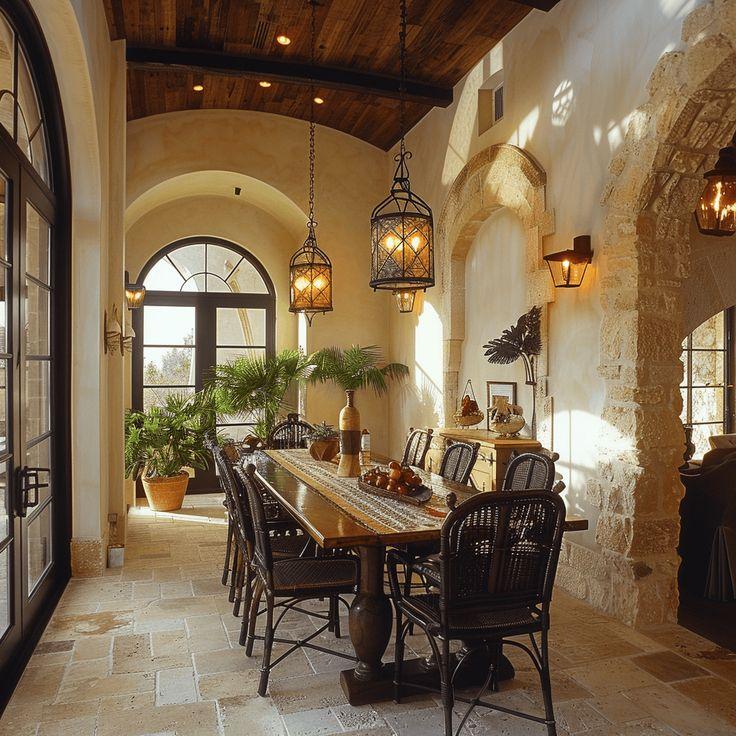
For a Provençal feeling, avoid high-contrast black-and-white schemes in a north-facing room. Blackened iron can be beautiful, but it works best as a line: a lantern frame, chair detail, curtain rod, or slim sconce. When black becomes the dominant accent, the room can feel graphic rather than lived in.
The table should anchor the room without swallowing it
A Mediterranean dining room does not need a massive farmhouse table to feel authentic. In many village houses and modest mas, dining rooms are compact. The table should leave enough air for chairs to move and enough visible floor to keep the room from feeling heavy.
For rectangular rooms, allow the table to follow the longest wall unless it blocks circulation. In a square room, a round table can soften the architecture and keep the shade from feeling static. Pedestal bases are useful in smaller rooms because they make chair placement easier and expose more floor.
Material makes a visible difference. A matte wood table brings warmth even before the room is styled. Pale oak, scrubbed pine, and medium walnut are easier to handle in cool light than espresso finishes. If the room has a stone or tile floor, avoid pairing it with a glass table unless you are deliberately going for a very spare, contemporary look. Glass reflects the coolness of the room and rarely contributes the tactile warmth people expect from Mediterranean interiors.
Chairs can be lighter than the table. Rush seats, cane backs, simple wood frames, or upholstered seats in flax-colored linen all work well. The most natural result often comes from slight variation: matching chair silhouettes with woven seats, or two end chairs that are a little softer without feeling formal.
A decision framework for choosing the warmest material layer
When a dining room feels too cold, it is tempting to add everything at once: a rug, curtains, lamps, new chairs, ceramics, art. Instead, choose the material layer that corrects the most visible problem first.
- If the floor feels cold: add softness underfoot or around the table with a flatwoven wool, jute-wool blend, or low-pile rug in sand, oat, clay, or faded olive. Keep the pattern quiet so chairs can move easily.
- If the walls feel stark: bring in linen curtains, a warm-toned artwork, a textured wall hanging, or a shallow cabinet in aged wood. The goal is to interrupt the chill without overcrowding the wall.
- If the table feels bare: use a washed linen runner, handmade-looking ceramics, and one low vessel. Let the grain of the table remain visible.
- If the room falls flat at night: correct the bulbs and add more than one light source before buying decorative objects. Warm, shaded light will make existing materials look better.
- If the room feels heavy rather than cold: remove one dark element before adding a warm one. A bulky cabinet, dark rug, or oversized pendant may be absorbing too much light.
Lighting should sit low, warm, and slightly imperfect
North-facing dining rooms depend on evening atmosphere. One central ceiling light is rarely enough, especially if it is bright, exposed, or cool-toned. Mediterranean rooms feel better when light comes from more than one level: a pendant over the table, a lamp on a sideboard, and perhaps a pair of small wall lights or candles.
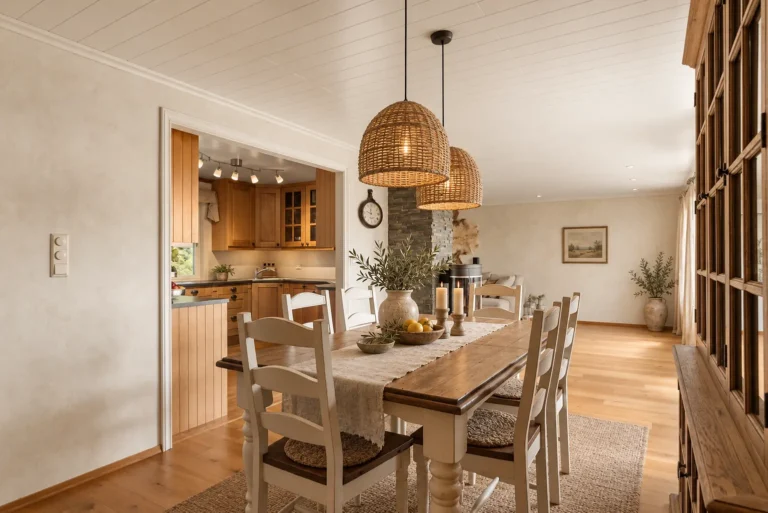
Over the dining table, natural materials are particularly forgiving. Woven pendants soften shadows and create a relaxed outline. Brass can work beautifully if the finish is aged or unlacquered-looking rather than mirror-bright. Blackened iron suits a more rustic room, but it should be balanced with linen, wood, or pale plaster so it does not become severe.
Keep the pendant visually related to the table. A small pendant over a long table can look timid, while an oversized shade in a low room can press down on the space. In many dining rooms, the best fixture is neither tiny nor theatrical: it is wide enough to mark the table, open enough to let the room breathe, and textured enough to look good when switched off.
Bulbs matter. Choose warm light for evening meals and avoid mixing one cool bulb with several warm ones in the same room. If a lamp has a linen shade, it will naturally diffuse the light and flatter plaster, wood, and ceramics. A sideboard lamp is especially useful in a dining room that feels chilly because it warms the perimeter, not just the table.
Use textiles to make the room feel inhabited, not decorated
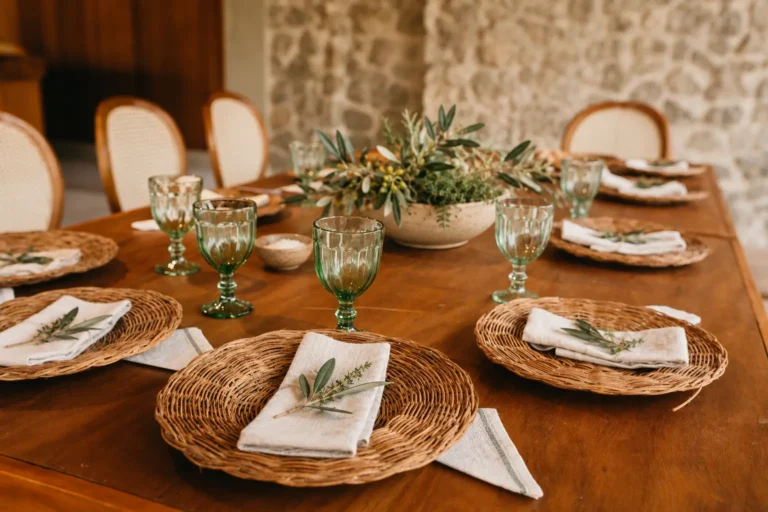
Textiles are the quickest way to warm a dining room, but they need to look relaxed rather than staged. In a cool Mediterranean room, linen is usually more convincing than shiny performance fabrics or crisp cotton. It has slub, shadow, and a softness that suits old stone and plaster.
Curtains can change the entire temperature of the room. If privacy is not an issue, choose unlined or lightly lined linen in a natural flax, chalk, or warm oatmeal shade. Hang them high enough to lengthen the wall, but let them fall simply. Overly tailored curtains can make a modest Mediterranean room feel suburban-formal.
On the table, a runner is often better than a full tablecloth for everyday use. It softens the center line while leaving wood visible. If you use placemats, choose woven or linen textures rather than glossy vinyl or high-contrast prints. The dining room should feel like a place where bread, olives, soup, fruit, and wine would sit comfortably, not like a showroom set for a holiday catalog.
Rugs require more caution. A thick rug under dining chairs can become frustrating. A flatweave or low pile is easier to live with. Leave enough rug beyond the table so chairs do not catch at the edge when pulled out. In a small room, a rug is not mandatory. Sometimes linen curtains and upholstered chair seats provide enough softness without complicating cleaning.
Bring in muted color through clay, olive, and aged wood
A north-facing room does not need bright color to feel warm. In fact, highly saturated terracotta, mustard, or turquoise can look artificial in cool light. The better palette is sun-faded: clay, dusted peach, wheat, olive, laurel green, warm gray-brown, and chalk.
Terracotta is useful because it adds warmth without shine. It can appear in a vessel, tile, planter, candle holder, or serving piece. Use it as a material first and a color second. A single matte terracotta pot on a sideboard may do more for the room than several orange accessories scattered across shelves.
Olive green is another strong choice, especially in fabrics, painted furniture, or ceramics. It connects naturally to Mediterranean landscapes and stays calm in shade. Keep the olive muted and slightly gray rather than bright. Pair it with linen, wood, and cream so it feels botanical rather than military.
Aged wood is the quiet mediator between cool architecture and warm styling. A pine sideboard, oak picture frame, or simple wooden serving board can make a plaster wall feel less bare. If all the wood in the room is new and perfect, add one piece with visible grain or patina. Mediterranean warmth often comes from imperfection: a nicked edge, a hand-thrown bowl, a linen crease.
Storage and display should look useful, not curated to death
Dining rooms become more believable when storage relates to meals. A sideboard with ceramic plates, glassware, linens, candles, and serving bowls feels natural. Open shelving can work, but only if the objects are edited and used. Too many decorative vessels can make the room feel like a shop.
For a cool room, display pieces with matte or softly reflective surfaces. Hand-glazed ceramics, clear glass, woven baskets, wood, and dull brass all catch light gently. Avoid filling shelves with very white ceramics against a cold wall; the effect can be clinical. Cream, stone, oatmeal, and clay tones are easier.
If the room is small, choose closed storage for visual clutter and leave one surface for atmosphere. A lamp, a bowl, and a seasonal branch are enough. If the room is larger, a tall cabinet can add architecture, but keep it shallow if circulation is tight. Mediterranean dining rooms look best when there is space to move with plates in hand.
Mirrors can help, but they should be used carefully. A mirror reflecting a cold blank wall doubles the problem. A mirror reflecting a lamp, a window, or warm wood can help. Choose a frame in aged wood, iron, or antique brass rather than a glossy metallic finish.
Details that keep the room from becoming themed
The fastest way to weaken a Mediterranean dining room is to over-explain it. Grapevine motifs, heavy faux-Tuscan finishes, ornate iron scrollwork, and brightly patterned everything can make the space feel theatrical. A more authentic room uses fewer signs and better materials.
Let one feature carry the mood. If the pendant is woven and sculptural, keep the table setting quiet. If the floor is handmade terracotta, use simple chairs and plain linen. If the sideboard is rustic, avoid loading it with equally rustic accessories. Contrast is what keeps the room fresh.
Scandinavian restraint pairs surprisingly well with Provençal warmth here. Clean chair lines, spare walls, and simple ceramics can make older materials feel current. The room should not look stripped, but it should have breathing space. Leave a stretch of bare plaster. Let the table show. Allow shadows to exist.
Maintenance also matters. Matte wood needs coasters and occasional care, but it hides small marks better than glossy finishes. Linen wrinkles, which is part of its charm, but it should be washable if used near food. Terracotta and unsealed ceramics can stain, so keep them for dry arrangements or use liners for plants. The best dining room is not precious; it can handle dinner.
Shop the Look
For a north-facing Mediterranean dining room, choose pieces that warm the table and the edges of the room through texture, not shine.
- woven pendant lights for soft texture over the table
- brass pendant lights with a warmer finish
- linen table runner for an everyday dining table
- ceramic dinner plates with a grounded Mediterranean feel
- rustic wood table lamps for a sideboard or buffet
Let the room grow warmer slowly
A cool dining room does not have to be corrected in one dramatic gesture. In many cases, the strongest changes are cumulative: a warmer bulb, a linen runner, a better-scaled pendant, a wood sideboard, a ceramic bowl that stays on the table because it is useful. Each layer should make the room feel more comfortable without making it busier.
The most convincing Mediterranean dining rooms are not perfect scenes. They are rooms that understand shade, texture, and time. In a north-facing space, that restraint is an advantage. Work with matte finishes, softened edges, warm neutrals, and low light, and the room will begin to feel less like a cold corner of the house and more like a quiet place to gather at the end of the day.
Affiliate disclosure: La Maison du Sud may earn a commission from qualifying purchases made through links in this article, at no extra cost to you.