Mediterranean Landscaping Ideas With Gravel, Rosemary, and Olive Trees for Sloped Front Yards
Mediterranean Landscaping for a Sloped Front Yard
A sloped front yard can feel like a design problem at first, but in Mediterranean landscaping it becomes an advantage. The gentle rise toward the house, the opportunity for layered planting, and the natural movement of stone and gravel all work beautifully with the informal elegance of southern European gardens. Instead of forcing the slope to become a flat lawn, a Mediterranean approach celebrates levels, texture, fragrance, and sun-loving plants.
This style is especially effective for homeowners who want curb appeal without a thirsty, high-maintenance yard. Pale gravel, rosemary, olive trees, lavender, low stone walls, and terracotta containers create a landscape that looks established, warm, and intentional. The goal is not a perfectly symmetrical formal garden. It is a front yard that feels rooted in the climate, softened by herbs, and shaped by practical materials that age well.
For a sloped front yard, the most successful Mediterranean design begins with three ideas: slow the movement of water, create comfortable paths, and use plants that look good in heat. Once these foundations are in place, the decorative details become easier. A simple olive tree can become a focal point, rosemary can define the edge of a path, and gravel can turn a difficult incline into a soft, luminous surface.
Start With the Shape of the Slope
Before choosing plants or decorative accents, study how the slope behaves. Notice where water runs after rain, which areas receive the strongest sun, and where people naturally want to walk from the street to the front door. Mediterranean landscaping should look relaxed, but the best examples are carefully planned underneath the surface.
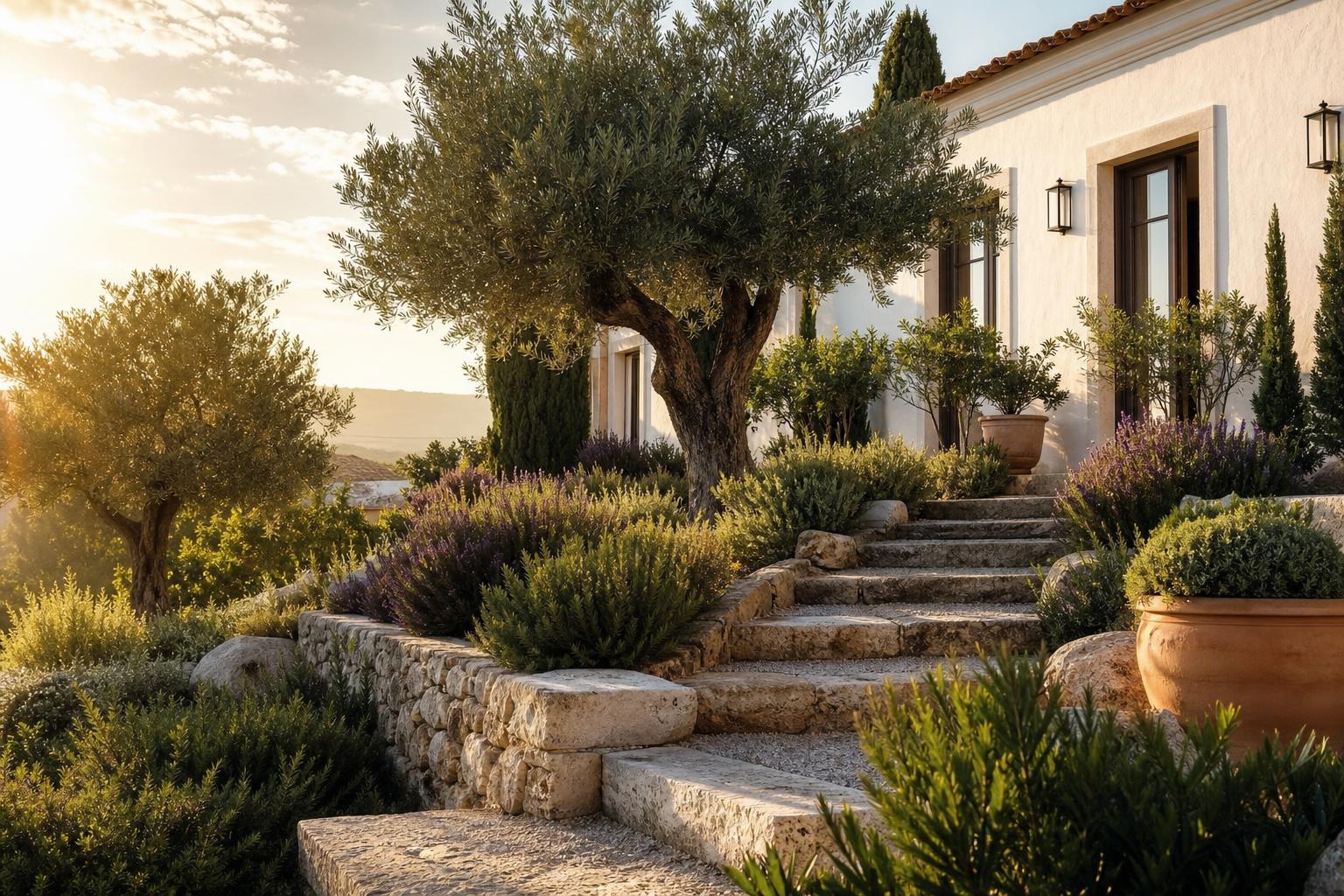
On a gentle slope, a curved gravel path may be enough to create graceful movement. On a steeper front yard, consider breaking the slope into small terraces with stone risers, low retaining walls, or planted bands. These levels make the landscape feel calmer and prevent gravel or soil from washing downhill.
Avoid treating the entire sloped yard as one large planting bed. Instead, think in layers. Place structural plants such as olive trees or cypress near the upper or middle portion of the yard, use rosemary and lavender to define the path, and reserve lower areas for spreading groundcovers or gravel pockets. This creates depth from the curb and makes the front yard feel designed from every angle.
Use Gravel as the Mediterranean Ground Layer
Gravel is one of the most useful materials for Mediterranean front yard landscaping, especially on dry or sunny slopes. It reflects light, keeps the palette warm, allows rain to drain, and gives the garden an immediate sense of texture. Compared with a traditional lawn, gravel also supports the low-water character that makes Mediterranean landscapes so appealing.
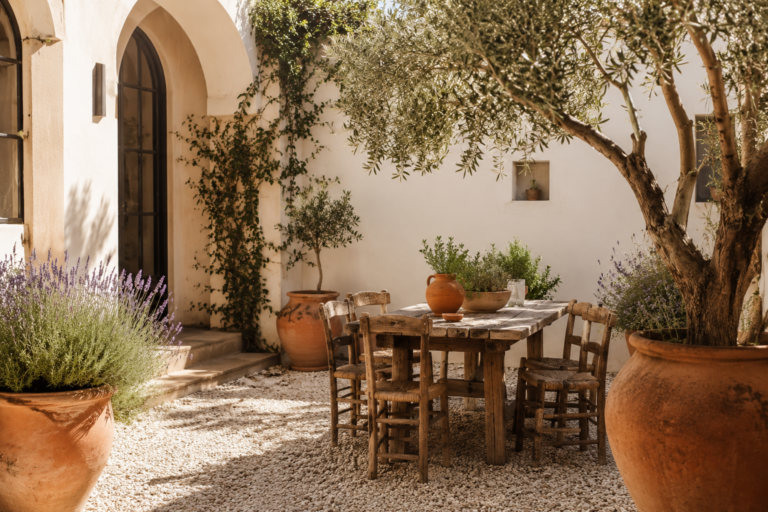
Choose gravel in soft natural tones rather than stark white or dark gray. Cream, beige, honey, buff, and pale limestone shades look especially good with olive trees and rosemary. The color should feel sun-baked, not decorative in an artificial way. If the house has white stucco, cream gravel creates a soft transition; if the exterior is stone or tan, a warmer gravel will make the landscape feel more cohesive.
On a slope, gravel needs structure. Use edging along paths and planting beds so it does not spill into the street or collect unevenly. For walkways, a gravel stabilizing grid can help keep the surface firm. This is especially helpful near the front entry, where guests need a comfortable and reliable path.
Where Gravel Works Best
- Along curved front paths that lead from the sidewalk to the door
- Between low stone terraces where lawn would be difficult to maintain
- Around olive trees, rosemary, lavender, and other drought-tolerant plants
- In parking strips or narrow side areas that need a polished low-water finish
- As a visual break between dense planting and architectural features
Choose Olive Trees as Sculptural Anchors
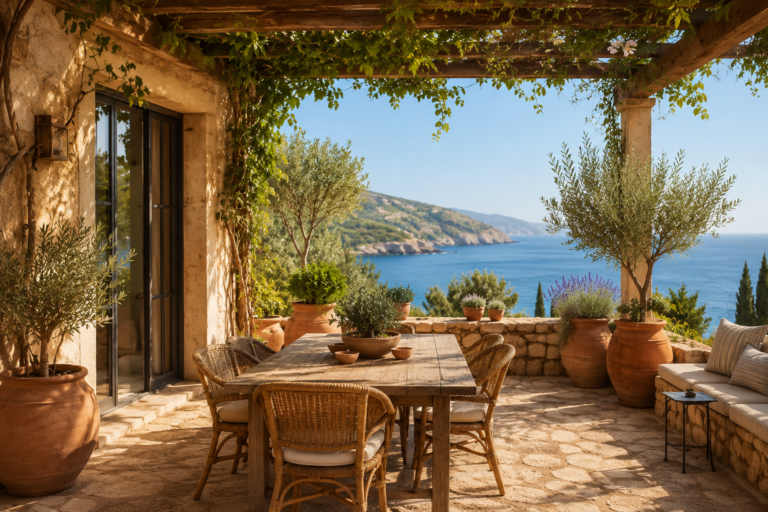
Few plants define Mediterranean landscaping as clearly as the olive tree. Its silvery foliage, twisted trunk, and airy canopy bring instant character to a front yard. On a slope, an olive tree also acts as a sculptural anchor, giving the eye a place to rest among gravel, herbs, and stone.
If your climate allows olive trees to grow outdoors year-round, use one mature specimen near a bend in the path or on a small terrace. It does not need to sit in the exact center of the yard. In fact, olive trees often look more natural when placed slightly off-center, as though the garden has grown around them over time.
For colder climates, consider a hardy olive variety in a large terracotta-style planter that can be protected in winter, or use a similar silvery evergreen suited to your region. The Mediterranean feeling comes from the texture, color, and sculptural quality, not from forcing a plant to survive in the wrong conditions.
Design Tips for Olive Trees
- Place an olive tree where it can be seen from the street and the front door.
- Surround the base with gravel, thyme, or low rosemary rather than heavy mulch.
- Use uplighting or warm path lighting to highlight the trunk in the evening.
- Keep nearby planting low so the tree remains the focal point.
- Pair olive foliage with cream gravel, aged terracotta, and pale stone.
Frame Paths With Rosemary
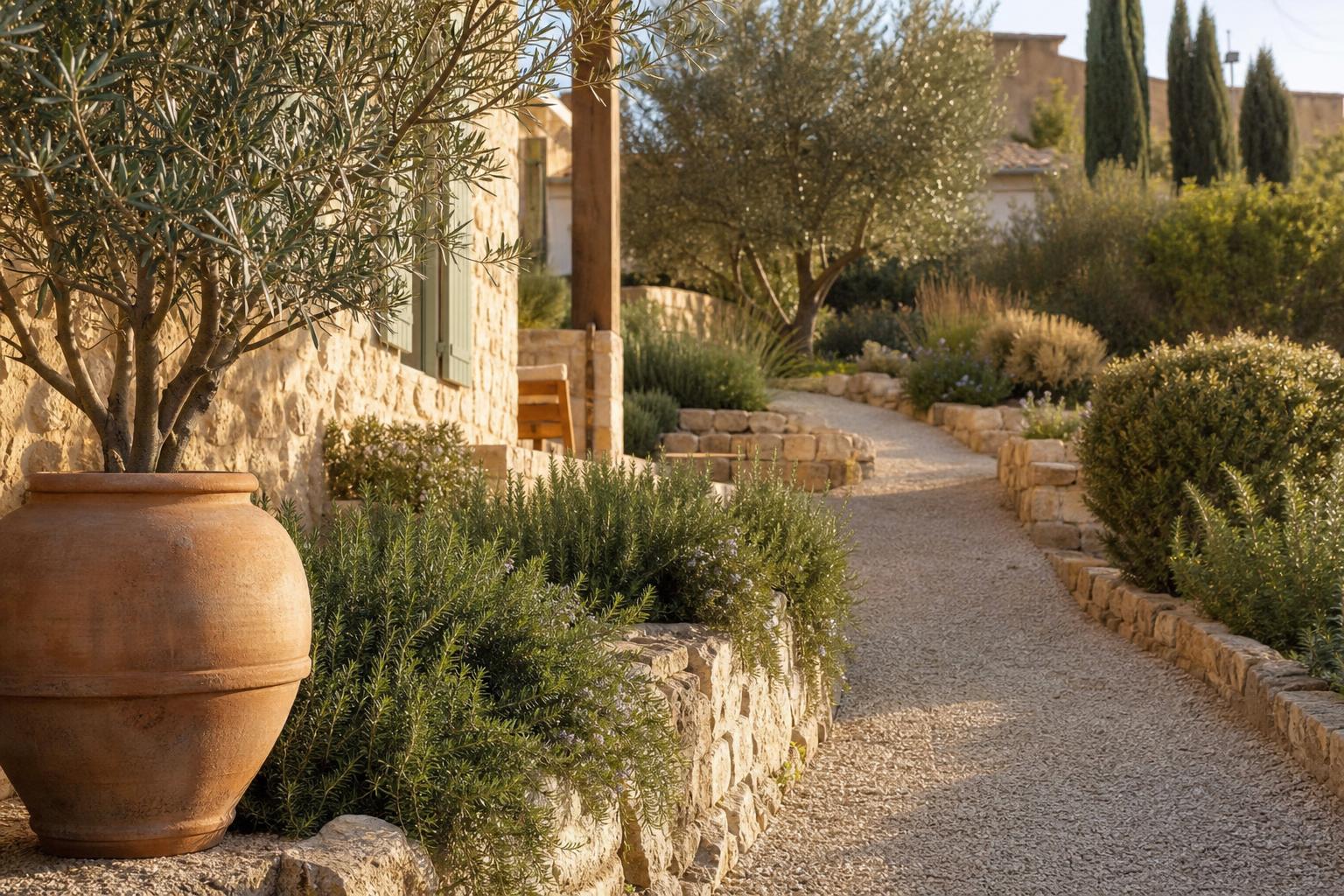
Rosemary is both beautiful and practical in a Mediterranean front yard. It handles heat, releases fragrance when brushed, stays green through much of the year in many climates, and provides a strong architectural line without looking stiff. Along a sloped path, rosemary can act like a living border that guides visitors toward the entry.
Upright rosemary is best for a more structured edge, while trailing rosemary is ideal for spilling over low walls or softening stone steps. If you like a slightly wild, Provençal feeling, mix rosemary with lavender and santolina. If you prefer a cleaner Spanish or Italian look, use rosemary in repeated bands with gravel between each layer.
The key is repetition. One rosemary plant may look accidental, but a series of rosemary shrubs along a path feels intentional and elegant. Let the plants grow close enough to create rhythm, but leave enough space for air circulation and mature size.
Add Low Stone Walls for Terracing
Stone is the backbone of a Mediterranean sloped front yard. It provides permanence, controls erosion, and visually connects the landscape to old-world architecture. Even a modest low wall can transform a difficult incline into a layered garden that feels calm and grounded.
Natural limestone, sandstone, fieldstone, or warm concrete blocks with a stone finish can all work, depending on budget and local availability. The wall does not need to be tall. In many front yards, a series of low retaining edges creates a more natural effect than one large retaining wall. These small terraces allow you to layer gravel, herbs, and small trees in a way that looks organic.
Keep the stone color close to the surrounding architecture. A Mediterranean landscape usually feels most authentic when the materials share a sun-warmed palette: cream, sand, taupe, weathered gray, clay, and muted gold. Avoid high-contrast materials if you want a timeless result.
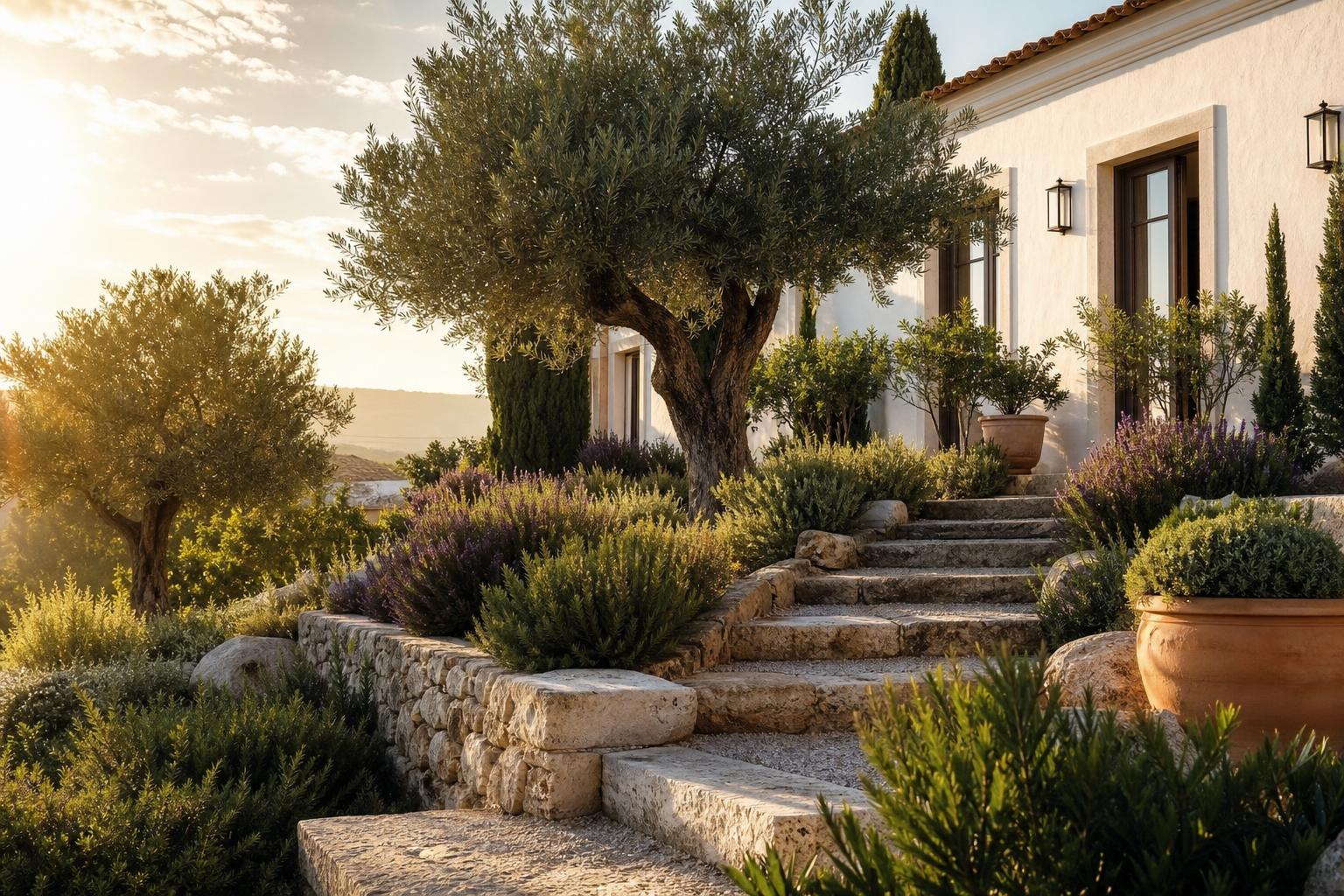
Design a Front Path That Feels Inviting
The path is one of the most important features in a front yard, especially when the ground slopes. In Mediterranean landscaping, the path should feel like a gentle invitation rather than a straight utility line. A slight curve slows the eye, makes the garden feel larger, and allows planting to reveal itself gradually.
If the slope is mild, a compacted gravel path with stone edging may be enough. If the slope is steeper, use broad stone steps set into gravel or framed with rosemary. Keep step heights comfortable and consistent. Mediterranean style may look relaxed, but safety and ease of movement are essential for a front entry.
For a more rustic look, combine irregular flagstones with gravel joints. For a cleaner look, use rectangular limestone pavers with gravel around them. Both options can feel Mediterranean when paired with the right planting and warm materials.
Layer Drought-Tolerant Planting
Mediterranean planting is not about filling every inch of soil. It is about rhythm, contrast, and plants that can hold their shape in heat. In a sloped front yard, layered drought-tolerant planting helps stabilize the soil while keeping the design airy and refined.
Start with evergreen structure. Olive trees, dwarf cypress, bay laurel, myrtle, and compact shrubs provide year-round form. Then add fragrant herbs such as rosemary, thyme, oregano, and sage. Finally, introduce seasonal softness with lavender, catmint, yarrow, or ornamental grasses suited to your climate.
Repeat fewer plant varieties rather than using one of everything. This is what gives Mediterranean front yards their calm, established quality. A slope with three olive trees, repeated rosemary, and drifts of lavender will usually look more elegant than a busy mix of unrelated plants.
Plant Combinations That Work Beautifully
- Olive tree, rosemary, lavender: classic, fragrant, and instantly Mediterranean.
- Cypress, gravel, santolina: structured and architectural for a formal entry.
- Bay laurel, thyme, terracotta pots: ideal for a smaller front yard or townhouse.
- Agave, rosemary, limestone: drier and more sculptural for hot climates.
- Ornamental grasses, sage, gravel: soft movement with low water needs.
Use Terracotta as a Warm Accent
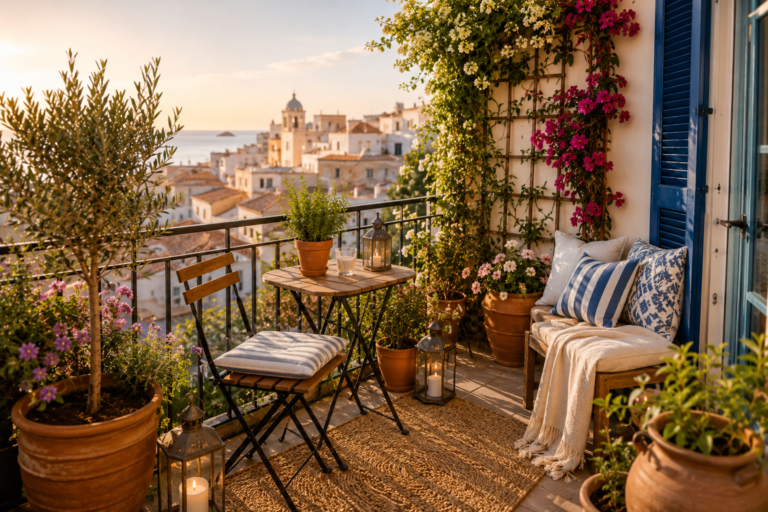
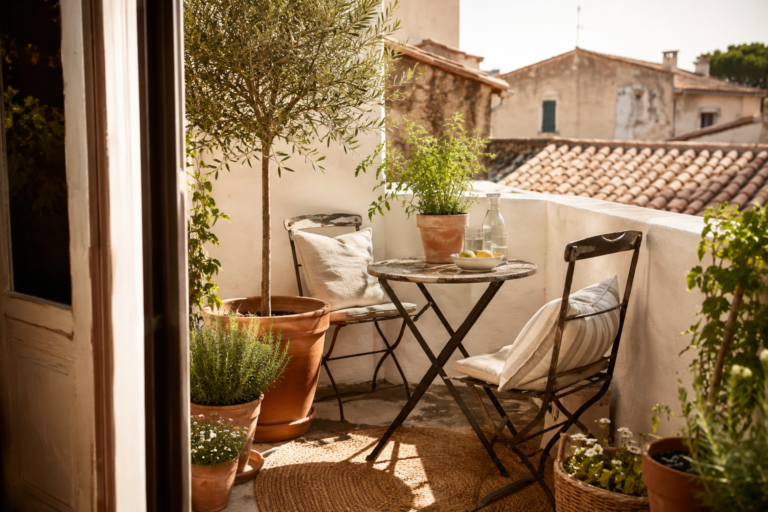
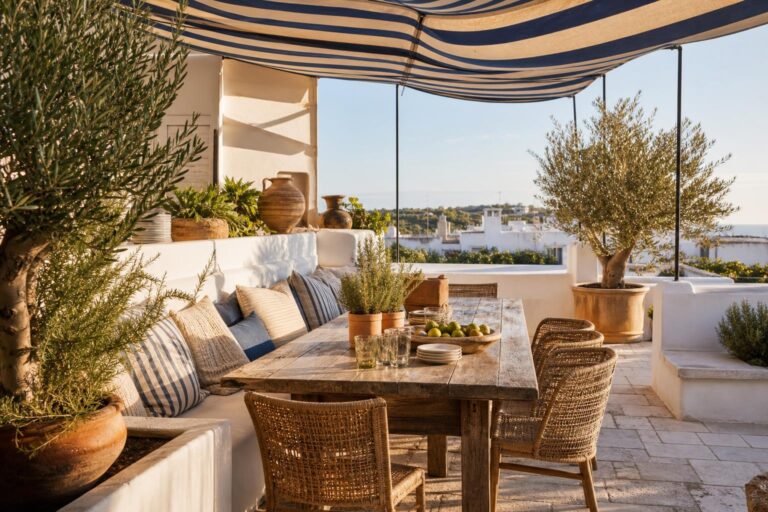
Terracotta is the easiest way to add warmth to a gravel-heavy landscape. Its earthy color balances pale stone and silver foliage, creating the sun-baked feeling associated with Mediterranean homes. In a sloped front yard, terracotta planters can also help mark transitions, such as the base of steps, the landing near the front door, or the turn in a path.
Choose simple shapes over overly ornate designs. Aged clay pots, olive jars, low bowls, and tall cylinder planters all work well. The finish should feel natural, matte, and slightly imperfect. If new terracotta looks too bright, it will soften over time outdoors.
For planting, use small citrus trees in warm climates, clipped bay, lavender, thyme, geraniums, or trailing rosemary. Keep the arrangement relaxed but not cluttered. A few large pots usually look more sophisticated than many small ones scattered across the slope.
Think About Drainage Before Decoration
Sloped front yards need careful drainage planning. Mediterranean materials like gravel and stone can help, but they must be installed correctly. If water runs too quickly down the slope, it can carry gravel, expose plant roots, or collect near the foundation.
Use terracing, gravel stabilization, French drains, dry creek beds, or strategically placed stones to slow and guide water. Plant roots also help hold soil, especially when shrubs and groundcovers are repeated across the slope. If your yard has significant runoff, consult a landscape professional before installing walls or major hardscape.
The most beautiful Mediterranean front yards work with the land rather than fighting it. Once water is managed, the garden will be easier to maintain and the materials will age more gracefully.
Choose Lighting That Feels Warm, Not Harsh
Front yard lighting should make the landscape feel welcoming after sunset while preserving the soft Mediterranean mood. Avoid cold white lights and overly bright fixtures. Warm, low lighting works best with gravel, stone, and olive foliage.
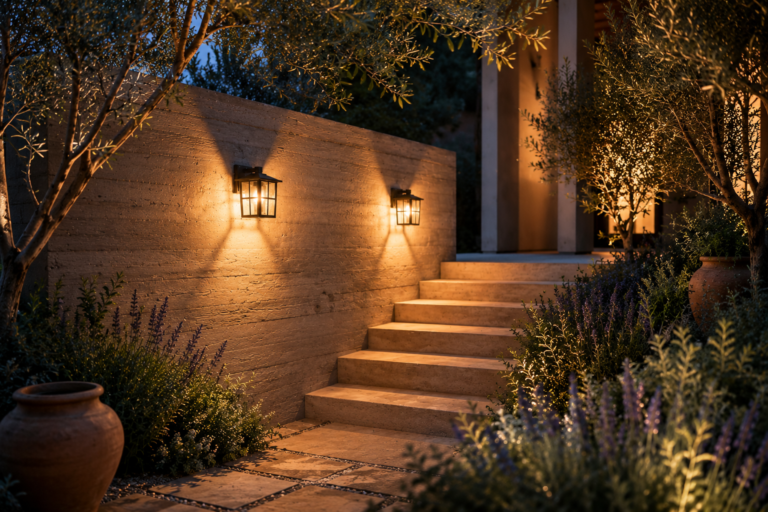
Use path lights along the safest walking areas, small uplights at the base of an olive tree, and subtle step lights if the slope includes stairs. The goal is to reveal texture without making the yard look commercial. Warm light on rosemary, stone walls, and terracotta can make the front entry feel inviting even in winter.
If wiring is difficult, solar path lights can be useful in sunny climates. Choose simple bronze, black, or aged brass finishes rather than shiny chrome. The fixtures should disappear into the landscape during the day.
Create Curb Appeal Without a Lawn
One of the strongest advantages of Mediterranean landscaping is that it does not rely on a green lawn to look finished. A sloped front yard can feel elegant with gravel, stone, herbs, and sculptural trees. This is especially helpful in dry regions or for homeowners who want to reduce watering and mowing.
To make a lawn-free front yard look intentional, define every area clearly. Use edging where gravel meets planting, keep paths readable, repeat plant varieties, and include at least one strong focal point. The design should feel simple from the street but layered as visitors approach.
Maintenance is still important. Rake gravel occasionally, prune rosemary after flowering, remove weeds before they spread, and refresh terracotta containers seasonally. Mediterranean landscaping is low-maintenance, not no-maintenance. The charm comes from controlled softness.
Budget-Friendly Ways to Get the Look
You do not need to redesign the entire front yard at once. Mediterranean landscaping can be built slowly, especially on a slope. Start with the path and erosion control, then add structure, then layer in decorative details.
If the budget is limited, prioritize gravel, edging, and a few repeated plants. A single young olive tree, several rosemary shrubs, and a clean gravel path can make a dramatic difference. Terracotta pots near the front door can add instant warmth while larger planting matures.
Another budget-friendly strategy is to use local stone. Mediterranean style is never about importing every material from far away. It is about choosing natural textures that look at home in the climate. Local stone often feels more authentic and costs less than highly processed imported options.
Smart Places to Save
- Use young olive trees and allow them to mature over time.
- Choose gravel for larger areas instead of expensive paving.
- Plant rosemary from small nursery pots in repeated groups.
- Use terracotta near the entry where it has the most visual impact.
- Install the landscape in phases, starting with drainage and paths.
Common Mistakes to Avoid
The biggest mistake in a Mediterranean sloped front yard is using too many unrelated materials. Gravel, stone, terracotta, metal edging, concrete pavers, colorful tile, and several mulch types can quickly feel chaotic. Limit the palette so the slope looks calm and cohesive.
Another mistake is planting without considering mature size. Rosemary, lavender, olive trees, and cypress all need room to breathe. Crowding them may look full at first, but it can lead to heavy pruning and poor airflow later.
Finally, avoid making the path too narrow or steep. A front yard must be beautiful, but it also needs to function every day. Comfortable movement, stable footing, and good lighting are part of good Mediterranean design.
Shop the Mediterranean Look
Bring the relaxed structure of a Mediterranean front yard to life with gravel-friendly materials, aromatic planting accents, and warm terracotta details.
- decorative pea gravel for Mediterranean paths
- large terracotta outdoor planters
- warm white solar path lights
- stone-look garden edging borders
- gravel grid stabilizer for sloped paths
- simple outdoor herb plant markers
Conclusion: A Sloped Front Yard Can Become the Best Feature
A Mediterranean sloped front yard works because it turns challenge into character. Instead of hiding the incline, the design uses gravel, stone, rosemary, olive trees, and terracotta to create layers of texture and movement. The result is warm, practical, drought-tolerant, and full of curb appeal.
Begin with the essentials: shape the slope, guide water, and create a path that feels natural. Then add the plants and details that bring the Mediterranean mood to life. With silvery foliage, fragrant herbs, warm stone, and soft gravel underfoot, even a difficult front yard can feel like a sun-washed entrance to a timeless home.