Mediterranean Terrace Ideas With Built-In Benches and Striped Awnings for Rooftop Dining
Designing a Mediterranean Terrace for Rooftop Dining
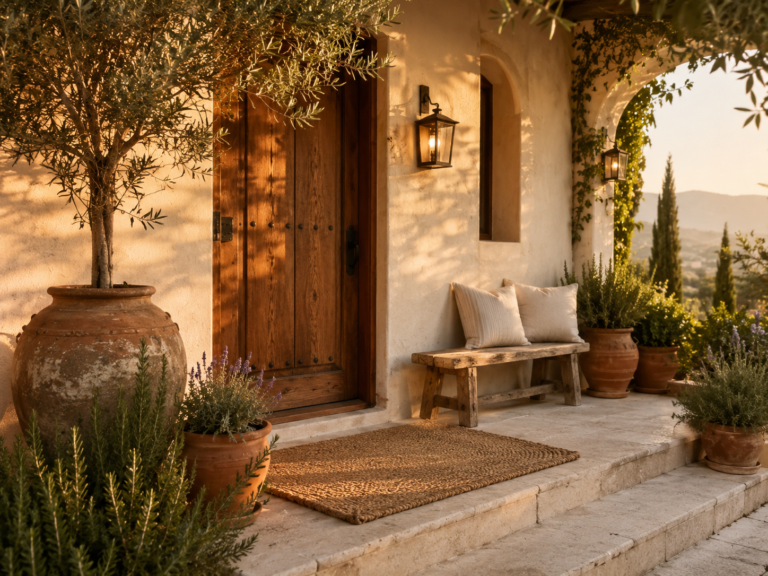
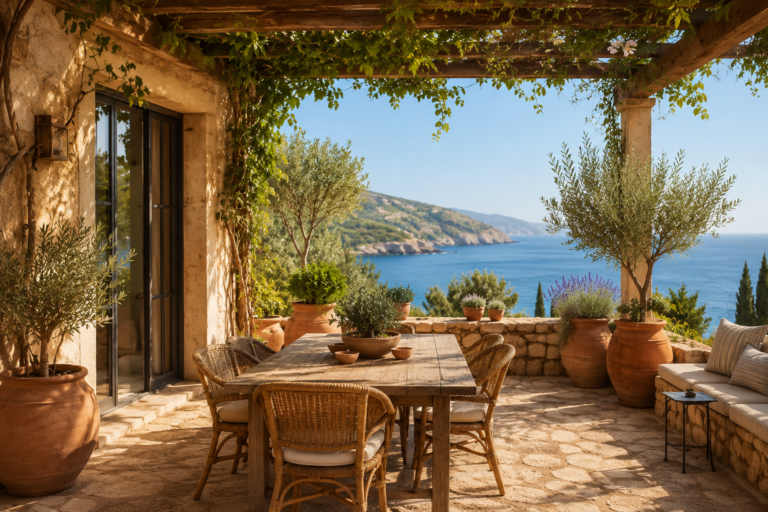
A Mediterranean terrace designed for rooftop dining should feel generous, shaded, textured, and quietly practical. It is not only a place to put a table outside. It is a small open-air room where meals stretch into the evening, cushions soften hard architecture, awnings move with the breeze, and every surface looks better in golden light. The most successful terraces borrow from the coastlines of Southern Europe: limewashed walls, terracotta pots, stone or clay-toned floors, striped textiles, wrought iron details, and simple furniture that can handle sun, wind, and daily use.
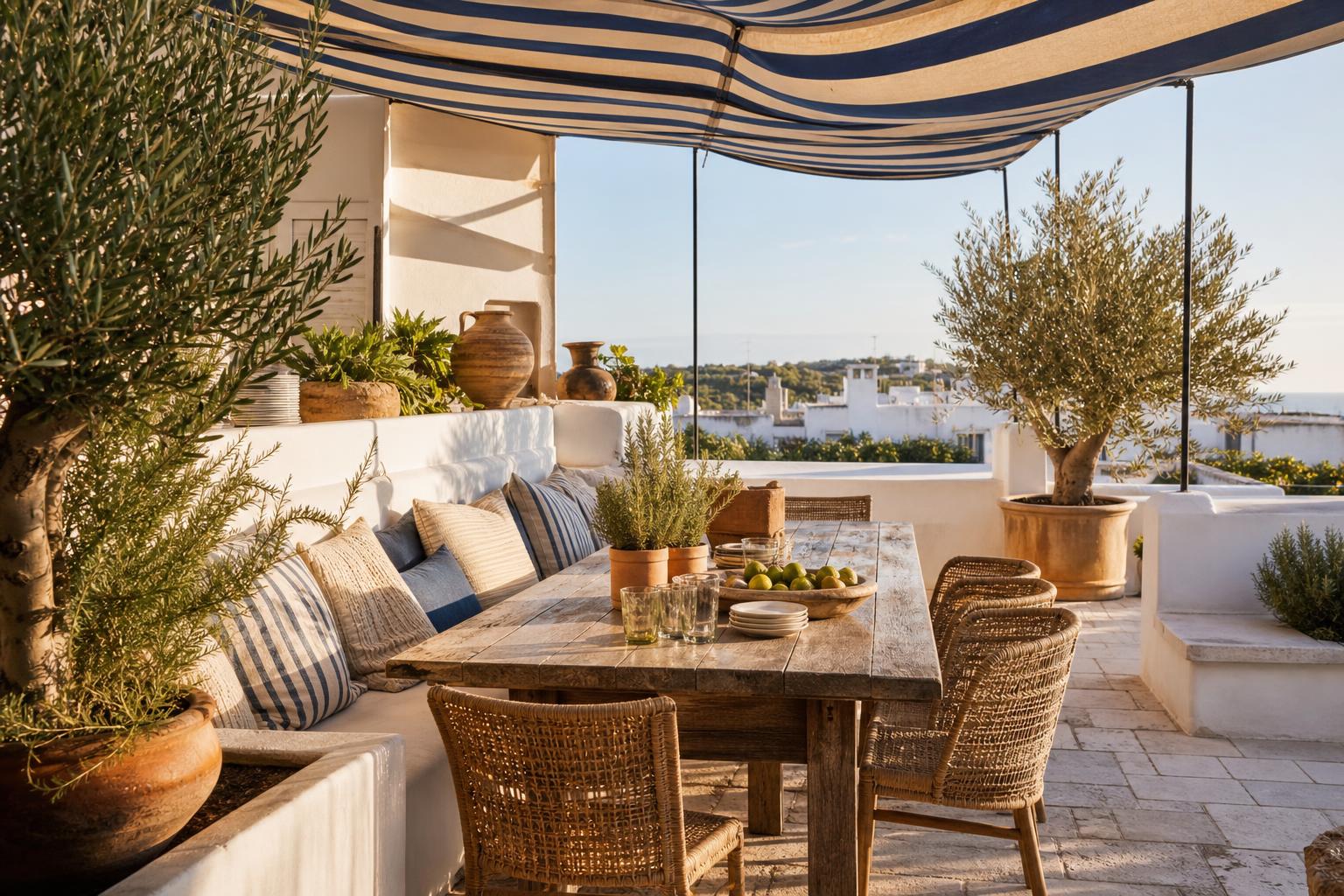
This particular approach focuses on built-in benches and striped awnings, two elements that are especially useful on rooftops. Built-in seating makes the most of perimeter walls and tight corners, while awnings provide comfort during lunch, early evening drinks, and weekend gatherings. Together, they create the feeling of a sheltered dining nook without enclosing the terrace or blocking the view.
The goal is not to recreate a resort terrace. It is to build a layered, welcoming outdoor dining space that feels collected over time. Think plastered benches topped with washable cushions, a narrow rustic table, potted herbs within reach, lanterns glowing after sunset, and a palette of chalk white, sun-faded blue, sand, clay, olive green, and aged wood.
Start With the Rooftop Layout
Before choosing finishes, study how the terrace behaves during the day. Rooftop spaces can be hotter, windier, and more exposed than courtyards or ground-level patios. Mediterranean style may look effortless, but the best results come from planning around sun, shade, circulation, and the direction of the view.
Place the dining area where it feels protected but not boxed in. If the terrace has one solid wall, use it as an anchor for a built-in bench. If there are low parapet walls, they may define a natural dining zone. A rectangular table works well against a long bench, while a round table is better for a compact corner where movement is limited.
Leave enough space for guests to move around chairs comfortably. On a narrow rooftop, choose one built-in bench and keep chairs only on the opposite side of the table. This creates a café-like arrangement that saves floor space and still accommodates several people. For larger terraces, consider an L-shaped bench that frames the dining table and leaves the center open.
Built-In Benches: The Heart of the Terrace
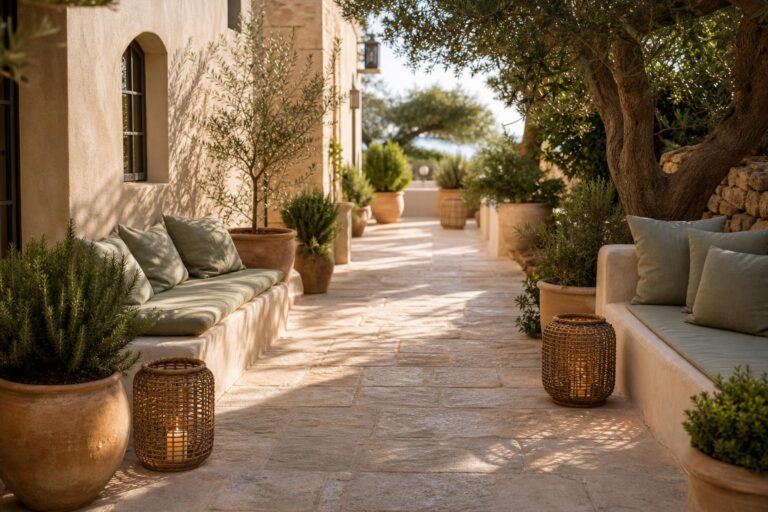
Built-in benches instantly make a terrace feel architectural. In Mediterranean design, they often look as if they belong to the structure itself: white plaster, rounded corners, thick bases, and simple proportions. This softness is important. Rooftop terraces can feel hard because of concrete, metal railings, and bright exposure. A plaster bench gives the space visual calm.
If you are renovating, a masonry or rendered bench is the most authentic choice. It can be built along a wall, under an awning, or around a corner. Keep the shape simple and avoid overly decorative curves. A straight bench with slightly rounded edges will feel timeless and easy to style.
For a less permanent option, use outdoor storage benches or modular bench frames and paint them in a warm white or stone color. Add thick cushions in outdoor fabric to create the look of a built-in banquette. This works especially well for renters or homeowners who want the character of Mediterranean seating without construction.
Comfort Matters More Than Decoration
A bench must be comfortable enough for long meals. Choose seat cushions with good thickness, ideally in a fabric that resembles linen but is made for outdoor use. Back pillows make a major difference, especially if the bench sits against a rough wall. Use a mix of rectangular cushions and smaller pillows, but keep the palette restrained so the terrace does not feel busy.
Sand, oatmeal, ivory, faded indigo, muted terracotta, and olive are excellent colors for cushions. If you introduce stripes, repeat them with intention. For example, if the awning is blue and cream, choose one or two blue striped pillows rather than covering every seat in pattern.
Striped Awnings for Shade and Character
A striped awning is one of the most recognizable Mediterranean terrace details because it is both decorative and useful. It brings shade, color, rhythm, and a sense of holiday ease. On a rooftop, it can also make dining possible during the brightest hours of the day.
Classic stripe combinations include blue and white, sand and cream, green and ivory, or terracotta and natural canvas. Blue and white feels coastal and crisp. Sand and cream is softer and more neutral. Green and ivory works beautifully with olive trees and herbs. Terracotta stripes feel warmer and earthier, especially with clay pots and aged wood.
Choose the stripe scale carefully. Wide stripes look bold and graphic, which can be beautiful on a large rooftop. Narrow stripes feel more traditional and delicate. If the terrace is small, medium stripes often create the best balance because they add pattern without overwhelming the architecture.
Where to Place the Awning
The awning should protect the dining table and built-in bench first. If possible, angle it so it blocks the harshest afternoon sun without cutting off air movement. Retractable awnings are useful when you want flexibility, while fixed fabric canopies create a stronger room-like effect.
If a permanent awning is not possible, use a striped umbrella, a sail shade, or a fabric canopy attached to discreet hooks. The key is to make the shade look intentional. A simple striped fabric stretched over a dining corner can feel more Mediterranean than a complicated structure in a shiny modern finish.
Choose a Dining Table With Texture
The dining table sets the tone for the terrace. For Mediterranean rooftop dining, avoid furniture that feels too polished or fragile. A rustic wood table, travertine-look table, stone-effect surface, or metal bistro base can all work well. The table should look relaxed enough for shared plates, bread baskets, fruit bowls, and ceramic pitchers.
If you have a built-in bench, consider a narrow rectangular table. It allows guests to slide in easily and keeps the layout efficient. A pedestal table can work in small spaces because it gives more legroom along the bench. For a larger terrace, a long farmhouse-style outdoor table creates a beautiful gathering point.
Weather resistance is essential. Rooftop furniture faces strong sun and sudden rain, so look for sealed wood, powder-coated metal, stone composite, concrete, teak, or durable outdoor materials. Mediterranean style does not require everything to be antique or handmade. A modern outdoor table can feel perfectly at home if its color and texture are warm and natural.
Use Woven Chairs to Lighten the Setting
Woven outdoor dining chairs add a relaxed layer to the look. They contrast beautifully with the solid quality of plaster benches and stone floors. Choose chairs with rattan-style texture, rope seats, wicker-inspired backs, or cane-look details made from weather-resistant materials.
For a classic terrace, pair a built-in bench on one side of the table with woven armchairs on the other. This combination feels informal but elegant. If space is tight, use armless chairs that tuck fully under the table. If the terrace is windy, avoid very lightweight chairs unless they can be secured or stored easily.
Black metal bistro chairs can also work, especially with striped awnings and terracotta pots. They add a stronger café feeling and are practical for narrow terraces. To soften them, add thin seat cushions in natural canvas or faded blue.

Build the Color Palette Around Sun and Shade
A Mediterranean rooftop terrace looks best when the color palette responds to strong light. Colors appear brighter outdoors, so slightly muted shades often feel more sophisticated than saturated ones. Start with a base of warm white, limestone, sand, or pale plaster. Then add clay, olive, weathered wood, and one accent color.
For a coastal mood, choose faded blue as the accent. Blue striped awnings, blue ceramic bowls, and a few blue cushions can bring freshness without making the space feel themed. For an earthier terrace, use terracotta stripes, olive cushions, and natural jute or rope textures. For a quiet luxury look, keep everything in white, stone, beige, and dark bronze, then let greenery provide the contrast.
The most important rule is repetition. If you use terracotta planters, repeat clay tones in dinnerware or cushions. If the awning is green and ivory, echo green through herbs, olive branches, or striped napkins. Repetition is what makes a small rooftop terrace feel designed rather than decorated piece by piece.
Terracotta Pots and Rooftop Greenery
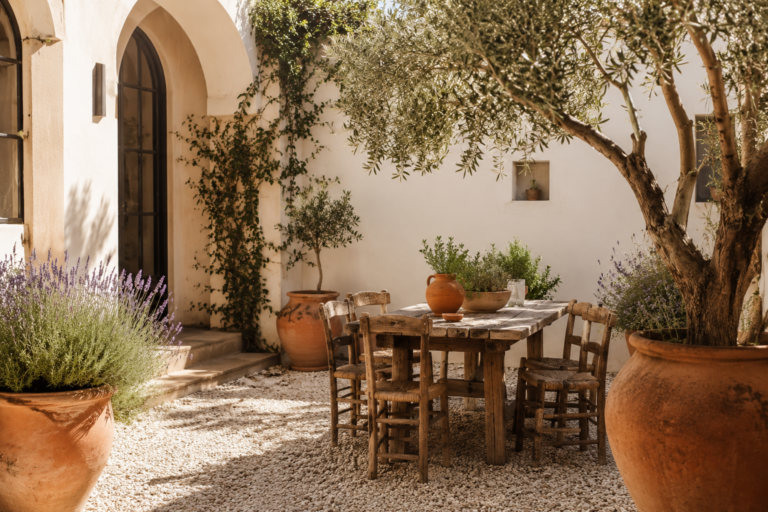
No Mediterranean terrace feels complete without plants. On a rooftop, plants provide shade, privacy, scent, and movement. Terracotta pots are especially effective because they add warmth and age beautifully in the sun. Use a mix of heights rather than lining up identical containers. A tall olive tree, medium rosemary shrubs, and smaller pots of thyme, basil, or lavender create a natural rhythm around the dining zone.
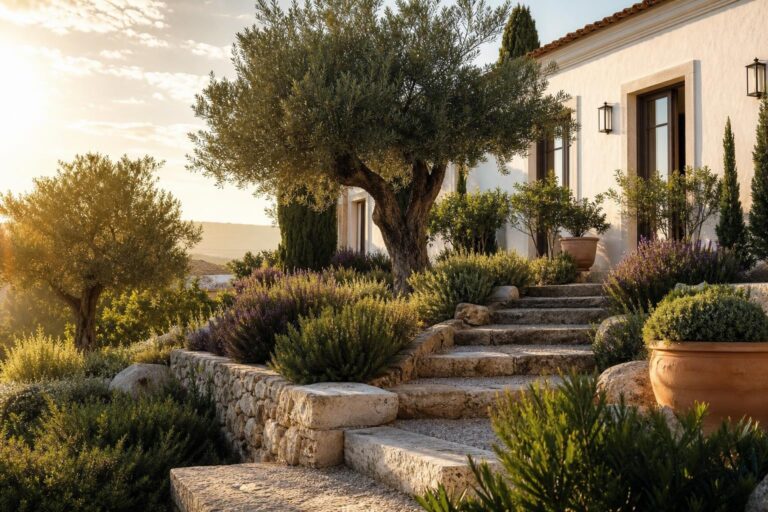
Choose plants that suit the exposure. Rooftops can be dry and windy, so drought-tolerant Mediterranean plants are ideal. Olive trees, bay laurel, rosemary, lavender, santolina, jasmine, dwarf citrus, agave, and bougainvillea can all be beautiful depending on your climate. If summers are very hot, group pots together to help retain moisture and protect smaller plants.
Place herbs close to the dining table so they feel useful as well as decorative. A pot of rosemary beside the bench or basil near the serving area adds fragrance and makes the terrace feel connected to everyday meals.
Flooring That Supports the Mediterranean Mood
The terrace floor has a major influence on the final atmosphere. Natural stone, limestone-look porcelain, terracotta tiles, pale concrete, or clay-toned pavers all suit this style. For rooftops, weight and drainage matter, so always choose materials that work with the structure and climate.
If replacing flooring is not possible, use outdoor rugs to introduce texture. A flatwoven rug in beige, sand, washed blue, or muted terracotta can define the dining zone and soften the surface underfoot. Avoid rugs that hold too much water, and choose a design that can be cleaned easily.
Floor color should support the furniture rather than compete with it. Pale stone tones reflect light and make the terrace feel airy. Terracotta floors create warmth and a stronger Southern European mood. Grey concrete can also work if softened with rugs, clay pots, wood furniture, and warm lighting.
Layer Lighting for Long Dinners
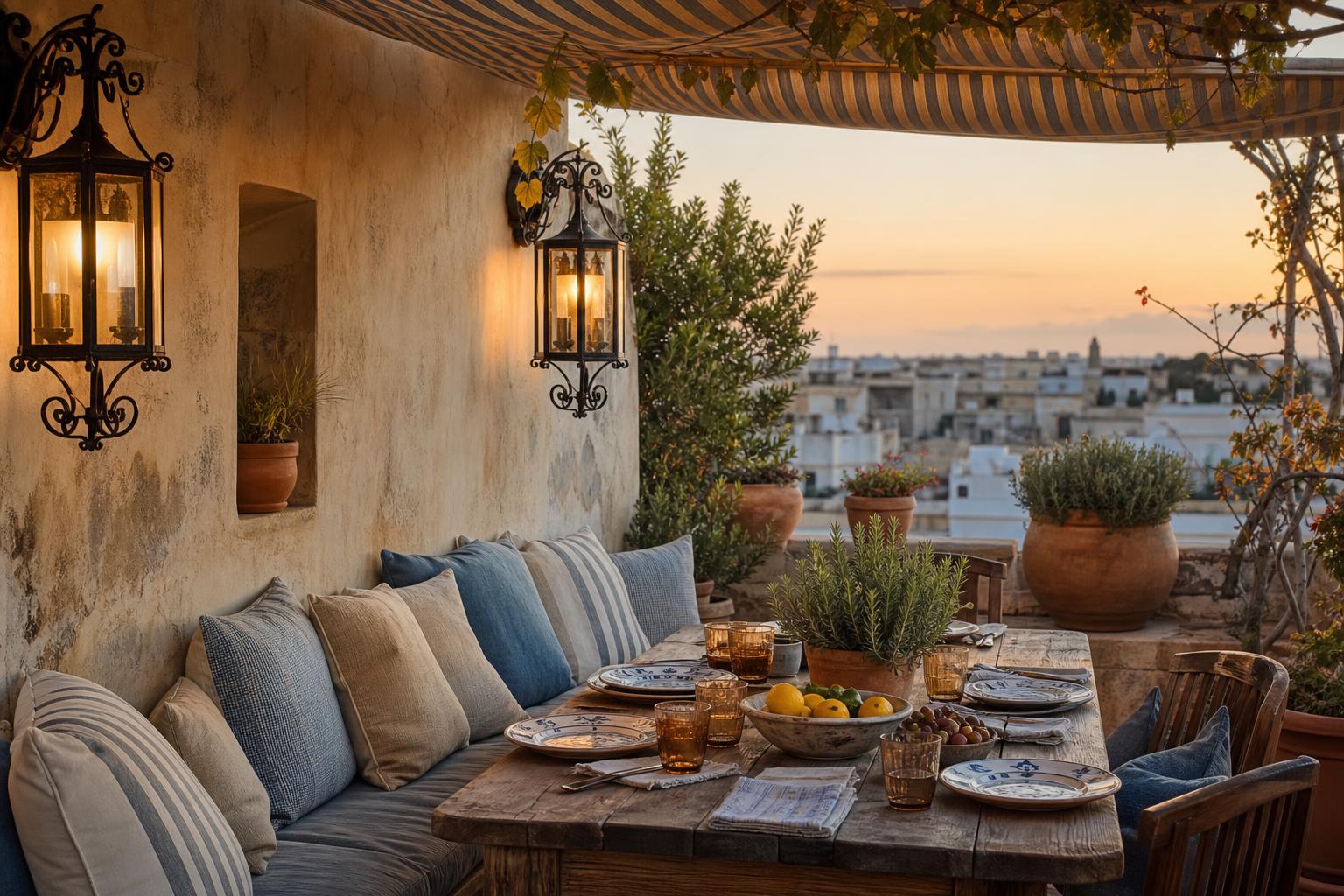
Lighting transforms a terrace after sunset. Mediterranean outdoor dining is rarely about bright overhead light. It is about warm pools of glow: lanterns on the floor, sconces on the wall, candles on the table, and delicate string lights above the awning or around the perimeter.
Start with one practical layer that allows people to see their plates. This might be a wall sconce, a rechargeable table lamp, or discreet overhead lighting. Then add atmosphere with lanterns and candles. Wrought iron lanterns are especially fitting because they echo traditional Mediterranean metalwork without feeling heavy.
Use warm white bulbs rather than cool white. A color temperature around the warm range creates a softer glow against plaster, stone, and terracotta. If using string lights, keep them simple and avoid multicolored bulbs. The goal is a terrace that feels like an intimate rooftop restaurant, not a party setup.
Table Styling for Relaxed Rooftop Meals
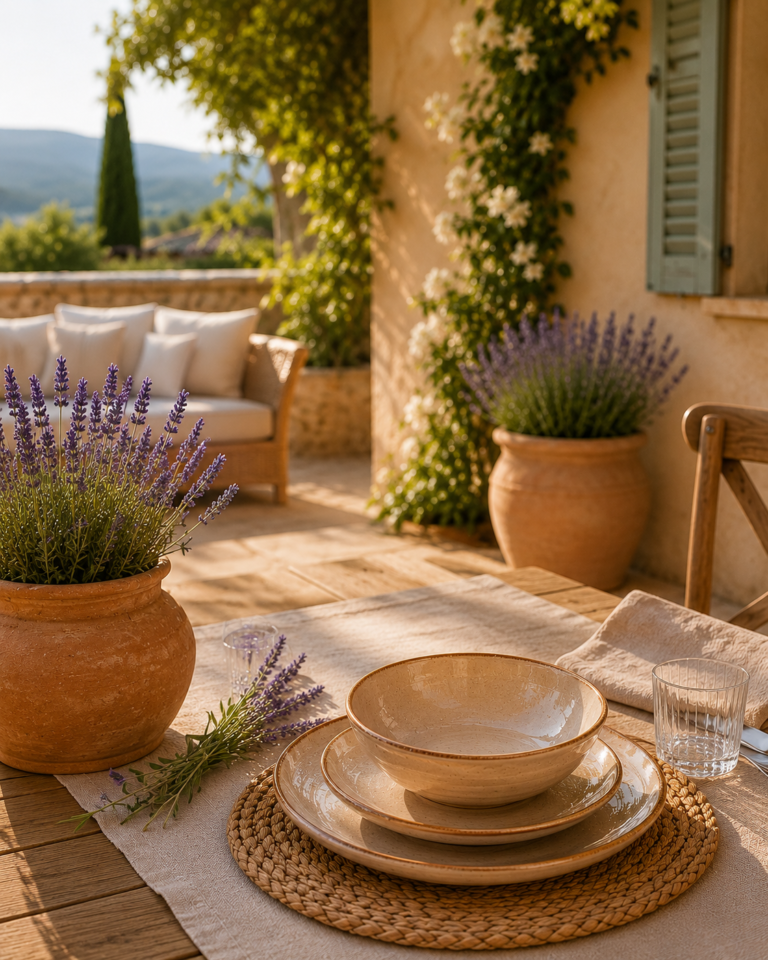
A Mediterranean terrace dining table should look abundant but not formal. Use ceramic plates, glass tumblers, linen napkins, wood boards, and simple serveware. Handmade or handmade-look ceramics are ideal because irregular shapes feel natural in an outdoor setting.
Keep centerpieces low so guests can talk across the table. A bowl of lemons, a small vase of olive branches, a cluster of candles, or a few herb pots are enough. For color, bring in striped napkins or blue ceramic dishes that connect to the awning.
During summer, use practical pieces that can move easily from kitchen to terrace: trays, pitchers, lidded bowls, and stackable plates. This makes the terrace more likely to be used often, not only styled for special occasions.
Privacy Without Closing the View
Rooftop terraces often need privacy from neighboring buildings, but heavy screening can destroy the open Mediterranean feeling. Use soft, breathable solutions instead. Tall planters, climbing jasmine, reed screens, slatted wood panels, or outdoor curtains can define the space while still allowing light and air through.
If the view is beautiful, frame it rather than block it. Place low seating where the eye can travel outward. Use taller plants only along less attractive edges or in corners where privacy matters most. A striped awning can also help create a sense of shelter from above, making the terrace feel more private without adding walls.
Small Rooftop Terrace Ideas
A small terrace can still feel rich and comfortable if every piece has a purpose. Use a single built-in bench along the longest wall, a slim table, two woven chairs, and one strong shade element. Avoid too many small accessories, which can make the space feel cluttered.
Choose planters in three sizes instead of many tiny pots. Keep the color palette tight: warm white walls, clay pots, natural cushions, and one stripe color. Use wall-mounted lanterns or rechargeable table lights to save floor space. If storage is limited, select cushions that can be stacked in a waterproof box or choose a bench with hidden storage.
For very narrow terraces, a foldable table can be paired with a built-in bench. Add a striped wall-mounted canopy or half umbrella for shade. This creates a compact breakfast or evening drinks spot with strong Mediterranean character.
Larger Terrace Dining Zones
On a larger rooftop, divide the terrace into zones without making it feel segmented. The dining area can sit under the striped awning, while a lounge corner with low chairs or a daybed occupies another side. Use consistent materials to connect the areas: matching terracotta planters, the same cushion fabric, or repeating lantern styles.
A large built-in L-shaped bench can wrap around the dining table and create generous seating for family gatherings. Add loose chairs so the arrangement can expand when guests arrive. If the terrace has a wide view, keep the furniture low and let the awning define the dining area from above.
Large terraces also benefit from a serving console or outdoor sideboard. Choose a simple wood, metal, or stone-look piece where you can place drinks, plates, and candles. This reduces trips indoors and makes meals feel more relaxed.
Materials That Age Gracefully Outdoors
The Mediterranean look depends on materials that improve with age. Plaster, terracotta, stone, wood, iron, linen-like fabrics, rope, and ceramic all develop character when exposed to sun and daily life. On a rooftop, choose outdoor-rated versions whenever possible, but keep the visual language natural.
Avoid glossy plastics, overly bright synthetic colors, and furniture that looks too delicate for the setting. The terrace should feel substantial enough to withstand the weather and soft enough to enjoy barefoot. This balance is what makes Mediterranean outdoor spaces so appealing.
- For seating: plaster, concrete, teak, powder-coated metal, or weather-resistant woven frames.
- For shade: striped outdoor canvas, retractable awnings, umbrellas, or breathable canopy fabric.
- For texture: terracotta pots, ceramic serveware, outdoor rugs, and rope details.
- For atmosphere: lanterns, warm bulbs, candles, and aged metal finishes.
Common Mistakes to Avoid
The first mistake is choosing furniture before planning shade. A rooftop dining area without shade may look beautiful in photos but remain unused during the hottest parts of the day. The striped awning or canopy should be considered a core design element, not an afterthought.
The second mistake is overcrowding the terrace. Mediterranean style is layered, but it still needs breathing room. Built-in benches save space, but too many chairs, pots, and accessories can make the area difficult to use. Prioritize comfortable circulation and clear surfaces for meals.
The third mistake is relying on one harsh light source. Outdoor dining needs layered lighting. A single bright fixture can flatten the mood, while lanterns and warm accents create depth.
The fourth mistake is using indoor textiles outdoors. Choose fabrics designed for sun and moisture, especially for cushions under an awning. They will last longer and keep the terrace looking cared for.
Budget-Friendly Ways to Get the Look
You do not need a full renovation to create a Mediterranean terrace mood. Start with shade, seating, and plants. A striped umbrella can substitute for a built-in awning. A storage bench with outdoor cushions can suggest the look of plaster seating. Terracotta pots, even in simple shapes, immediately add warmth.
Paint is another powerful tool. If allowed, paint a wall in warm white, limewash-effect beige, or soft stone. This creates a better backdrop for plants and furniture. Add woven chairs or a rustic table secondhand, then unify the mix with cushions in a restrained palette.
Lighting is one of the most affordable upgrades. A few lanterns, warm solar lights, or rechargeable table lamps can make the terrace feel inviting at night. Focus your spending on pieces that affect comfort: shade fabric, cushions, and a sturdy table.
Seasonal Styling for a Mediterranean Terrace
In spring, let greenery lead. Fresh herbs, pale cushions, and simple ceramic pieces make the terrace feel awake and fragrant. In summer, emphasize shade and cool color. Blue stripes, white tableware, and linen-like textiles create a breezy mood even on hot days.
In early autumn, warm the palette with terracotta, amber glass, olive branches, and darker woven textures. Add heavier cushions or throws for evening dinners. In mild winter climates, keep the terrace usable with lanterns, evergreen plants, and weatherproof seat pads that can be brought out when needed.
The bones of the terrace should remain consistent, while textiles and table styling shift with the season. This keeps the space fresh without constant redecorating.
A Simple Terrace Design Formula
If you want a clear formula, begin with four essentials: a built-in or built-in-look bench, a striped shade element, a textured dining table, and a collection of terracotta planters. Once those are in place, add woven chairs, warm lighting, and simple tableware.
This formula works because it combines architecture, comfort, pattern, and nature. The bench grounds the space. The awning gives it identity. The table invites gathering. The planters soften the rooftop edges. Everything else can be adjusted according to budget, climate, and available space.
Shop the Mediterranean Look
Bring this rooftop terrace style home with pieces that add shade, texture, comfort, and warm evening charm.
- blue and white striped outdoor awning
- weather resistant linen-look outdoor cushions
- large terracotta outdoor planters
- rustic outdoor dining table
- wrought iron outdoor lanterns
- woven outdoor dining chairs
Conclusion: A Rooftop Dining Space With Mediterranean Ease
A Mediterranean terrace with built-in benches and striped awnings is beautiful because it solves real outdoor living problems while creating atmosphere. It offers shade, saves space, welcomes guests, and turns a rooftop into a place where meals feel slower and evenings feel warmer.
Focus on practical comfort first: a good layout, durable seating, reliable shade, and lighting that flatters the space after sunset. Then layer in the details that make Mediterranean design feel so inviting: terracotta pots, woven chairs, rustic wood, handmade ceramics, herbs, linen textures, and a restrained sun-washed palette.
Whether your terrace is a narrow city rooftop or a generous open-air dining area, the combination of built-in seating and striped shade can make it feel like a private Southern European escape. Keep it simple, tactile, and useful, and the terrace will become one of the most loved rooms of the home.