Mediterranean Wall Decor Ideas With Hand-Painted Plates for Dining Rooms
A Collected Mediterranean Dining Room Starts on the Wall
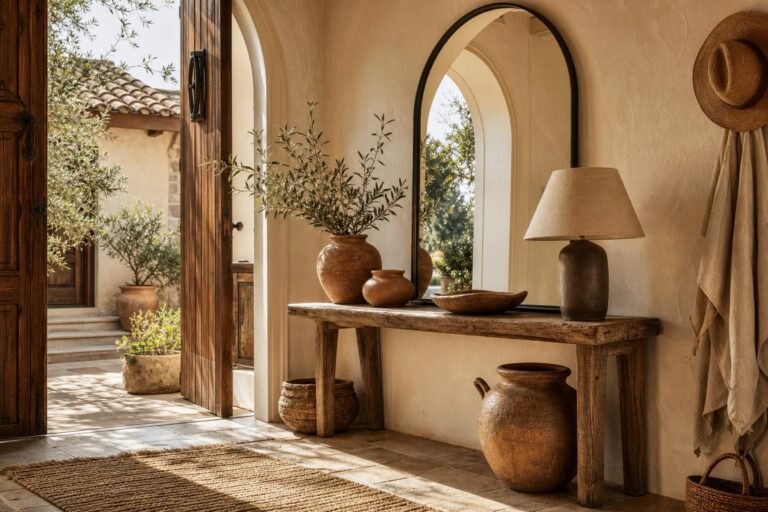
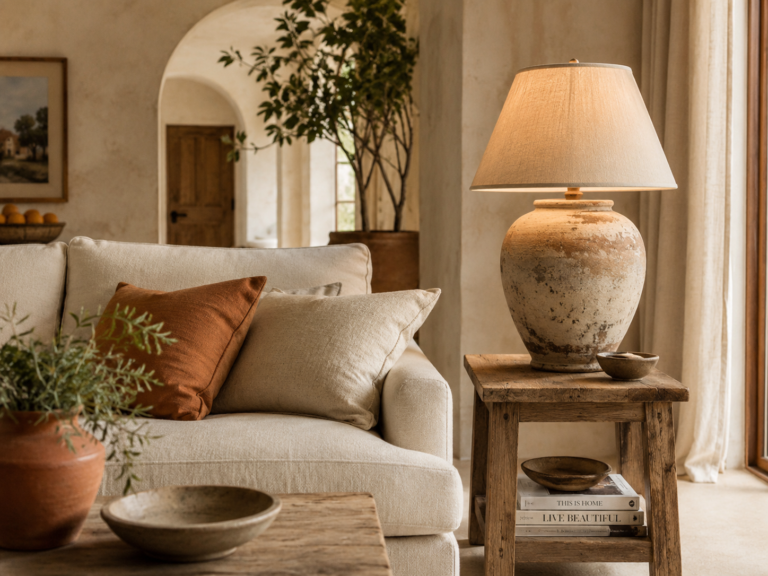
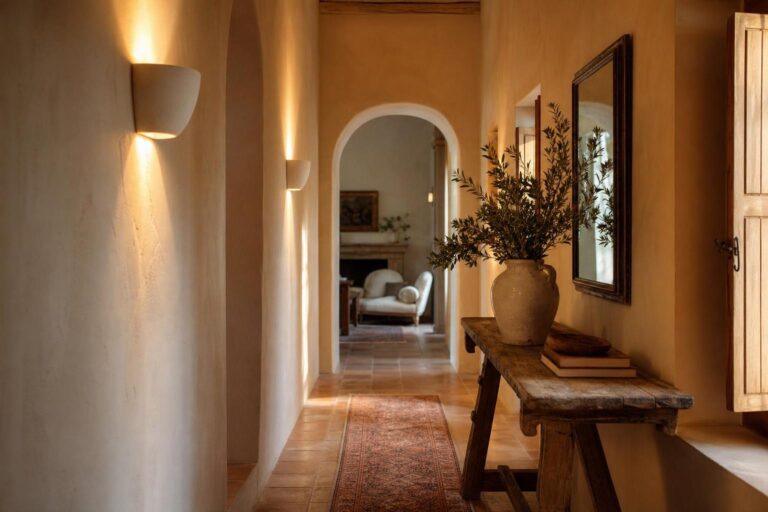
Mediterranean wall decor feels most authentic when it looks gathered over time rather than installed in one afternoon. In a dining room, hand-painted plates are one of the most beautiful ways to create that feeling. They bring color, craftsmanship, and a relaxed sense of hospitality to the space, while staying practical for rooms where furniture often needs to remain simple.
Unlike generic framed prints, ceramic plates add dimension. Their curved edges catch the light, their glazes shift from matte to glossy, and their motifs can echo the history of southern European homes, from coastal blue patterns to earthy terracotta designs. A plate wall can be rustic, refined, minimal, colorful, symmetrical, or playfully imperfect depending on how you arrange it.
The key is not to cover the wall at random. Mediterranean dining rooms work best when every layer feels connected: the table, chairs, lighting, ceramics, textiles, and wall color should all belong to the same calm story. With a thoughtful palette and an intentional layout, hand-painted plates can become the focal point that makes the whole room feel warm, personal, and timeless.
Why Hand-Painted Plates Work So Well in Mediterranean Dining Rooms
Dining rooms are naturally connected to serving, gathering, cooking, and celebration, so ceramic plates feel right at home. A wall of plates does not seem purely decorative; it feels related to the daily rituals of the room. That is why this idea has more soul than many standard wall decor solutions.
Hand-painted plates also suit Mediterranean interiors because they celebrate imperfection. Slight variations in brushwork, glaze, and color make the arrangement feel human. A tiny irregular line or uneven rim is not a flaw; it is the detail that keeps the room from feeling overly polished.
Another advantage is flexibility. You can begin with three plates above a sideboard and grow the collection slowly. You can use heirloom ceramics, travel finds, artisan pieces, vintage plates, or new handmade-inspired designs. The result can be modest and quiet or bold and dramatic, depending on the scale of your dining room.
Choose a Color Story Before You Choose the Plates
The most successful Mediterranean plate walls begin with a restrained palette. Even if you love colorful ceramics, limiting your main colors will make the display feel intentional. Think in terms of a base color, one warm tone, one cool tone, and one grounding neutral.
Terracotta, Ivory, and Olive
This palette is ideal for a calm, earthy dining room. Choose plates with clay red borders, soft cream backgrounds, and olive leaf motifs. Pair them with a wood table, woven chairs, and linen napkins. The mood is rustic but still elegant.
Cobalt Blue and White
Blue and white ceramic plates create a fresher coastal Mediterranean feeling. To keep the look sophisticated, mix bold blue patterns with plenty of white space. This palette works beautifully on warm plaster, cream, or pale sand-colored walls.
Ochre, Honey, and Soft Brown
For a sun-washed dining room, try plates in golden yellow, honey glaze, and warm brown. These colors glow in evening light and pair especially well with brass, walnut, oak, and candlelight.
Black, Cream, and Natural Clay
If you prefer a more minimal Mediterranean look, use cream plates with simple black linework, raw clay edges, or subtle geometric designs. This keeps the plate wall graphic and modern while still feeling artisanal.
Pick the Right Wall for a Decorative Plate Display
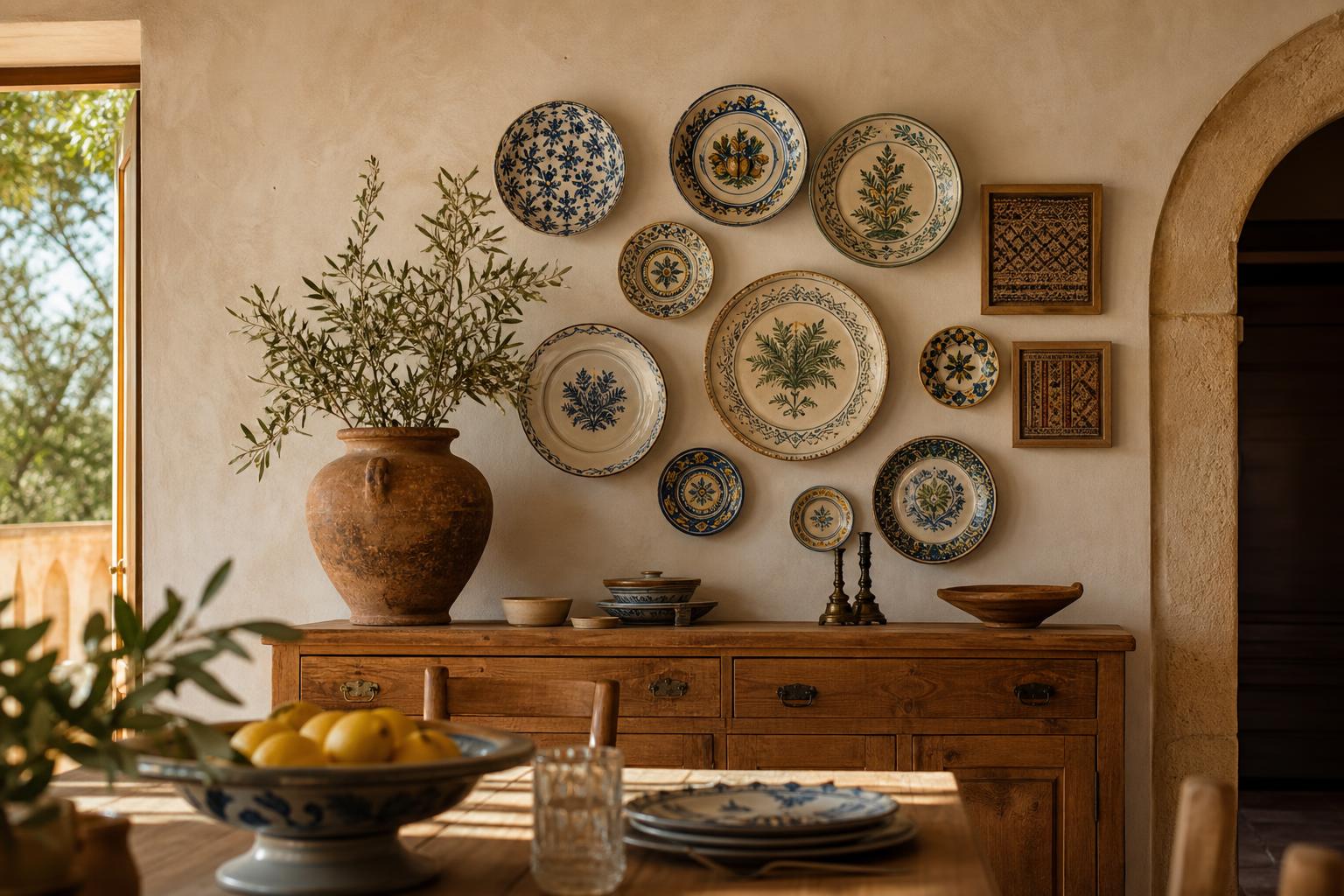
A plate wall needs breathing room. The best location is usually above a sideboard, console, banquette, or dining bench. These furniture pieces provide a visual anchor, so the plates do not appear to float without purpose.
If your dining table is centered against a blank wall, you can also create a plate arrangement directly above it. In that case, make sure the display is wide enough to relate to the table. A small cluster of plates above a large table can feel timid. A broader arrangement, even with open spacing, will feel more balanced.
For small dining rooms, consider a vertical arrangement. A column of plates beside a window, near a built-in cabinet, or above a narrow sideboard can draw the eye upward and make the room feel taller. In larger dining rooms, a horizontal arrangement helps fill long walls without needing oversized art.
Decide Between Symmetry and a Collected Layout
The layout determines the mood of the room as much as the plates themselves. Mediterranean design often embraces relaxed symmetry: balanced, but not rigid. Before hanging anything, lay the plates on the floor and test the composition.
Formal Symmetry
A symmetrical plate wall works well in a more elegant dining room. Use one large plate in the center, then mirror smaller plates on each side. Keep the colors consistent and repeat shapes for a calm, traditional result.
Loose Asymmetry
An asymmetrical arrangement feels more collected and artistic. Start with the largest plate slightly off center, then place smaller plates around it in a gentle curve. The goal is movement, not chaos. Leave enough space between each piece so every plate can be appreciated.
Grid Arrangement
A grid is best for plates of the same size or same color family. It gives ceramic wall decor a cleaner, more contemporary look. For Mediterranean warmth, avoid making the grid too perfect with identical factory-style plates. Slight variations in pattern will keep it charming.
Organic Cluster
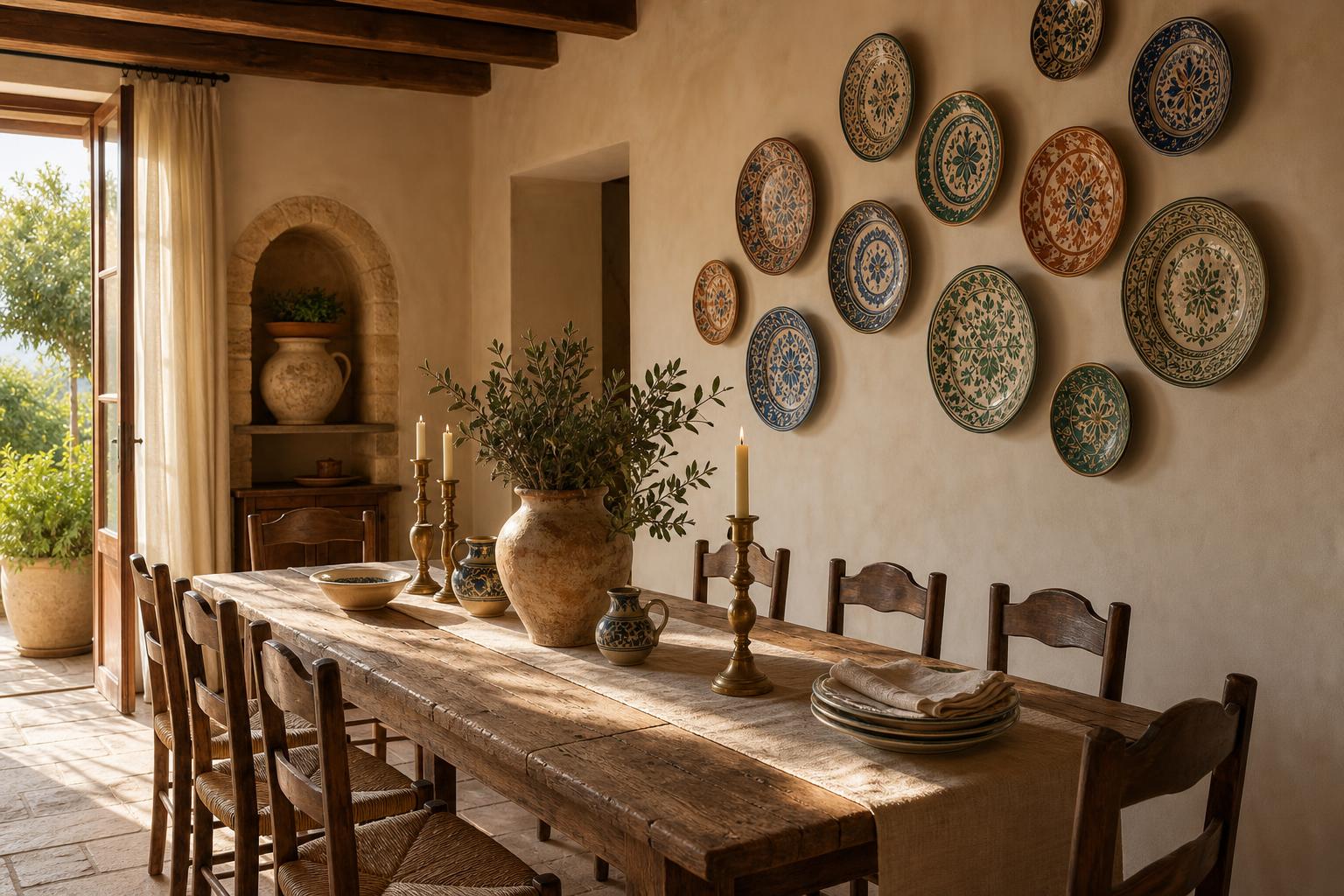
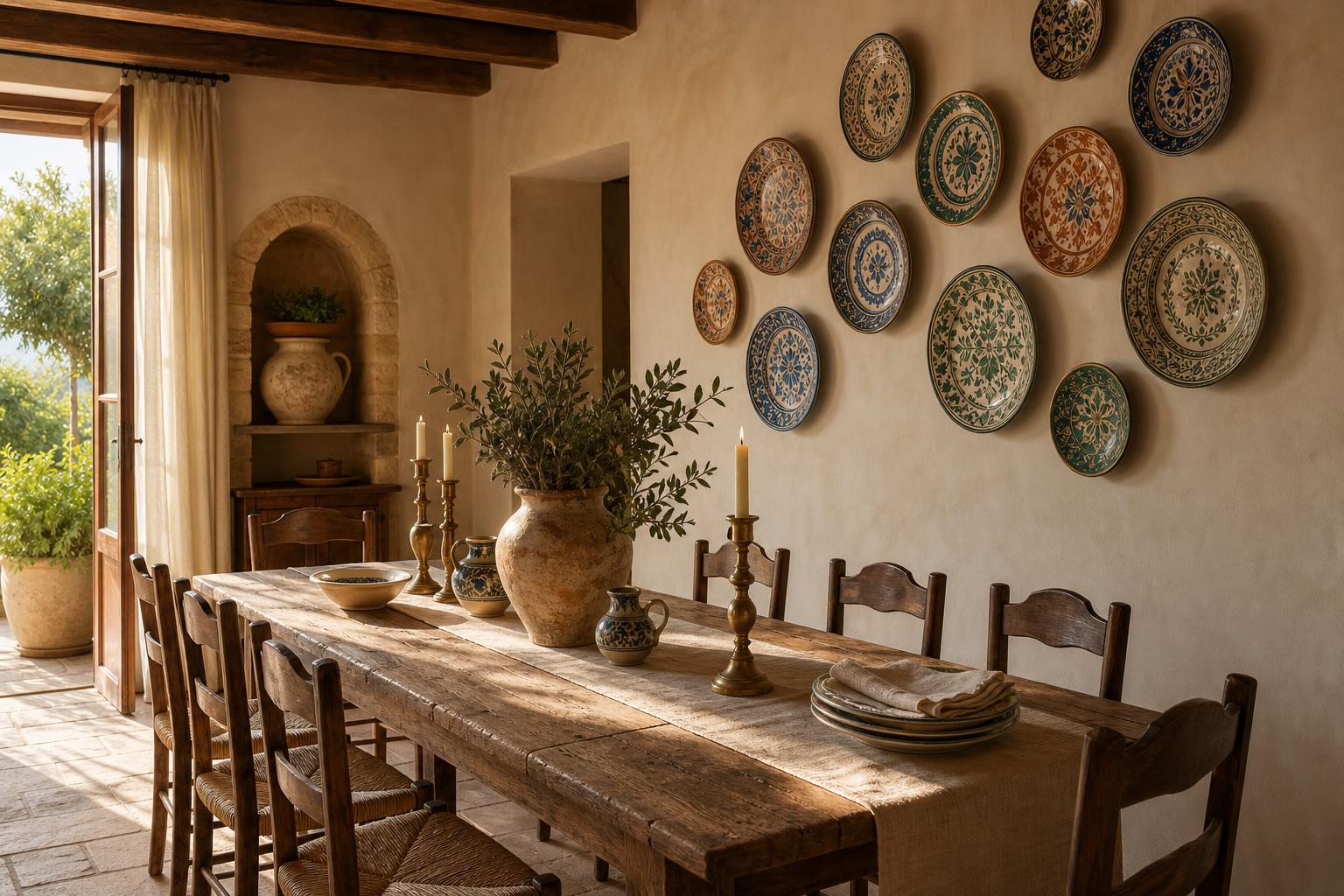
An organic cluster is the most relaxed option. It works beautifully with vintage and artisan pieces. Choose plates in different sizes, but keep the palette cohesive. The arrangement should look spontaneous while still following a clear visual rhythm.
Use Plate Size to Create Rhythm and Depth
A Mediterranean plate wall becomes more interesting when sizes vary. Large plates create anchors, medium plates carry the pattern, and small plates fill pauses in the composition. If every piece is the same size, the wall can feel flat unless you are creating a deliberate grid.
For most dining rooms, begin with one or two larger plates between 12 and 16 inches wide. Add several medium plates around 8 to 10 inches, then include a few small saucers or shallow bowls to soften the edges of the arrangement. Shallow bowls are especially useful because they cast stronger shadows and add sculptural depth.
Do not place all large plates on one side. Spread visual weight across the wall. If a plate is especially dark, colorful, or patterned, treat it as heavier than a pale neutral plate even if they are the same size.
Mix Patterns Without Making the Wall Feel Busy
Mediterranean ceramic patterns can include stripes, florals, borders, dots, leaves, fish, lemons, geometric motifs, and painterly abstract marks. Mixing them is part of the charm, but the room still needs calm.
A useful rule is to repeat at least one element across the display. That element might be color, line style, motif, rim shape, or glaze finish. For example, you could mix floral plates, striped plates, and plain plates as long as they all include cobalt blue. Or you could combine terracotta, olive, and cream plates if they all have hand-drawn borders.
Plain plates are important too. They give the eye a place to rest. If every plate is highly decorated, the wall may compete with the dining table, rug, chandelier, or open shelving. A few simple cream or clay plates can make the detailed pieces look more special.
Coordinate the Plate Wall With the Dining Table
The plate wall should feel connected to what happens below it. If your dining table is rustic wood, choose ceramics with earthy glazes, hand-painted borders, or natural clay tones. If the table is stone, travertine, or marble, plates with soft ivory, blue, or olive details can add warmth without overwhelming the surface.
Textiles also help link the wall to the table. A linen table runner, woven placemats, or simple cotton napkins can echo the handmade quality of the plates. Avoid overly shiny fabrics or stiff formal table settings if you want a relaxed Mediterranean look.
For centerpieces, keep the styling low and natural. A terracotta bowl, olive branches in a ceramic vase, seasonal fruit, or brass candle holders will support the wall decor instead of distracting from it.
Pair Ceramic Plates With Other Mediterranean Wall Elements
A plate wall does not have to include only plates. In fact, mixing in a few complementary elements can make the dining room feel more personal. The secret is restraint. Add texture, not clutter.
- Small framed textiles: A fragment of woven fabric or block-printed linen can soften the hard surface of ceramics.
- Wrought iron accents: A slim iron sconce or small decorative bracket adds old-world structure.
- Wooden shelves: A narrow shelf beneath the plates can hold a few bowls, pitchers, or candle holders.
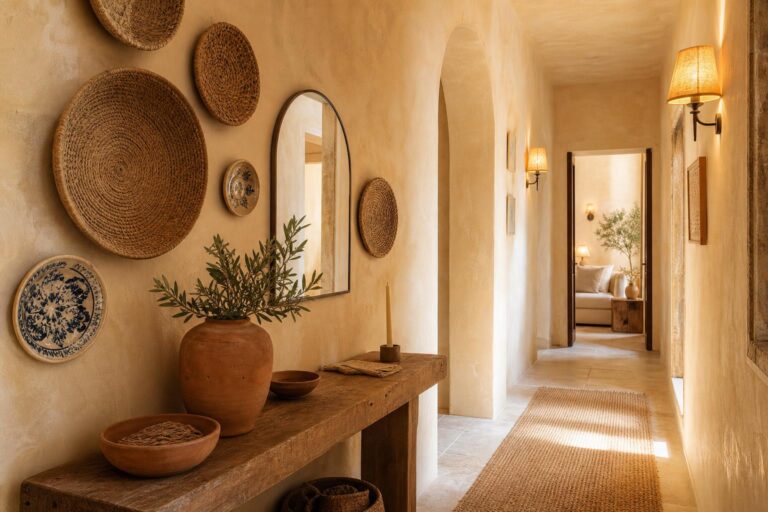
- Basket details: One or two flat woven baskets can add warmth, but use them sparingly so the focus remains on ceramics.
- Plaster niches: If your home has architectural niches, display a few plates inside them for a built-in Mediterranean effect.
Adapt the Look for Small Dining Rooms
In a small dining room, a decorative plate wall can be more effective than a large framed artwork because the individual pieces create air and movement. The wall feels decorated but not heavy.
Keep the palette light and limit the display to five to nine pieces. Choose plates with white, cream, pale blue, or soft clay backgrounds. Avoid filling the entire wall from edge to edge. Negative space is what keeps a compact room feeling comfortable.
If your dining area is part of an apartment or open-plan room, place the plate wall above a small sideboard or floating shelf. This defines the dining zone without using a bulky divider. A simple pendant light above the table can then complete the area and make it feel intentional.
Make the Plate Wall Renter-Friendly
If you rent, you can still create this look without committing to permanent damage. Lightweight plates are easiest to hang with removable systems, but always check the weight limits of the product and test carefully.
Another option is to use a freestanding plate rack on top of a sideboard. This gives the impression of a composed ceramic display without attaching every piece to the wall. A wrought iron or wood plate rack can feel especially appropriate in a Mediterranean dining room.
You can also lean plates on a narrow picture ledge. This method is flexible and easy to change seasonally. To make it secure, use a ledge with a raised front lip and avoid placing fragile pieces where they can be knocked by chairs or passing traffic.
Common Mistakes to Avoid
A plate wall looks effortless when finished, but a few mistakes can make it feel scattered. The first is choosing plates that have no relationship to one another. They do not need to match, but they should share a visual language.
The second mistake is hanging plates too high. In a dining room, the display should relate to seated eye level and to the furniture below it. If the lowest plate sits far above a sideboard, the arrangement may feel disconnected.
The third mistake is using too many tiny plates. Small plates are charming as accents, but they cannot carry the entire wall. Include at least one larger piece so the arrangement has confidence.
Finally, avoid overdecorating the surrounding area. If the plate wall is colorful, keep nearby artwork, shelves, and table decor simpler. Mediterranean rooms feel rich because of material and texture, not because every surface is crowded.
Seasonal Styling Around a Mediterranean Plate Wall
One of the pleasures of ceramic wall decor is that it can stay in place year-round while the surrounding dining room changes. In spring, pair the plates with branches, white linens, and fresh herbs. In summer, add lemons, blue glass, striped napkins, and lighter tableware.
For autumn, lean into terracotta, olive, rust, and dark wood. A bowl of figs or pears can make the dining room feel abundant without looking staged. In winter, bring in beeswax candles, deeper textiles, and warm metallic accents. The plates provide color and pattern even when the rest of the room becomes quieter.
This is why hand-painted plates are such a lasting choice. They do not belong to one trend or season. They can support a relaxed family meal, a festive dinner, or an everyday breakfast corner with the same natural beauty.
Shop the Mediterranean Look
Use these pieces to build a warm, collected dining room wall around hand-painted ceramics, natural textures, and timeless Mediterranean details.
- Hand-painted Mediterranean ceramic plates
- Discreet decorative plate wall hangers
- Wrought iron wall plate rack
- Terracotta ceramic vase for a dining sideboard
- Natural linen table runner
- Warm brass candle holders for the dining table
Conclusion: Let the Wall Feel Gathered, Not Decorated
The best Mediterranean wall decor has a sense of memory. A dining room plate wall should not feel like a showroom display; it should feel as though each piece was chosen because its color, glaze, motif, or shape added something meaningful to the room.
Start with a focused color palette, choose a wall with purpose, and arrange the plates with enough space for the ceramics to breathe. Whether you prefer cobalt blue and white, terracotta and olive, or quiet cream and clay, hand-painted plates can bring warmth, craftsmanship, and Mediterranean character to your dining room.
When styled with natural wood, linen, candlelight, and simple serving pieces, a ceramic plate wall becomes more than decoration. It becomes part of the hospitality of the room: relaxed, generous, sun-warmed, and deeply personal.