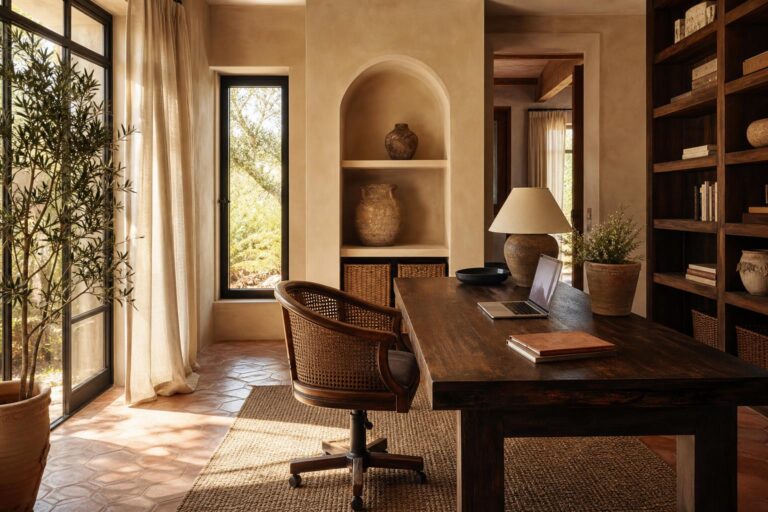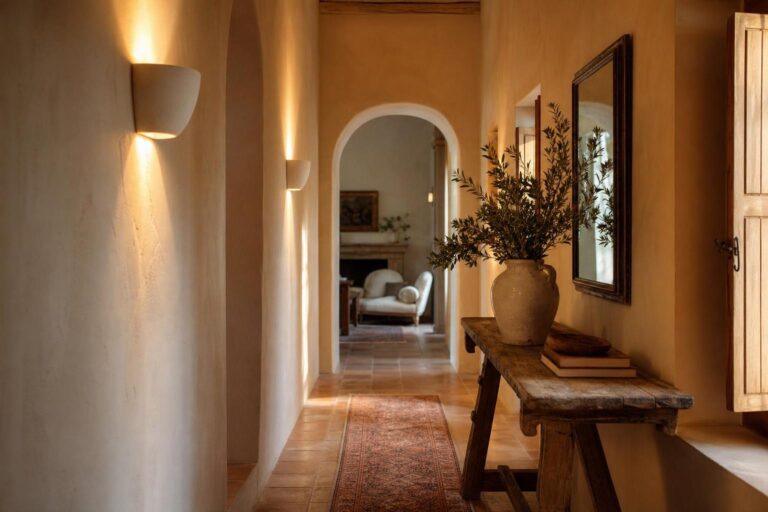
Rental-Friendly Mediterranean Wall Decor Ideas for Narrow Hallways With Woven Textures
A Narrow Hallway Can Feel Like a Mediterranean Passage
Narrow hallways are often treated as leftover space, especially in rentals where permanent renovations are limited. Yet in Mediterranean homes, transition areas are rarely ignored. A corridor can feel like a quiet passage between rooms, softened by texture, warmed by earthy color, and filled with small handmade details that make the home feel collected over time. The key is not to crowd the walls, but to choose pieces with depth, warmth, and rhythm.
These rental-friendly Mediterranean wall decor ideas are designed for narrow hallways where every inch matters. Instead of heavy built-ins, permanent tilework, or major plaster changes, the focus is on removable solutions: woven wall baskets, lightweight ceramic accents, arched mirrors, framed textiles, peel-and-stick details, slim ledges, and warm lighting effects. The result is a hallway that feels rooted in the Mediterranean without risking your deposit or overwhelming a compact passage.
Start With a Warm, Textured Wall Feeling
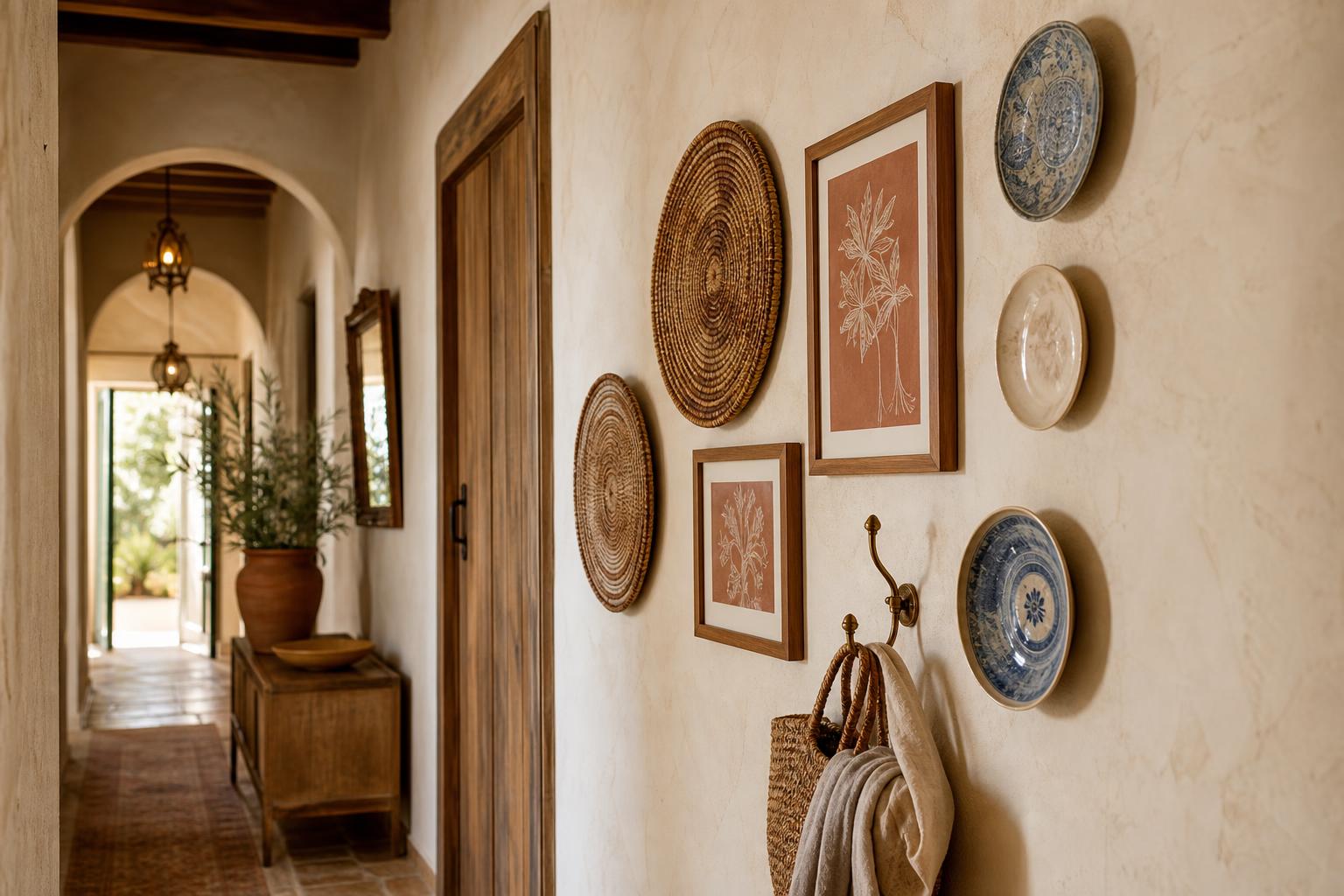
The Mediterranean look begins before you hang anything. Even if you cannot repaint, you can create the impression of sun-washed plaster through the color and texture of your wall decor. Choose pieces in warm white, sand, stone, wheat, tobacco, olive, clay, and faded blue. These tones bring the feeling of limewashed walls, old coastal houses, and rustic village interiors without requiring a brush or contractor.
If your hallway walls are plain bright white, use decor to soften contrast. Natural fibers, matte ceramics, and aged wood frames help remove the sharpness that often makes rental hallways feel cold. If your walls are beige or gray, lean into warmer accents like terracotta, ochre, warm brass, and honey-toned rattan. Mediterranean style is not about making every surface colorful; it is about creating a gentle mix of earth, sun, sea, and handmade imperfection.
Use Woven Wall Baskets Instead of Flat Art Alone
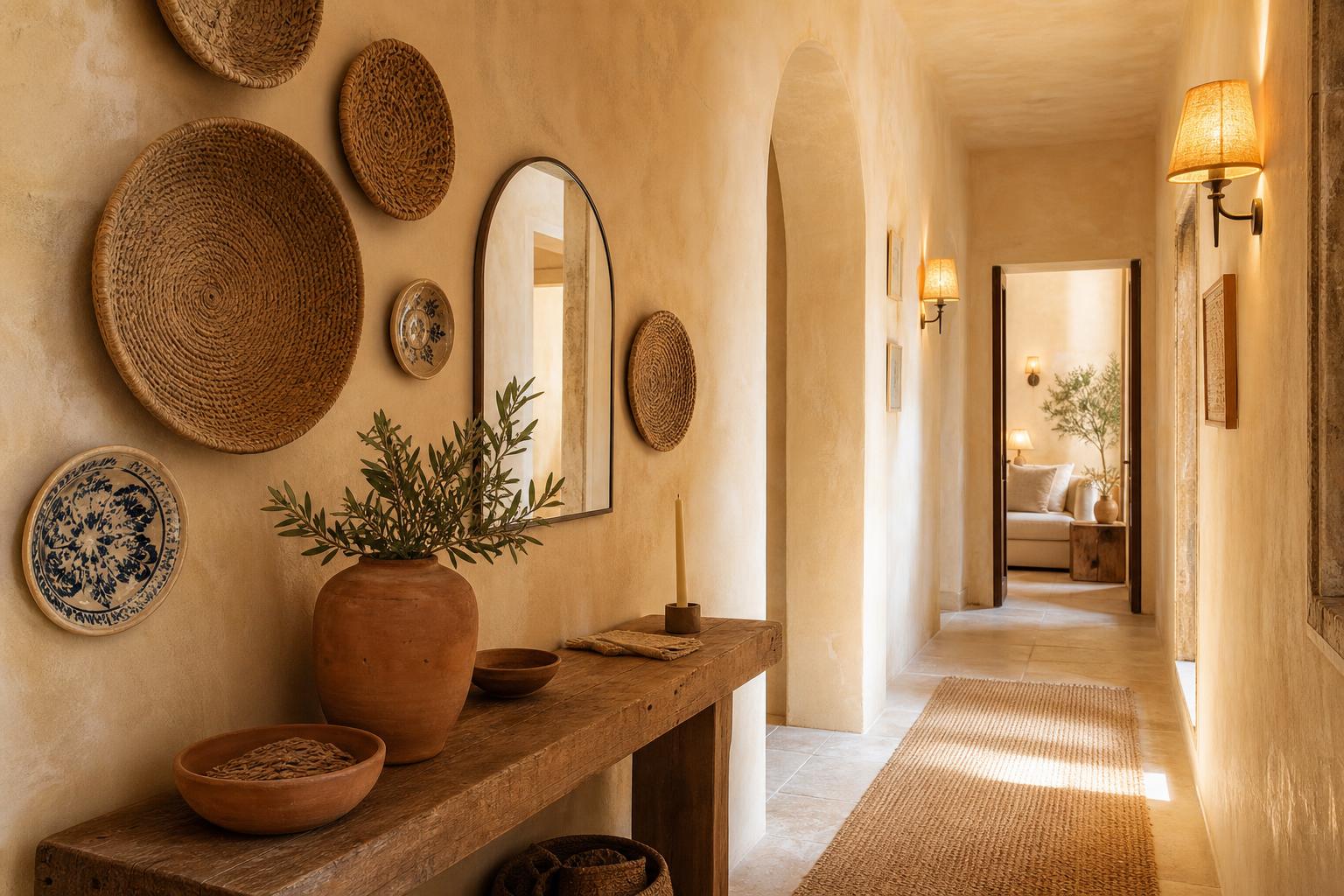
Woven baskets are one of the most practical choices for a narrow hallway because they add texture without needing deep projection from the wall. A group of shallow seagrass, raffia, or palm leaf baskets gives the corridor a handcrafted Mediterranean feeling while staying lightweight enough for removable hooks. The best arrangement is slightly irregular, as if collected during summer travels, rather than perfectly symmetrical.
For a narrow hallway, keep the basket display contained. A cluster of three to seven baskets works better than covering the entire wall. Place the largest basket slightly above eye level and let the smaller ones move diagonally around it. This creates movement, which helps a long corridor feel less tunnel-like. Choose baskets with subtle variation: one with a black woven rim, one with a warm straw center, one with a flat plate shape, and one with a more rustic handmade edge.
Design tip: avoid very bulky baskets that stick out too far. In a tight passage, even a few extra inches can become inconvenient. Look for flat-backed or shallow woven trays that sit close to the wall.
Bring in Handmade Ceramic Plates for Mediterranean Character
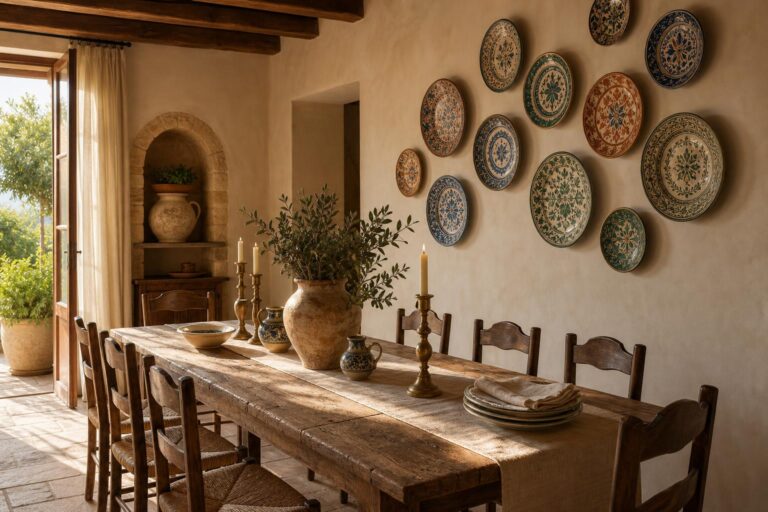
Handmade ceramic plates are a classic Mediterranean wall decor idea, but they do not need to look overly decorative or old-fashioned. For a more refined hallway, choose a small group of plates in muted colors: cream, clay, soft blue, olive green, or off-white with hand-painted details. A single ceramic plate beside an arched mirror can look more modern than a large formal plate collection.
In a rental, lightweight ceramic-look pieces or small plates mounted with removable plate hangers are the safest approach. You can also mix one or two real handmade plates with framed prints of tile patterns to keep the wall lighter. This is especially useful in narrow hallways where heavy objects may feel risky or visually dense.
The beauty of ceramics is their imperfect surface. Tiny variations in glaze, uneven edges, and hand-painted lines bring the Mediterranean mood to life. These details suggest craft, history, and slow living, which are essential to the style.
Add an Arched Mirror to Open the Corridor
An arched mirror is one of the most effective pieces for a narrow hallway because it adds both Mediterranean architecture and visual space. The arch echoes old doorways, niches, and monastery corridors, while the reflection helps brighten a tight passage. If your hallway feels dark or closed in, place the mirror where it can catch light from a nearby room, window, or lamp.
For a rental-friendly solution, choose a lightweight mirror with a slim wood, black metal, antique brass, or natural rattan frame. A tall narrow arch works well at the end of a corridor, where it creates the illusion of an opening. A smaller arched mirror can be used above a slim console shelf or next to a basket arrangement. The goal is not to make the hallway feel like a dressing area, but to create depth and a hint of Mediterranean architecture.
If you cannot hang a mirror securely, lean a tall arched mirror against the wall in a slightly wider hallway or use a smaller mirror above a renter-friendly wall shelf. Always consider walking space first. Mediterranean decor should feel relaxed, never awkward.
Create a Mini Gallery With Olive Wood and Aged Frames
Framed art can still work beautifully in a Mediterranean hallway when the frames feel natural and collected. Instead of glossy black gallery frames, choose olive wood, raw oak, walnut, antique brass, or lightly distressed white finishes. These materials pair well with woven baskets and ceramics because they feel tactile rather than flat.
For the art itself, look for simple Mediterranean-inspired subjects: abstract coastal landscapes, vintage botanical sketches, line drawings of arches, muted tile patterns, olive branches, figs, lemons, or old village doorways. Avoid filling the hallway with overly bright travel posters unless you want a more playful vacation-house look. For a softer and more timeless design, keep the colors faded and earthy.
In a narrow hallway, spacing matters. Leave breathing room between frames so the wall does not feel visually heavy. A row of three medium pieces can make a short hallway feel orderly, while a loose salon-style grouping can make a long hallway feel more personal. The best choice depends on the shape of the corridor. Long and straight hallways usually benefit from rhythm; short hallways can handle a more intimate cluster.
Try Peel-and-Stick Tile Accents Without Covering the Whole Wall
Mediterranean style is strongly associated with patterned tile, but a rental hallway does not need a full tile installation. Small peel-and-stick tile accents can suggest the look without becoming permanent. Use them sparingly: a narrow vertical strip behind a mirror, a small framed panel, the back of a shallow wall niche, or the area above a slim console. The effect should feel like a detail discovered in an old home, not like a temporary sticker covering every surface.
Choose patterns in terracotta, faded blue, cream, and sand rather than loud high-contrast designs. In a narrow hallway, strong patterns can quickly feel busy. A muted tile motif brings Mediterranean charm while still allowing the space to feel calm.
If peel-and-stick tile is not allowed in your rental, frame tile-patterned paper or fabric instead. A framed textile panel can create a similar feeling and is easy to remove later. This approach also gives you more control over scale and color.
Use Slim Wall Ledges for Rotating Seasonal Decor
A shallow picture ledge can be extremely useful in a rental hallway because it lets you layer decor without making many new holes. Choose a ledge in natural wood, whitewashed wood, or warm brass, and style it with small framed prints, a tiny ceramic vase, a dried olive branch, or a small woven object. Keep the depth minimal so it does not interrupt movement through the corridor.
The advantage of a ledge is flexibility. In summer, you can style it with pale ceramics, blue accents, and a small shell or stone object. In autumn, shift toward terracotta, dried grasses, and warm wood. In winter, use deeper olive tones, candle-style accents, and cream textiles. Mediterranean decor is often associated with summer, but its earthy materials can feel warm and grounded year-round.
For the most elegant result, do not overload the ledge. A narrow hallway needs negative space. Two or three meaningful objects will look more intentional than a crowded line of accessories.
Layer Textile Art for Softness and Sound
Hallways can feel echoey, especially in apartments with hard floors. Textile wall decor adds softness both visually and acoustically. A small woven wall hanging, a framed linen textile, or a vintage-style fabric panel can reduce the bare feeling of a corridor and introduce Mediterranean warmth. Look for natural materials such as linen, cotton, wool, jute, and raffia.
For a refined look, choose textiles with simple stripes, faded patterns, or geometric details inspired by Mediterranean craft. A cream and tan striped textile can feel coastal and relaxed. A rust and olive woven piece can feel more rustic. A blue and ivory panel can hint at Greek island interiors without becoming themed.
Because hallways are narrow, avoid thick macrame pieces with long fringe at shoulder height. They can catch on bags and coats. Instead, choose flat woven panels or framed textiles that sit safely against the wall.
Introduce Terracotta in Small, Controlled Doses
Terracotta is one of the easiest ways to make a hallway feel Mediterranean, but in a narrow space it should be used carefully. Too much orange can make the corridor feel darker or smaller. Instead, use terracotta as an accent: a small wall planter, a clay-colored print, a painted frame, a ceramic plaque, or a stripe within a woven basket.
Terracotta pairs beautifully with warm white, stone beige, olive green, black iron, and natural wood. If your hallway is very dark, combine terracotta with cream and pale woven textures to keep the look lifted. If your hallway has good light, you can use deeper clay tones for a richer, old-world mood.
A renter-friendly wall planter with faux or dried greenery can also add life without maintenance concerns. Choose olive branches, eucalyptus, rosemary-like stems, or trailing greenery instead of overly tropical plants. Mediterranean decor works best when the greenery feels drought-tolerant, silvery, or aromatic.
Make the End Wall a Focal Point
Many narrow hallways have one end wall that naturally draws the eye. This is the perfect place for a stronger Mediterranean statement. Instead of decorating both long walls heavily, focus on the end wall with an arched mirror, a large woven tray, a framed textile, or a pair of ceramic plates. This pulls the eye forward and gives the hallway a sense of destination.
If the hallway ends at a door, consider decorating around it with subtle symmetry. A pair of small framed prints or two woven pieces on either side can make the door feel more intentional. If there is a blank wall at the end, a single oversized piece may be better than many small items. In tight spaces, one strong focal point often feels calmer than several competing displays.
Choose Warm Lighting Effects When Hardwiring Is Not Possible
Wall decor is not only about objects. Light changes how every texture appears. Woven baskets, ceramics, and wood frames all look better under warm light. If you cannot install sconces, use plug-in wall lights, battery-operated picture lights, or a small lamp on a narrow console. The goal is a soft amber glow rather than bright overhead lighting.
In Mediterranean interiors, light should feel sun-warmed and gentle. Choose warm white bulbs and avoid cool blue light, which can make natural fibers look dull. A small picture light above a framed textile or arched mirror can give the hallway a boutique hotel feeling without major renovation. Even a warm lamp in the adjacent room can help if it reflects in a hallway mirror.
Keep the Layout Practical for Everyday Movement
A beautiful hallway still needs to function. Before hanging anything, think about how people move through the space. Do you carry laundry baskets through the corridor? Do children run through it? Do bags or coats brush against the wall? In a narrow hallway, delicate or protruding decor should be placed higher or kept to protected areas.
Use flatter pieces along the main walking line and reserve deeper objects for wider sections, end walls, or spaces above furniture. If you add hooks, choose sculptural ones that look intentional even when empty. Antique brass, black iron, or wood pegs can support hats, market bags, or a lightweight woven tote while still contributing to the Mediterranean mood.
The most successful rental-friendly Mediterranean hallway is one that feels lived-in but not cluttered. It should welcome movement, guide the eye, and add warmth without turning a practical passage into an obstacle course.
A Simple Formula for Styling the Wall
If you are unsure where to start, use a simple formula: one architectural shape, one woven texture, one ceramic element, one framed piece, and one warm accent. For example, pair an arched mirror with three woven baskets, one small ceramic plate, a muted landscape print, and a terracotta wall planter. This combination feels layered but still controlled.
Another option is to create a quieter wall with a slim wood ledge, two olive wood frames, a small ceramic vase, and a flat woven tray above. This works well for minimalist renters who want Mediterranean warmth without a full gallery wall. The important thing is balance. Mediterranean style should look collected, but it should also feel natural to the architecture and size of your home.
Before installing everything, lay the arrangement on the floor and photograph it. This helps you see whether the shapes are balanced. Then transfer the arrangement to the wall using removable strips, lightweight hooks, or rental-safe hanging systems appropriate for the weight of each item.
What to Avoid in a Narrow Mediterranean Hallway
It is easy to over-style a small passage. Avoid heavy dark frames on every wall, bulky shelves, oversized objects at shoulder height, and too many competing tile patterns. Also avoid making the theme too literal. A hallway does not need signs, souvenir-style imagery, or every possible Mediterranean symbol at once. A few authentic-feeling materials will create a more elegant result than a crowded theme.
Be careful with bright blue if your hallway has little natural light. Blue and white can be beautiful, but in a dark corridor it may feel cold unless balanced with warm wood, woven fibers, and clay tones. Likewise, strong terracotta should be softened with cream or natural straw to prevent the hallway from feeling heavy.
Most importantly, do not forget scale. Narrow hallways reward restraint. Choose pieces that add texture from close range, because people will view them up close as they pass. Handmade details, subtle glaze, woven patterns, and aged finishes matter more than oversized statements.
Shop the Mediterranean Look
Use lightweight, renter-friendly accents to add warmth, texture, and Mediterranean character to a narrow hallway without permanent renovation.
- flat woven wall baskets for hallway decor
- arched wall mirror with a natural wood frame
- Mediterranean ceramic wall plates
- olive wood picture frames for warm gallery walls
- peel and stick Mediterranean tile decals
- warm battery operated picture light
Conclusion: Make the Hallway Feel Collected, Warm, and Easy to Change
Rental-friendly Mediterranean wall decor for narrow hallways is about creating atmosphere without permanent renovation. With woven baskets, handmade ceramic accents, arched mirrors, warm frames, soft textiles, terracotta details, and thoughtful lighting, even a plain corridor can feel like a meaningful part of the home. The best results come from layering natural materials while keeping the walking space open and calm.
Think of the hallway as a small Mediterranean passage rather than a blank connector between rooms. Every detail should feel warm, tactile, and slightly imperfect. When the pieces are lightweight, removable, and carefully scaled, you can enjoy the charm of Mediterranean design now and take it with you later.