Mediterranean Patio Ideas With Tadelakt Walls and Sage Green Cushions for Shaded Side Yards
Mediterranean Patio Ideas With Tadelakt Walls and Sage Green Cushions for Shaded Side Yards
A shaded side yard can seem like the forgotten strip of a home: too narrow for a full garden, too dim for a classic sun patio, and too visible to ignore. Yet this kind of in-between space is perfect for a Mediterranean patio. The Mediterranean look does not rely only on blazing sunlight or ocean views. At its best, it is about texture, restraint, natural materials, and the feeling of cool relief after a hot afternoon.
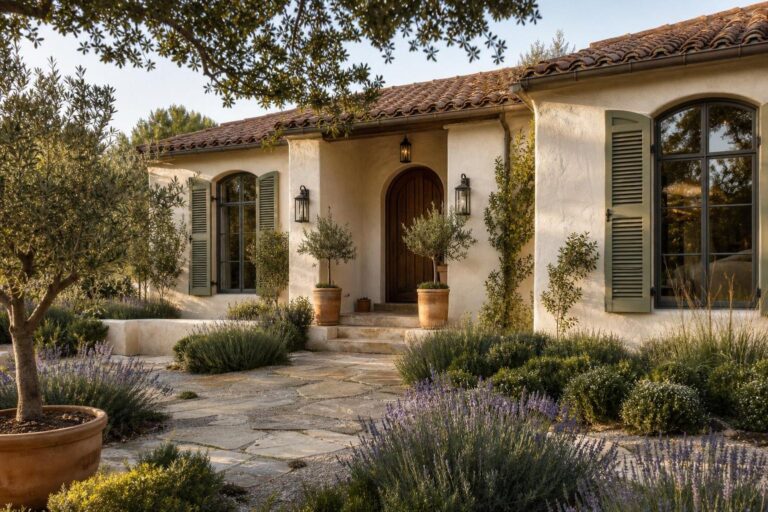
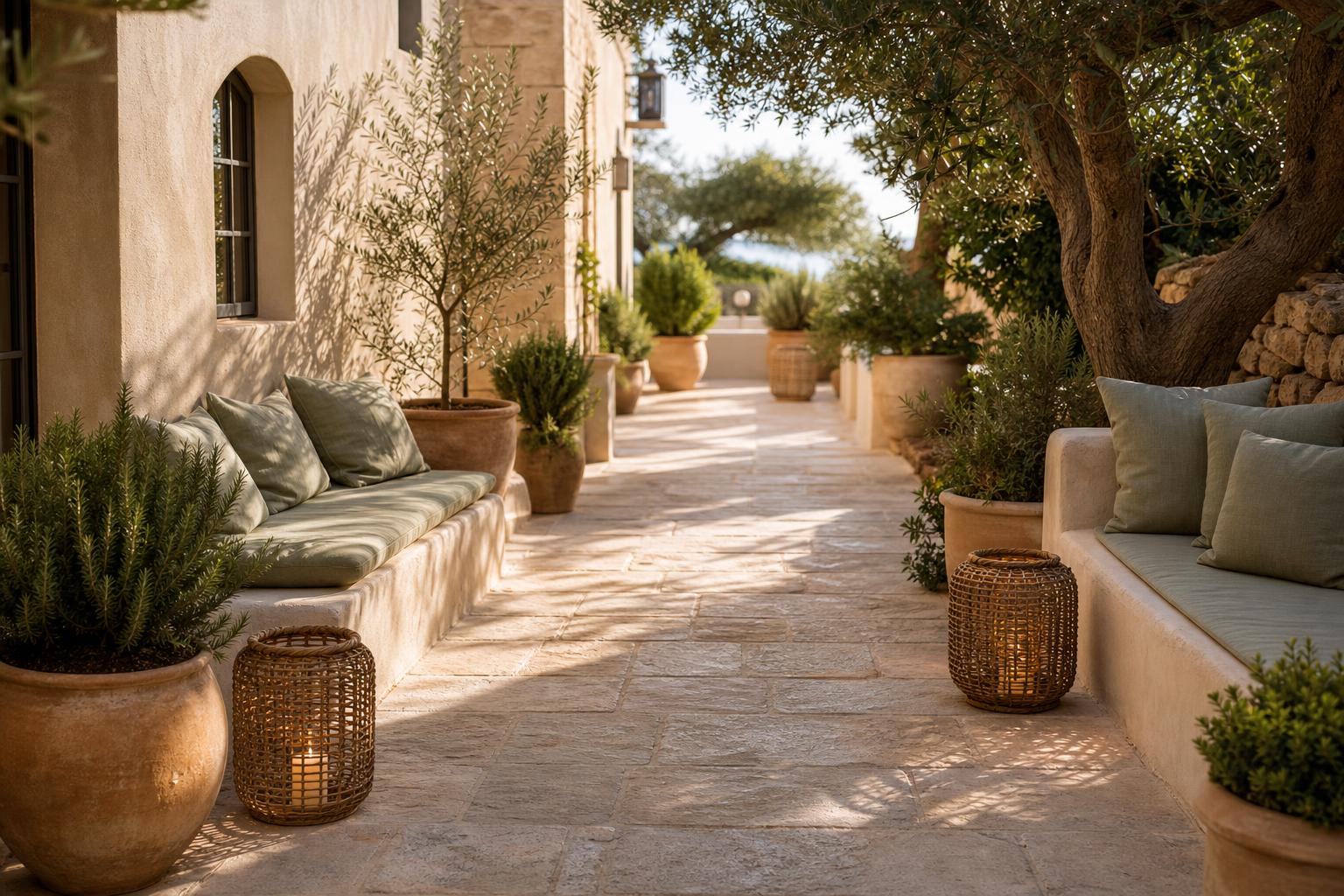
For a side yard, the strongest design direction is a quiet palette of tadelakt-style walls, sage green cushions, pale stone, terracotta planters, and warm lantern light. Tadelakt, or a tadelakt-inspired plaster finish, brings the soft hand-smoothed surface associated with Mediterranean and North African interiors. Sage green keeps the space fresh without making it feel overly colorful. Together, they create a sheltered patio that feels calm, architectural, and highly usable even when the area receives limited direct sun.
Why a Shaded Side Yard Works So Well for Mediterranean Style
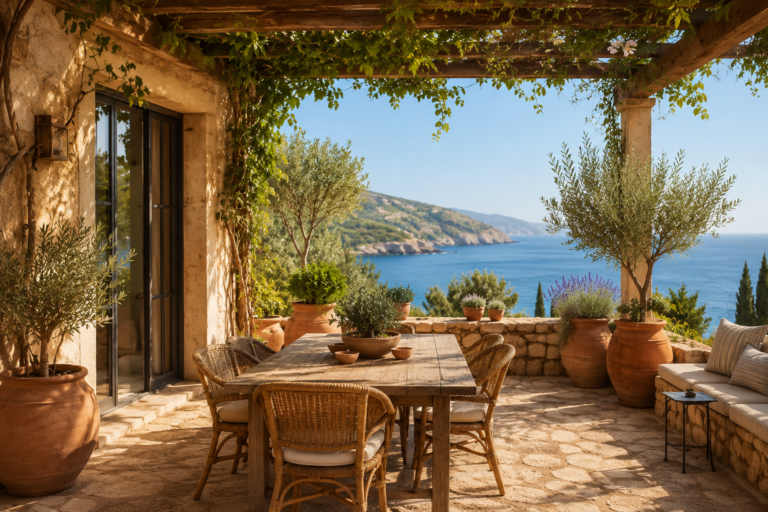
Many homeowners assume a Mediterranean patio needs open sky, citrus trees, and bright sun. But traditional Mediterranean homes often value shade just as much as sunlight. Thick plaster walls, covered passages, planted courtyards, and narrow lanes are designed to stay cool. A shaded side yard naturally has this enclosed, protected quality, which means it already has the bones of a Mediterranean retreat.
The key is to avoid treating the side yard as a corridor. Instead of leaving it as a passage between front and back, give it a purpose. It can become a morning coffee spot, an outdoor reading nook, a quiet dinner corner for two, or a cooling transition between the house and garden. The design should make the space feel intentional, not leftover.
Because side yards are often long and narrow, every element needs to work hard. Wall texture, flooring, seating, lighting, and planting should create atmosphere without crowding the walkway. A Mediterranean palette helps because it favors grounded, tactile materials over bulky decoration.
Start With Tadelakt-Style Walls for a Soft Architectural Backdrop
The walls are the most important visual surface in a side-yard patio. In a narrow space, they are always in view. A tadelakt-style finish gives these walls depth without pattern. Instead of flat paint, you get subtle movement, a mineral softness, and the slight sheen of hand-polished plaster.
True tadelakt is a traditional lime plaster that requires skilled application, but you can create a similar mood with limewash, mineral plaster, microcement, or exterior-rated textured paint. The goal is not perfection. The beauty comes from a surface that looks touched by hand, softly uneven, and integrated into the architecture.
Best Wall Colors for a Shaded Mediterranean Patio
In a shaded side yard, avoid stark white unless the space receives enough reflected light to soften it. A very bright white can look cold in shadow. Warmer shades are more forgiving and more Mediterranean.
- Warm ivory: ideal for brightening a narrow space while staying soft.
- Sand beige: a natural choice with limestone, travertine, and light gravel.
- Pale clay: warmer than beige and beautiful with terracotta pots.
- Stone gray-beige: elegant for modern Mediterranean homes.
- Muted cream: timeless, relaxed, and easy to pair with sage textiles.
If the side yard is very dark, use the lightest warm plaster tone on the longest wall and reserve deeper clay or taupe accents for a niche, planter base, or small end wall.
Choose Sage Green Cushions for a Cool, Natural Accent
Sage green is one of the most useful colors for a shaded Mediterranean patio because it behaves like a neutral while still bringing life to the space. It connects visually to olive leaves, rosemary, lavender, and climbing vines. It also softens stone and plaster without competing with them.
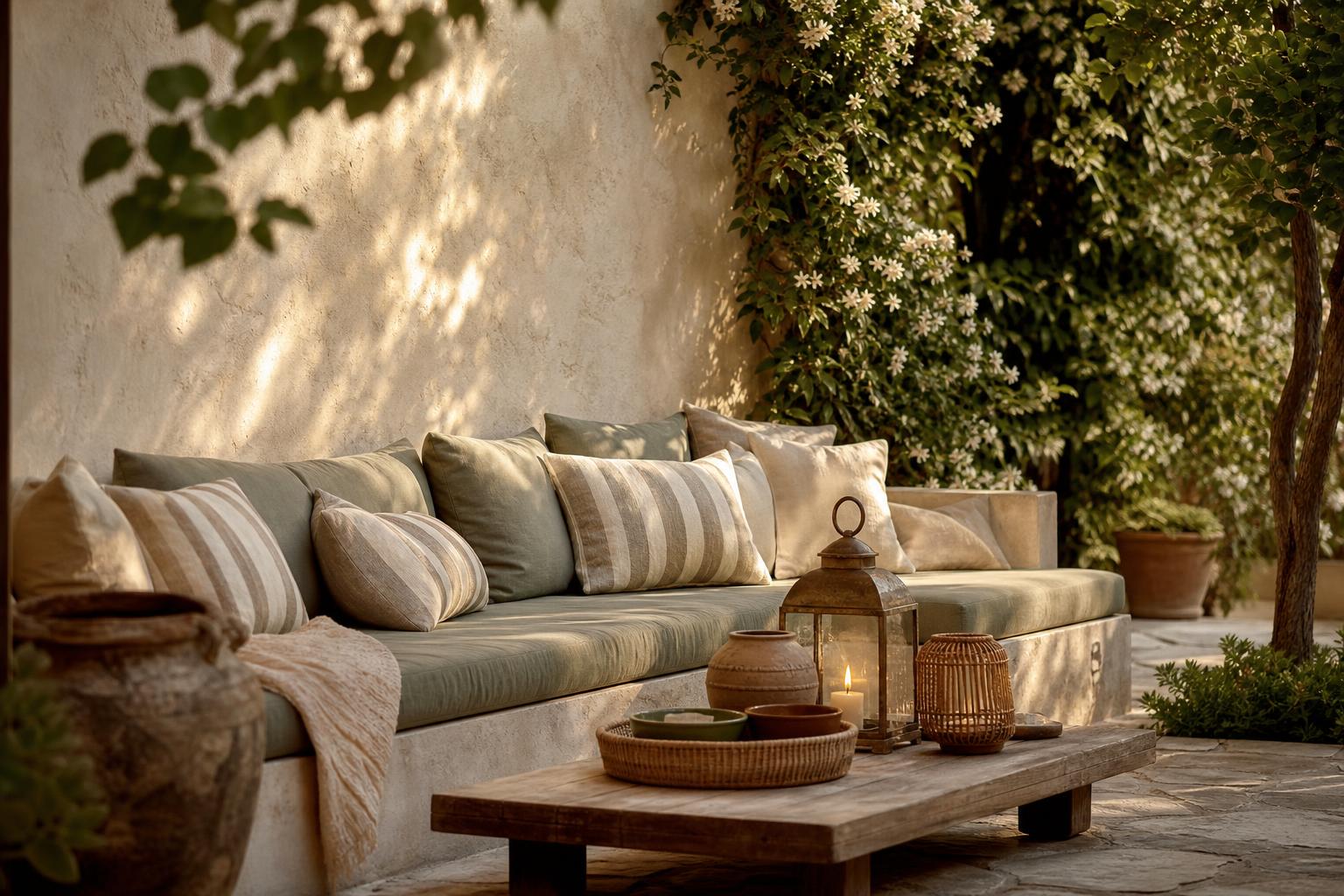
For built-in benches, sage green seat cushions create a tailored and restful look. If you prefer movable chairs, use sage covers on seat pads and add a few patterned pillows in cream, olive, faded stripe, or muted terracotta. The effect should feel collected, not overly matched.
How to Keep Sage Green From Looking Flat
Layer different textures instead of using one solid fabric everywhere. A smooth outdoor cushion, a slubby linen-look pillow, a woven stripe, and a small block-print accent will make the color feel richer. In Mediterranean design, texture often matters more than contrast.
Choose outdoor fabrics that can handle shade and moisture. Shaded side yards may dry more slowly after rain, so removable cushion covers are practical. Look for washable, mildew-resistant materials, and store softer throws indoors when not in use.
Use Natural Stone or Stone-Look Flooring to Ground the Patio
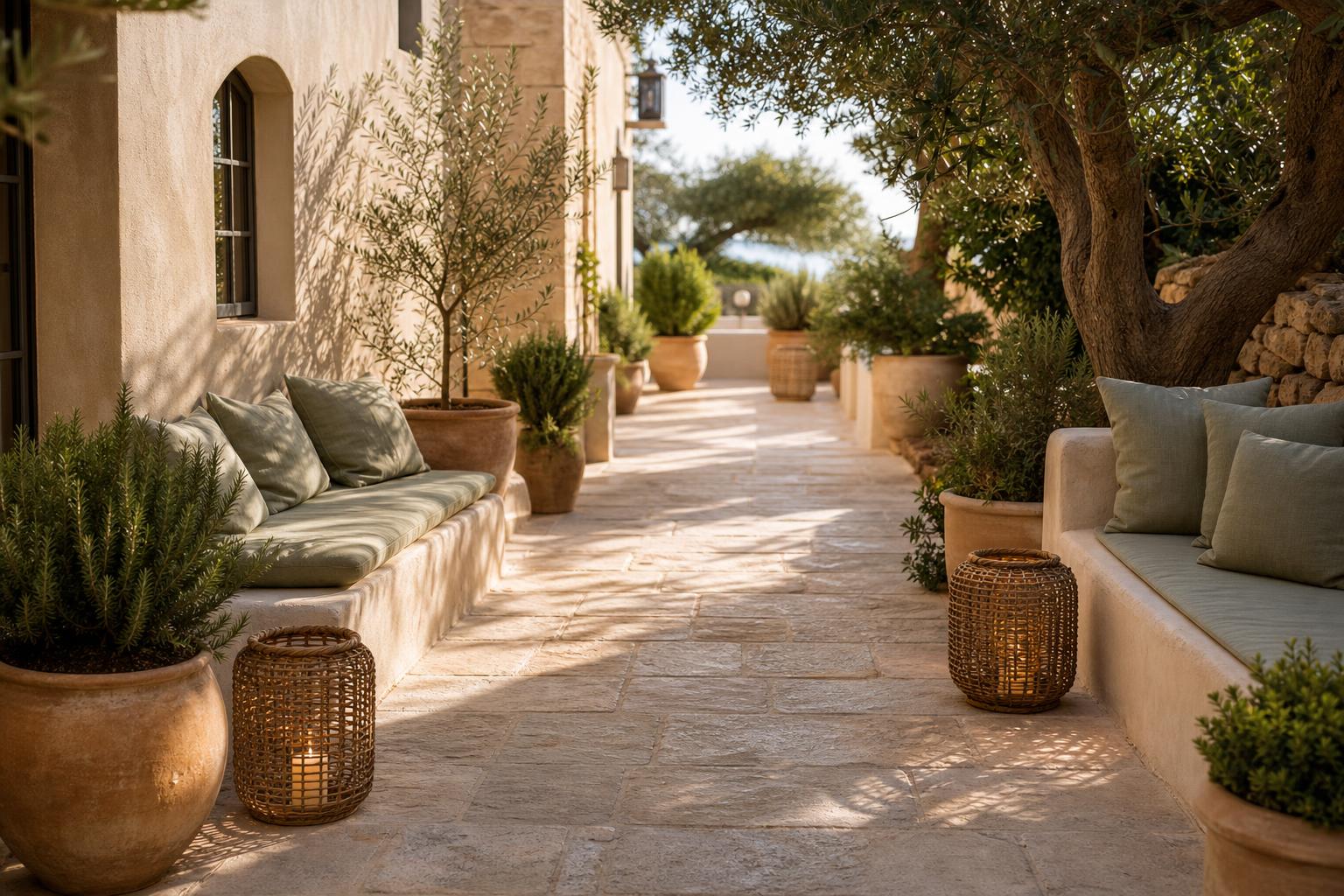
The floor determines whether a side yard feels like a pass-through or a real living space. For this design, natural stone is the most convincing choice. Limestone, travertine, sandstone, and tumbled stone pavers all work beautifully with tadelakt-style walls and sage cushions.
In shaded areas, consider texture and slip resistance. Highly polished stone may look elegant but can become slick. A honed, brushed, tumbled, or lightly textured finish is usually better outdoors. If real stone is outside the budget, porcelain pavers with a limestone or travertine look can still support the Mediterranean mood while being durable and easy to maintain.
Flooring Layout Ideas for Narrow Side Yards
- Large rectangular pavers: make a narrow patio feel calmer and less busy.
- Running bond pattern: gently draws the eye down the length of the space.
- Mixed stone sizes: creates an old-world courtyard feeling.
- Gravel border: softens edges and helps with drainage.
- Stone landing zones: define seating areas without adding walls.
If the side yard feels too long, break it visually into two or three zones. A small seating area, a planted moment, and a lantern-lit end wall can make the patio feel like a sequence rather than a tunnel.
Build In Seating to Save Space
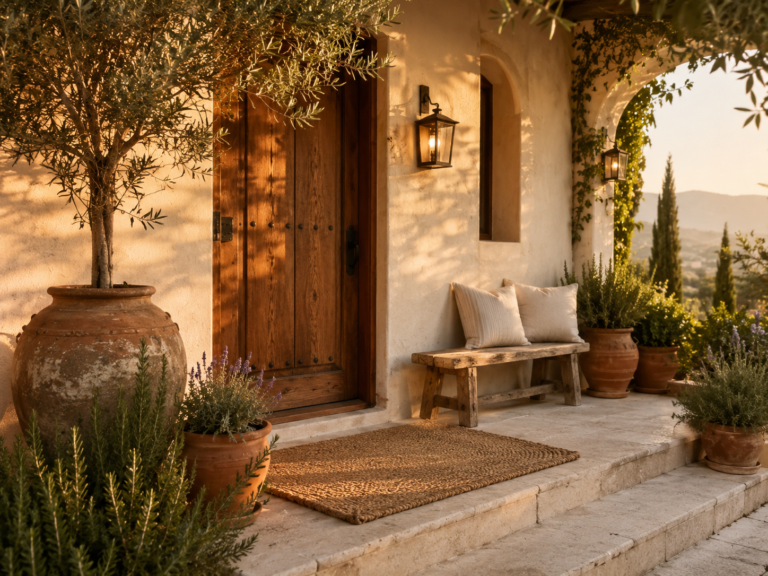
Built-in seating is one of the smartest choices for a Mediterranean side-yard patio. A plaster bench along one wall keeps the footprint slim and makes the space feel architectural. It also echoes the built-in banquettes often found in plastered Mediterranean homes, courtyards, and terraces.
A bench does not need to be deep to be comfortable. Even a relatively narrow seat can work with the right cushion and back pillows. If space allows, add a low back or raised plaster ledge behind the cushions. This gives the bench a finished look and creates a surface for lanterns, small pots, or ceramic pieces.
For a renter-friendly or lower-budget approach, use a slim outdoor bench in teak, acacia, or powder-coated metal and place it against the tadelakt-style wall. Add a long sage cushion to create the same soft Mediterranean effect without construction.
Add Terracotta and Greenery Without Overcrowding
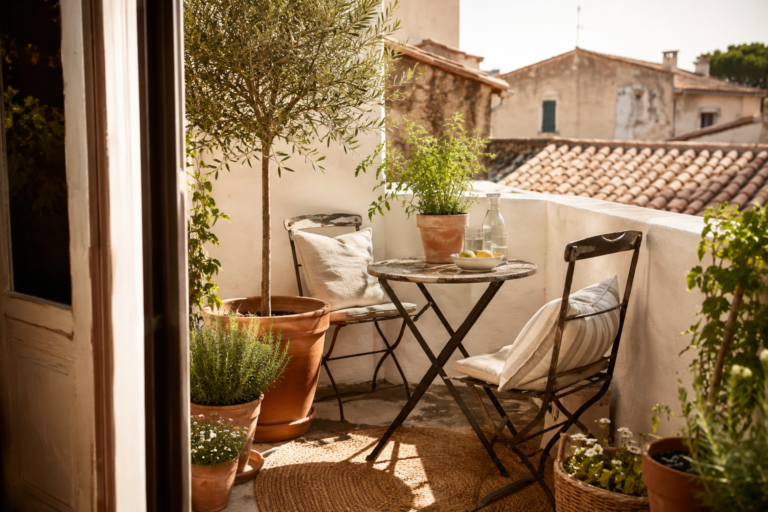
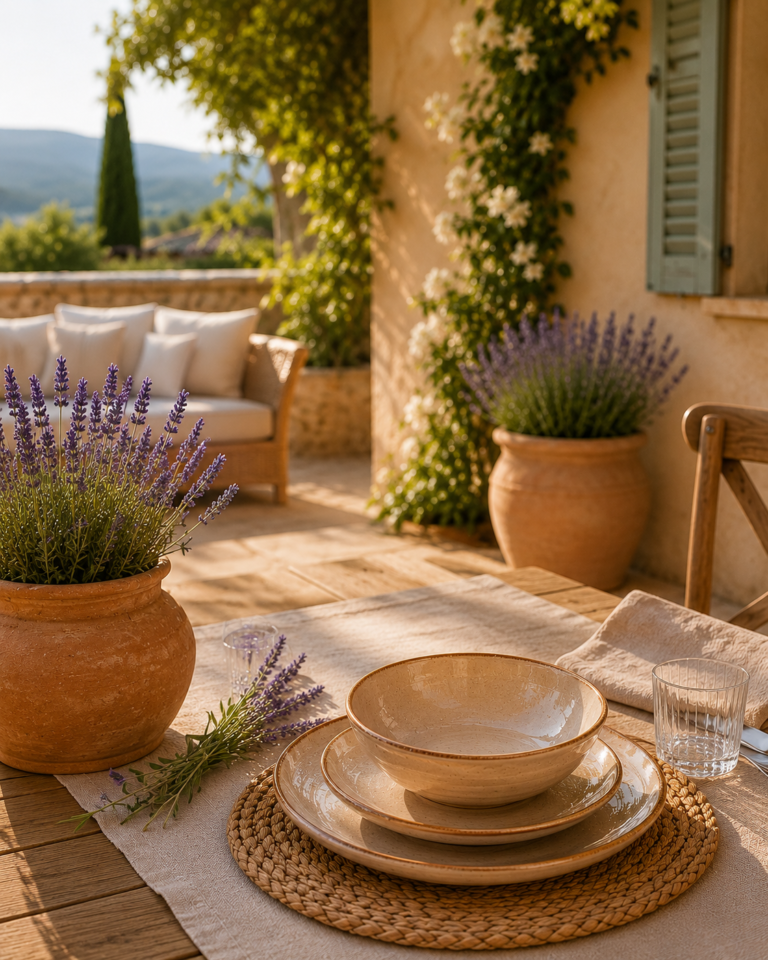
A shaded side yard needs planting, but it also needs breathing room. Mediterranean planting is often sculptural and aromatic rather than lush in a tropical way. Terracotta pots are especially useful because they add warmth to a cool shaded patio and age beautifully over time.
Choose plants based on the actual light level. If the spot receives a few hours of sun, you may be able to use dwarf olive trees, rosemary, lavender, santolina, and bay laurel. If the side yard is mostly shaded, consider myrtle, ferns in terracotta, jasmine where conditions allow, ivy geraniums, fatsia, or shade-tolerant herbs near the brighter end.
Planter Placement for a Narrow Patio
- Use tall pots at the ends: this creates a destination and reduces the corridor effect.
- Keep the walkway clear: avoid scattering small pots along the entire floor.
- Group in odd numbers: three pots in varied heights look more natural than a straight row.
- Repeat terracotta tones: repetition makes the patio feel designed.
- Add wall-mounted planters carefully: they can save floor space but should not make the walls feel cluttered.
If you love the look of olive trees but lack enough sun, use them in the brightest part of the patio or choose a convincing faux olive in a heavy terracotta pot for the deepest shade. The overall impression matters more than strict botanical tradition.
Create a Mediterranean Mood With Warm Layered Lighting
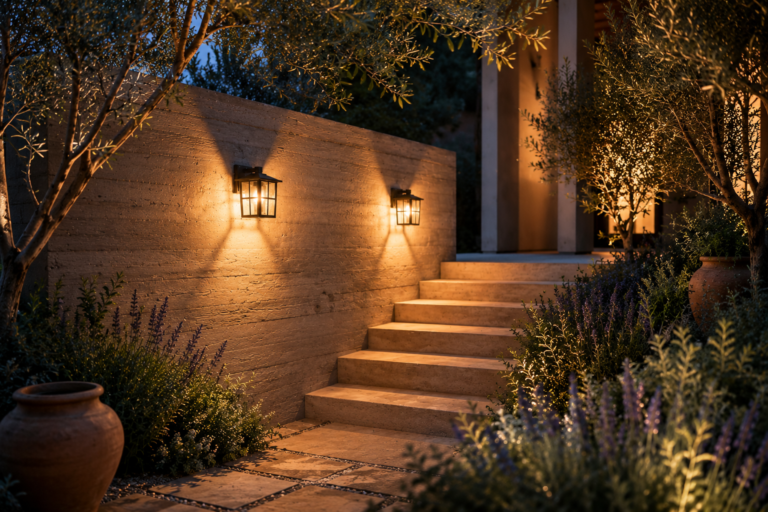
Lighting is essential in a shaded patio because the space may feel dim even during the day. The goal is not to flood it with harsh light, but to create a warm glow that emphasizes texture. Tadelakt-style walls look especially beautiful under low, grazing light.
Use a combination of wall sconces, lanterns, and low accent lighting. A pair of warm outdoor sconces on the plaster wall can make the patio feel like an extension of the home. Woven lanterns or metal lanterns on the floor bring a relaxed vacation mood. Small solar or low-voltage uplights can highlight potted trees or climbing plants.
Lighting Temperature Matters
Choose warm bulbs rather than cool white. Around 2700K is usually ideal for a Mediterranean atmosphere. Cool lighting can make beige plaster look gray and sage cushions look dull. Warm lighting brings out the honey tones in stone, the depth of terracotta, and the softness of green textiles.
If you use string lights, keep them restrained. A single line overhead can be charming, but too many strands can make the patio feel casual in the wrong way. For this more refined tadelakt and sage concept, lanterns and sconces usually look more timeless.
Use Arches, Niches, and End-Wall Features for Character
Architectural details can transform a plain side yard into a Mediterranean patio with soul. Even small gestures make a difference. A shallow arched niche in a plaster wall, a curved planter edge, or an arched mirror designed for outdoor use can soften the straight lines of a narrow space.
If construction is possible, consider adding one feature at the end of the side yard. This might be a plaster niche with a ceramic vessel, a wall fountain, a large urn, or a climbing plant trained around a simple arch. The end of a narrow patio needs a focal point so the eye has somewhere to rest.
For a non-permanent version, use a tall arched trellis, a large potted citrus or olive, or a weather-resistant decorative panel. Keep it simple. Mediterranean style feels most convincing when the architecture leads and the decor supports it.
Balance Cool Shade With Warm Materials
Because this patio concept is built around shade, the palette needs warmth. Tadelakt-style walls and sage cushions create calm, but terracotta, aged wood, brass, and warm stone prevent the space from feeling too cool. Think of the color balance as three parts pale mineral tones, two parts green, and one part sun-baked warmth.
A rustic wood coffee table or stool can be enough. You do not need a full furniture set. A single reclaimed-look table between a built-in bench and a pair of slim chairs will make the patio feel relaxed and functional. Handmade ceramics in cream, ochre, or olive can add another layer without clutter.
Materials That Suit This Look
- Tadelakt-style plaster: for soft, sculptural walls.
- Limestone or travertine: for an elegant Mediterranean floor.
- Terracotta: for planters, bowls, and warm accents.
- Sage outdoor fabric: for cushions that feel calm and natural.
- Woven rattan or rope: for lanterns, chairs, or small accessories.
- Aged brass or bronze: for sconces and hardware.
Keep Decor Minimal but Meaningful
A narrow side-yard patio does not need many decorations. In fact, too much styling can quickly make the space feel crowded. Focus on a few pieces that reinforce the Mediterranean story: one ceramic bowl, a water jar, a woven tray, a striped pillow, or a lantern with a hand-punched pattern.
Wall decor should be used sparingly because the plaster texture is already decorative. If you add something to the wall, choose one strong element rather than several small ones. A simple iron hook, a ceramic plaque, or a single outdoor sconce can be enough.
The most sophisticated Mediterranean patios often feel edited. They leave room for light, shadow, and the beauty of natural materials. If you are unsure whether to add another accessory, remove one item first and see if the space feels calmer.
Make the Patio Comfortable for Real Use
Beautiful side-yard patios sometimes fail because they are styled for photos rather than daily life. Before choosing finishes, decide how you want to use the space. A coffee spot needs a small table at the right height. A reading nook needs back support and shade-friendly lighting. A dinner corner needs enough knee room, stable flooring, and a clear path from the house.
Comfort also depends on airflow and maintenance. Shaded side yards can feel damp if they are enclosed, so use breathable materials where possible and avoid overcrowding with dense planting. Choose cushions that can be removed easily. Make sure the floor drains properly. If the patio is overlooked by neighbors, add climbing greenery, a trellis, or tall pots rather than heavy screens that block air and light.
Budget-Friendly Ways to Get the Look
You can create a Mediterranean tadelakt-and-sage mood without a full renovation. Start with the surfaces that have the biggest visual impact. Paint or limewash the wall in a warm mineral tone, then add sage cushions to existing seating. Replace scattered plastic planters with a smaller number of terracotta pots. Add warm lanterns for evening atmosphere.
If new flooring is not possible, use outdoor rugs in natural tones to define the seating area. Choose a flatwoven style that dries quickly and does not fight the stone-and-plaster palette. A gravel refresh can also improve a side yard dramatically, especially if paired with stepping stones or large pavers.
The most important investment is cohesion. A modest patio can look expensive when the palette is disciplined: plaster tones, sage green, terracotta, natural fibers, and warm light. Avoid buying random outdoor accessories just because they are Mediterranean themed. Choose fewer, better-aligned pieces.
Common Mistakes to Avoid
The first mistake is making the space too white. In shade, pure white can look flat and cold. Warm ivory or sand tones usually work better. The second mistake is using furniture that is too big. A side yard needs slim profiles, built-in solutions, or flexible pieces that can move easily.
Another common issue is poor lighting. One bright overhead fixture will not create the atmosphere this style needs. Use several softer light sources at different heights. Finally, avoid overplanting. Mediterranean patios often rely on negative space. A few well-chosen plants in beautiful pots will look more refined than a crowded collection of mismatched containers.
Shop the Mediterranean Look
Bring the shaded side-yard patio to life with practical pieces that echo tadelakt texture, soft sage tones, natural stone, and warm evening light.
- sage green outdoor cushion covers
- Mediterranean woven outdoor lanterns
- large terracotta patio planters
- beige and green striped outdoor pillows
- rustic wood outdoor coffee table
- warm Mediterranean outdoor wall sconce
Conclusion: A Cool, Textured Patio With Mediterranean Soul
A shaded side yard can become one of the most atmospheric parts of the home when it is treated as a Mediterranean patio rather than a leftover passage. Tadelakt-style walls bring softness and architecture. Sage green cushions add freshness and comfort. Natural stone, terracotta planters, warm lanterns, and restrained planting complete the feeling of a cool retreat.
The beauty of this approach is its balance. It is practical for narrow spaces, gentle in low light, and timeless enough to evolve over years. With the right textures and a limited palette, even the smallest shaded side yard can feel like a private Mediterranean escape.