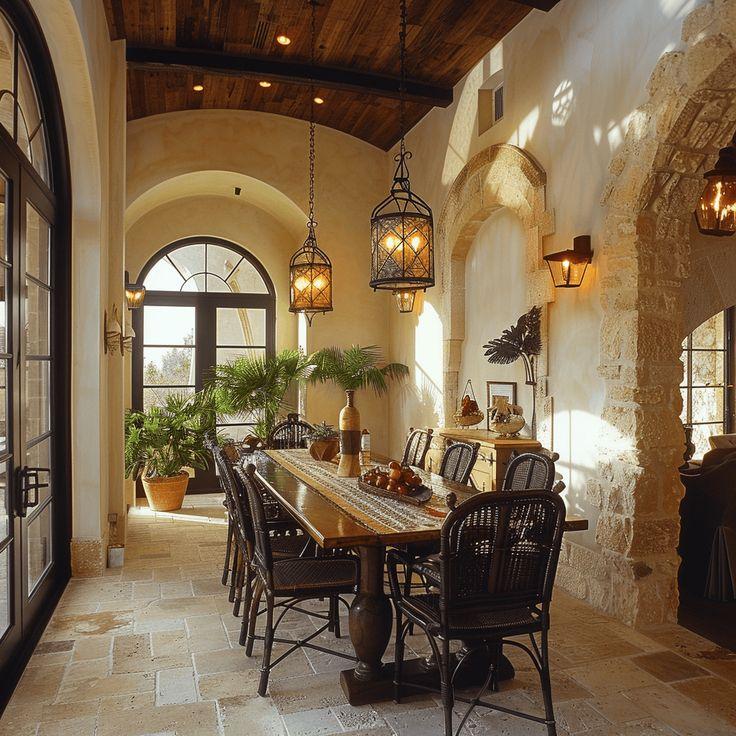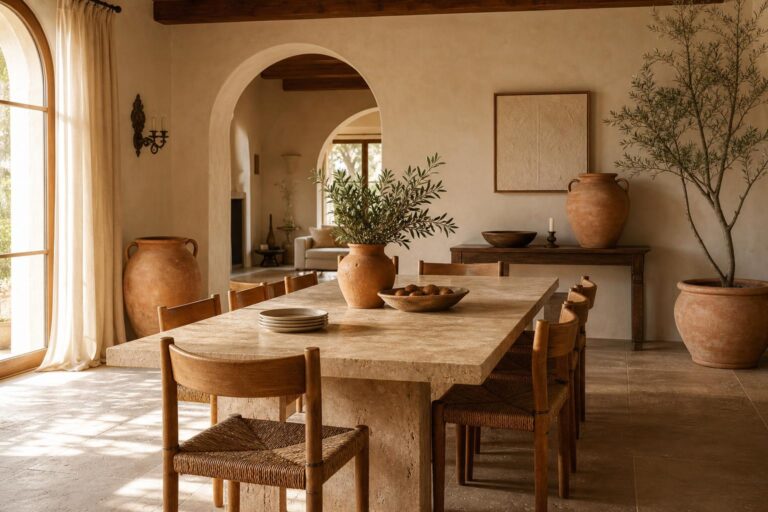
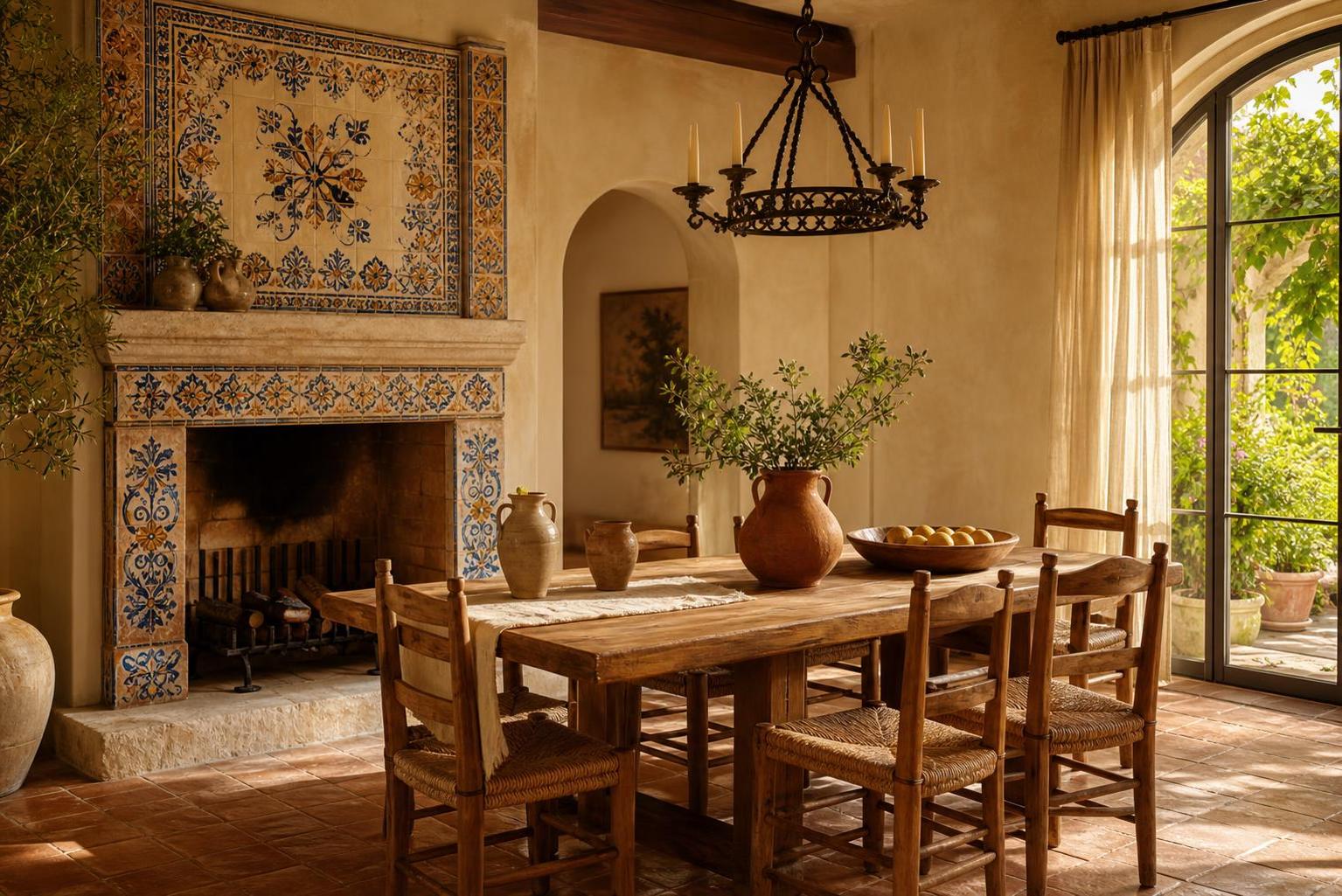
Mediterranean Dining Room Fireplace Ideas With Hand-Painted Tile Surrounds
Why a Hand-Painted Tile Fireplace Belongs in a Mediterranean Dining Room
A Mediterranean dining room is at its best when it feels generous, grounded, and slightly timeworn. It should invite long meals, quiet conversation, and the kind of atmosphere that makes a simple bowl of olives feel special. A fireplace adds that emotional center, but a fireplace with a hand-painted tile surround does something more: it turns the dining room into a room with memory, craftsmanship, and a clear point of view.
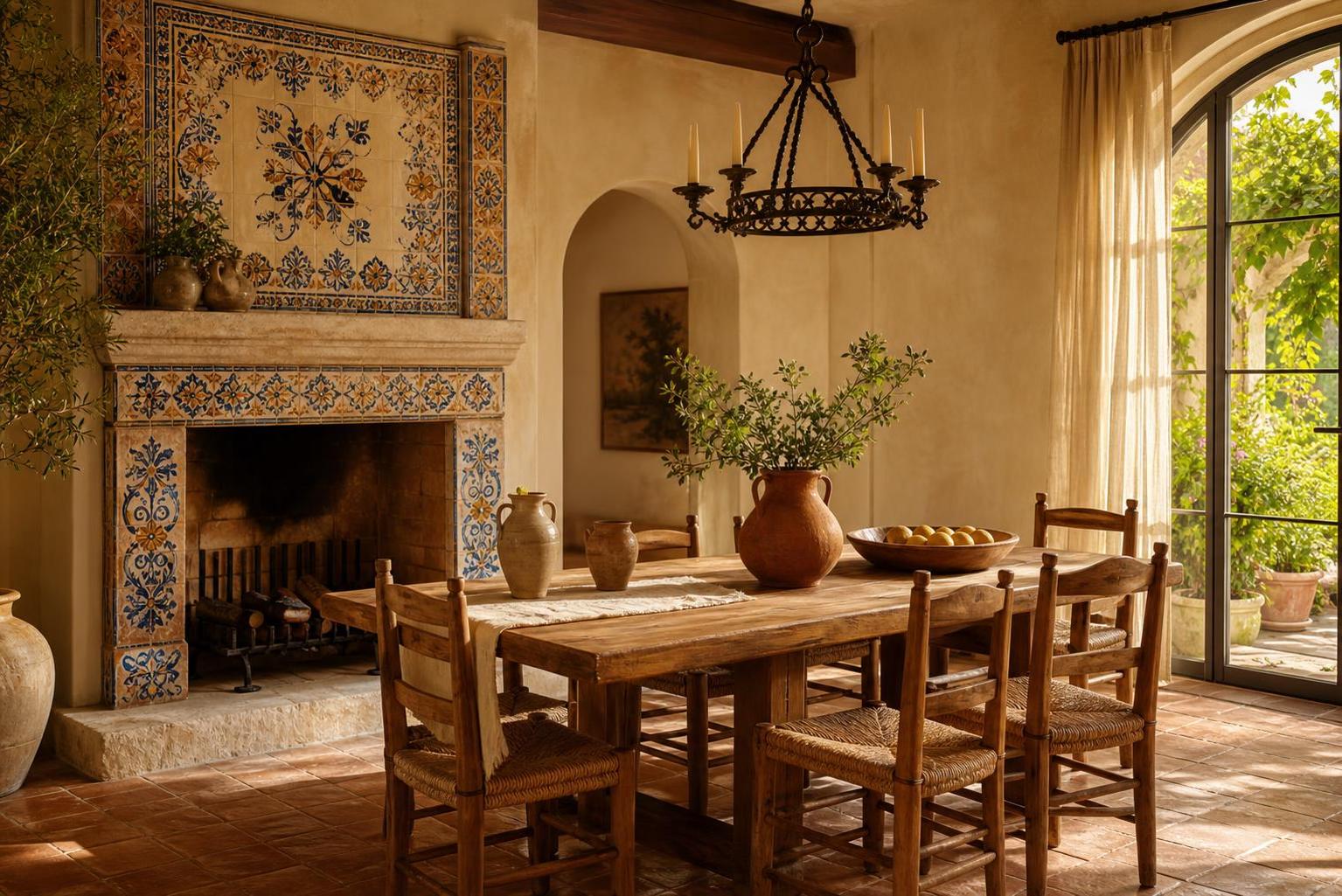
Unlike a plain painted wall or a minimal stone surround, hand-painted tile introduces rhythm and personality. The pattern can be Spanish, Provençal, Greek island inspired, Moorish, or Italian rustic, depending on the color and motif. Around a dining table, this kind of fireplace creates a beautiful backdrop without needing excessive wall decor. The key is to balance the tile with honest materials: plaster, wood, iron, linen, clay, and aged metals.
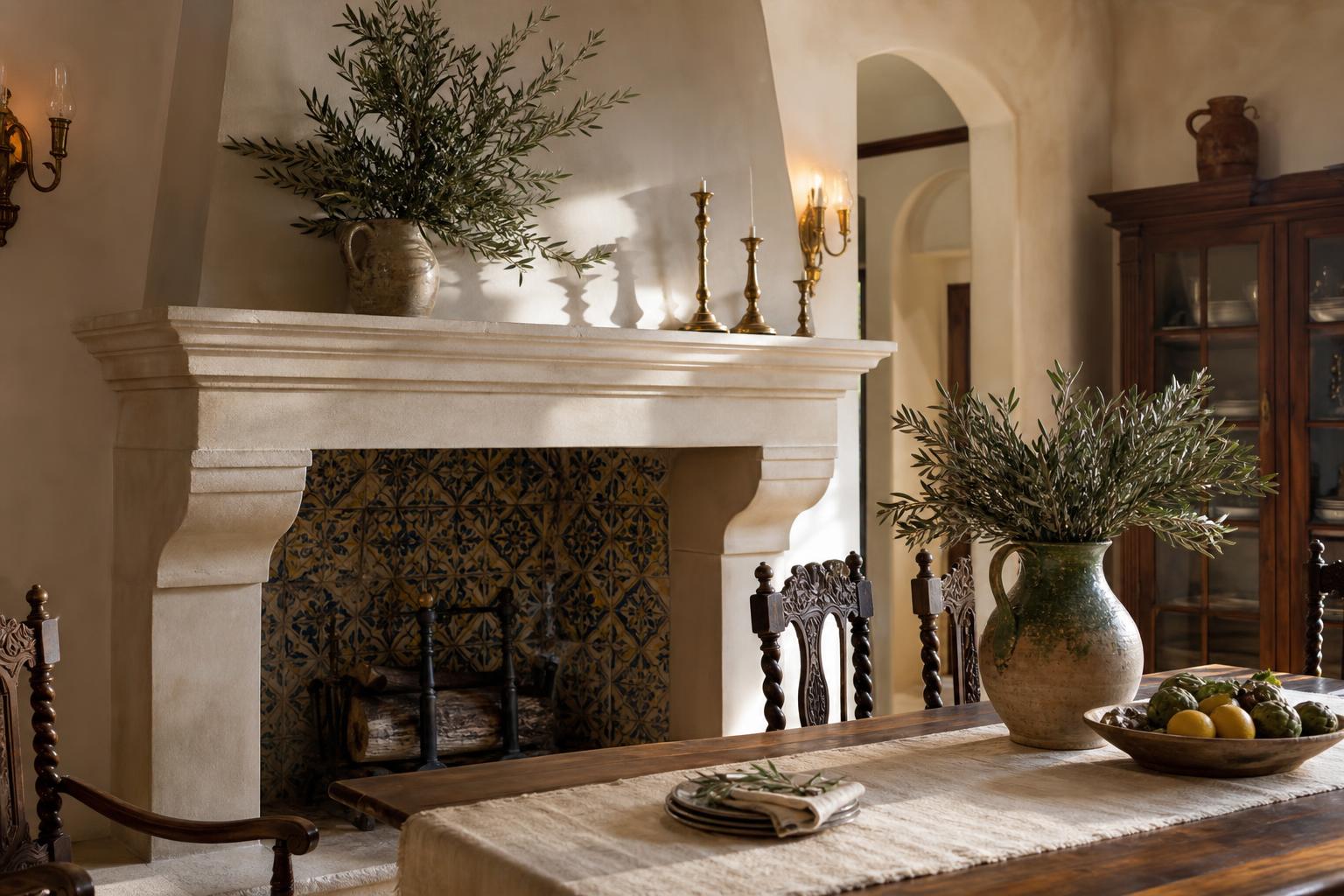
This guide focuses on Mediterranean dining room fireplace ideas with hand-painted tile surrounds, from choosing tile colors to styling the mantel, arranging furniture, and making the whole room feel elegant rather than busy.
Start With the Tile as the Room’s Story
In a Mediterranean dining room, the tile surround should feel like an architectural feature, not an afterthought. Before choosing furniture or lighting, decide what kind of story the tile will tell. Blue and white tiles feel coastal and crisp, especially when paired with limewash walls and pale oak. Terracotta, ochre, and deep green tiles feel warmer and more rustic, perfect for dining rooms with dark wood tables and ceramic serving pieces. Black, cream, and muted clay patterns can look more formal and old-world.
The most successful hand-painted tile fireplace surrounds usually have one of three approaches. The first is a full patterned surround, where the tiles frame the firebox and travel up toward the mantel. The second is a tiled border with a plain plaster mantel, which gives a quieter look. The third is a tiled hearth paired with a simple plaster or stone surround, ideal if you want a Mediterranean accent without making the fireplace overly colorful.
Tile Colors That Work Beautifully
- Blue and ivory: classic, bright, and suited to coastal Mediterranean dining rooms.
- Terracotta and cream: warm, earthy, and perfect with reclaimed wood furniture.
- Olive green and sand: subtle, natural, and calming for family dining spaces.
- Ochre, navy, and white: expressive and artistic without feeling overly modern.
- Charcoal and off-white: elegant for more formal Mediterranean interiors.
If your dining room is small, choose a tile pattern with fewer colors and a softer contrast. If the room has high ceilings or a generous table, you can use a bolder motif because the scale of the space can support it.
Choose a Fireplace Shape That Feels Mediterranean
The shape of the fireplace can be just as important as the tile. Mediterranean interiors often favor softened geometry: arches, thick plaster edges, rounded corners, and simple openings that look built into the home. If you are renovating, consider an arched firebox or a gently rounded plaster surround. These curves pair naturally with patterned tile because they keep the fireplace from feeling too rigid.
For a more Spanish-style dining room, a rectangular tile surround with a dark iron firebox can look beautiful, especially when topped with a heavy wood mantel. For a Greek or coastal Mediterranean look, a smoother white plaster fireplace with a tiled hearth may feel lighter. For a Tuscan-inspired room, consider a deeper mantel, warm-toned tiles, and a stone or terracotta floor nearby.
If changing the structure is not possible, you can still create the feeling with decorative choices. A curved mirror above the mantel, rounded pottery, arched candle holders, or a soft plaster paint finish can make even a basic fireplace feel more Mediterranean.
Balance Pattern With Calm Walls
Hand-painted tile needs breathing room. If the dining room walls are too busy, the fireplace can lose its impact. The safest and most beautiful wall finishes for this look are warm white limewash, soft cream plaster, pale sand, muted clay, or a barely-there greige. These finishes create the sun-washed effect that Mediterranean rooms are known for.
A matte wall surface is better than a glossy one. The slight movement of limewash or mineral paint echoes the handmade character of the tiles. If real limewash is not an option, choose a flat or velvety paint finish in a warm neutral. Avoid cold gray, stark white, or blue-toned beige, as these can make terracotta and ochre tiles feel dull.
For a dining room that feels more intimate, you can use a deeper plaster-inspired color such as warm taupe, mushroom, or muted clay on the walls. This works especially well with cream and blue tiles because it gives the room depth without competing with the pattern.
Select a Dining Table That Grounds the Fireplace
The dining table should feel visually strong enough to hold its own against the fireplace. A thin, overly polished table can look out of place near handmade tile. Instead, choose a table with substance: rustic oak, reclaimed pine, walnut, travertine, or a plaster-style pedestal table. The goal is not perfection; it is presence.
A long rectangular wood table looks timeless in front of a tiled fireplace, especially if the room is narrow. A round table can soften the layout and is ideal if the fireplace is centered on one wall. For a more formal Mediterranean dining room, a carved pedestal table or stone-topped table creates a sense of permanence.
Dining Chairs That Complement Tile
- Rush-seat chairs: classic and relaxed, especially with blue or terracotta tiles.
- Woven bistro-style chairs: lighter and ideal for coastal Mediterranean rooms.
- Dark wood chairs: dramatic and suited to Spanish-inspired interiors.
- Slipcovered chairs: soft and elegant for a quieter, more neutral dining room.
- Iron-framed chairs: useful when you want to echo wrought iron details near the fireplace.
Keep the chair fabric simple if the tile is colorful. Natural linen, oatmeal cotton, warm white cushions, or subtle stripes will support the fireplace rather than compete with it.
Style the Mantel With Restraint
A hand-painted tile fireplace already has ornament, so the mantel should be styled with care. Too many small objects can make the area feel cluttered. Instead, use fewer pieces with stronger silhouettes. A pair of iron candlesticks, one large ceramic vase, a low bowl, or a leaning framed artwork can be enough.
For Mediterranean dining rooms, mantel styling works best when it looks gathered over time. Mix handmade ceramics with aged brass, olive branches, dried herbs, or a simple earthenware pitcher. Avoid shiny modern accessories and overly symmetrical arrangements that feel staged. A little imperfection is part of the charm.
Beautiful Mantel Combinations
- Rustic and warm: terracotta vase, brass candlesticks, and a small landscape painting.
- Coastal and airy: white ceramic vessels, blue glass, and olive branches.
- Spanish-inspired: wrought iron candle holders, dark wood frame, and clay pottery.
- Minimal Mediterranean: one oversized vessel and a simple linen-covered firewood basket nearby.
If the tile pattern is bold, keep the mantel objects in solid colors. If the tile is subtle, you can add more texture through pottery, woven pieces, or aged metal.
Use Lighting to Make the Tile Glow
Lighting is essential around a dining room fireplace because hand-painted tiles change beautifully throughout the day. In natural light, the glaze may appear fresh and bright. At night, candlelight and warm bulbs bring out the depth of the brushwork. The right lighting makes the fireplace feel alive during dinner.
A wrought iron chandelier over the dining table is a natural choice, but it should not block the fireplace view. Choose a fixture with an open frame, simple arms, or candle-style bulbs. If the ceiling is low, consider a shallow iron chandelier or a pair of pendants rather than a heavy central fixture.
Wall sconces on either side of the fireplace can be stunning, especially if they are plaster, aged brass, or iron. They frame the tile and add evening atmosphere. Use warm bulbs, ideally around 2700K, and dimmers if possible. A Mediterranean dining room should never feel harshly lit.
Coordinate the Hearth With the Dining Room Floor
The hearth is often overlooked, but it can make the fireplace feel integrated into the room. If the fireplace surround has hand-painted tiles, the hearth can either match the surround or use a quieter material. Terracotta, limestone, travertine, slate, or plain clay tile all work beautifully.
If your dining room already has patterned floors, keep the hearth simple. If the floor is wood or neutral stone, a tiled hearth can add personality. The most elegant approach is usually contrast in texture rather than contrast in color. For example, glossy hand-painted wall tiles paired with matte terracotta hearth tiles create depth without visual chaos.
Rugs can also help connect the fireplace and dining table. Choose a low-pile wool rug, a faded vintage-style rug, or a natural fiber rug with a textured weave. Avoid thick rugs too close to the firebox, and always consider safety clearances.
Build a Palette Around the Fireplace Tiles
Once the tile is selected, pull the dining room palette from it. This is the easiest way to make the space feel intentional. If the tile includes cobalt blue, repeat a softer blue in a ceramic bowl or striped napkins. If it includes terracotta, bring that warmth into a vase, artwork, or seat cushions. If olive green appears in the pattern, echo it with branches, glassware, or a muted tablecloth.
The secret is repetition without overmatching. You do not need blue curtains, blue chairs, and blue plates just because the tile is blue. Two or three quiet echoes are enough. Mediterranean style feels collected, not coordinated like a showroom.
A Reliable Mediterranean Dining Palette
- Base: warm white, cream, sand, or limewash beige.
- Wood: oak, walnut, reclaimed pine, or dark stained timber.
- Tile accent: blue, terracotta, green, ochre, or charcoal.
- Metal: wrought iron, aged brass, bronze, or blackened steel.
- Textiles: linen, cotton, jute, wool, and subtle woven stripes.
This kind of palette allows the fireplace to remain the focal point while the rest of the dining room feels rich and layered.
Make the Fireplace Work for Entertaining
A dining room fireplace is not only decorative; it changes how the room is used. During dinner parties, it becomes a natural gathering point before and after the meal. For that reason, think about the space around it. If there is room, place a small bench, a pair of stools, or a narrow console nearby. This creates a place for drinks, serving dishes, or extra candles.
For family meals, the fireplace can make the room feel more intimate even when it is not lit. Store firewood in a woven basket, keep a ceramic bowl of matches nearby, or arrange lanterns on the hearth. These details signal warmth and hospitality.
If the fireplace is nonworking, you can still use it beautifully. Fill the firebox with stacked birch logs, large pillar candles, or a simple arrangement of pottery. Avoid fake flames that look too modern. Mediterranean design is strongest when materials feel real.
Rental-Friendly Ways to Suggest the Look
If you cannot renovate the fireplace, there are still ways to create a hand-painted tile effect. Peel-and-stick tile decals can work on a flat surround if placed carefully and removed according to the manufacturer’s instructions. Another option is to tile a removable fireplace board or decorative panel that sits around a nonworking firebox.
You can also bring the idea in through accessories. A large ceramic platter above the mantel, patterned candle holders, a painted tile tray on the table, or framed textile art can echo the same Mediterranean spirit. The goal is to create the impression of craft and color even if the architecture is temporary.
For renters, keep the walls warm and simple, use a rustic dining table if possible, and let lighting do much of the work. A plug-in wall sconce, iron chandelier-style pendant, or candlelit mantel can make a standard dining room feel much more atmospheric.
Common Mistakes to Avoid
The first mistake is choosing tiles that are too glossy, too modern, or too perfect. Mediterranean tile should feel handmade, even if it is newly purchased. Slight variation in color and line is an advantage. The second mistake is mixing too many patterns in one room. If your fireplace tile is expressive, keep curtains, rugs, and upholstery quieter.
Another common issue is using a mantel that feels too suburban or polished. A bright white factory-made mantel can fight against the old-world character of painted tile. If replacing it is not possible, consider painting it a warm plaster tone or styling it with rustic, substantial objects.
Finally, avoid cool lighting. Blue-white bulbs flatten warm plaster, terracotta, and wood. A Mediterranean dining room fireplace should glow, especially in the evening.
Shop the Mediterranean Look
Use these pieces to echo the warmth of a hand-painted tile fireplace and create a dining room that feels layered, relaxed, and timeless.
- hand-painted Mediterranean accent tiles
- rustic wood mantel shelf
- wrought iron candle holders
- Mediterranean ceramic vase
- neutral linen table runner
- antique brass fireplace screen
Conclusion: Let the Fireplace Set the Mood
A Mediterranean dining room fireplace with a hand-painted tile surround is more than a decorative feature. It gives the room a sense of place, craftsmanship, and warmth. Whether you prefer blue and white coastal tiles, earthy terracotta patterns, or a quiet olive and cream palette, the fireplace can guide every other choice in the space.
Keep the surrounding materials honest, the walls calm, the lighting warm, and the furniture substantial. Style the mantel with restraint and repeat the tile colors in small, thoughtful ways. When everything works together, the dining room becomes the kind of space Mediterranean design does best: relaxed, artful, welcoming, and ready for long evenings around the table.