Mediterranean House Exterior Ideas With Clay Roof Tiles and Painted Shutters for Single-Story Homes
Why Clay Roof Tiles and Painted Shutters Define Mediterranean Curb Appeal
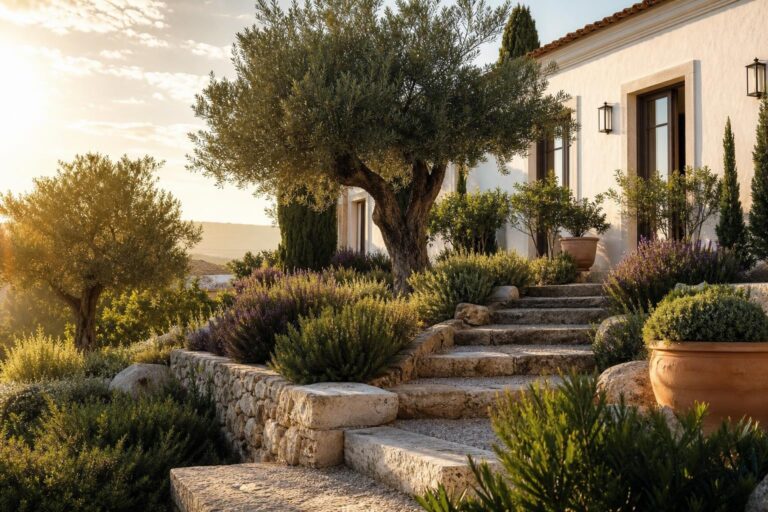
A memorable Mediterranean house exterior is never only about one feature. It is the relationship between warm materials, sun-softened colors, architectural rhythm, and practical details that make the home feel settled into its landscape. For single-story homes, this balance matters even more because the facade sits close to the ground and every horizontal line becomes visible. Clay roof tiles add shadow, texture, and unmistakable warmth, while painted shutters bring color, proportion, and a sense of handcrafted charm.
This design angle is especially useful for ranch-style houses, low stucco homes, compact coastal cottages, and modern single-story properties that need more character. Instead of adding unnecessary ornament, a Mediterranean exterior works best when the key elements feel intentional: a roof with depth, walls with texture, shutters with a beautiful muted finish, and an entry that welcomes without overwhelming.
The goal is not to make the exterior look like a movie set or a resort. The most elegant version feels natural, slightly aged, and quietly luxurious. Think sun-baked terracotta, creamy stucco, muted blue or sage shutters, rustic wood, forged metal, and planters that soften the edges of the architecture.
Start With the Roofline: The Power of Clay Tile
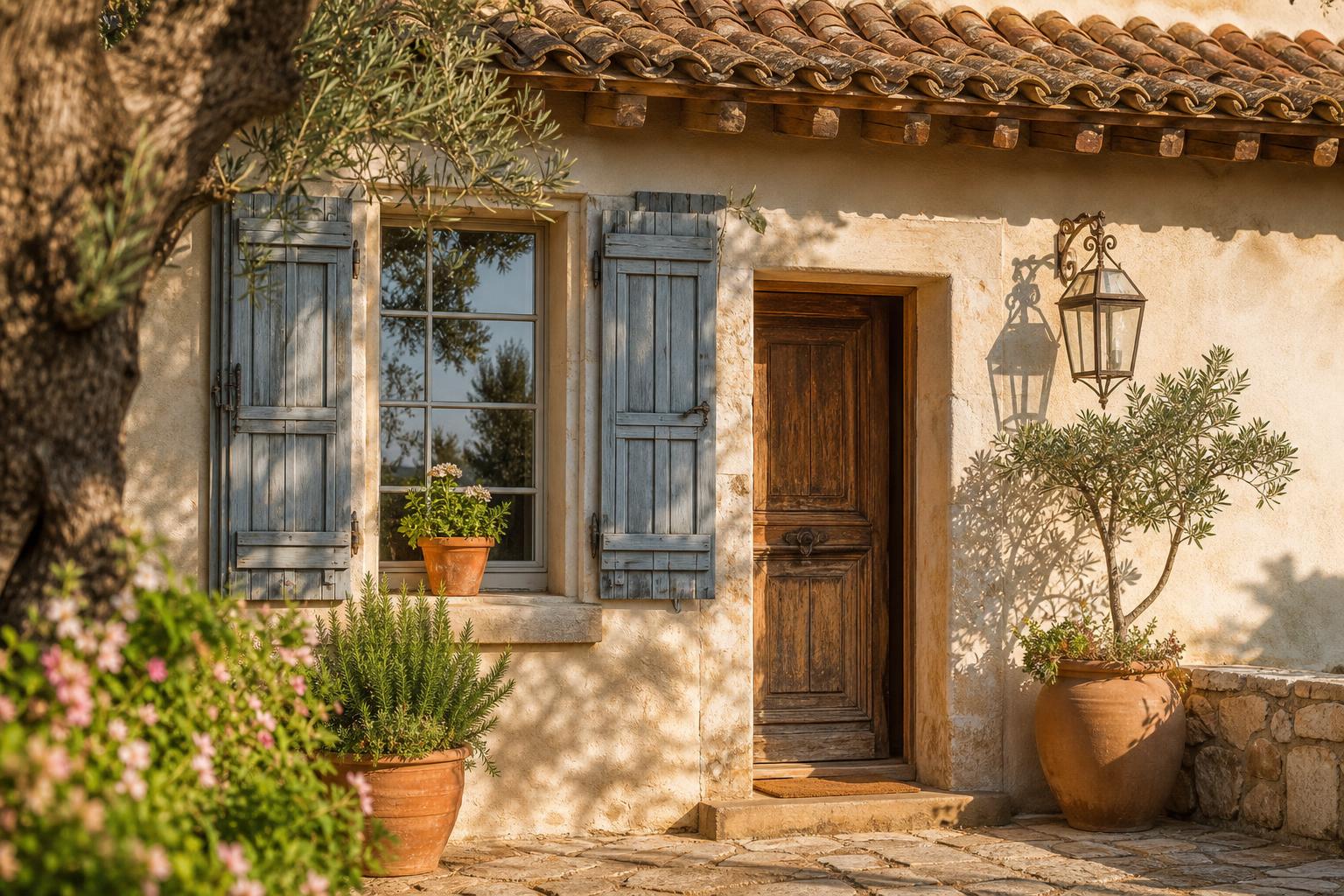
Clay roof tiles are one of the strongest visual cues in Mediterranean architecture. Their earthy red, orange, brown, and weathered rose tones instantly warm up the facade. On a single-story home, the roof often occupies a large percentage of what you see from the street, so the tile color and profile should be chosen with care.
Traditional barrel tiles create deep shadows and a more old-world look. Flat clay tiles feel quieter and work well on transitional homes that need Mediterranean warmth without heavy rusticity. If you are updating an existing roof, avoid perfectly uniform bright orange tiles unless the rest of the exterior is very simple. A blend of terracotta, cinnamon, sand, and slightly aged brown tones usually looks more authentic.
For single-story homes, roof overhangs are also important. A slightly generous overhang creates shade, protects the stucco, and makes the home appear more relaxed. If your roofline is very plain, consider adding material contrast under the eaves with warm wood tones or a soft painted soffit that relates to the shutter color.
Choose Painted Shutters That Look Sun-Washed, Not Loud
Painted shutters are one of the easiest ways to give a Mediterranean house exterior personality. They frame the windows, add vertical rhythm, and introduce color without covering the entire facade. The key is choosing shades that look softened by light rather than overly saturated.
Beautiful Mediterranean shutter colors include muted sage, dusty olive, faded blue-gray, mineral blue, warm taupe, soft charcoal, weathered teal, and natural clay brown. These colors work because they are rooted in the landscape: herbs, sea, stone, sky, and dry earth. On a cream or ivory stucco home, green shutters feel relaxed and garden-like. On a sandy beige facade, blue-gray shutters add a coastal note. On whitewashed walls, dark bronze or olive shutters create elegant contrast.
Shutter proportions matter as much as color. They should look as if they could actually cover the window, even if they are decorative. Narrow shutters beside wide windows can feel skimpy. Oversized shutters can feel theatrical. For a refined facade, keep the lines simple: vertical boards, subtle louvers, or flat panels with minimal hardware.
Use Stucco Texture to Support the Mediterranean Mood
Stucco is the perfect partner for clay tile because it offers a soft, mineral surface that changes throughout the day. A completely flat, bright white exterior can look too modern or stark beside a warm terracotta roof. A slightly textured finish in a creamy, chalky, or sandy tone tends to feel more natural.
Consider colors like warm ivory, limestone white, pale sand, almond, light greige, or sun-faded beige. The undertone should coordinate with the roof tile. If your tiles are deep red and orange, a cream wall color will soften them. If the tiles are pale terracotta or antique rose, a warmer off-white can keep the home from looking washed out.
Avoid using too many competing colors on the main exterior. Mediterranean homes often feel rich because of texture, not because of a complicated paint scheme. Let the roof, shutters, door, planters, lighting, and landscaping create the layers.
Design a Front Door That Feels Anchored
The front door is the emotional center of the facade. On a single-story Mediterranean home, it can make the difference between a plain exterior and one that feels inviting. A rustic wood door is a classic choice, especially when paired with clay roof tiles and painted shutters. Walnut, chestnut, oak, and medium weathered wood tones all work beautifully.
If replacing the door is not possible, consider refinishing the existing one with a warmer stain or painting it in a deep Mediterranean shade. Olive black, aged bronze, muted terracotta, dark teal, or warm espresso can all work, depending on the shutter color. The door should feel heavier and more grounded than the shutters, especially if the home has a low roofline.
Hardware also matters. A simple wrought iron handle, aged brass knocker, or dark bronze lockset can add depth without looking overly decorative. The best approach is restraint: one or two substantial details are more elegant than several small ornate pieces.
Bring In Stone Without Making the Facade Too Heavy
Natural stone can enrich a Mediterranean exterior, but it should be used thoughtfully on single-story homes. Too much stone on a low facade can make the house feel heavy or visually compressed. Instead, use stone as an accent that gives the home a sense of permanence.
Good places for stone include the base of exterior columns, a low garden wall, the front step, the entry threshold, or a small section around the porch. Limestone, travertine, sandstone, and softly irregular fieldstone all pair well with clay tile. Choose stone in warm neutral tones rather than cold gray if you want the exterior to feel cohesive.
If your home already has brick or concrete details, you do not necessarily need to remove them. A limewash finish, warm paint, or surrounding landscape elements can help those materials blend into a Mediterranean palette.
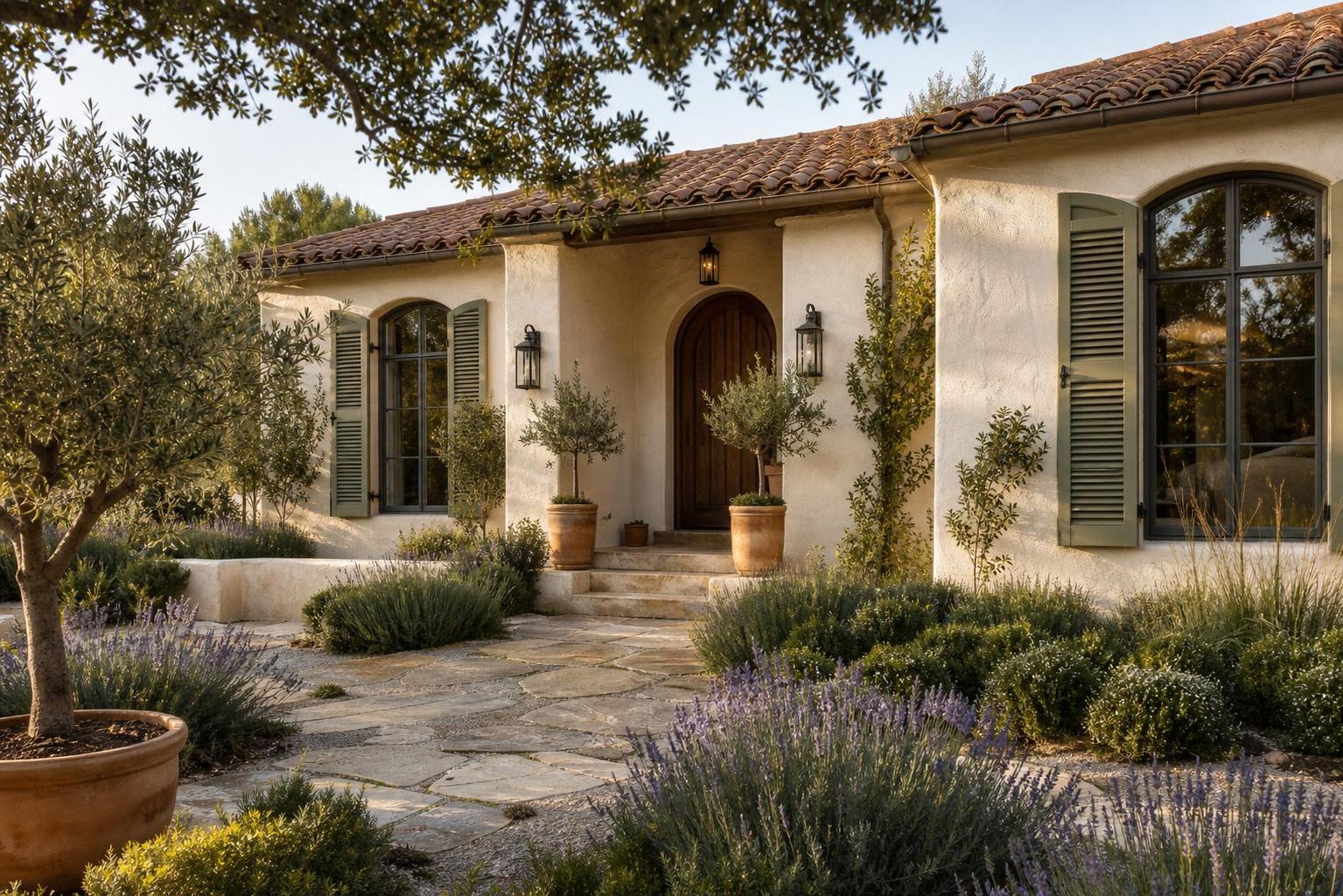
Build a Cohesive Color Palette Around the Roof
The roof is usually the warmest color on a Mediterranean exterior, so it should guide the rest of the palette. A balanced scheme often includes one warm wall color, one shutter color, one door or metal finish, and natural accents from stone, wood, and planting.
Palette 1: Cream Stucco, Terracotta Roof, Sage Shutters
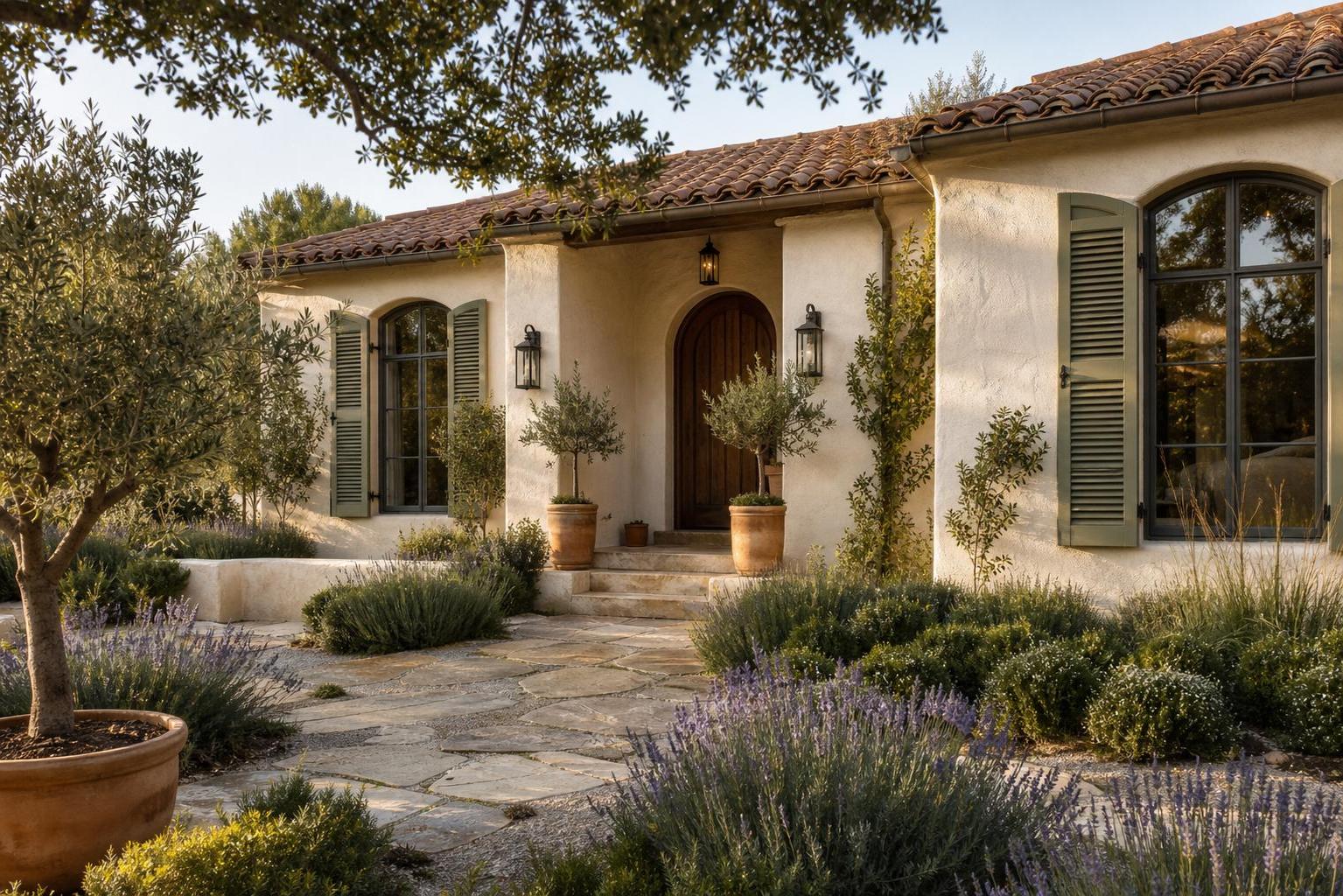
This is one of the most timeless combinations for a single-story home. The cream stucco keeps the facade light, the clay roof adds warmth, and sage shutters introduce a gentle garden tone. Finish the look with terracotta planters, aged brass or bronze hardware, and olive trees or rosemary near the entry.
Palette 2: Sandy Stucco, Aged Clay Roof, Blue-Gray Shutters
This palette works beautifully for homes that lean coastal. Blue-gray shutters feel calm and breezy without becoming overly nautical. Use natural stone steps, woven outdoor baskets, and a medium wood door to keep the look grounded.
Palette 3: Whitewashed Walls, Mixed Terracotta Roof, Dark Olive Shutters
If you love contrast, dark olive shutters create a sophisticated look against whitewashed stucco. This palette feels more European and slightly more formal. Keep accessories simple and choose blackened bronze or wrought iron lighting for definition.
Add Mediterranean Lighting That Flatters the Facade
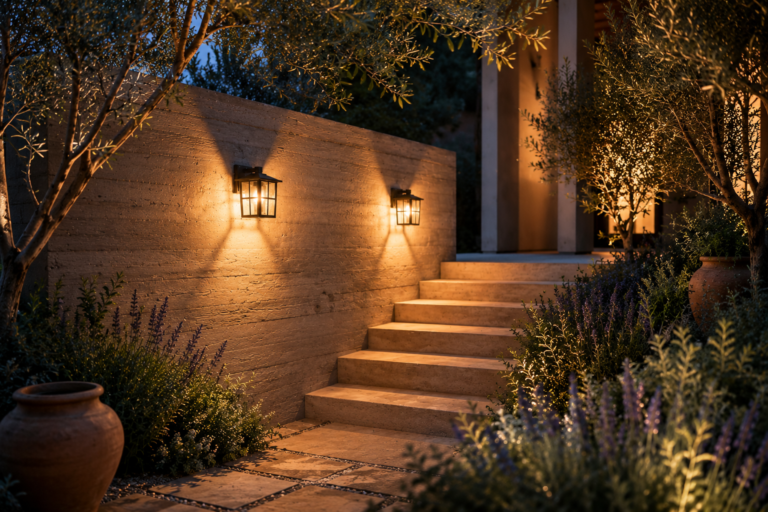
Exterior lighting should look beautiful during the day and create a warm glow at night. Mediterranean homes are especially suited to wall lanterns, iron sconces, seeded glass, and aged metal finishes. The fixture should feel substantial enough to hold its own against clay roof tiles and textured stucco.
Place lanterns beside the front door, near garage doors, or along a covered entry if the architecture allows. For a single-story house, avoid fixtures that are too tiny because they can look lost on a wide facade. At the same time, oversized lanterns may make the entry appear crowded. Choose pieces that echo the warmth of the roof and the depth of the shutters.
Warm white bulbs are essential. Cool exterior bulbs can make stucco look flat and gray. A soft golden glow enhances the texture of the walls and makes the clay tile feel richer after sunset.
Use Planters to Connect the House to the Landscape
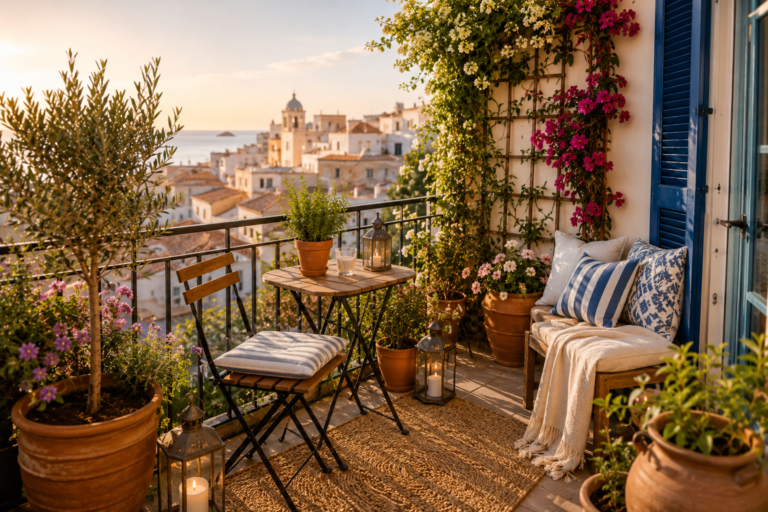
Planters are not just accessories on a Mediterranean facade. They help transition between architecture and planting, especially on single-story homes where the front elevation can feel long or low. Terracotta pots are the obvious choice, but they work best when varied in height and shape.
Use large planters near the entry to visually anchor the door. Add medium pots under windows to relate to the shutters. Smaller pots can sit on steps or low walls, but avoid cluttering the walkway. Plants with silvery, blue-green, or herbal foliage are especially effective because they echo the dry Mediterranean landscape.
- Olive trees add height and sculptural structure in large pots.
- Rosemary gives fragrance and a relaxed rustic feeling.
- Lavender softens the base of stucco walls with color and texture.
- Agave or architectural succulents work well for a cleaner, modern Mediterranean look.
- Bay laurel offers a formal option near the front door.
Pay Attention to Windows, Trim, and Small Details
Small exterior details can either support the Mediterranean look or distract from it. Window trim should not compete with the shutters. A simple stucco return, warm off-white trim, or subtle stone surround usually works better than high-contrast bright trim.
If your windows are very modern, shutters can help soften them. If your windows are already divided or arched, keep shutters simpler so the facade does not become too busy. Grilles, iron accents, and deeper window recesses can enhance the Mediterranean feeling, but they should be used with restraint.
House numbers, doorbells, mailboxes, and doormats should also follow the same visual language. Choose aged metals, ceramic details, natural fibers, and simple shapes. A single ceramic house number plaque or wrought iron number set can add charm without overwhelming the entry.
Make a Single-Story Home Feel Taller and More Elegant
One common challenge with single-story homes is that the facade can feel too horizontal. Mediterranean details can help add height and rhythm. Tall shutters, vertical planting, arched entry details, and taller lanterns all guide the eye upward.
If the architecture allows, an arched front door or arched entry surround can instantly create Mediterranean character. However, you do not need to rebuild the facade to get the effect. A rounded top mirror inside the entry window, a curved stone step, arched gate detail, or softly rounded planting bed can create a similar visual mood.
Another strategy is to layer heights near the entry. Use a tall potted olive tree, a lower lavender pot, a medium lantern, and a strong door color. This creates a vertical composition that balances the long roofline.
Budget-Friendly Updates That Still Look Authentic
You do not need a complete renovation to move a single-story house toward a Mediterranean exterior. Start with the details that have the strongest visual impact from the street. Painting shutters, updating exterior lighting, adding terracotta planters, and changing door hardware can transform the facade quickly.
- Paint existing shutters in sage, blue-gray, olive, or warm taupe.
- Replace cool exterior bulbs with warm white bulbs for a softer evening glow.
- Add two oversized terracotta planters near the front door for instant warmth.
- Upgrade the house numbers to ceramic, bronze, or wrought iron.
- Use a natural coir or woven doormat instead of a brightly patterned mat.
- Refresh the front door stain or paint it in a deeper Mediterranean color.
If your budget allows for one larger investment, prioritize the roof or the front door. Clay roof tiles create the biggest architectural transformation, while a beautiful wood door can make the entry feel completely new.
Common Mistakes to Avoid
The most common mistake is making every element too decorative. Mediterranean style is rich, but it is also grounded in practicality and climate. Too many scrolls, bright colors, glossy finishes, and faux finishes can make the exterior feel artificial.
Another mistake is choosing colors in isolation. A shutter color may look beautiful on a paint card but too intense beside terracotta roof tiles. Always test samples outdoors at different times of day. Morning light, afternoon sun, and evening shade can dramatically change how stucco and shutters appear.
Finally, avoid ignoring scale. Small lanterns, tiny planters, and undersized shutters can make a single-story home look unfinished. Mediterranean exteriors benefit from details that feel sturdy, useful, and proportionate.
Shop the Mediterranean Look
Use these exterior accents to bring clay roof warmth, painted shutter charm, and timeless Mediterranean curb appeal to your home.
- Large terracotta outdoor planters
- Mediterranean outdoor wall lanterns
- Decorative exterior window shutters
- Wrought iron door knocker
- Spanish style house numbers
- Natural coir front door mat
Final Thoughts: Create a Mediterranean Exterior That Feels Collected Over Time
A beautiful Mediterranean house exterior with clay roof tiles and painted shutters should feel warm, calm, and enduring. The best designs do not rely on one dramatic gesture. They combine roof texture, soft stucco, muted color, natural materials, and thoughtful details until the whole facade feels harmonious.
For a single-story home, focus on proportion and warmth. Let the clay roof set the tone, choose shutters that look weathered by sun, ground the entry with wood and metal, and use planters to soften the architecture. Whether you are planning a full exterior renovation or simply refreshing your curb appeal, these elements can help your home feel more timeless, more welcoming, and unmistakably Mediterranean.