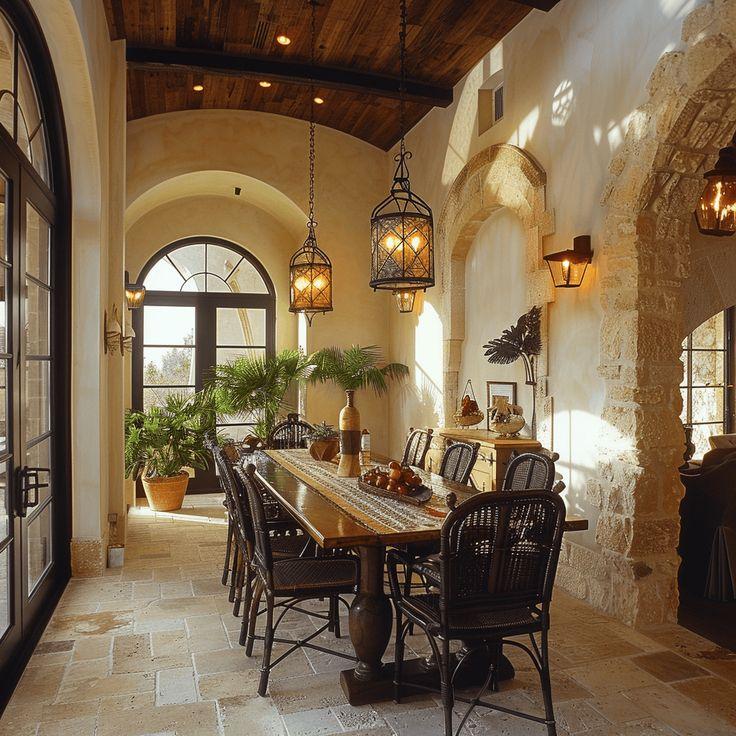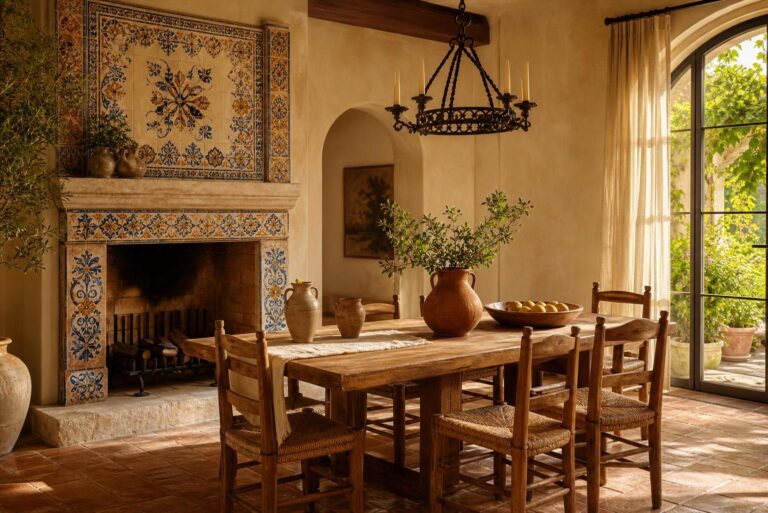
Mediterranean Dining Room Ideas With Travertine Tables and Woven Chairs for Family Gatherings
Designing a Mediterranean Dining Room for Real Family Gatherings
A Mediterranean dining room should feel generous before it feels perfect. It is the room where bread is passed across the table, ceramics are mixed without apology, chairs are pulled close, and the best pieces look better with time. For a family home, the style works beautifully because it favors durable materials, natural texture, soft color, and an easy rhythm rather than a formal showroom look.
This guide focuses on a specific and highly livable version of the look: a Mediterranean dining room built around a travertine table, woven chairs, linen textiles, warm lighting, and handmade accents. Travertine brings quiet elegance and a sense of permanence, while woven seating keeps the room relaxed and welcoming. Together, they create a dining space that can handle weeknight dinners, long Sunday lunches, homework sessions, celebrations, and everyday mess with grace.
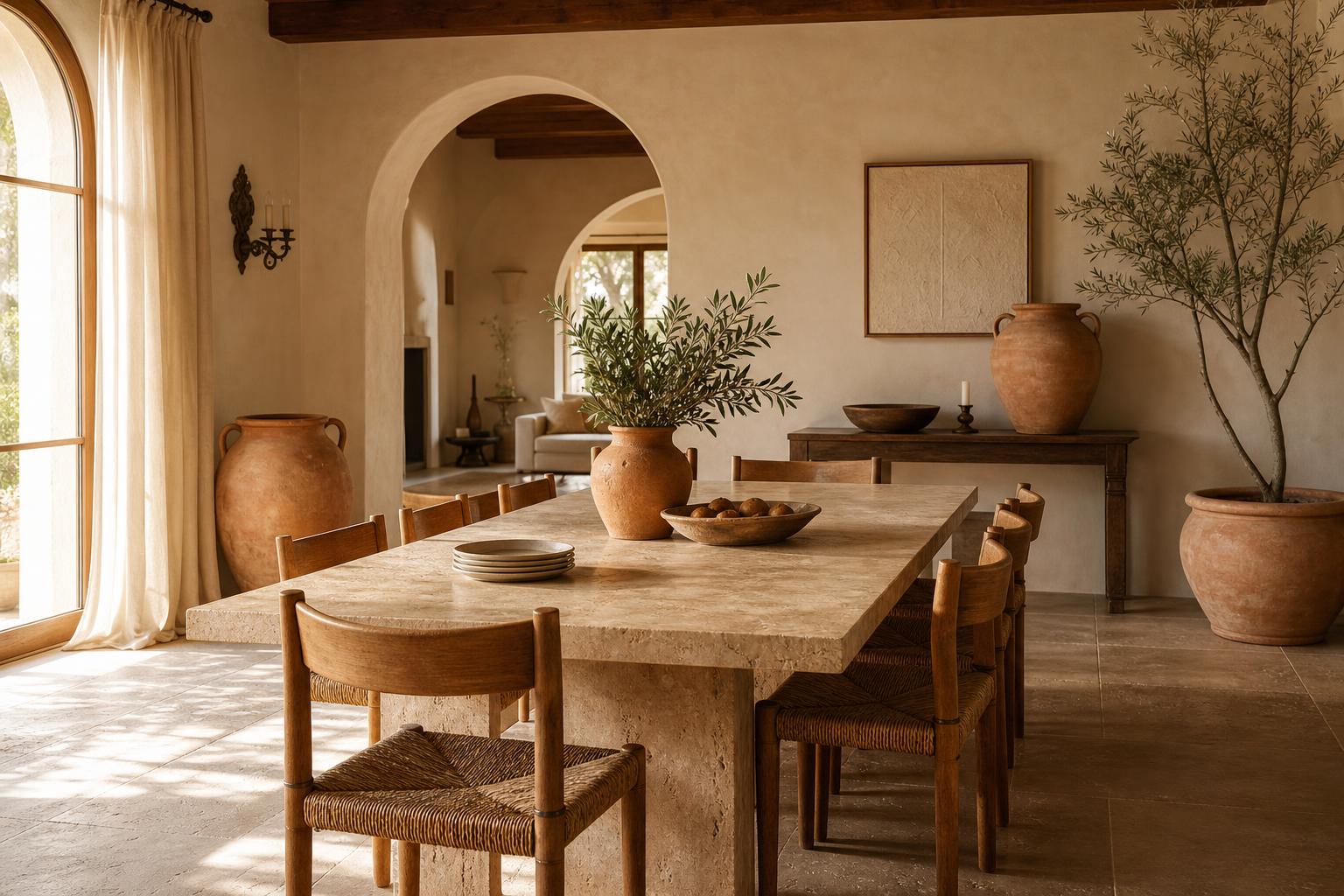
Why Travertine and Woven Chairs Work So Well Together
The most successful Mediterranean rooms balance weight and softness. Travertine has visual weight: it feels architectural, ancient, cool, and grounded. Woven chairs bring the opposite quality. They are lighter, more tactile, and more informal. When paired in a dining room, the combination prevents the space from becoming either too rustic or too polished.
A travertine table also introduces subtle movement through its veining and creamy stone tones. Unlike a glossy modern table, it does not need dramatic styling to look interesting. Woven chairs add variation through cane, rush, rattan, or seagrass texture, giving the room a handmade character. This is especially useful in family dining rooms, where comfort and practicality matter as much as beauty.
If you want a Mediterranean atmosphere that feels elegant but not precious, use the table as the anchor and let the surrounding pieces be softer, warmer, and more relaxed. The result is timeless, but never stiff.
Start With the Right Dining Table Shape
The dining table sets the tone for the whole room. A rectangular travertine table is ideal for larger families or anyone who hosts often. It creates a strong central line and works well beneath a linear chandelier or two pendant lights. A round travertine table is better for small dining rooms and open-plan corners because it encourages conversation and softens the room visually.
For a Mediterranean family dining room, avoid choosing a table that looks too delicate. A slightly thick stone top, rounded edges, or a pedestal base will feel more authentic than a thin, glossy slab. The goal is not to imitate a hotel restaurant. The goal is to create a table that feels like it belongs in a sun-washed house where meals are slow and casual.
If real travertine is outside the budget, consider a stone-look table, a plastered pedestal base with a natural top, or a vintage limestone-style piece. The important qualities are warmth, texture, and a pale mineral color rather than perfect material authenticity.
Choose a Finish That Handles Daily Life
Families need materials that support real use. Honed travertine is more forgiving visually than polished stone because it has a matte surface and a softer appearance. It hides small marks better and pairs naturally with linen, clay, wood, and iron. Sealed stone is essential if the table will be used daily, especially in a home with children or frequent entertaining.
If you love the look but worry about stains, use placemats, linen runners, and coasters as part of the design rather than as afterthoughts. In Mediterranean decorating, protective layers can be beautiful. A relaxed linen runner down the center of a travertine table adds softness while making the room feel used and loved.
Select Woven Chairs That Feel Comfortable, Not Decorative Only
Woven dining chairs are a defining feature in this style, but comfort should come first. Many beautiful chairs look charming in photos yet feel too upright for a long meal. For a family gathering space, choose chairs with a supportive back, a generous seat, and a weave that feels sturdy. Rush seats, cane panels, rattan frames, and seagrass details can all work, depending on the mood you want.
For a rustic Mediterranean effect, pair a simple wooden frame with a woven rush seat. For a lighter coastal Mediterranean feeling, consider pale oak or natural rattan. For a more refined look, black or dark walnut frames with cane backs can add contrast against the travertine table.
You do not need every chair to match. In fact, a slightly collected look often feels more authentic. Use matching side chairs and add upholstered host chairs at the ends, or mix two similar woven styles in the same tone family. Keep the material palette consistent so the room feels intentional rather than random.
Add Seat Cushions Without Losing the Look
Seat cushions are practical for long dinners, but they should not feel overly tailored. Choose cushions in natural linen, cotton canvas, or a subtle stripe. Warm white, oatmeal, sand, muted olive, faded blue, or clay-colored fabrics all suit the Mediterranean palette. Ties can look charming if they are simple, but avoid shiny fabrics or overly thick cushions that hide the woven texture completely.
For families, removable covers are worth the investment. A washable cushion in a natural fabric keeps the room relaxed and usable. Mediterranean design should not make everyone nervous about sitting down.
Build a Warm Neutral Color Palette
The best backdrop for a travertine and woven chair dining room is a warm neutral palette. Think limewash white, cream, bone, sand, warm beige, soft taupe, pale stone, and sun-faded clay. These colors allow the natural materials to stand out without creating visual clutter. They also make the room feel brighter, especially if the dining area does not receive abundant natural light.
To avoid a flat beige room, vary the textures. A plaster-like wall, woven chair seat, stone tabletop, linen curtain, ceramic bowl, and aged wood cabinet can all be neutral while still feeling rich. Mediterranean interiors rely on this kind of quiet layering. The interest comes from surfaces, not loud color.
If you want more color, add it in small, earthy amounts. Olive green works beautifully through branches, cushions, or pottery. Terracotta can appear in vases, bowls, or a floor vessel. Faded blue brings a coastal note, but keep it muted if the room already has a strong stone-and-woven foundation.
Use Walls and Floors to Support the Atmosphere
Walls should feel soft rather than sharp. Limewash, roman clay, matte paint, or a plaster-effect finish can create depth without demanding attention. If you cannot change the wall finish, choose a warm white or creamy neutral paint rather than a cold bright white. Cool white walls can make travertine look gray and woven furniture feel less inviting.
For floors, natural stone, terracotta, warm wood, or limestone-look tile all support the style. If your existing floor is not ideal, a rug can bridge the gap. Choose a low-pile wool rug, a vintage-inspired flatweave, or a natural fiber rug with enough softness underfoot. In a family dining room, make sure the rug is large enough for chairs to remain on it when pulled out.
Lighting That Makes Dinner Feel Warm and Unhurried
Lighting is one of the most important details in a Mediterranean dining room. The room should glow in the evening rather than feel brightly lit from above. A wrought iron chandelier is a classic choice, especially over a rectangular travertine table. Its darker lines contrast beautifully with pale stone and natural woven chairs.
For a softer interpretation, use a pendant with a plaster, linen, ceramic, or woven shade. A large natural fiber pendant can make the dining room feel relaxed and family friendly, while a ceramic pendant adds artisan character. The scale matters: a fixture that is too small will make the table feel disconnected, while one generous fixture can anchor the whole room.
Install dimmers whenever possible. Mediterranean dining is about atmosphere, and dim lighting changes the way materials appear. Travertine becomes warmer, ceramics look more dimensional, and woven textures cast gentle shadows. Add wall sconces or a small lamp on a sideboard if the room needs layered light.
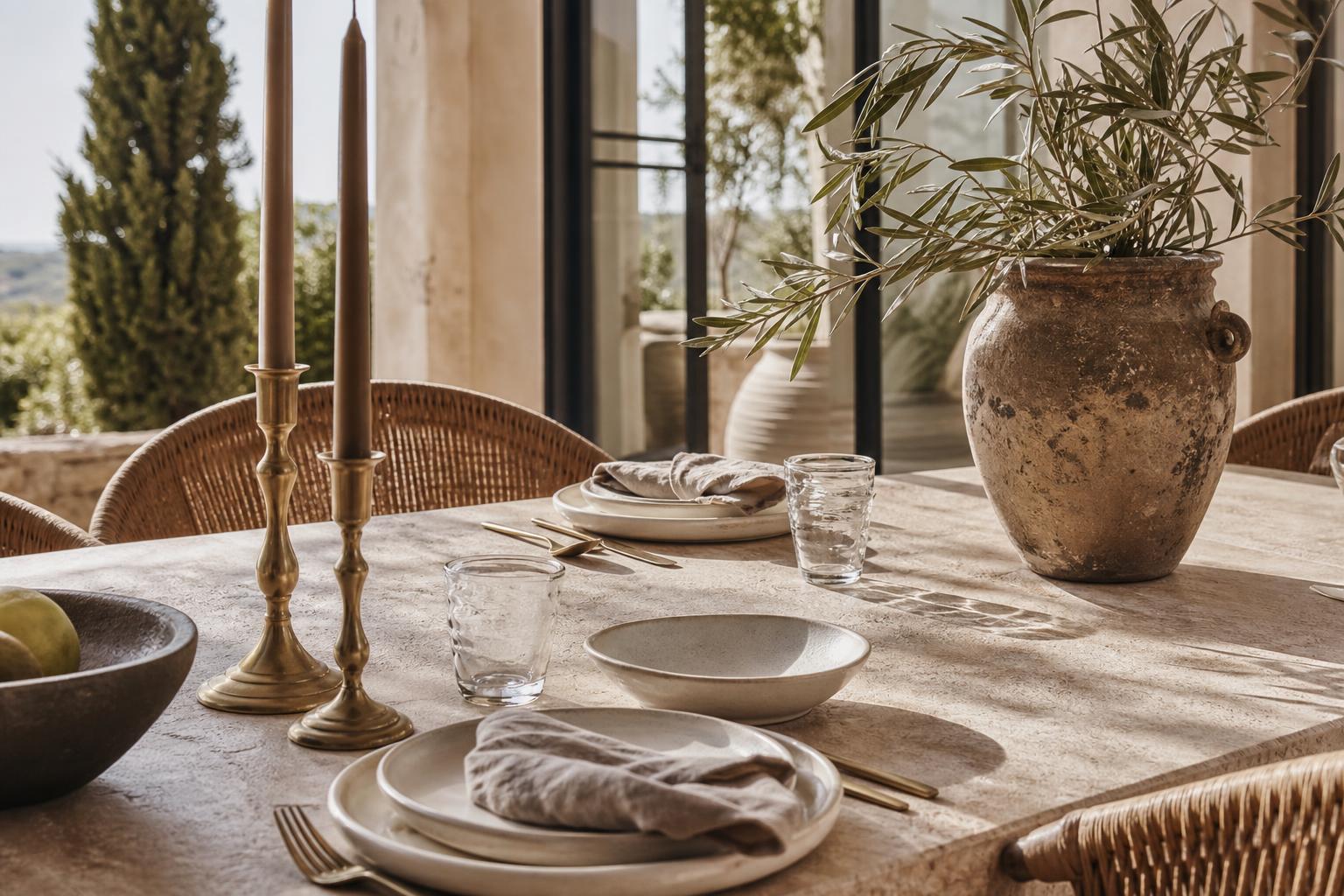
Set the Table With Linen, Ceramics, and Simple Centerpieces
A Mediterranean dining room becomes complete when the table is styled in a way that feels effortless. Linen is the easiest starting point. Use a relaxed tablecloth for special meals, a runner for everyday dinners, or individual linen napkins for a subtle layer. Do not worry about perfect ironing. Slightly rumpled linen suits the style and makes the table feel approachable.
Handmade-style ceramics are another essential layer. Choose plates and bowls with imperfect edges, speckled glazes, or soft white and sand tones. You can mix creamy dinner plates with terracotta serving bowls, olive oil cruets, and small blue accents if you want more color. The key is to make the table look collected over time rather than purchased as one matching set.
Centerpieces should be low and generous. A terracotta vase with olive branches, a ceramic bowl filled with lemons, a cluster of brass candlesticks, or a simple arrangement of herbs can be enough. Avoid tall arrangements that block conversation. In a family dining room, the centerpiece should be easy to move when platters arrive.
Add Storage That Looks Collected and Useful
A dining room works better when storage is part of the design. A rustic wood sideboard, arched cabinet, painted hutch, or open shelving unit can hold serving bowls, linens, pitchers, candles, and seasonal pieces. Mediterranean homes often feel layered because practical objects are visible and beautiful at the same time.
When styling a sideboard, avoid filling every inch. Leave breathing room between objects. Stack a few ceramic plates, display a matte vase, lean a framed sketch, and add a small lamp for evening warmth. A bowl for fruit or bread can make the scene feel alive rather than overly staged.
If your dining room is small, choose a narrow console instead of a deep cabinet. Baskets underneath can store napkins, extra candles, or children’s table items. Woven storage works especially well because it repeats the chair texture and keeps the Mediterranean mood consistent.
Plan the Layout for Conversation and Movement
A family dining room must function smoothly. Leave enough space around the table so chairs can move easily and people can pass without squeezing. This matters even more with a stone table, which has a strong physical presence. If the room is compact, a round table can improve flow and make the space more intimate.
Consider how the room connects to the rest of the home. If the dining area is near the kitchen, keep the path clear. If it is part of an open-plan living space, use lighting, a rug, or a sideboard to define the dining zone. Mediterranean design does not require heavy separation. A subtle shift in texture is often enough.
For families with children, durability should guide the layout. Avoid fragile decor at elbow height, choose chairs that are easy to pull out, and keep everyday tableware accessible. A beautiful dining room that supports daily habits will be used more often, which is the real measure of success.
Decorating Ideas for Different Budgets
You can create this look without renovating the entire dining room. If you are starting small, focus on the elements people see and touch first: chairs, lighting, table linens, and ceramics. Replacing overly modern chairs with woven ones can immediately shift the mood. Adding a linen runner and handmade-style plates can make an existing table feel more Mediterranean.
For a mid-range update, invest in a strong light fixture and a sideboard in warm wood or painted finish. These pieces change the architecture of the room without construction. You might also paint the walls a warmer white or add a plaster-effect finish to create depth.
For a higher-end approach, a real travertine table can become the heirloom piece. Pair it with quality woven chairs, dimmable lighting, custom linen curtains, and a cabinet that looks built into the room. Keep the styling restrained so the materials remain the focus.
Common Mistakes to Avoid
One common mistake is making the room too theme-driven. Mediterranean style does not need obvious motifs everywhere. Skip excessive blue patterns, souvenir-style wall art, or too many ornate details. A few authentic materials will do more than a room full of themed accessories.
Another mistake is choosing cool gray neutrals. Travertine, rattan, linen, and terracotta all look best with warm undertones. If the walls, rug, or curtains are too cool, the room can feel disconnected. Sample colors in the actual dining room before committing.
Finally, do not sacrifice comfort for appearance. Dining rooms are meant to hold people for hours. Test chair height, check the table clearance, and make sure lighting can soften at night. The most beautiful Mediterranean dining room is one where everyone wants to stay a little longer.
Shop the Mediterranean Look
Bring this dining room style home with natural textures, warm lighting, and timeless pieces inspired by Mediterranean family gatherings.
- a travertine-inspired dining table
- woven dining chairs with natural texture
- a neutral linen tablecloth
- handmade-style ceramic dinnerware
- a wrought iron dining chandelier
- a rustic terracotta vase
Conclusion: A Dining Room That Feels Timeless and Lived In
A Mediterranean dining room with a travertine table and woven chairs brings together elegance, durability, and warmth. The stone grounds the space, the woven seating relaxes it, and layers of linen, ceramics, warm light, and natural color make it feel personal. Designed well, this room will not feel like a formal space reserved for special occasions. It will become the heart of everyday meals, family stories, and long gatherings that unfold naturally around the table.