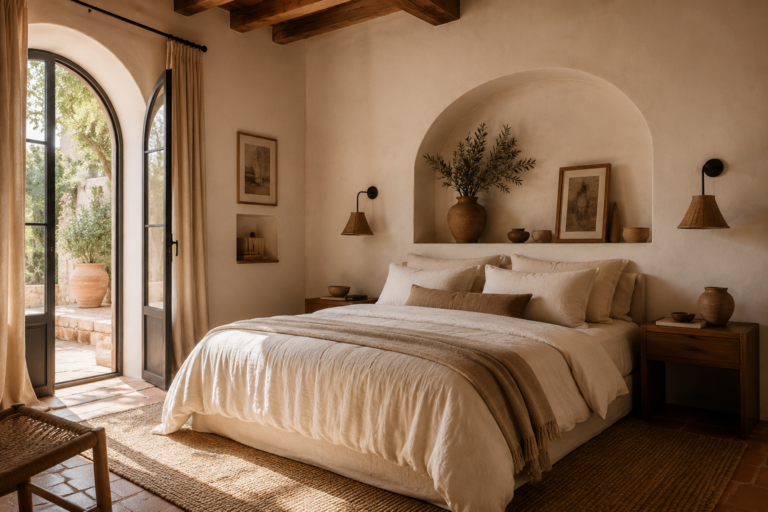
Cozy Mediterranean Bedroom Ideas With Linen Canopies and Limewash Walls
A Mediterranean bedroom should feel collected rather than decorated all at once. The most beautiful rooms in this style often combine sun-washed walls, relaxed textiles, rustic wood, and pieces that look touched by hand. For a small primary bedroom, that balance matters even more. You want atmosphere without clutter, softness without heaviness, and character without overwhelming the footprint.
This guide focuses on a specific and highly livable approach: cozy Mediterranean bedroom ideas with linen canopies and limewash walls. It is a romantic look, but not overly ornate. It borrows from coastal villas, old stone houses, Provençal farm rooms, and Greek island interiors while staying calm, practical, and comfortable for everyday life.
Why Linen Canopies and Limewash Walls Work So Well Together
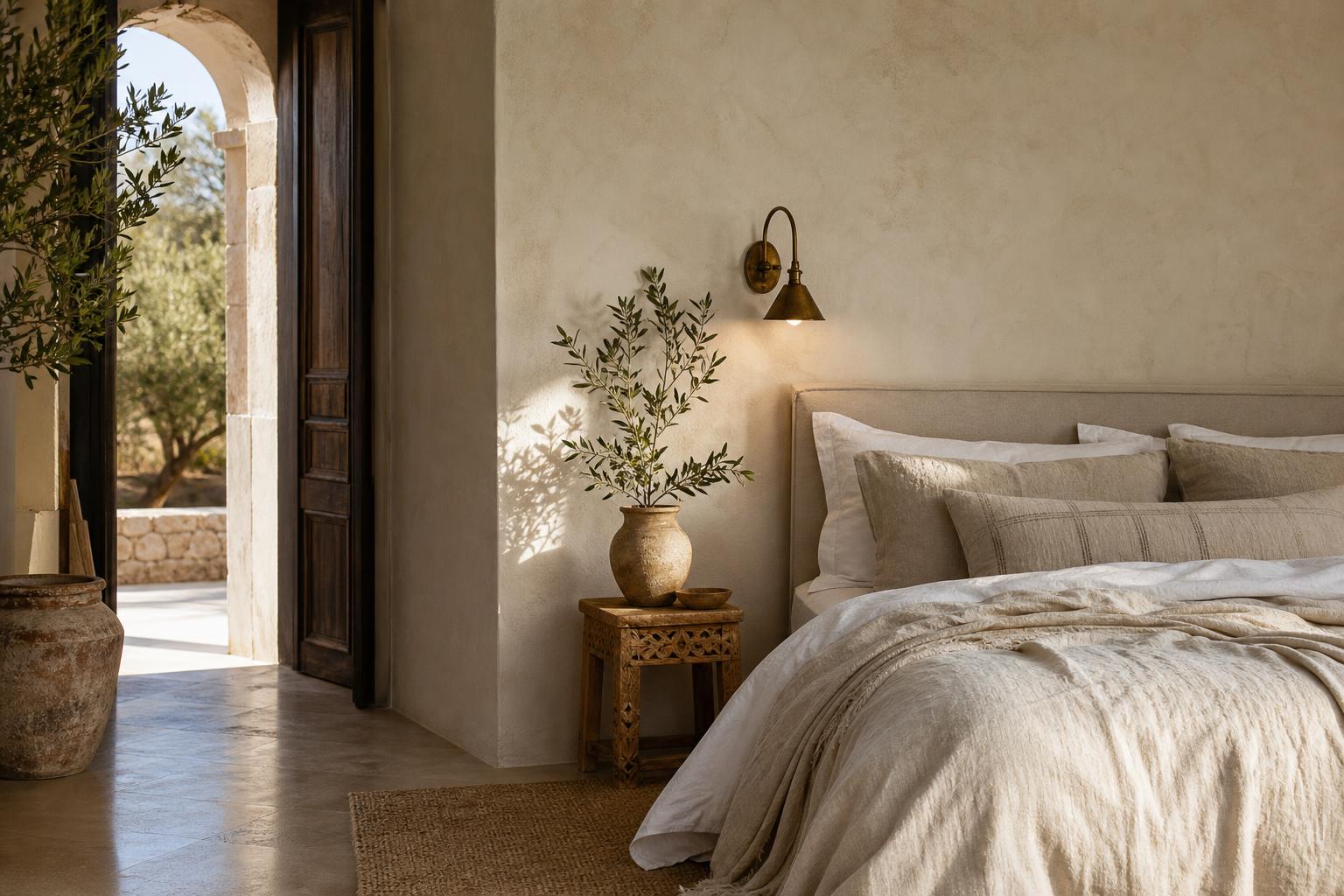
Linen and limewash share the same quiet imperfection. Linen wrinkles beautifully, softens with age, and filters light in a way that feels natural. Limewash has movement, depth, and subtle tonal variation, so the wall never looks flat or sterile. Together, they create the kind of layered backdrop that makes a bedroom feel peaceful before you add much furniture.
In Mediterranean interiors, texture often does more work than pattern. A simple white room can feel deeply warm if the walls are mineral, the curtains are loose linen, and the bed is dressed with tactile layers. This is especially useful in small bedrooms because you can create richness without relying on too many objects.
The canopy adds height and softness. The limewash adds depth and age. The combination draws the eye upward and around the room, making the space feel cocooning rather than cramped.
Start With a Soft Limewash Wall Color
The wall color sets the emotional temperature of the bedroom. For a Mediterranean look, avoid sharp whites and cool grays. Instead, choose limewash tones inspired by sunlit plaster, limestone, sand, clay, and warm chalk.
Beautiful options include warm ivory, bone, mushroom beige, pale greige, stone beige, soft wheat, and muted clay pink. These colors feel neutral but never empty. They also work beautifully with linen bedding, woven textures, and aged wood.
If your bedroom is small or does not receive much natural light, use a paler limewash shade with warm undertones. A deeper beige or clay shade can be stunning, but it may visually close in the room if used on every wall. In that case, apply the richer tone behind the bed and keep the remaining walls lighter.
Limewash paint has natural variation, so always sample it on more than one wall. Morning light, afternoon light, and lamplight can change the color dramatically. A shade that looks creamy in daylight may become golden at night, which can be lovely if you want a cozy atmosphere.
Choose a Canopy That Feels Airy, Not Heavy
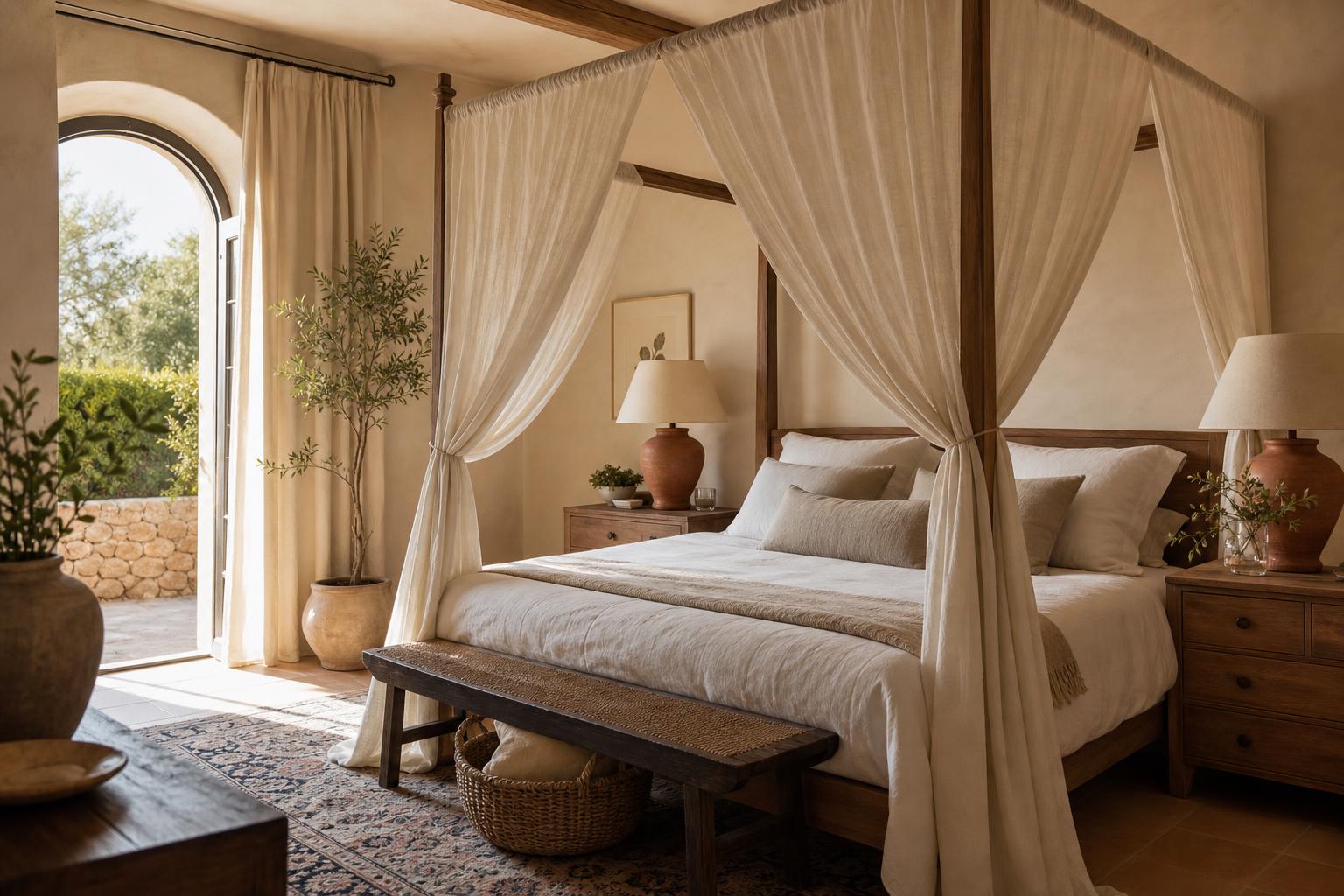
A Mediterranean linen canopy should look relaxed and breathable. The goal is not a formal four-poster bed with heavy fabric. Instead, imagine loose panels, light draping, and a sense of shadow and movement.
For a small primary bedroom, the best canopy ideas are simple. You might hang linen panels from a ceiling-mounted canopy frame, drape fabric from a wall-mounted rod above the headboard, or use a slim wood or iron canopy bed with sheer linen curtains tied casually at the posts.
Keep the fabric light to medium weight. Pure white linen gives a fresh coastal feeling, while oatmeal, flax, or natural beige creates a warmer countryside mood. If your limewash walls are already warm beige, white or ivory linen can add contrast. If your walls are pale and creamy, natural linen can bring depth.
Avoid glossy synthetic sheers or overly crisp curtains. Mediterranean style depends on touchable materials. Linen, cotton voile, and gauze-like cotton all work well because they hang softly and catch light without feeling formal.
Make the Bed the Quiet Center of the Room
In a small bedroom, the bed usually dominates the layout. Instead of fighting that, make it the focal point. A linen canopy naturally frames the bed, so keep the bedding inviting but not overcomplicated.
Start with linen sheets in white, ivory, or warm sand. Add a relaxed duvet or coverlet, then layer one textured throw at the foot of the bed. A quilted cotton blanket, waffle-weave throw, or lightweight linen coverlet can add comfort without bulk.
For pillows, choose fewer but better pieces. Two sleeping pillows, two square linen pillows, and one small lumbar cushion are enough. Mediterranean bedrooms often feel serene because they leave breathing room. Too many pillows can make the bed look styled rather than restful.
Patterns should be used with restraint. A single striped pillow, faded block print cushion, or muted vintage textile can add charm. Let the canopy, walls, and natural materials remain the main story.
Use Rustic Wood to Ground the Softness
Limewash and linen are soft, matte, and airy, so the room needs something grounding. Rustic wood is one of the best ways to add that balance. Look for nightstands, benches, stools, or dressers with visible grain, imperfect edges, or a slightly aged finish.
A small primary bedroom may not have room for large furniture, so choose pieces that work hard. A narrow wood stool can replace a bulky nightstand. A slim vintage dresser can provide storage and character. A low bench at the foot of the bed can hold folded blankets without blocking the room.
Wood tones should feel sun-warmed rather than dark and glossy. Oak, elm, pine, walnut, and reclaimed wood all work, especially when the finish is matte. If you already own darker furniture, soften it with pale linen, ceramic lamps, and woven accents so the room still feels Mediterranean rather than heavy.
Layer Natural Flooring and Rugs for Warmth
Many Mediterranean bedrooms are inspired by terracotta, stone, or wood floors, but you do not need original architecture to create the feeling. A rug can change the mood of the room immediately.
For a cozy bedroom, choose a rug that extends beyond the sides of the bed so your feet land on something soft in the morning. Natural jute adds texture, but it can be rough underfoot. If comfort is a priority, layer a small vintage-style wool rug over a larger jute base, or choose a flatweave cotton-wool blend with a faded Mediterranean pattern.
Colors can include sand, rust, faded blue, muted olive, clay, cream, and soft brown. The rug should look slightly timeworn, not overly bright. A too-new or high-contrast rug can pull attention away from the peaceful limewash and linen palette.
Add Warm Lighting That Flatters the Walls
Limewash walls are especially beautiful at night when warm light grazes the surface. This is where lighting becomes essential. Instead of relying on a single ceiling fixture, create small pools of light around the room.
Wall sconces are ideal beside the bed because they free up space on small nightstands. Choose aged brass, bronze, ceramic, plaster, or rattan shades for a Mediterranean feeling. A fabric shade will create gentle light, while a metal sconce can feel more architectural.
If you prefer table lamps, look for ceramic bases, terracotta tones, or carved wood. Keep lampshades warm white rather than cool white. Bulbs should also be warm, ideally around 2700K, so the room feels golden and restful in the evening.
A small pendant light can work if the ceiling is high enough, but keep it understated. A woven pendant, plaster pendant, or simple linen shade can add height without overpowering the canopy.
Bring in Handcrafted Mediterranean Details
The difference between a generic neutral bedroom and a Mediterranean bedroom is often in the details. Handcrafted pieces add soul. They do not need to be expensive, but they should feel tactile and intentional.
Consider a hand-thrown ceramic vase on the dresser, a small terracotta bowl for jewelry, an olive wood tray, a woven wall basket, or a carved wood mirror. These pieces create a sense of place and make the room feel collected over time.
One strong piece is often better than many small accessories. For example, a large arched mirror above a dresser can echo Mediterranean architecture and reflect light around a small room. A single ceramic lamp can bring more atmosphere than several decorative objects scattered across the nightstand.
Keep surfaces edited. Mediterranean rooms are warm, but they are not cluttered. Let each object have space around it so the materials can be appreciated.
Use Arched Shapes Without Renovating
Arches are one of the most recognizable Mediterranean architectural details, but not every bedroom has built-in arches. Fortunately, you can suggest the shape with furniture and decor.
An arched mirror is the simplest option. Place it above a dresser, lean it in a corner, or hang it opposite a window to increase natural light. A headboard with a curved top can also create a soft architectural line behind the bed.
If you want a subtle DIY idea, paint a soft arch behind the bed using a limewash-compatible shade slightly deeper than the wall color. This works especially well in a rental or budget bedroom because it creates the feeling of a niche without construction. Keep the arch wide enough to frame the bed and canopy so it looks intentional.
Rounded lamps, curved stools, scalloped trays, and oval artwork can continue the theme in smaller ways. The goal is not to repeat arches everywhere, but to soften the room’s straight lines.
Plan Storage So the Room Stays Serene
A small Mediterranean bedroom can quickly lose its charm if everyday items have nowhere to go. Storage should be discreet, natural, and easy to maintain.
Use woven baskets under a bench or beside the wardrobe for extra blankets, slippers, or laundry. Choose a bedside table with a drawer if you need to hide chargers, books, and glasses. A vintage trunk at the foot of the bed can add character while storing seasonal linens.
If you have an open clothing rail, keep the palette calm. Hang linen shirts, neutral robes, and woven bags together so the display feels intentional. Use matching wood hangers to reduce visual noise.
Avoid overly modern plastic bins in visible areas. If you need practical containers inside closets, that is fine, but the visible storage should support the Mediterranean mood through natural fibers, wood, or fabric.
Choose Window Treatments That Feel Breezy
Window treatments are important because they connect directly to the linen canopy. If the canopy is linen, consider using linen curtains as well, but vary the weight slightly. For example, use gauzy linen around the bed and heavier washed linen on the windows for privacy.
Hang curtains high and wide to make the bedroom feel larger. This is especially helpful in small primary rooms where the ceiling height may feel modest. Let the fabric skim the floor or puddle just slightly for a relaxed look.
Colors should stay close to the wall or bedding palette. Ivory curtains on warm limewash walls feel soft and seamless. Natural flax curtains create more contrast and work beautifully with rustic wood. If you want a hint of color, try muted blue-gray, olive, or faded clay, but keep the tone dusty rather than saturated.
Style the Room for Different Seasons
One of the advantages of this bedroom style is that it adapts easily through the year. In summer, keep the canopy open, use crisp white linen, and add only a light coverlet. A small ceramic vase with olive branches or dried lavender is enough decoration.
In cooler months, deepen the palette. Add a wool throw in camel, rust, or warm taupe. Bring in a heavier quilt, a textured pillow, or a small bedside rug. The limewash walls and canopy will still feel airy, but the layers will make the room feel cocooned.
Seasonal changes should be subtle. Mediterranean bedrooms rarely depend on themed decor. Instead, they shift through material weight, light, and texture.
Budget-Friendly Ways to Get the Look
You do not need a full renovation to create this atmosphere. Start with the changes that have the biggest visual impact. A limewash-style paint treatment behind the bed, linen bedding, and warmer lighting can transform the room quickly.
- Paint one feature wall: Use a limewash or mineral-effect paint behind the bed instead of coating the entire room.
- Make a simple canopy: Hang linen panels from ceiling rods or a wall-mounted curtain rod above the headboard.
- Swap lampshades: Warm fabric shades can make existing lamps feel softer and more Mediterranean.
- Use baskets for storage: Woven baskets add texture while hiding everyday items.
- Shop secondhand wood furniture: Vintage stools, small dressers, and rustic nightstands often have more character than new pieces.
- Limit the palette: Fewer colors make affordable pieces look more cohesive.
If you can invest in only one element, choose the bedding or the wall finish. These two surfaces occupy the most visual space and will define the room immediately.
Common Mistakes to Avoid
The first mistake is choosing whites that are too cold. Mediterranean interiors are usually warmed by sun, stone, and natural fibers. A stark blue-white wall can make linen look dull and wood look harsh. Choose creamy, chalky, or sandy undertones instead.
The second mistake is overdecorating. Because this style includes baskets, ceramics, rustic furniture, rugs, and textiles, it can become busy if every surface is filled. Leave negative space on walls and tabletops.
The third mistake is using a canopy that is too heavy for the room. Thick fabric, dark posts, or excessive draping can make a small bedroom feel cramped. Keep the canopy light, breathable, and proportionate.
Finally, avoid mixing too many strong patterns. A Mediterranean bedroom can include stripes, block prints, and vintage motifs, but they should be muted and balanced with plenty of plain linen and plaster-like texture.
A Simple Design Formula to Follow
If you want an easy starting point, use this formula: warm limewash walls, natural linen canopy, rustic wood nightstands, ceramic lighting, one textured rug, and two or three handcrafted accents. This combination creates a complete Mediterranean feeling without requiring a large budget or a large room.
From there, adjust the mood. For a coastal Mediterranean bedroom, add more white, pale blue, and light oak. For a rustic countryside feeling, add clay tones, darker wood, and woven storage. For a more elegant version, use aged brass sconces, a carved mirror, and higher-quality linen bedding.
The best version is the one that feels restful to you. Mediterranean design is not about copying a villa perfectly. It is about creating warmth, ease, and a quiet connection to natural materials.
Shop the Mediterranean Look
Use these bedroom-focused finds to bring soft linen texture, warm lighting, and handcrafted Mediterranean character into your space.
- linen canopy bed curtains
- neutral washed linen duvet cover
- aged brass bedroom wall sconces
- rustic wood nightstands
- terracotta ceramic table lamp
- vintage-style Mediterranean bedroom rug
Conclusion
A cozy Mediterranean bedroom with linen canopies and limewash walls is both romantic and practical. The look works beautifully in small primary rooms because it relies on texture, softness, and warm light rather than oversized furniture or excessive decoration.
Begin with a gentle wall color, add breathable linen around the bed, ground the room with rustic wood, and finish with handcrafted details. When each choice feels natural and tactile, the bedroom becomes more than a styled space. It becomes a calm retreat with the relaxed beauty of the Mediterranean.