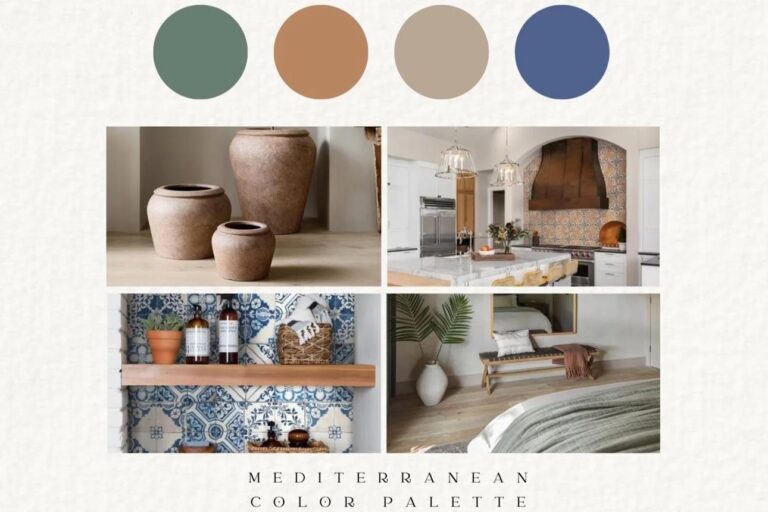
Terracotta and Olive Green Mediterranean Color Palette Ideas for Calm Open-Plan Homes
A Mediterranean color palette does not have to rely on bright coastal blue or stark white to feel authentic. For a softer, more grounded home, terracotta and olive green create one of the most elegant combinations you can use, especially in open-plan spaces where the living room, dining area, and kitchen visually connect. This palette feels sun-warmed without being loud, earthy without becoming heavy, and timeless without looking overly traditional.
The beauty of terracotta and olive green is that both colors come directly from the Mediterranean landscape. Terracotta recalls clay rooftops, handmade tiles, old pottery, and sunbaked village walls. Olive green brings in the quiet character of groves, shutters, herbs, and mature gardens. Together, they create a palette that feels lived-in, relaxed, and deeply natural. In an open-plan home, this pairing can help define zones, soften modern architecture, and make large connected rooms feel warmer and more intimate.
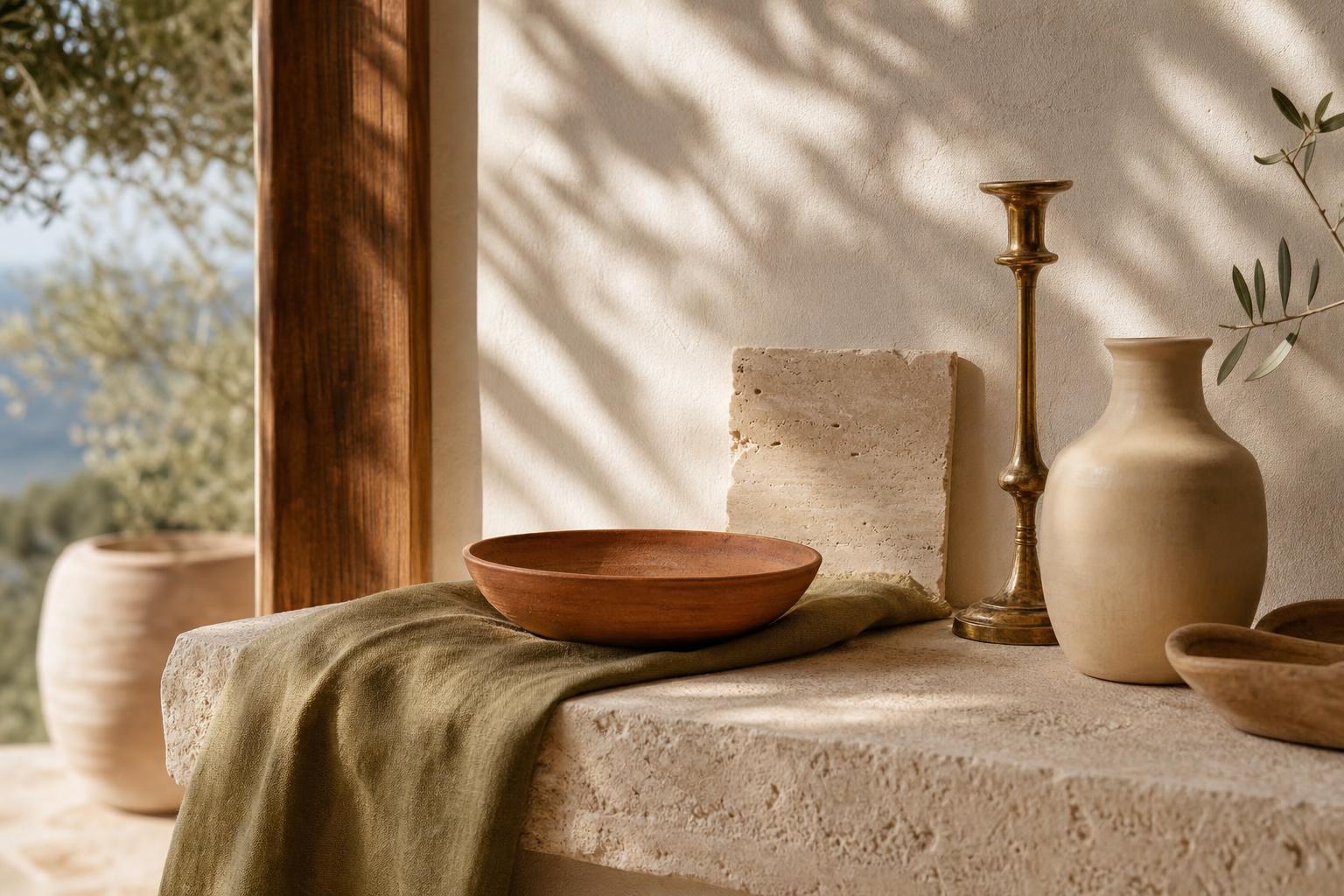
Why Terracotta and Olive Green Work So Well in Mediterranean Interiors
Terracotta and olive green are complementary in mood, even though they are not direct opposites on the color wheel. Terracotta has a warm red-orange undertone, while olive green has a muted yellow-green base. One feels mineral and sunbaked; the other feels botanical and shaded. This contrast gives a Mediterranean home a sense of balance, much like the relationship between clay walls and olive trees in an old southern courtyard.
In open-plan interiors, this balance matters. A large room can easily feel flat if everything is beige, but it can also become visually chaotic if too many strong colors compete. Terracotta and olive green sit in the middle. They introduce depth while staying connected to nature. Because both colors are muted, they work beautifully with plaster walls, limestone floors, travertine, woven textures, oak, walnut, rattan, linen, and aged metals.
This palette is especially useful if you want a Mediterranean home that feels sophisticated rather than themed. Instead of filling the room with obvious coastal motifs, you can use color to create atmosphere. The result is quieter, richer, and more enduring.
Start With a Warm White or Plaster-Inspired Base
The most successful Mediterranean color palettes begin with a breathable base. For terracotta and olive green to look refined, the surrounding neutral should be warm, mineral, and slightly imperfect. Avoid cold gray-white walls, which can make terracotta look too orange and olive green look dull. Instead, choose warm white, ivory, chalk, cream, or limewash-inspired beige.
If your open-plan home has a lot of natural light, a soft warm white wall can keep the room fresh while allowing terracotta and olive green to stand out. If your space feels too bright or echoing, a plaster-toned neutral with a hint of sand or stone can make it feel more cocooning. The goal is not to create a blank backdrop, but a Mediterranean surface that feels touched by light.
For renters or anyone not ready to repaint, the same effect can be achieved through textiles and large surfaces. A cream linen sofa, natural jute rug, off-white curtains, pale travertine coffee table, or warm-toned ceramic lamps can establish the base before any stronger color is introduced.
Use Terracotta as the Warming Accent
Terracotta is powerful because it immediately adds warmth. In an open-plan home, it is best used with intention rather than everywhere at once. A little terracotta can transform a space; too much can make the palette feel heavy or overly rustic. Think of it as the color that brings the sun into the room.
For a subtle approach, introduce terracotta through ceramics, lampshades, cushions, artwork, plant pots, or a patterned rug. These small accents can be repeated from the living area to the dining space so the palette feels connected. For example, a terracotta vase on the coffee table can relate to terracotta-striped dining cushions or a clay-colored runner on a sideboard.
For a bolder approach, consider one large terracotta element. This could be an accent wall in a muted clay paint, a terracotta upholstered lounge chair, clay-toned curtains, a vintage rug with burnt orange details, or floor tiles if you are renovating. In a Mediterranean interior, terracotta looks best when it has texture and variation. Matte, chalky, handmade, faded, and weathered finishes usually feel more authentic than glossy or highly saturated versions.
Let Olive Green Create Calm and Depth
Olive green is the color that keeps the palette calm. It brings a quiet, shaded quality that balances terracotta beautifully. In open-plan homes, olive green can be used to create visual pauses between warmer materials. It is particularly effective on textiles, painted furniture, cabinetry, artwork, and decorative accessories.
An olive green linen sofa can look elegant against warm white walls and rustic wood. If that feels too committed, olive green cushions, throws, dining chair upholstery, or curtains offer a softer starting point. In a dining area, olive green seat pads or table linens add depth without overwhelming the room. In a connected kitchen, olive green lower cabinets or a painted island can ground the whole open-plan scheme.
The key is to choose the right olive. Avoid greens that are too bright, minty, or cool. Mediterranean olive green should feel muted, earthy, and slightly dusty. It can lean toward sage for a lighter look or toward deep olive for a richer atmosphere, but it should always feel natural rather than artificial.
Build a Cohesive Open-Plan Palette
Open-plan homes need repetition. Because several areas are visible at once, each zone should feel distinct but related. A Mediterranean palette works best when colors move gently through the room rather than appearing in isolated blocks. Terracotta should not live only on the sofa, and olive green should not appear only in the dining chairs. Repeat each color at least two or three times in different scales.
A simple formula is to use warm white or plaster tones for about half of the room, natural wood and stone for about a quarter, olive green for a calm layer, and terracotta for warm accents. This keeps the interior balanced. The exact proportions can shift depending on your taste, but the principle remains the same: let neutrals and natural materials do the quiet work, then add terracotta and olive green with purpose.
For example, in a living area you might choose a cream sofa, oak coffee table, terracotta cushions, olive green throw, and a ceramic lamp. In the dining area nearby, repeat the palette with a rustic wood table, off-white chairs, olive green linen napkins, and a terracotta bowl. If a kitchen is visible, bring in aged brass hardware, a warm stone backsplash, olive green herbs, or clay pottery on open shelving. The whole space will feel connected without looking overly matched.
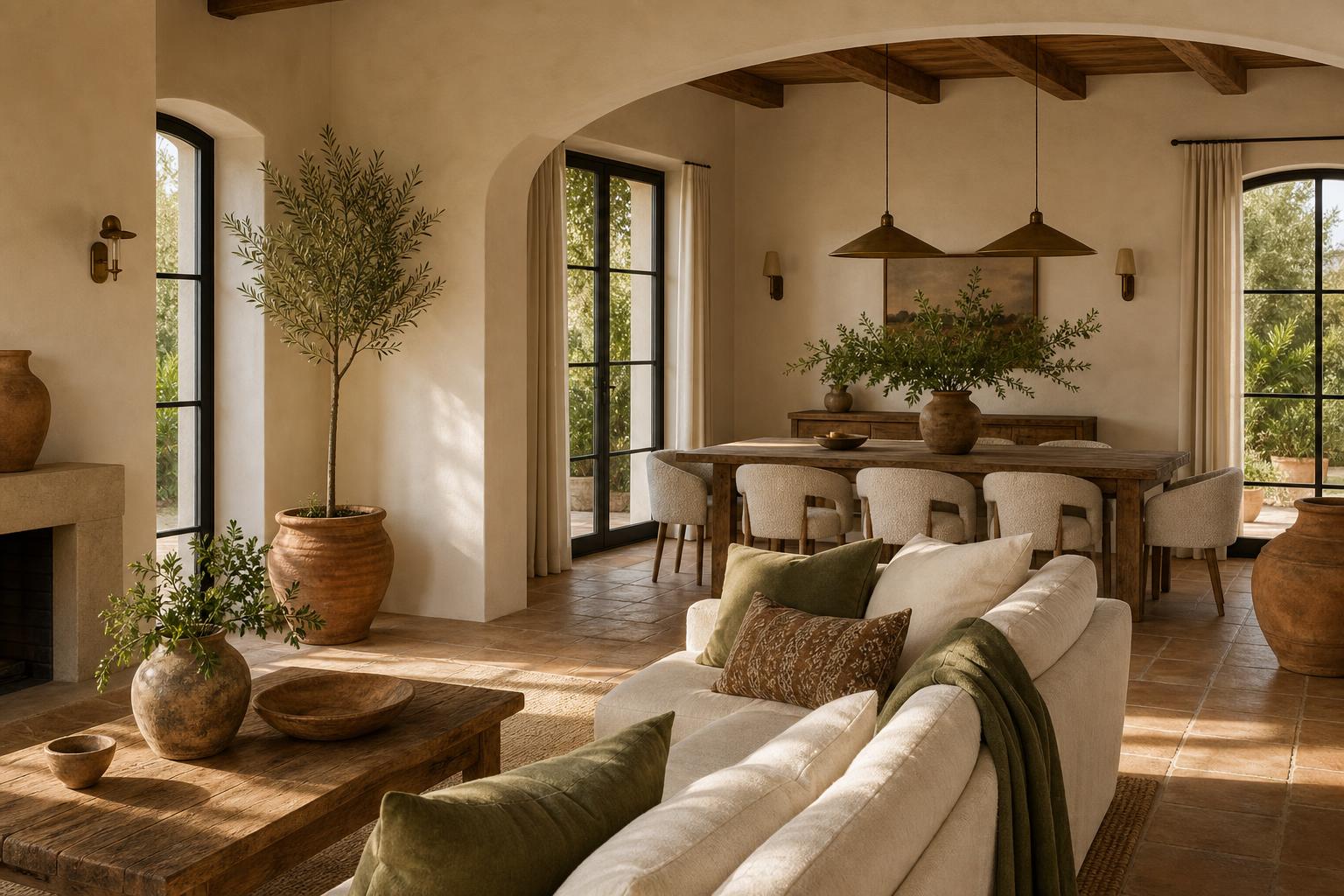
Choose Natural Materials That Support the Palette
Terracotta and olive green feel most Mediterranean when paired with honest materials. Natural textures prevent the colors from looking flat or decorative. They also add the sense of age and craft that defines Mediterranean homes.
Travertine, limestone, marble with warm veining, reclaimed wood, rattan, cane, linen, wool, jute, ceramic, plaster, and aged brass all work beautifully. These materials have irregularities that make the palette feel relaxed. A travertine side table can soften terracotta accents. A woven rug can bridge olive textiles and wooden furniture. A handmade ceramic vase can introduce clay tones in a way that feels organic rather than forced.
If your open-plan home has modern finishes, use texture to warm them up. Smooth white walls, flat cabinetry, and contemporary flooring can still support a Mediterranean palette if you layer woven baskets, linen curtains, rustic stools, ceramic bowls, and warm lighting. The colors will feel more natural when they are surrounded by touchable surfaces.
Try These Terracotta and Olive Green Color Combinations
One of the easiest ways to avoid mistakes is to think in complete combinations rather than single colors. Terracotta and olive green can shift in mood depending on what you pair them with. The following palettes work especially well for Mediterranean open-plan homes.
- Soft and airy: warm white, pale oak, light olive, faded terracotta, linen beige, and brushed brass.
- Rustic and grounded: plaster beige, dark olive, burnt terracotta, walnut, jute, and blackened iron.
- Elegant and minimal: ivory, travertine, muted olive, clay pink, natural oak, and antique brass.
- Family-friendly and relaxed: cream, medium olive, terracotta stripe, honey wood, washable linen, and woven storage.
- Moody Mediterranean: deep olive, warm taupe, dark terracotta, aged bronze, stone gray, and walnut.
These combinations can guide everything from paint choices to cushion covers. If you are unsure, collect samples before buying large items. Place paint swatches, fabrics, wood finishes, and ceramics together in the room at different times of day. Mediterranean palettes depend heavily on light, so a color that looks perfect in the morning may feel too strong in the evening.
How to Use the Palette in a Living Area
In the living area, focus on comfort and layering. A warm white or oatmeal sofa creates a versatile base. Add olive green cushions in linen or cotton, then bring in terracotta through a lumbar cushion, ceramic lamp, or patterned rug. If the room needs more structure, a deep olive armchair can act as an anchor without feeling too formal.
A rustic wood coffee table is an ideal bridge between the two colors. Style it with a terracotta bowl, a stack of books with earthy covers, a small olive branch arrangement, and a travertine tray. Keep the styling simple. Mediterranean interiors usually feel best when accessories have room to breathe.
For walls, choose artwork that repeats the palette in a subtle way. Abstract landscapes, vintage-style botanical prints, or textured wall hangings can introduce olive, clay, cream, and muted brown. Avoid overly glossy prints or colors that are too crisp. The overall feeling should be soft, sun-faded, and collected.
How to Carry the Palette Into the Dining Area
The dining area is a natural place for terracotta and olive green because both colors feel warm and convivial. Start with a wood dining table if possible. Weathered oak, pine, or walnut all work well. Pair it with woven chairs, slipcovered chairs, or simple upholstered seating in cream, olive, or natural linen.
Terracotta can appear through a centerpiece, table runner, ceramic plates, candlesticks, or a large bowl. Olive green can come through napkins, seat cushions, artwork, or a painted sideboard. If your dining area is part of the same room as the living area, repeat at least one texture as well as one color. For example, if the living room has olive linen cushions, use olive linen napkins on the table. If the living room has terracotta pottery, use clay-toned ceramics on the dining side.
Lighting matters here. A woven pendant, plaster pendant, or aged brass chandelier will enhance the palette better than a chrome fixture. Warm bulbs are essential because they make terracotta glow and olive green feel rich rather than gray.
Paint Ideas for a More Immersive Look
If you want a stronger transformation, paint is one of the most effective ways to use this palette. In an open-plan home, avoid painting too many disconnected accent walls. Instead, choose architectural moments that make sense. A fireplace wall, dining alcove, built-in shelving, kitchen island, or arched niche can all carry color beautifully.
Olive green works well on cabinetry, built-ins, or a media wall because it has enough depth to ground functional elements. Terracotta works beautifully in areas meant to feel warm and intimate, such as a dining nook or reading corner. If you use both paint colors in the same open-plan room, make sure one is dominant and the other is secondary. Two strong painted statements can compete if they are too close together.
For a softer Mediterranean effect, consider limewash or mineral-style paint. These finishes add movement and depth, making terracotta and olive green feel more natural. A flat modern paint can still work, but textured finishes are especially suited to the relaxed elegance of this style.
Common Mistakes to Avoid
The first mistake is choosing colors that are too saturated. Bright orange and sharp green can quickly make a room feel themed rather than timeless. Look for muted clay, rust, cinnamon, olive, sage, moss, and herb tones instead.
The second mistake is ignoring undertones. Terracotta can lean pink, orange, red, or brown. Olive green can lean yellow, gray, or brown. The most harmonious combinations usually share a warm undertone. If your terracotta is very red, pair it with a deeper, brown-based olive. If your terracotta is pale and peachy, use a softer sage-olive.
The third mistake is adding too many competing accents. Mediterranean interiors can include blue, black, mustard, or burgundy, but in an open-plan home it is wise to keep the main palette focused. Let terracotta and olive green lead, then use other colors sparingly.
The fourth mistake is relying only on color and not enough texture. A Mediterranean palette should feel tactile. If the room contains flat fabrics, glossy furniture, and smooth surfaces only, the colors may look staged. Add linen, wood grain, woven fibers, ceramic glaze, plaster texture, and stone to make the palette feel authentic.
Budget-Friendly Ways to Try the Look
You do not need a full renovation to bring this palette into your home. Start with the pieces that are easiest to change: cushion covers, throws, ceramic planters, table linens, lampshades, artwork, and decorative bowls. Choose two olive green items and two terracotta items, then place them in different zones of the open-plan space.
Another affordable approach is to update existing furniture. A simple wooden sideboard can be styled with terracotta pottery and olive branches. Dining chairs can be refreshed with olive green cushions. A plain sofa can be transformed with linen pillows in clay, cream, and muted green. Even a single large terracotta vase on a dining table can shift the mood of the room.
If you are willing to do a small DIY project, paint an old cabinet or bookcase in muted olive green. This adds character and storage while acting as a strong Mediterranean anchor. Pair it with warm neutral walls and clay ceramics so the piece feels intentional.
Finishing Touches That Make the Palette Feel Mediterranean
The final layer is atmosphere. Mediterranean design is not only about colors; it is about warmth, light, imperfection, and ease. Choose warm lighting rather than cool bulbs. Let curtains fall softly instead of looking stiff. Mix handmade ceramics with older wood pieces. Use fewer, better accessories rather than cluttering every surface.
Small details can make the palette feel more authentic. A bunch of olive branches in a clay vase, a woven basket beside the sofa, a linen tablecloth in a faded neutral, or aged brass candleholders on a console can all support the story. The goal is to make the open-plan space feel collected over time, not decorated in a single weekend.
Shop the Mediterranean Look
Bring this terracotta and olive green Mediterranean palette into your open-plan home with warm textures, earthy ceramics, and timeless natural finishes.
- Olive green linen throw pillows
- Terracotta ceramic vases
- Warm white linen curtains
- Travertine decorative trays
- Aged brass candle holders
- Natural jute area rugs
Conclusion: A Calm Mediterranean Palette With Lasting Warmth
Terracotta and olive green are ideal colors for a Mediterranean open-plan home because they offer both warmth and calm. Terracotta brings the earthy glow of clay, tile, and sunbaked walls, while olive green adds depth, softness, and a natural connection to the landscape. Together with warm whites, natural wood, stone, linen, woven textures, and aged brass, they create a home that feels cohesive, relaxed, and quietly elegant.
Whether you begin with a few cushions and ceramics or commit to painted cabinetry and plaster-inspired walls, this palette can adapt to your space. Use repetition to connect each zone, choose muted tones over bright ones, and let texture do as much work as color. The result is a Mediterranean interior that feels timeless, grounded, and beautifully livable.