Mediterranean House Exterior Ideas With Cream Stucco and Wrought Iron for Narrow Lots
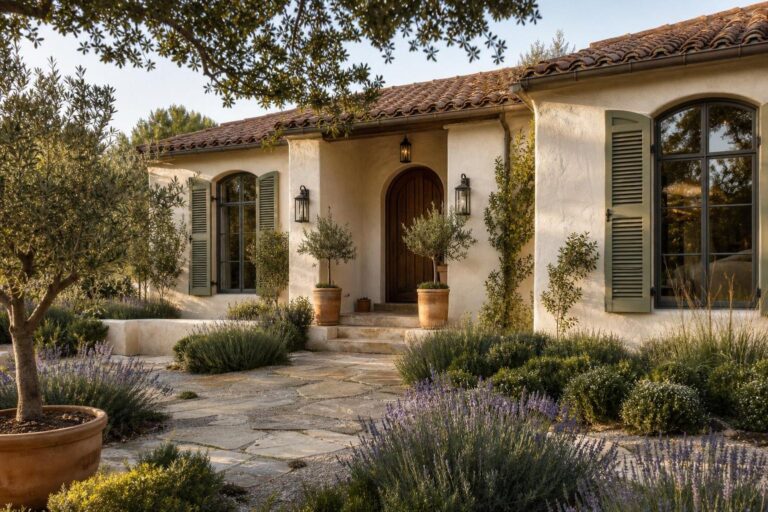
A Mediterranean house exterior does not need a wide frontage to feel graceful. In fact, a narrow lot can make the style even more memorable when every detail is chosen with intention. Cream stucco, black wrought iron, clay roof accents, arched openings and warm lantern light can turn a compact facade into a layered, sun-washed entrance that feels timeless rather than crowded.
The key is proportion. Mediterranean exteriors are known for texture, shadow, handcrafted materials and a relaxed sense of permanence. On a narrow house, those qualities need to be edited carefully. Too many decorative elements can make the front look busy, while too little detail can make the exterior feel flat. A successful design uses vertical lines, repeated materials and a soft contrast between pale stucco and dark metalwork.
Why Cream Stucco Works So Well on Narrow Mediterranean Exteriors
Cream stucco is one of the most flattering finishes for a Mediterranean narrow-lot home because it reflects light without looking stark. Pure white can sometimes feel too sharp on a tall, slim facade, especially when paired with black iron. A warmer cream, ivory, chalky beige or pale limestone tone gives the exterior softness and makes architectural shadows look richer throughout the day.
Texture matters as much as color. A lightly troweled stucco finish adds depth to a narrow facade without requiring additional ornament. Instead of relying on bold trim or multiple materials, the wall itself becomes interesting. The subtle unevenness catches sunlight around windows, arches and entry recesses, creating the charm associated with old Mediterranean villages.
For the most elegant result, avoid choosing a cream that is too yellow. Look for undertones inspired by natural plaster, limestone, sand or aged stone. These shades pair beautifully with terra cotta, olive green planting, dark bronze metal and warm wood doors.
Start With a Strong Front Door Moment
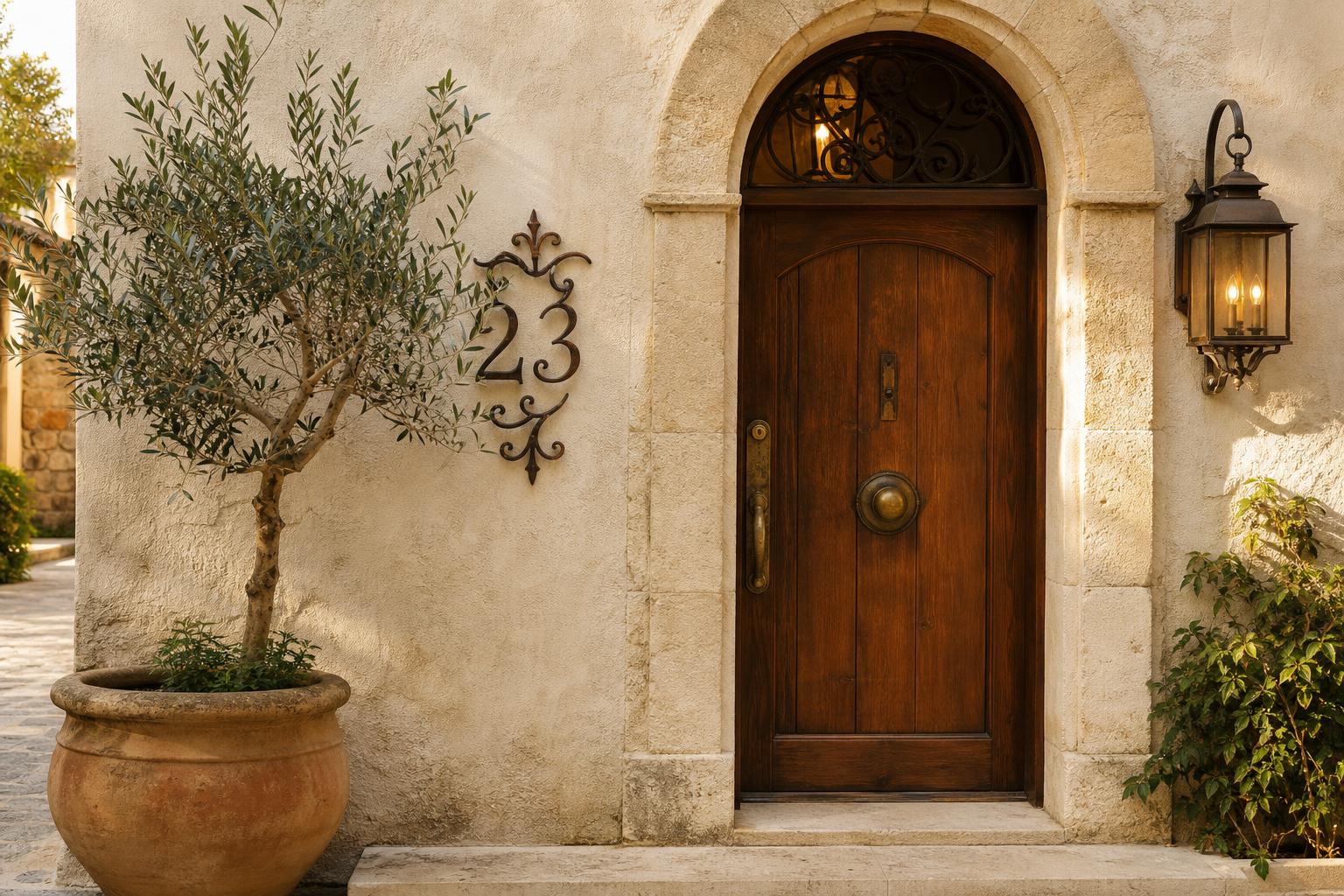
On a narrow lot, the front door is often the most important architectural feature. It becomes the visual anchor that gives the exterior personality. Mediterranean homes look especially inviting with arched doors, heavy wood doors, paneled doors, iron grilles or a simple rectangular door set within an arched plaster surround.
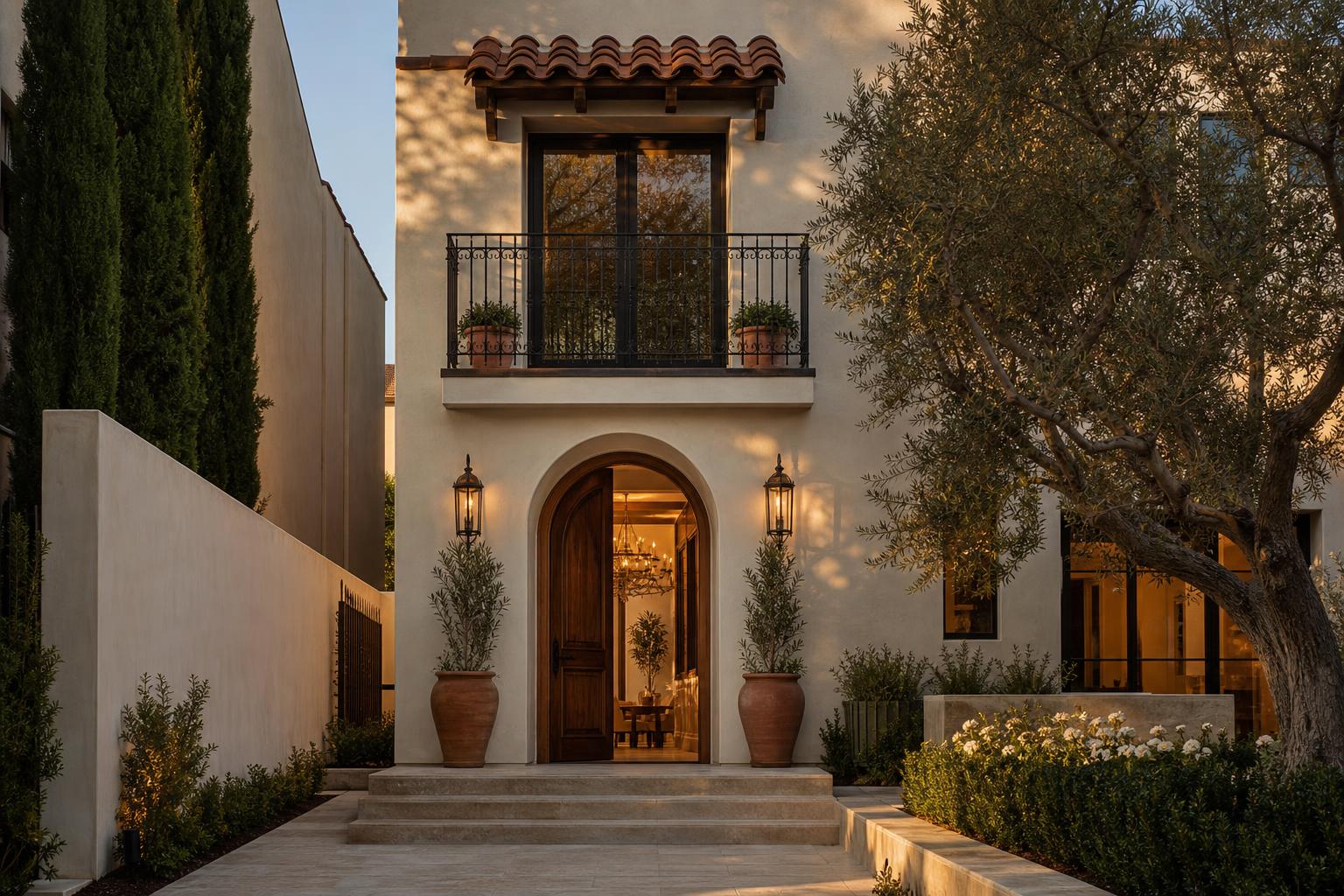
If a true arch is not possible, you can create the feeling of one with details around the entrance. A curved stucco hood, an arched transom, an arched iron gate or even a rounded lantern shape can soften the facade. The goal is not to force a grand villa detail onto a small house, but to create one graceful focal point that suggests Mediterranean craftsmanship.
For narrow exteriors, choose a front door color that adds depth without overwhelming the cream stucco. Weathered walnut, dark oak, deep olive, charcoal bronze or muted blue-gray can all work beautifully. If the house has black wrought iron elsewhere, a warm wood door keeps the palette from feeling too severe.
Use Wrought Iron as a Fine Line, Not a Heavy Frame
Wrought iron is one of the defining elements of Mediterranean exterior design, but scale is crucial on a slim facade. The most successful narrow-lot homes use iron as a drawing line: balcony rails, lantern brackets, house numbers, window grilles, door hardware or a small pedestrian gate. These details create contrast against cream stucco while preserving the airy feeling of the exterior.
Avoid making every feature black and heavy. If the windows, railings, lanterns, door hardware and gate are all oversized, the facade can feel compressed. Instead, repeat wrought iron in two or three places so the eye moves vertically. For example, use black iron address numbers near the entry, a slender railing above and one lantern by the door. This creates rhythm without visual clutter.
Matte black is classic, but aged bronze and dark iron finishes can feel softer and more authentic. They work especially well with cream stucco because they create contrast while still feeling sun-aged and natural.
Add Height With Vertical Greenery
Many narrow house exteriors lack horizontal space, so vertical greenery becomes one of the most useful design tools. Climbing jasmine, bougainvillea, ivy, star jasmine or climbing roses can pull the eye upward and make a compact facade feel taller and more romantic. Even if the planting area is small, a narrow trellis or wall-mounted support can bring life to the front elevation.
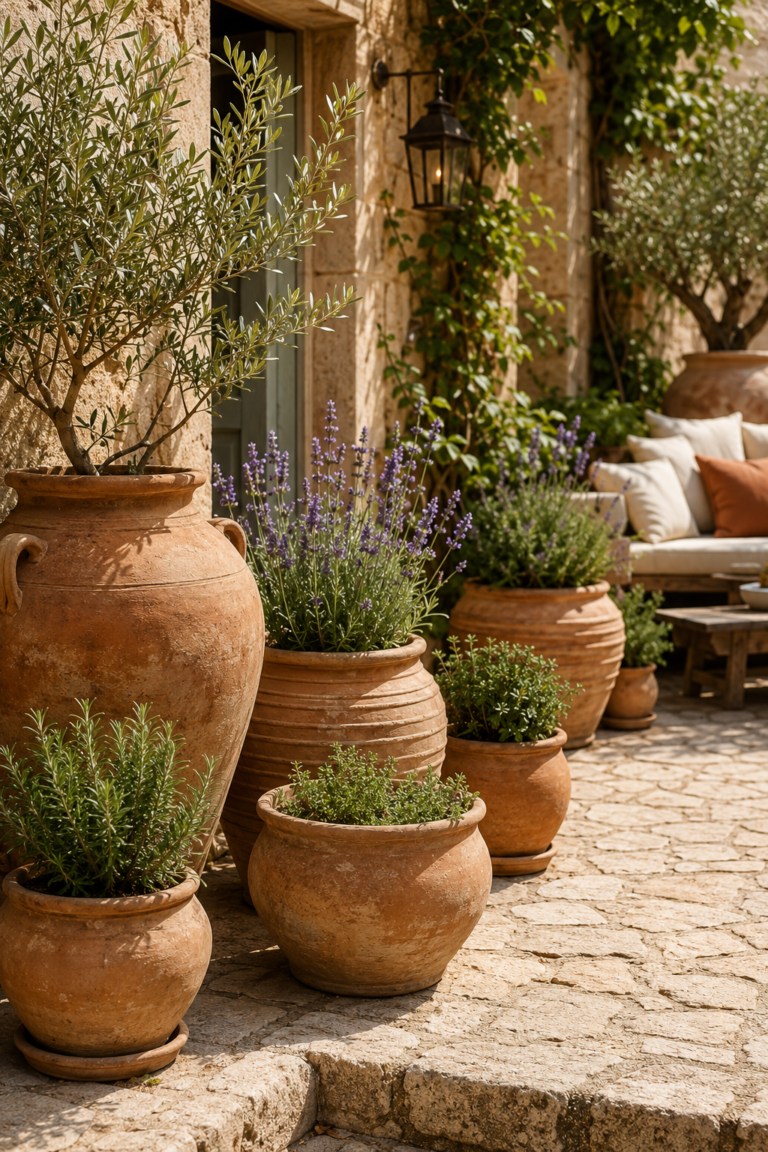
For a more restrained look, use tall planters with olive trees, bay laurel, cypress or rosemary standards. The upright shape echoes Mediterranean landscapes and frames the door without requiring a large garden bed. Terracotta, aged stone, warm concrete and clay-colored planters all suit cream stucco beautifully.
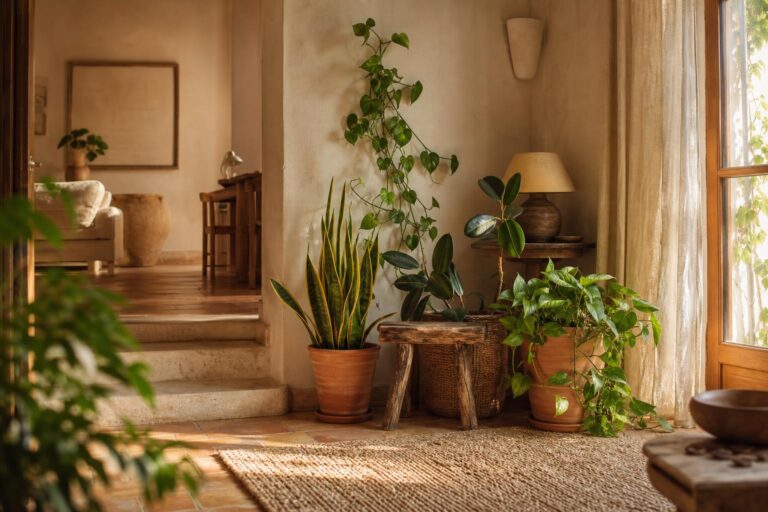
If your entry receives limited sun, consider shade-tolerant greenery in simple clay pots rather than struggling with sun-loving Mediterranean plants. The atmosphere matters more than strict botanical authenticity. A healthy plant in the right container will always look better than a stressed olive tree in the wrong exposure.
Choose Clay Tile Accents Carefully
Clay roof tiles bring instant Mediterranean character, but a narrow-lot home does not always need a full red tile roof to achieve the look. In many cases, small clay tile accents are more effective. A short barrel tile awning over the door, a tiled roof edge, a small projecting canopy or a garage detail can add warmth without overpowering the facade.
The best clay tones for cream stucco are not overly orange. Look for aged terracotta, weathered red, muted rust, dusty rose clay or mixed antique tile tones. These colors feel natural and pair well with wrought iron. If the roof is already dark or neutral, even a few clay details can introduce that sun-baked Mediterranean warmth.
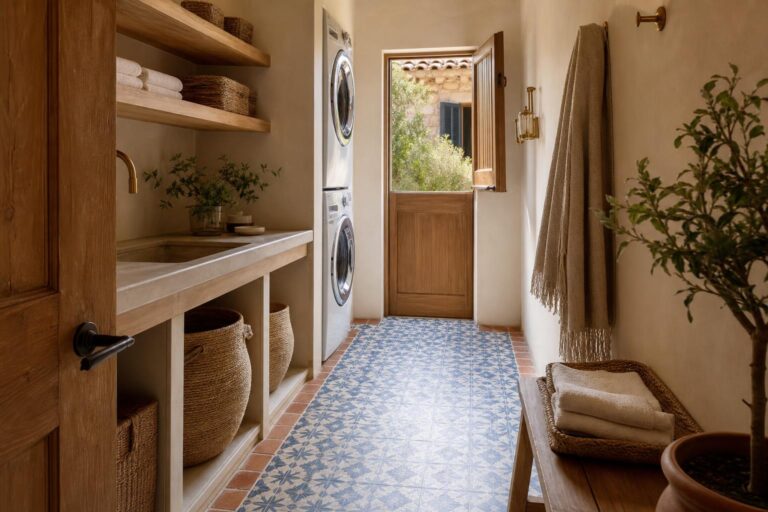
For narrow homes, avoid using too many competing tile patterns on the exterior. A decorative tile riser at the front step can be beautiful, but it should coordinate with the roof accents and door color. Think of tile as jewelry rather than wallpaper.
Balance Windows With Shutters, Grilles or Deep Trim
Windows on a narrow facade need definition. Without it, they can disappear into the stucco or appear randomly placed. Mediterranean design offers several ways to make windows feel intentional: deep stucco returns, iron grilles, wood shutters, stone sills or simple dark frames.
Functional-looking shutters can be charming, especially in muted olive, weathered wood, charcoal or dusty blue. However, shutters should be proportionate to the windows. On a very narrow exterior, bulky shutters may crowd the facade. In that case, slim iron grilles or deeper stucco trims may be better.
Deep window recesses are especially effective because they create shadow. Mediterranean architecture often relies on depth rather than applied decoration. If you are renovating, ask whether the window openings can be visually thickened with stucco returns or trim that matches the wall color. This subtle change can make a newer home feel more established.
Layer Warm Exterior Lighting
Mediterranean exteriors come alive in the evening. Warm lighting enhances cream stucco, highlights textured walls and makes wrought iron details feel more sculptural. For a narrow facade, lighting should be warm, low-glare and placed with restraint.
A pair of lanterns can look beautiful if there is enough space around the door, but one well-scaled lantern may be better on a tight entry. Look for simple metal lanterns with seeded glass, aged bronze finishes, arched tops or hand-forged details. The fixture should feel architectural, not overly decorative.
Use warm white bulbs rather than cool daylight bulbs. The goal is a golden glow that resembles candlelight or late sun. If you have steps, a small path or a recessed entry, add gentle lighting near the ground so the entrance feels safe and inviting without becoming overly bright.
Make the Path Feel Generous Even When Space Is Tight
A narrow lot often comes with a narrow walkway, but that does not mean the approach must feel cramped. The path to the front door should be simple, textured and clearly directed. Limestone-look pavers, warm concrete slabs, gravel borders, brick edging or terracotta-toned tile can all support a Mediterranean exterior.
If the path is very slim, create generosity through edges. A small strip of gravel, low herbs or compact groundcover can make the walkway feel designed rather than leftover. Repeating the same material from the steps to the threshold also helps the entry feel more spacious.
For a townhome or tightly spaced house, symmetry is not always possible. Instead, focus on balance. One tall planter on one side of the door can be balanced by a lantern, house numbers or climbing plant on the other. Narrow Mediterranean curb appeal is often about visual weight, not perfect matching.
Keep the Color Palette Limited and Sun-Warmed
A narrow Mediterranean exterior looks most elegant when the palette is controlled. Cream stucco should be the main color, with wrought iron as the dark accent and clay or wood as the warm accent. Greenery adds the living color. This limited palette prevents the facade from looking busy.
A strong exterior palette might include cream stucco, dark bronze iron, aged terracotta, warm walnut and olive green. Another softer version might use ivory stucco, charcoal iron, pale limestone, natural oak and silvery green planting. Both feel Mediterranean, but the first is warmer and more traditional while the second is calmer and more understated.
Be careful with bright accent colors on a narrow house. A vivid blue door or patterned tile can be beautiful, but it should be the single expressive feature. If you use a colorful door, keep the planters, lighting and window details quieter.
Small Details That Create Authentic Character
The beauty of a Mediterranean exterior often comes from details that feel crafted rather than manufactured. On a narrow lot, these small elements are especially important because they are seen up close. House numbers, door knockers, thresholds, planters, mailboxes and lanterns can all contribute to the atmosphere.
- House numbers: Choose wrought iron, aged brass or hand-painted tile numbers that are easy to read.
- Door hardware: Use substantial hardware in black iron, oil-rubbed bronze or aged brass.
- Planters: Select terracotta, stone, aged clay or simple concrete forms rather than glossy plastic.
- Thresholds: A limestone or stone-look sill gives the entry a more permanent feeling.
- Mailboxes: Keep the shape simple and coordinate the finish with the lantern or hardware.
- Textured walls: Let stucco texture create interest instead of adding too many decorative objects.
What to Avoid on a Narrow Mediterranean Facade
One common mistake is trying to include every Mediterranean feature at once. Arches, balconies, shutters, patterned tile, iron grilles, urns, bright doors and heavy lanterns can look wonderful on a large villa, but they may overwhelm a narrow house. Editing is part of the design.
Another mistake is using materials that look too new and shiny. Mediterranean style is warm, tactile and slightly aged. Very glossy tile, bright white stucco, polished black metal and synthetic-looking planters can make the exterior feel flat. Choose matte finishes, natural textures and colors that look softened by sun.
Finally, avoid ignoring scale. A lantern that is too small will disappear, but one that is too large can dominate the whole facade. Planters should be tall enough to frame the entry, but not so wide that they block the path. Every element should support the proportions of the house.
A Simple Formula for Narrow-Lot Mediterranean Curb Appeal
If you are unsure where to begin, use a simple design formula: cream textured stucco, one strong front door, two or three wrought iron accents, one warm clay or terracotta detail, vertical greenery and soft golden lighting. This combination gives you the essence of Mediterranean exterior design without overcrowding the facade.
For a budget-friendly refresh, start with the most visible details. Replace house numbers, update the lantern, add a tall terracotta planter and repaint the door in a warm wood-inspired or muted Mediterranean color. These changes can shift the mood of the exterior before any major renovation begins.
For a larger renovation, focus on architectural depth. Consider an arched entry surround, deeper window trim, stucco refinishing, a clay tile awning or a more substantial front door. These improvements create lasting character and make the narrow exterior feel intentionally designed.
Shop the Mediterranean Look
Use these exterior-friendly accents to bring cream stucco, wrought iron details and warm Mediterranean curb appeal to a narrow facade.
- wrought iron address numbers
- Mediterranean outdoor wall lanterns
- large terracotta planters
- black iron front door hardware
- potted olive tree for the entry
- Spanish style tile house numbers
Conclusion
A narrow Mediterranean house exterior can be every bit as charming as a wide villa facade when the design is focused and layered. Cream stucco provides softness, wrought iron adds definition, clay accents bring warmth and vertical greenery gives life to the elevation. With thoughtful proportions and restrained details, a slim frontage can feel elegant, welcoming and deeply timeless.
The goal is not to copy a grand Mediterranean estate, but to capture the feeling of sunlit plaster, handcrafted metal, warm earth tones and an inviting entrance. When each detail has room to breathe, even the narrowest exterior can become a graceful expression of Mediterranean style.