Rustic Mediterranean Fireplace Ideas for Small Living Rooms With Limestone and Plaster
Rustic Mediterranean Fireplace Ideas for Small Living Rooms With Limestone and Plaster
A fireplace can transform a small living room faster than almost any other architectural feature. In a Mediterranean home, it is not just a place for fire; it is the visual anchor, the evening gathering point, and the surface where stone, plaster, wood, ceramic and light come together. When the room is compact, the fireplace has to work especially hard. It needs to feel generous without overwhelming the floor plan, rustic without becoming heavy, and timeless without looking staged.
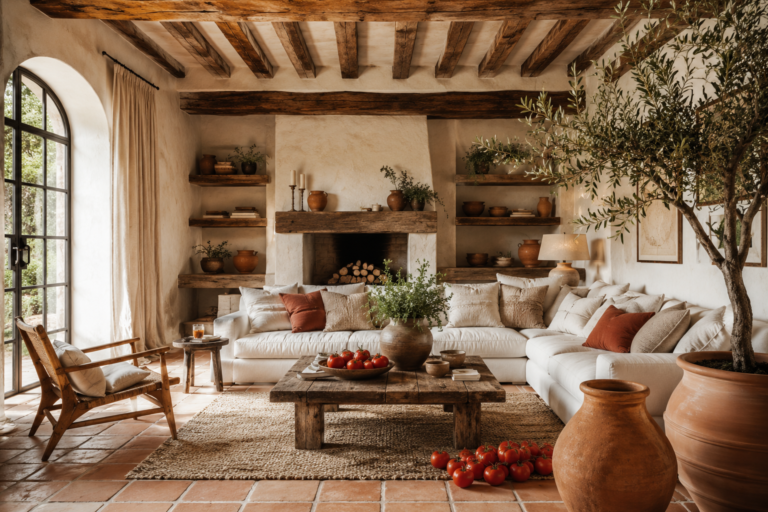
This guide focuses on a precise design approach: rustic Mediterranean fireplace ideas for small living rooms using limestone, plaster and natural texture. Instead of treating the fireplace as a decorative afterthought, think of it as the heart of the room. The right surround can make a narrow space feel grounded. The right mantel can introduce old-world character. The right lighting can turn a simple plaster wall into a warm, sculptural feature.
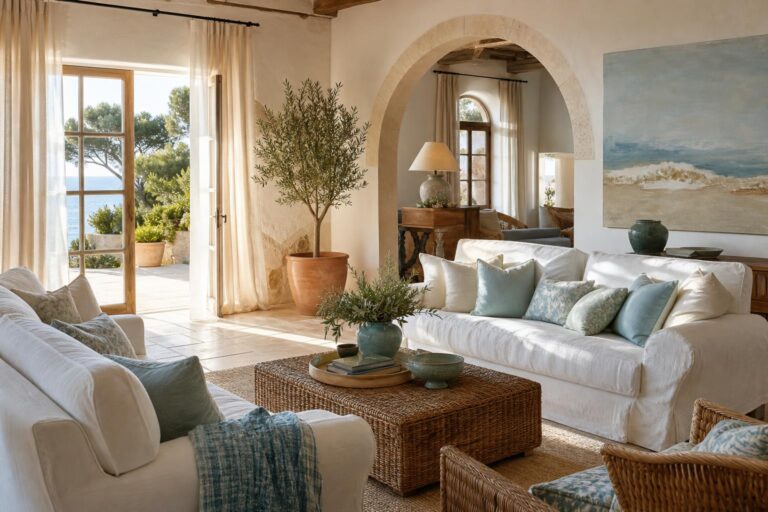
The Mediterranean look works beautifully in small rooms because it values warmth over excess. A few honest materials often have more impact than a crowded collection of accessories. Pale limestone, hand-finished plaster, terracotta, linen, aged wood and iron can create depth without visual clutter. The result is a living room that feels relaxed, sun-washed and intimate, even when square footage is limited.
Start With the Fireplace as the Room’s Quiet Anchor
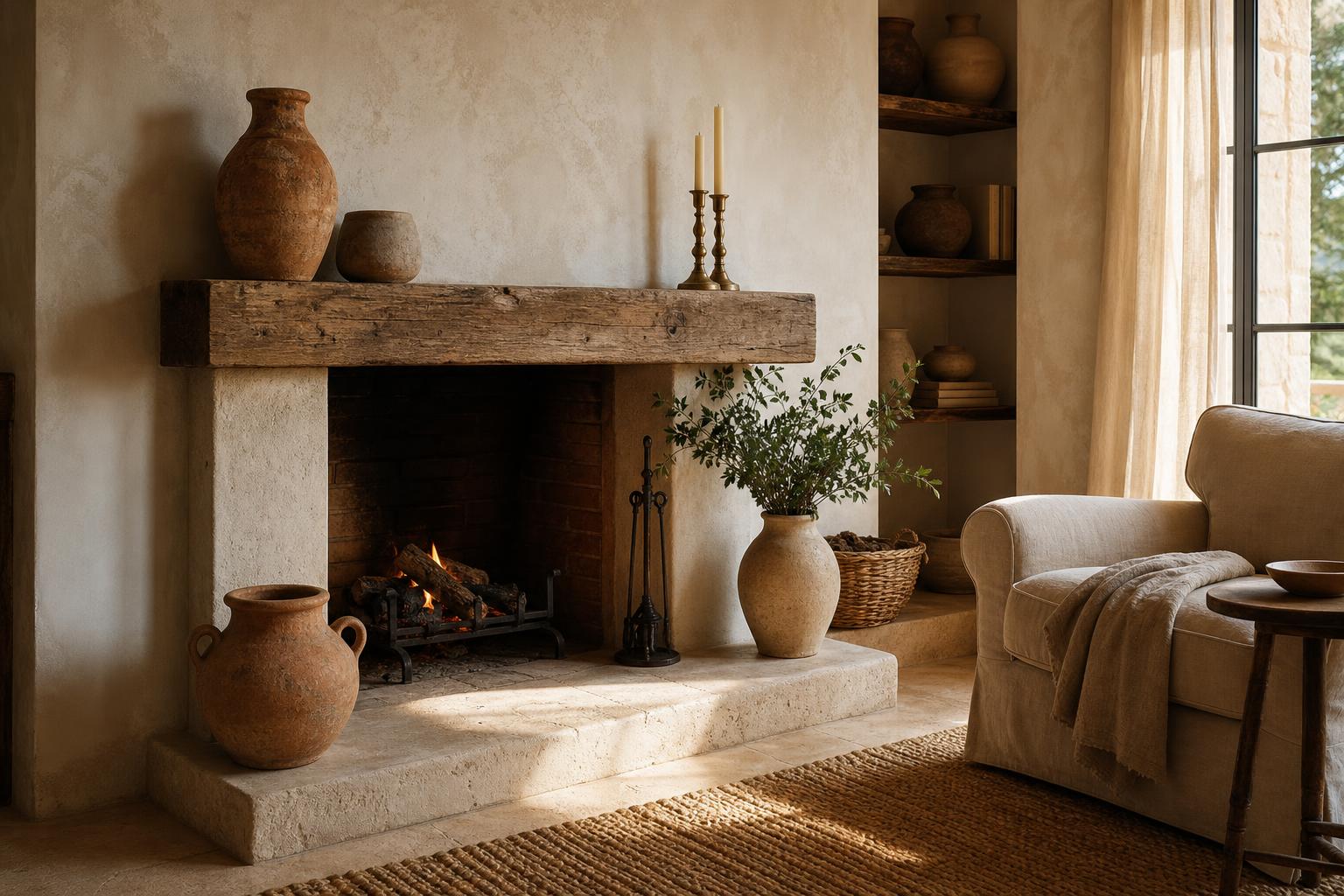
In a small living room, the fireplace should be the calmest strong element in the space. That may sound contradictory, but it is the secret to making the room feel balanced. A rustic Mediterranean fireplace does not need an oversized mantel, dark stone or heavy ornament to command attention. Its presence can come from proportion, texture and material honesty.
Begin by asking how the fireplace relates to the room. Is it centered on the main wall, tucked into a corner, or set between windows? A centered fireplace can become the natural focus for seating, while a corner fireplace often benefits from softer styling and asymmetrical furniture placement. If the fireplace is narrow, extend the plaster or stone treatment vertically to create elegance. If it is wide, keep the surrounding decor low and restrained so the room does not feel crowded.
The most successful small Mediterranean living rooms often use a fireplace with a simple silhouette. A softly rounded plaster chimney breast, a honed limestone frame, or a shallow arched opening can bring architectural charm without excess. The goal is not to make the fireplace look new and perfect. It should feel as though it belongs to the room and has aged gently over time.
Choose Limestone for a Soft, Sun-Warmed Foundation
Limestone is one of the most graceful materials for a Mediterranean fireplace because it has natural warmth without looking dark or glossy. In small living rooms, this matters. Polished black stone or dense brown surrounds can visually shrink a room, while pale limestone reflects light and gives the fireplace a grounded, earthy presence.
For a rustic Mediterranean look, choose limestone with a honed, tumbled or lightly textured finish. Avoid anything too shiny. The beauty of limestone is in its quiet variation: creamy beige, soft ivory, warm gray, sand and shell tones. These shades pair effortlessly with limewashed walls, terracotta floors, linen upholstery and dark wood accents.
A full limestone surround can feel substantial, but in a small living room it should remain visually lean. Consider a simple frame around the firebox, a low hearth slab, or a modest mantel shelf rather than thick blocks on every side. If you want more presence, use limestone at the hearth and pair it with plaster above. This keeps the floor-level area durable while allowing the upper wall to feel soft and light.
Best Limestone Fireplace Details for Small Rooms
- Honed limestone hearth: A low slab creates a practical ledge for candles, logs or ceramics without adding bulky furniture.
- Simple limestone surround: Clean lines keep the look rustic but refined.
- Softly aged edges: Rounded or eased corners feel more Mediterranean than sharp, modern cuts.
- Cream and sand tones: Pale stone adds warmth while keeping the room open.
Use Plaster to Add Depth Without Visual Weight
Plaster is ideal for a rustic Mediterranean fireplace because it introduces texture in a subtle, architectural way. Unlike patterned tile or heavily veined stone, plaster does not demand constant attention. It shifts with the light, creating shadow, movement and softness across the fireplace wall.
For small living rooms, a plaster fireplace surround can be especially useful because it blends into the wall while still feeling custom. A hand-troweled finish brings irregularity and warmth. Lime plaster, Roman clay and mineral-based plaster finishes all work well if you want a natural, matte surface. The color should usually stay close to the wall tone: warm white, stone beige, pale clay, oatmeal or muted sand.
If your fireplace wall feels flat, plaster can help create dimension. Build out a shallow chimney breast, add a softly curved edge, or create a recessed niche for logs. Even a simple plaster mantel ledge can feel beautifully old-world when the finish is slightly imperfect. The key is restraint. Mediterranean interiors rarely feel successful when every surface fights for attention. Let the plaster whisper rather than shout.
Consider a Soft Arch for Mediterranean Character
Arches are closely associated with Mediterranean architecture, and they can be very effective around a fireplace. In a small living room, however, the arch should be carefully scaled. A large dramatic arch may overpower the wall, while a subtle arched firebox or niche can add charm without taking over.
An arched fireplace opening works well with plaster because the material can curve naturally around the shape. If a structural arched firebox is not possible, you can still suggest the form with an arched plaster surround, an arched niche above the mantel, or an arched mirror placed nearby. The curve softens the room and balances the straight lines of sofas, shelving and coffee tables.
For a rustic look, avoid overly crisp or decorative arch trim. A slightly thick plaster edge, a limestone keystone detail, or a simple recessed curve will feel more authentic. The arch should look built into the room, not applied as a theme.
Keep the Mantel Simple and Meaningful
A small living room fireplace can quickly become cluttered if the mantel is overloaded. Mediterranean styling works best when the objects feel collected, handmade and useful. Instead of filling the mantel edge to edge, choose a few pieces with strong texture and varied height.
An aged wood mantel is a beautiful partner for limestone and plaster. Reclaimed oak, weathered pine or chestnut adds rustic warmth and prevents pale materials from feeling too cool. If the room is very small, use a slim wood beam rather than a deep shelf. You want enough surface for a ceramic vase and candleholders, not a ledge that interrupts circulation.
For a more minimal approach, skip the wood mantel and use a plaster ledge or limestone shelf. This can look especially elegant in compact rooms where too many material changes would feel busy. Whether wood, stone or plaster, the mantel should feel integrated with the fireplace, not like a separate decorative strip.
Mediterranean Mantel Styling That Works
- One handmade ceramic vessel: Choose a matte clay, whitewashed or blue-glazed piece for quiet character.
- Aged brass or iron candleholders: They add evening warmth without requiring much space.
- Olive branches or dried stems: Natural greenery gives height while keeping the palette soft.
- A leaning framed artwork: Select a simple landscape, sketch or textile-inspired print.
- A small stack of books: Use neutral covers or remove bright jackets for a calmer look.
Balance the Fireplace With Low, Relaxed Seating
Furniture placement is one of the biggest challenges in a small living room with a fireplace. The instinct is often to push everything against the walls, but that can make the fireplace feel disconnected. Instead, create a compact conversation area that acknowledges the hearth.
A low linen sofa works beautifully in Mediterranean interiors because it feels relaxed and does not block the fireplace visually. Choose warm white, oatmeal, flax, taupe or pale gray linen. If you need additional seating, consider one small accent chair rather than two bulky armchairs. A woven leather chair, slipcovered slipper chair or compact wood-framed lounge chair can add texture without crowding the room.
The coffee table should also stay low and natural. A rustic wood table, travertine-topped piece, small round table or woven ottoman can all work. Round shapes are particularly useful in tight spaces because they improve flow around the fireplace seating area.
Layer Warm Lighting Around the Fireplace
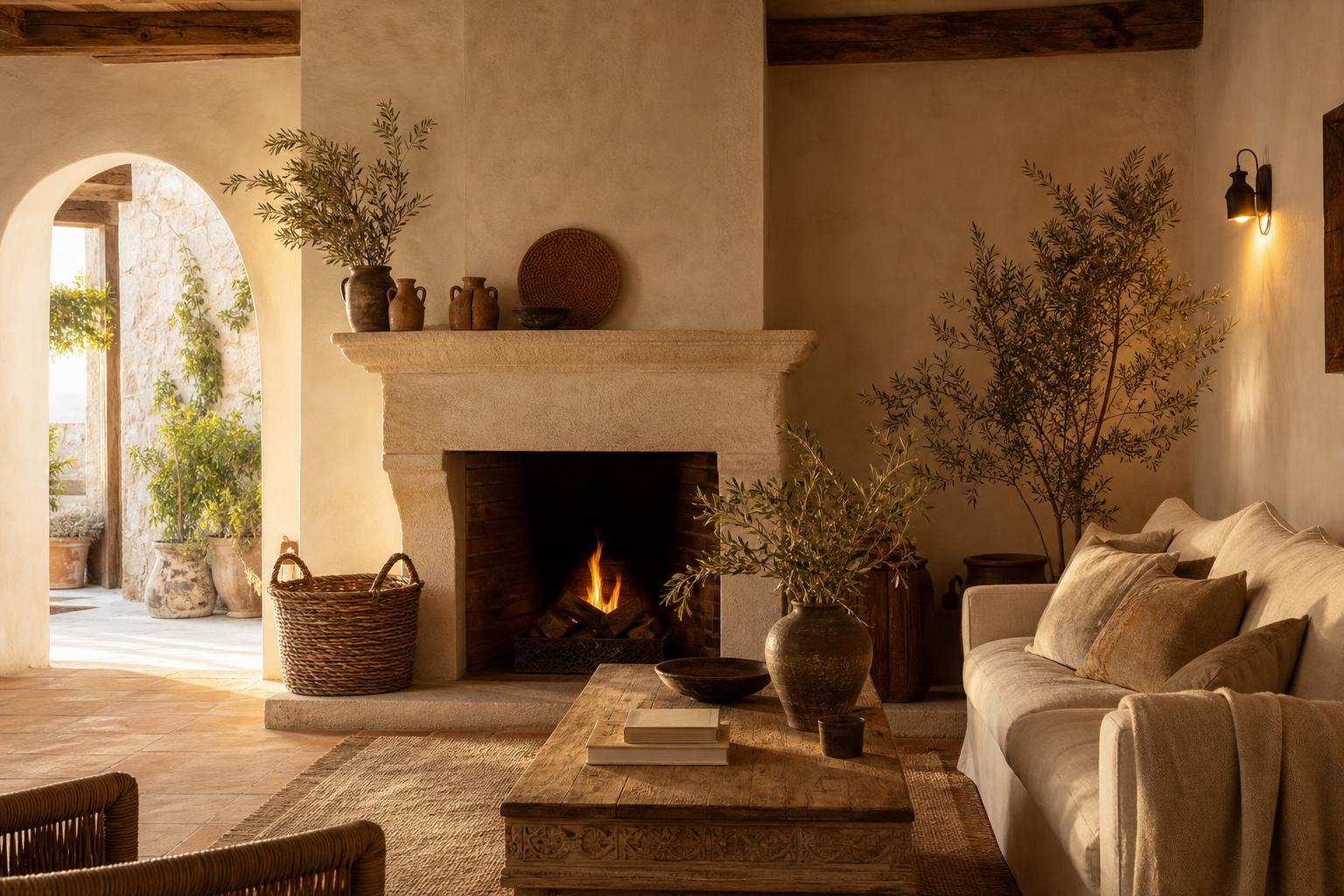
A fireplace gives natural glow, but it should not be the only source of warmth in the room. Mediterranean interiors rely on layered lighting: wall sconces, table lamps, candles and shaded fixtures that create a golden atmosphere after sunset.
If you have space on both sides of the fireplace, install simple wall sconces in aged brass, bronze, ceramic or blackened iron. Choose warm bulbs and avoid bright white light. The goal is to graze the plaster and stone, highlighting texture rather than flattening it. If electrical work is not possible, plug-in sconces or small table lamps on nearby shelves can still create the effect.
Candles are especially powerful near a rustic fireplace. Place them on the hearth in varied heights, inside lanterns, or grouped on the mantel. Use unscented candles if the space is small, as too many fragrances can feel overwhelming. The soft flicker against limestone, plaster and terracotta is one of the simplest ways to create a Mediterranean evening mood.
Use Terracotta and Woven Texture Sparingly
Terracotta is a natural companion to a Mediterranean fireplace, but in a small living room it should be used with intention. If you already have terracotta floor tiles, let them be a major part of the palette and keep accessories quieter. If your floors are wood or stone, you can introduce terracotta through planters, vessels, a small side table or decorative bowls.
The same rule applies to woven textures. Baskets, cane, rattan, jute and seagrass bring an essential handmade quality, but too many pieces can make a compact room feel visually noisy. Choose one or two useful woven items: a log basket next to the hearth, a lidded basket for blankets, or a jute rug layered under a smaller wool rug.
Rustic Mediterranean design is not about filling every corner. It is about creating a material conversation. Limestone feels cool and solid. Plaster feels soft and mineral. Wood feels aged and grounding. Terracotta feels sunbaked. Woven fibers feel humble and human. When each material has breathing room, the fireplace area feels rich without feeling crowded.
Choose a Rug That Defines the Hearth Zone
A rug can help a small living room feel cohesive, especially when the fireplace is the focal point. Mediterranean-inspired rugs often include warm neutrals, faded rust, muted blue, ochre, charcoal, cream and clay. For a rustic fireplace room, avoid anything too bright or sharply graphic. Look for faded patterns, flatweaves, wool textures or vintage-style motifs.
Size matters. A rug that is too small will make the seating area feel disconnected from the fireplace. Ideally, the front legs of the sofa and chair should sit on the rug. Leave a safe distance between the rug and the firebox, particularly if you use the fireplace regularly. If the hearth projects into the room, let the rug begin just beyond it rather than forcing the rug underneath.
For a softer Mediterranean look, consider layering. A plain jute or wool base rug can add texture, while a smaller vintage-style rug on top brings pattern. This technique works well in small rooms because it creates depth without relying on large furniture pieces.
Add Built-In Niches or Shelves With Restraint
Built-ins flanking a fireplace can be beautiful, but they must be handled carefully in small living rooms. Heavy cabinetry can make the fireplace wall feel dense. Instead, think in terms of shallow shelves, plaster niches or low storage that supports the fireplace rather than competing with it.
Plaster niches are especially Mediterranean. A small arched niche beside the fireplace can hold ceramics, books or a lamp. If you need practical storage, consider closed cabinets below with open shelves above, painted the same warm white as the wall. This keeps the look calm while still giving you room for everyday items.
Open shelves should be styled lightly. Mix books with ceramic bowls, small art pieces, baskets and one or two sculptural objects. Leave empty space between items. In a rustic Mediterranean room, negative space is part of the design. It allows the texture of the plaster and the shape of the fireplace to remain visible.
Work With a Warm Neutral Color Palette
The most timeless Mediterranean fireplace rooms usually begin with warm neutrals. This does not mean plain white. Instead, think of layered mineral tones: limewash, cream, chalk, bone, sand, greige, clay, stone and faded taupe. These colors allow limestone and plaster to blend naturally into the room.
For contrast, use dark wood, aged bronze, black iron or deep olive sparingly. A small room benefits from a few grounding accents, but too much dark contrast can create a choppy effect. If you love blue, choose muted Mediterranean blues rather than bright navy. A faded blue pillow, ceramic vase or artwork can look beautiful against a plaster fireplace.
When choosing paint or plaster colors, test them near the fireplace at different times of day. Limestone can read cool in some light and warm in others. A wall color that looks perfect in morning sun may appear gray at night. Warm bulbs and natural textiles can help correct this, but the base palette should already feel gentle and inviting.
Style the Hearth for Everyday Living
The hearth is practical, but it is also one of the best styling surfaces in a small living room. Because it sits low, it can hold useful objects without cluttering sightlines. A woven log basket, a stack of cut wood, a ceramic pot, a lantern or a low brass bowl can all add character.
Keep safety in mind. If the fireplace is functional, avoid placing flammable decor too close to the opening. Use metal screens, proper fire tools and heat-safe materials. If the fireplace is decorative or unused, you can style the firebox itself with stacked birch logs, pillar candles, a large ceramic vessel or a sculptural iron candelabra.
A Mediterranean fireplace should never feel too precious. The most beautiful rooms have signs of use: a folded linen throw, a basket of wood, a slightly irregular ceramic bowl, a chair pulled toward the fire. These details make the room feel lived in rather than simply decorated.
Small-Room Mistakes to Avoid
Even strong Mediterranean materials can feel wrong if the proportions are off. The first mistake is making the fireplace surround too bulky. In a compact room, oversized stone legs or a deep mantel can steal valuable visual and physical space. Choose shallow profiles and let texture provide richness.
The second mistake is overdecorating the mantel. Too many small objects create visual clutter and make the fireplace look less architectural. Use fewer, larger pieces instead. A single tall vase and two candleholders often look better than ten tiny accents.
The third mistake is mixing too many Mediterranean clichés. You do not need patterned tile, wrought iron, olive trees, blue pottery, terracotta and carved wood all in one corner. Select the elements that suit your home. A limestone and plaster fireplace with linen seating and warm lighting can feel Mediterranean without becoming themed.
The final mistake is using cold lighting. Bright overhead light can make plaster look flat and limestone look dull. Always add warm lamps, sconces or candles so the fireplace becomes inviting in the evening.
How to Refresh an Existing Fireplace Without a Full Renovation
If you already have a fireplace but it does not feel Mediterranean, small changes can make a major difference. Painting a dark surround in a warm mineral tone can soften the look. Adding a plaster finish over a plain wall can create texture. Replacing a glossy mantel with reclaimed wood can instantly introduce rustic warmth.
If the firebox surround is dated tile, consider whether it can be replaced with limestone, travertine or a neutral handmade tile. In some homes, even a new hearth slab is enough to shift the entire mood. For renters or low-commitment updates, focus on styling: a woven log basket, linen curtains, a vintage-style rug, ceramic vessels and warm lamps.
The best refreshes are cohesive. Do not add Mediterranean accessories without addressing the surrounding palette. A bright white wall, cool gray sofa and chrome lighting will fight against rustic fireplace decor. Warm the room as a whole, and the fireplace will feel more natural.
Shop the Mediterranean Look
Bring this rustic fireplace style into a small living room with warm materials, handmade textures and practical hearth accents.
- limestone-inspired fireplace decor accents
- reclaimed wood mantel shelf
- aged brass wall sconces for warm light
- terracotta ceramic vase for the mantel
- woven log basket for the hearth
- black iron rustic fireplace tools
Conclusion: Let the Fireplace Feel Simple, Warm and Built-In
A rustic Mediterranean fireplace in a small living room should feel calm, generous and deeply connected to the materials around it. Limestone gives the room a soft stone foundation. Plaster adds movement and handmade texture. Wood, terracotta, linen, woven fibers and warm lighting complete the atmosphere without crowding the space.
The key is not to imitate a villa or fill the room with themed decor. Instead, focus on proportion, honest surfaces and a few meaningful details. Keep the mantel restrained, choose low relaxed seating, use warm neutral colors and let the fireplace wall breathe. When the materials are natural and the styling is simple, even the smallest living room can feel like a quiet Mediterranean retreat.