Mediterranean Living Room Ideas for a TV Wall That Doesn’t Take Over
A television can make a Mediterranean living room feel suddenly modern in the wrong way. One black rectangle on a pale plaster wall, one glossy media console, one tangle of visible cables, and the room loses the softness that makes old stone houses, village apartments, and Provençal salons so inviting.
The answer is not to hide the TV behind an elaborate trick. In a real home, the screen is often used every day. The better aim is to make the wall around it feel settled: grounded by natural materials, softened by lamps and textiles, and balanced enough that the television is only one element in the room rather than the visual center of gravity.
Start with the real problem: contrast, not technology
Most awkward TV walls fail because the contrast is too sharp. A dark screen is mounted on a blank white wall, often above a narrow cabinet that looks too light to support it. The eye reads the television as a floating object because nothing nearby has enough visual weight, texture, or warmth to hold it in place.
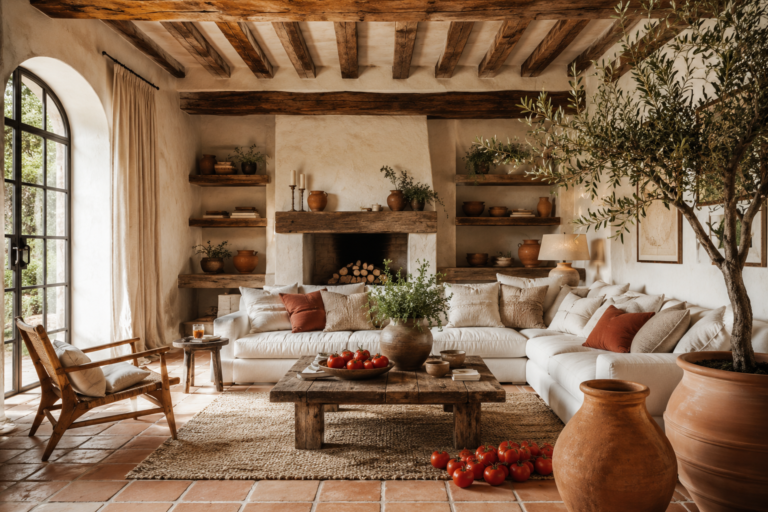
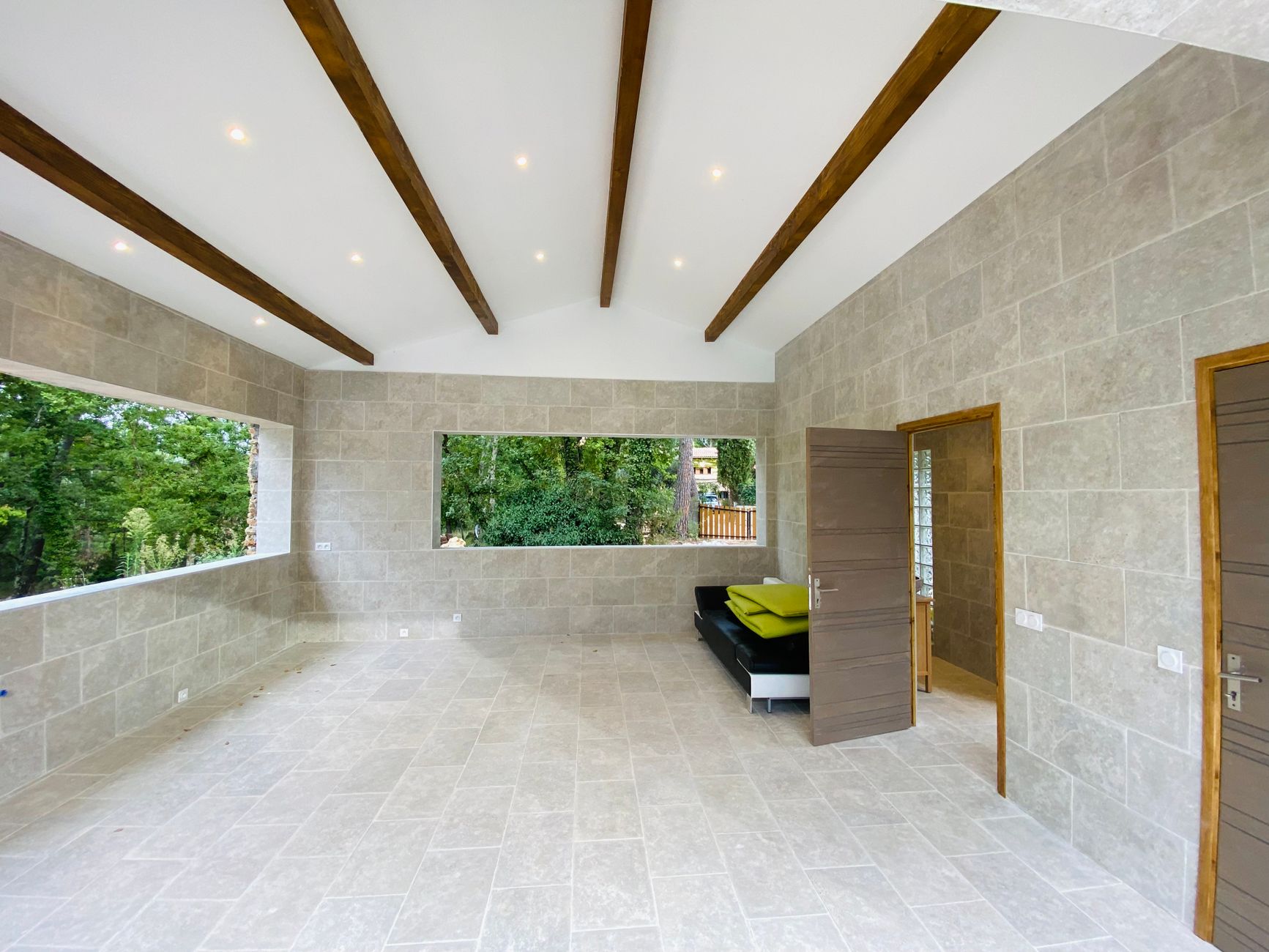
In a Mediterranean living room, especially one inspired by Provence, the surrounding surfaces matter more than the device itself. Limewashed plaster, pale limestone, matte travertine, aged oak, hand-thrown ceramics, and natural linen all have a softened edge. They absorb light rather than bouncing it back. A TV wall needs some of that same matte, tactile quality.
If your wall is painted bright white, the screen will feel harsher. If the media unit is glossy, the reflection doubles the problem. If all the accessories are tiny, the room starts to look busy without becoming warmer. Before buying anything, look at the wall from the main seat in daylight and again in the evening. Notice whether the issue is the wall color, the furniture scale, the lighting, or simply the lack of surrounding texture.
Choose a calmer field behind the screen
The simplest correction is to reduce the contrast between the screen and the wall. This does not mean painting the room dark. In a Southern French interior, a mid-tone neutral often works better: warm stone, mushroom, soft clay, muted olive-gray, or a chalky greige that resembles aged plaster. These colors let the television recede without making the room feel heavy.
If you prefer pale walls, choose a finish with movement. Limewash or mineral-style paint gives variation that a flat modern paint cannot imitate. The slight cloudiness of the finish makes the wall feel older and less clinical. In a rental, where painting may not be possible, you can create a similar sense of depth with a larger woven shade lamp, an aged wood console, and ceramics in warm earth tones.
Avoid building a decorative frame directly around the television unless the rest of the room can carry it. Heavy faux-stone surrounds, symmetrical shelves packed with objects, and overly ornate moldings often make the screen more noticeable, not less. A better Mediterranean approach is quieter: a softened wall plane, a grounded piece of furniture below, and one or two substantial materials nearby.
Let the media piece look like furniture, not equipment
The cabinet beneath the TV should feel as if it belongs in the room even when the screen is off. In Provence, the most convincing choices are usually low, sturdy, and tactile: aged oak, walnut, reclaimed pine, painted wood in a muted tone, or a plastered built-in with simple doors. The piece should be wider than the television whenever possible. A few extra inches on each side helps the composition feel intentional rather than top-heavy.
For most living rooms, a low cabinet between about knee height and console height feels more relaxed than a tall unit. It keeps the screen at a comfortable viewing level and leaves enough wall space above or around it for breathing room. If the TV is mounted too high, the whole wall begins to feel like a lobby or a bar. Lower is usually softer, especially with deep sofas and lounge chairs.
Closed storage is worth prioritizing. Routers, remotes, game controllers, chargers, and extra cords have a way of disturbing even the best room. Cane-front doors, slatted wood, or simple painted panels can hide the practical parts while keeping the piece breathable. If you need open shelving for equipment, keep it to one side or one central bay rather than exposing the entire length of the cabinet.
On top, resist the urge to decorate the full surface. A ceramic bowl, a low stack of books, or a small vessel with olive branches is enough. Leave negative space so the cabinet reads as calm furniture, not a display shelf competing with the screen.
Use lighting to move the eye away from the black rectangle
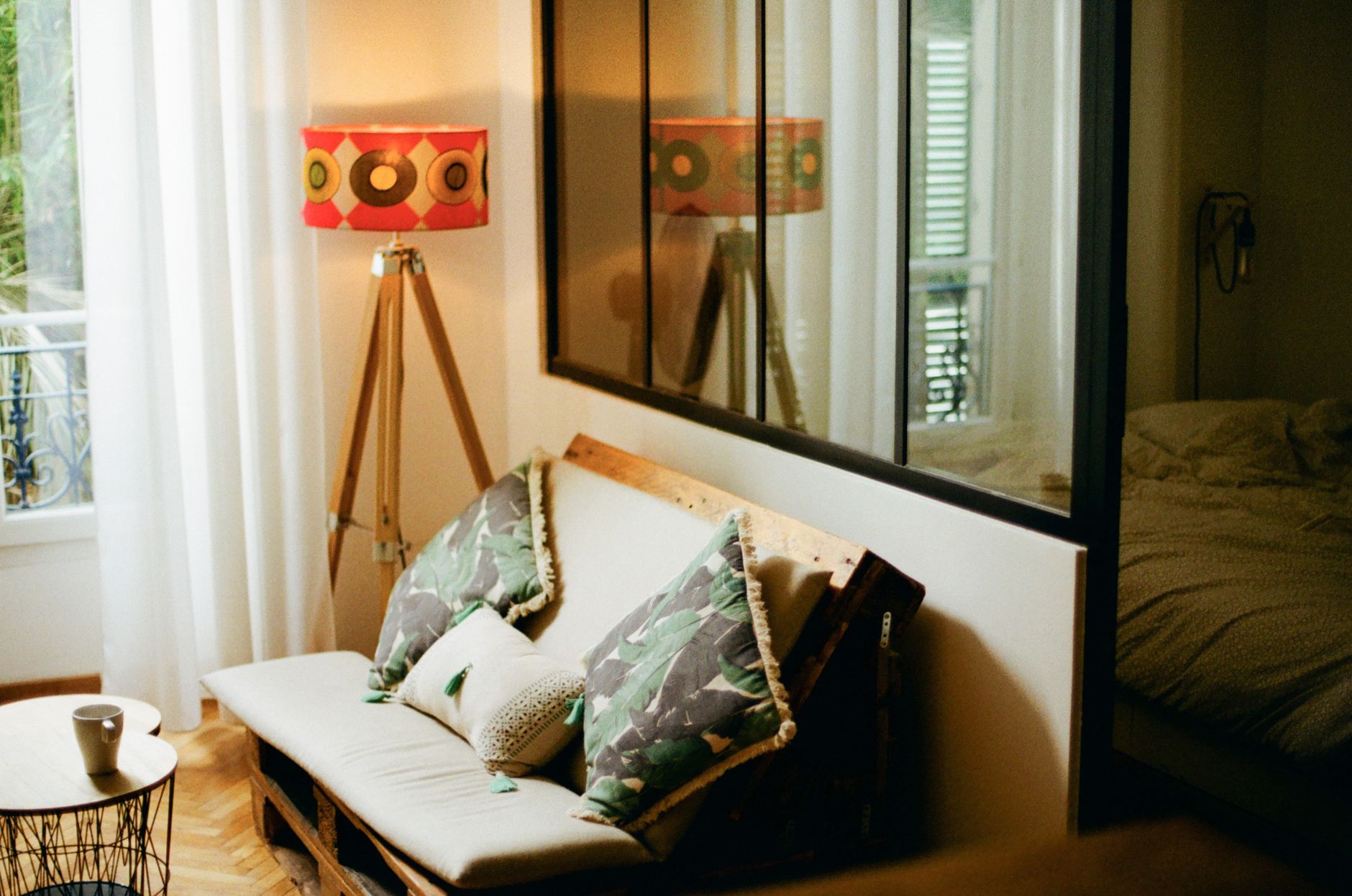
A TV wall often looks harsh because all the light in the room comes from overhead. Ceiling light flattens the wall and makes the screen feel more graphic. Mediterranean rooms, by contrast, tend to feel best with low, warm pools of light: a shaded floor lamp near a reading chair, a ceramic table lamp on a side table, perhaps a discreet wall light if the electrical plan allows it.
The goal is not to illuminate the television. It is to give the room other points of warmth. A linen shade softens the edge of the light. Terracotta, ceramic, travertine, wood, and rattan bases bring the material language back toward the South of France. Place lamps so they glow beside the seating area or near textured surfaces rather than reflecting directly in the screen.
In the evening, switch off the overhead light and use two or three lower sources instead. One lamp near the sofa, one lamp or sconce across the room, and a small warm accent on the media piece can completely change how the TV wall feels. The screen remains functional, but the living room no longer feels arranged around a single cold surface.
Arrange the seating for conversation first
The strongest Mediterranean living rooms rarely feel like private cinemas. They allow for conversation, reading, coffee, and an open window as much as watching a film. If every seat faces the TV directly, the room becomes one-dimensional. Even a small adjustment can make it feel more gracious.
Angle one armchair slightly toward the sofa rather than toward the screen. Let the coffee table sit between people, not simply in front of the television. If you have a long sofa, soften the TV focus with a side chair, a small stool, or a bench near the edge of the arrangement. This gives the room the layered rhythm of a lived-in salon rather than a viewing zone.
The distance between the sofa and the media wall should feel comfortable for your actual screen size and room depth, but the decorative principle is simple: do not let the television dictate every line. A rug, if you use one, should connect the seating pieces rather than stopping short at the coffee table. Linen curtains, textured cushions, and a low wood table help bring attention back to the human scale of the room.
A decision framework for the TV wall
When the wall still feels unresolved, do not add more accessories at random. Work through the problem in order. This keeps the result restrained, which is essential if you want the room to feel Provençal rather than staged.
- If the TV feels too stark: soften the wall first with a warmer paint color, limewash-style finish, or a larger area of matte texture behind the screen. Do this before adding shelves or art.
- If the TV feels too heavy: widen or visually strengthen the furniture below it. A low wood cabinet, plastered base, or cabinet with cane or panel doors gives the screen a place to land.
- If the TV still dominates at night: change the lighting plan. Add shaded lamps and warm side lighting so the room has several gentle focal points after sunset.
This order matters. Wall, weight, then light. If you begin with small decor, you may spend more and still feel that the room is visually unbalanced.
Bring in texture without making the wall busy
A Mediterranean TV wall benefits from texture, but not necessarily from pattern. The most convincing rooms use a few honest materials and let them breathe. Think of a village house near Uzès or a modest apartment in Aix: the beauty is often in old timber, matte plaster, woven baskets, linen cushions, and ceramic pieces that look useful as well as decorative.
If you want art near the television, choose fewer, larger pieces rather than a tight gallery wall around the screen. A single framed textile, a charcoal drawing, or a small landscape on one side can work if the colors are soft. Keep glass glare in mind. Reflective frames can be distracting when placed close to a screen, especially opposite windows.
Open shelves require discipline. They can look beautiful in photographs, but around a television they quickly become cluttered. If you use shelves, leave some empty space and repeat materials: one stack of books, one ceramic vessel, one small basket, one piece of aged wood. Avoid lining up many small objects of equal height. The eye will read them as visual noise.
Textiles are safer and often more effective. A linen curtain panel, a warm neutral cushion, a woven throw, or a muted kilim pillow can shift the whole room without touching the television. Use color sparingly: clay, faded rust, olive, sand, oat, and chalky beige are enough. Strong blue-and-white contrast, shiny gold accents, or theatrical Tuscan colors can push the room away from the quiet Mediterranean mood you are trying to create.
Work with windows, glare, and cables early
The practical details are not glamorous, but they decide whether the room feels calm. Glare from a window opposite the TV can make you close curtains all day, which defeats the airy character of a Mediterranean living room. If possible, place the screen on a wall perpendicular to the main window rather than directly opposite it. When that is not possible, use natural linen curtains or woven shades to filter light while keeping the room soft.
Cables should be planned before the final styling. If you own the home, an in-wall cable route or a recessed outlet can make the wall much cleaner. In a rental, use a paintable cord cover that matches the wall, or choose a media cabinet high enough to hide the drop from the screen. The cord solution should disappear into the architecture, not become another black line on a pale wall.
Soundbars and speakers also need visual consideration. A black soundbar can look severe on a pale oak cabinet. If it must stay visible, center it cleanly and keep the surface around it bare. If you can place speakers on side shelves or within a cabinet designed for ventilation, the wall will feel less technical.
Do not underestimate dust and maintenance. Open wicker, fluted doors, and heavy textures can collect dust near electronics. If the room is used daily, choose materials you can clean without fuss: smooth aged wood, washable linen covers, closed cabinets, and ceramics with simple shapes.
Shop the Look
These pieces suit a calm Mediterranean living room because they add warmth around the TV wall without turning the space into a themed display.
- linen shade floor lamps
- travertine table lamp
- ceramic table lamps
- muted kilim pillow cover
- simple wooden tray
Let the screen be present, but not in charge
A successful Mediterranean TV wall does not pretend modern life has disappeared. It simply gives the screen a better room to live in. The wall is warmer, the furniture below has weight, the lighting is soft enough for evenings, and the seating still welcomes conversation.
When the materials are matte and natural, the proportions are grounded, and the styling is restrained, the television becomes part of the living room rather than a break in its atmosphere. That is the balance to aim for: practical, lived-in, and quietly rooted in the textures of the South of France.
Affiliate disclosure: La Maison du Sud may earn a commission from qualifying purchases made through links in this article, at no extra cost to you.