Mediterranean Bathroom Ideas for a Tub-Shower Combo That Feels Soft, Not Plastic
A tub-shower combo can be the hardest part of a bathroom to make beautiful. It is usually the largest surface in the room, often framed by shiny hardware, a practical curtain rod, and tile that was chosen for durability rather than atmosphere. If the shower curtain is thin, the towels are bright white, and the only light is a cold ceiling fixture, the whole bathroom can feel more temporary than restful.
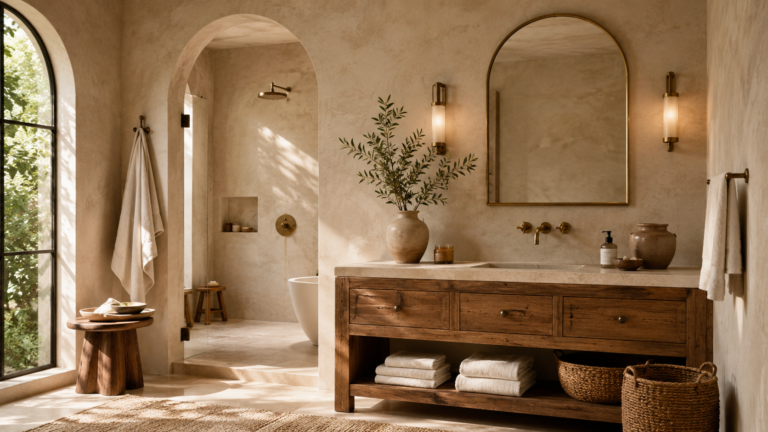
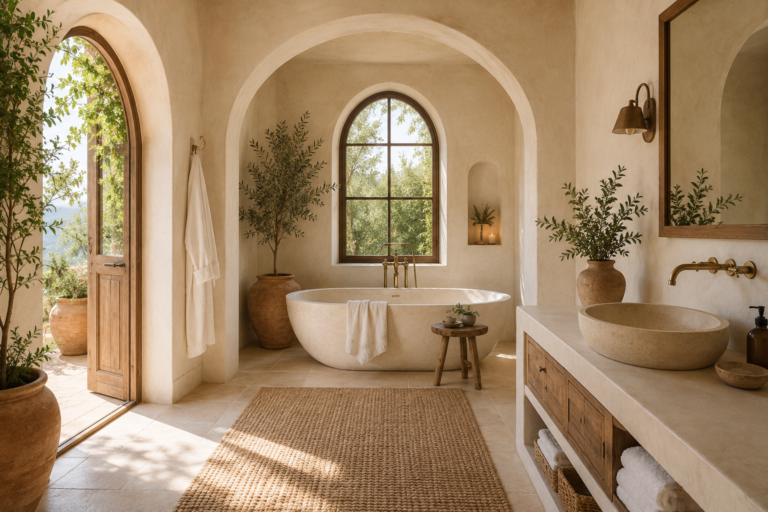
The goal is not to pretend the tub is a carved stone bath in an old Provençal mas. It is to give a standard bathroom the quiet warmth of the South of France: natural linen, aged metal, ceramic, woven storage, soft plaster colors, and lighting that feels gentle at night. The changes are modest, but the order matters. Begin with the surfaces that dominate the eye, then move to the smaller details that make the room feel lived in.
Begin With the Curtain, Because It Changes the Architecture
In a tub-shower bathroom, the curtain reads almost like a wall. A shiny synthetic curtain in a strong color can make the room feel busy even when everything else is simple. A softer fabric effect, especially in ivory, oatmeal, flax, or warm greige, gives the tub area the visual weight of a textile panel rather than a utility screen.
For a Mediterranean or Provençal feeling, avoid anything too crisp and hotel-like. The best direction is relaxed but not shabby: a curtain with the look of natural linen, a matte finish, and enough weight to hang in vertical folds. Those folds are important. They echo the way linen curtains hang in old village houses, where the beauty comes from shadow and texture rather than pattern.
If privacy is not an issue and the bathroom is small, keep the color very close to the wall tone. A pale curtain against pale plaster-colored walls will visually widen the room. If the tile is very plain white, choose a warmer curtain rather than a pure white one; even a slight flax undertone can reduce the clinical feeling.
Use a separate waterproof liner inside if needed, but let the outer curtain carry the style. The practical layer should disappear; the visible layer should feel like part of the room.
Let the Existing Tile Decide the Warmth Level
Most tub-shower combos already have tile, and replacing it is rarely the first or most sensible step. Instead, treat the tile as the fixed condition and adjust the surrounding palette around it. Mediterranean bathrooms work best when the materials feel sun-washed rather than high contrast, so the right warm neutral can soften even ordinary tile.
If the tile is cool white
Cool white tile can look sharp beside beige paint, so choose warmth carefully. Bring in linen, pale stone, light oak, straw, and aged brass rather than deep terracotta or heavy brown. The aim is to take the chill off without making the white tile look even colder by comparison.
A good wall color direction would be chalk, limestone, warm ivory, or very pale sand. If painting is not possible, repeat those tones in towels, baskets, and the curtain. Keep black accents minimal and slender, perhaps only in a mirror frame or small lantern-style detail.
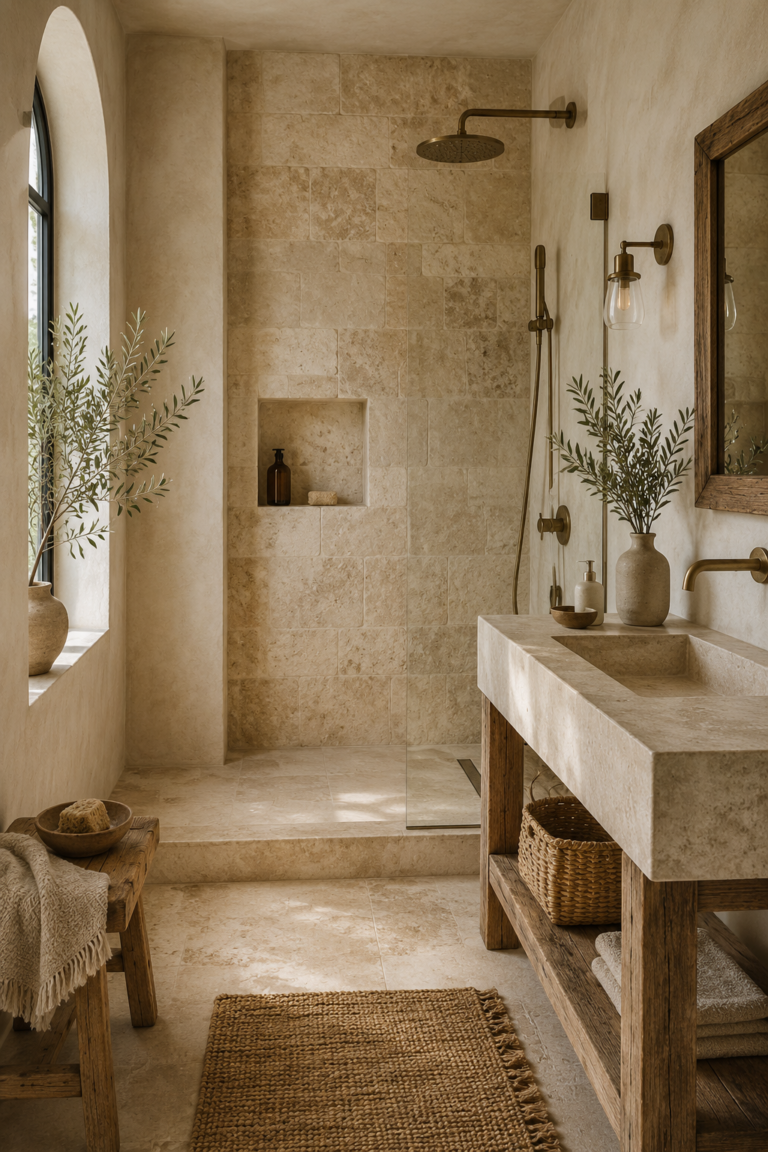
If the tile is beige, cream, or travertine-look
This is the easiest base for a Mediterranean bathroom. Lean into tonal layering: linen towels in natural flax, a ceramic soap dish, a pale wood stool if there is space, and a wall light with a warm shade. Avoid adding too many competing beige tones with yellow undertones. A mix of chalk, sand, stone, and one earthen accent will look more refined.
If the tile is gray
Gray tile needs warmth, but not clutter. Choose olive wood tones, handmade ceramic, warm metal, and linen. Terracotta can help, but use it sparingly: one small vase, a plant pot, or a soap dish nearby, not a full set of matching accessories. Too much terracotta against gray can feel forced rather than natural.
Add Warmth Where Water Will Not Ruin It
The Mediterranean look depends on honest materials, but bathrooms add moisture, splashes, and cleaning products to the equation. The trick is to place texture where it can survive. Inside the wet zone, keep things simple: the curtain, liner, bath mat, and perhaps a discreet bottle or two. Just outside the wet zone, you can safely add the more tactile pieces.
Woven baskets are useful under a vanity, on an open shelf, or beside the tub if they are not constantly splashed. Choose them for rolled hand towels, extra toilet paper, or grooming tools you do not want on the counter. In a small bathroom, one generous basket usually looks calmer than three little ones.
Brass or warm metal hooks are another high-impact detail. They work especially well beside a tub-shower because towels need breathing room. A towel bar can look clean, but hooks often suit an older Mediterranean mood: practical, casual, and slightly collected. If you use hooks, leave enough wall space between them so towels do not form one damp mass.
Ceramic is the easiest material to bring close to water. A handmade-style soap dish, a small cup, or a shallow tray can make the sink area feel intentional without adding visual noise. Avoid full matching bathroom sets; they tend to look more catalog than courtyard house. One or two ceramic pieces are enough.
The Measurement Rule That Makes the Tub Area Look Intentional
Small bathrooms often feel awkward because the curtain, rod, hooks, and towels are installed wherever they happened to fit. A few inches can change the way the whole tub wall reads. Use this simple measurement rule before you replace accessories or drill new holes.
- Hang the curtain as high as the proportions allow. If there is wall space above the shower surround, place the rod closer to the ceiling than to the top of the tile. A higher curtain makes the tub area feel more architectural.
- Let the curtain nearly meet the floor or tub edge cleanly. Avoid a curtain that floats too high above the tub apron. The fabric should look deliberate, not undersized.
- Place towel hooks at comfortable shoulder height, with breathing room. If hooks sit too low, towels crowd the tub. If they are too close together, they never dry gracefully. Space matters as much as the hook style.
This rule is especially useful in rentals, where you may not be able to change tile or plumbing. Even with the same tub, a higher curtain, calmer fabric, and better towel placement can make the room feel more finished.
Choose Lighting That Softens Tile After Dark
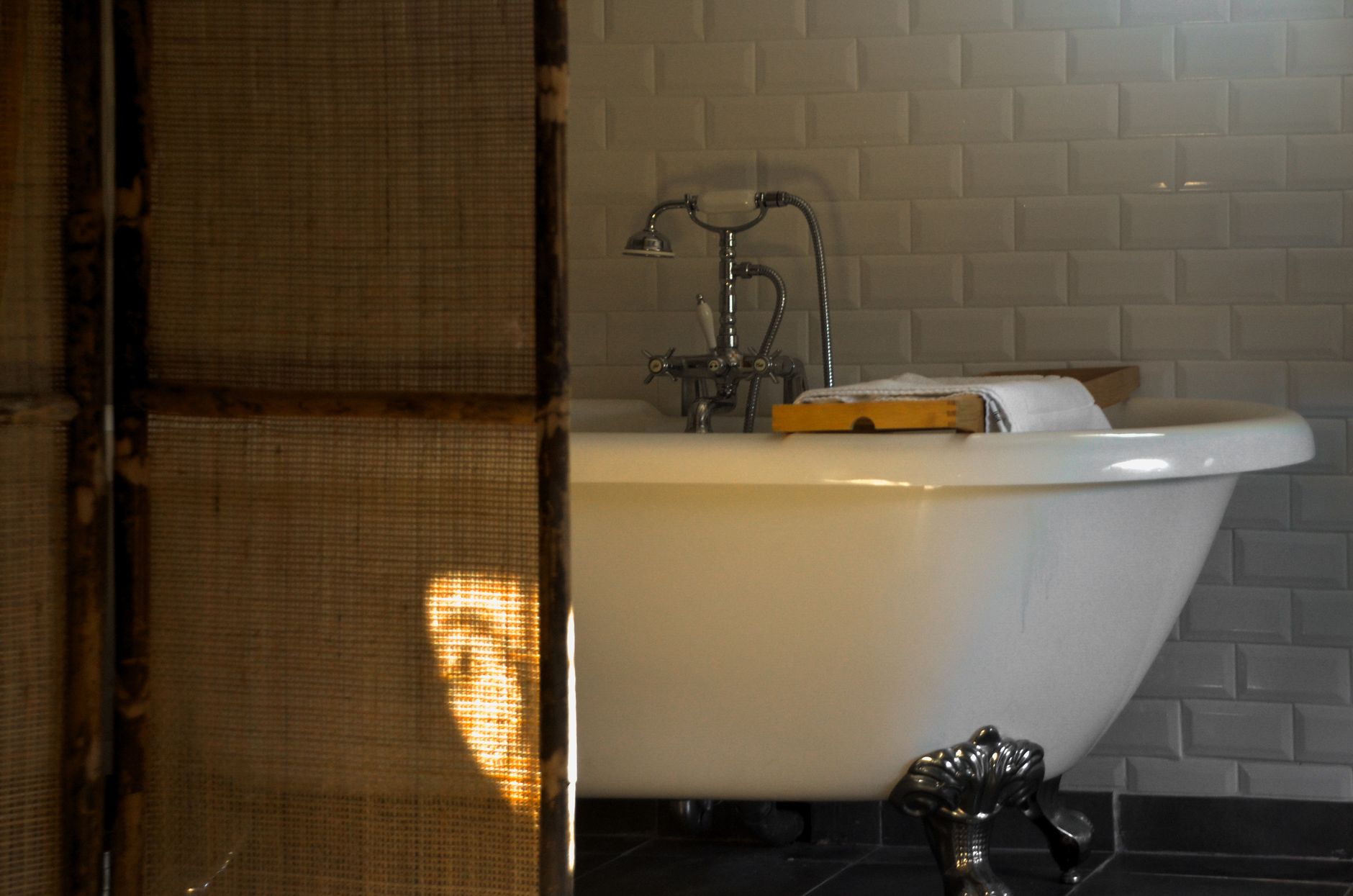
Bathrooms often rely on one overhead fixture, which is rarely flattering to plaster tones, tile, or skin. Mediterranean interiors feel warm because light is layered: daylight through shutters, a shaded lamp in a corner, sconces on textured walls, candlelight at dinner. In a bathroom, you can borrow that idea in a practical way.
If there is a vanity light, choose a warm, diffused effect rather than a glaring exposed bulb look. A wall light with a softened shade or warm metal finish will flatter natural materials more than a chrome fixture with icy light. The goal is not dimness; it is gentleness.
Near a tub-shower, keep electrical choices appropriate for bathroom conditions and installation requirements. Hardwired fixtures should be installed according to local code, especially near water. If you are renting or not ready to change electrical work, focus on bulbs where allowed, a warmer wall color, reflective ceramic, and a curtain that diffuses the room rather than bouncing harsh light back into it.
At night, the most beautiful Mediterranean bathroom is not overly bright. It has enough light for grooming, but the background remains soft: linen folds, muted tile, a ceramic dish, a towel in a natural shade. That restraint is what keeps the room from looking themed.
Make Storage Look Collected, Not Crowded
A tub-shower bathroom often becomes crowded because every product has nowhere else to go. Shampoo bottles collect on the tub ledge, towels hang from the curtain rod, and the sink counter becomes the only available shelf. Before adding decorative objects, remove visual clutter from the wet area.
Keep daily shower products together in one practical caddy or niche if you have one. Decanting everything is not necessary, and in real homes it can become more work than it is worth. Instead, reduce the number of visible bottles and choose the calmest placement. The tub ledge should not become the main display surface.
For open storage, woven baskets are more forgiving than clear bins. They hide irregular shapes and bring in the dry, rustic texture associated with Mediterranean homes. Use baskets where air can circulate, not in a sealed damp corner. If the bathroom has a shelf above the toilet, keep the arrangement low and horizontal: a basket, folded towels, and perhaps one ceramic piece. Avoid stacking accessories upward, which can make a small bathroom feel cramped.
Linen towels help storage look better even when they are visible. Compared with thick, bright towels, linen or linen-look towels tend to sit flatter and feel more relaxed. Choose two related tones rather than a full rainbow: flax and ivory, stone and chalk, or sand and muted olive. The palette should look as if it belongs to the tile and wall color, not like a seasonal accent.
Use Provençal Details With a Light Hand
The difference between a believable South of France bathroom and a themed Mediterranean bathroom is restraint. You do not need painted tiles, wrought iron everywhere, blue bottles, and bunches of lavender on every surface. A lived-in Provençal room is usually quieter: old stone, limewash, simple linens, a chipped ceramic bowl, and something practical hanging on a hook.
If you want pattern, bring it in through one small element such as a hand towel, a vintage-style tray, or a modest textile. Avoid making the shower curtain the patterned centerpiece unless the rest of the bathroom is extremely plain. In most tub-shower bathrooms, texture is more elegant than print.
Plants can work, but only if the bathroom has enough natural light. A single trailing plant or a small pot near the window can soften tile. In a windowless room, skip the struggling plant and use ceramic, linen, and warm light instead. Artificial greenery often undermines the natural character you are trying to build.
Metal finishes should feel gently aged rather than shiny and new. Brass hooks, blackened iron accents, or an antique bronze mirror can all work, but choose one main direction. Mixing too many metals in a small bathroom makes the room feel accidental. If your plumbing is chrome and cannot be changed, let the smaller accessories be warm and matte; the chrome will recede when it is not repeated everywhere.
Shop the Look
These pieces support the practical changes above: softer fabric at the tub, warmer towel storage, natural texture, and small ceramic details that suit a Mediterranean bathroom without overwhelming it.
- linen shower curtain
- brass towel hooks
- handmade ceramic soap dish
- linen towels
- woven storage baskets
- warm wall light
Pulling the Room Together Without a Remodel
A Mediterranean tub-shower bathroom does not need to be dramatic. In fact, it is better when it feels gradual and lived in. Start with the curtain because it changes the largest visual plane. Then warm the towel area with hooks, soften storage with baskets, and replace small shiny accessories with ceramic or linen. If the lighting is harsh, address it before adding more decor; good light makes simple materials look intentional.
The most successful version will still look like a real bathroom. The tub remains practical, the tile remains easy to clean, and the storage still works for daily routines. What changes is the atmosphere: less plastic, less glare, fewer scattered products, and more of the quiet texture found in old Provençal houses near stone, plaster, and sun-faded linen. That is usually enough to make a standard tub-shower feel calm rather than compromised.
Affiliate disclosure: La Maison du Sud may earn a commission from qualifying purchases made through links in this article, at no extra cost to you.