Mediterranean Bathroom Shelf Ideas for Calm Linen Storage
The shelf above a bathroom sink often becomes the least peaceful part of the room. A spare towel is folded beside a half-used bottle, a candle sits too close to the mirror, cotton rounds live in a plastic tub, and suddenly the bathroom feels busy even if the walls are pale and the tile is beautiful.
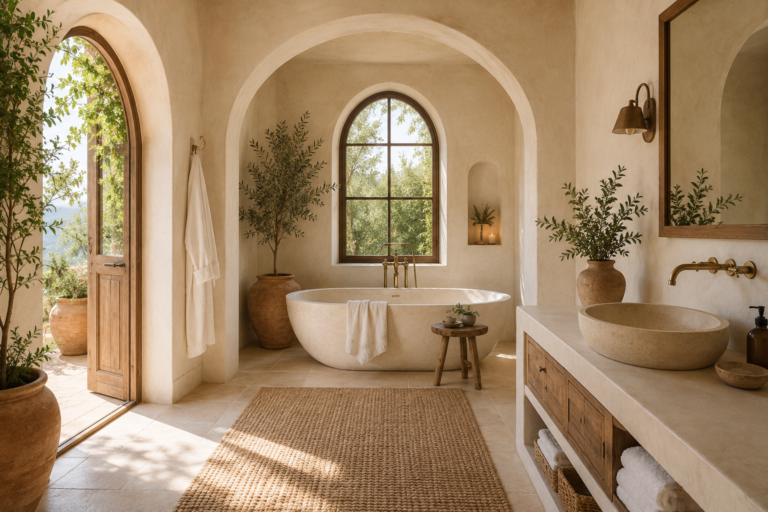
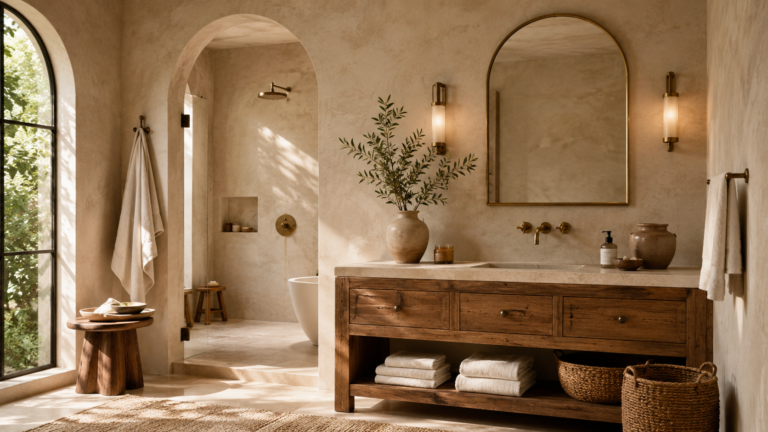
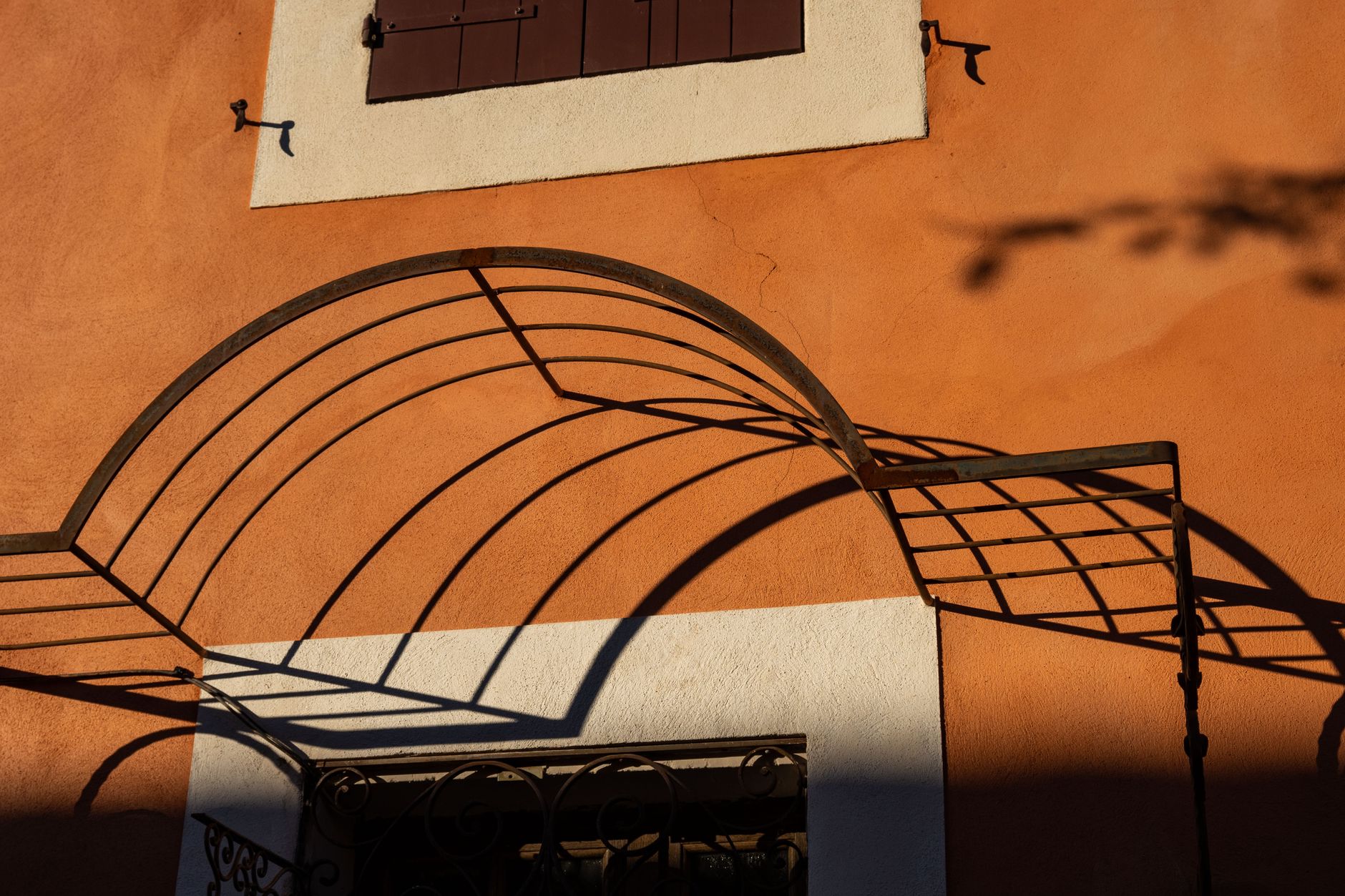
In a Mediterranean bathroom, especially one inspired by modest homes in Provence, shelves should not look like display units. They should feel like part of the daily rhythm: linen drying softly on a hook, a ceramic dish holding soap, a woven basket gathering what the eye does not need to see. The goal is not to make storage disappear. It is to give useful things better materials, better spacing, and a quieter palette.
Start With What the Shelves Are Doing Wrong
Before buying baskets or folding towels again, look at the shelf as a small architectural element. Is it too deep for the room? Too high to reach comfortably? Too crowded with objects of the same size? Many bathrooms feel cluttered not because they contain too much, but because everything is treated equally. A toothbrush cup, perfume bottle, towel stack, jar, plant, and candle all fight for the same attention.
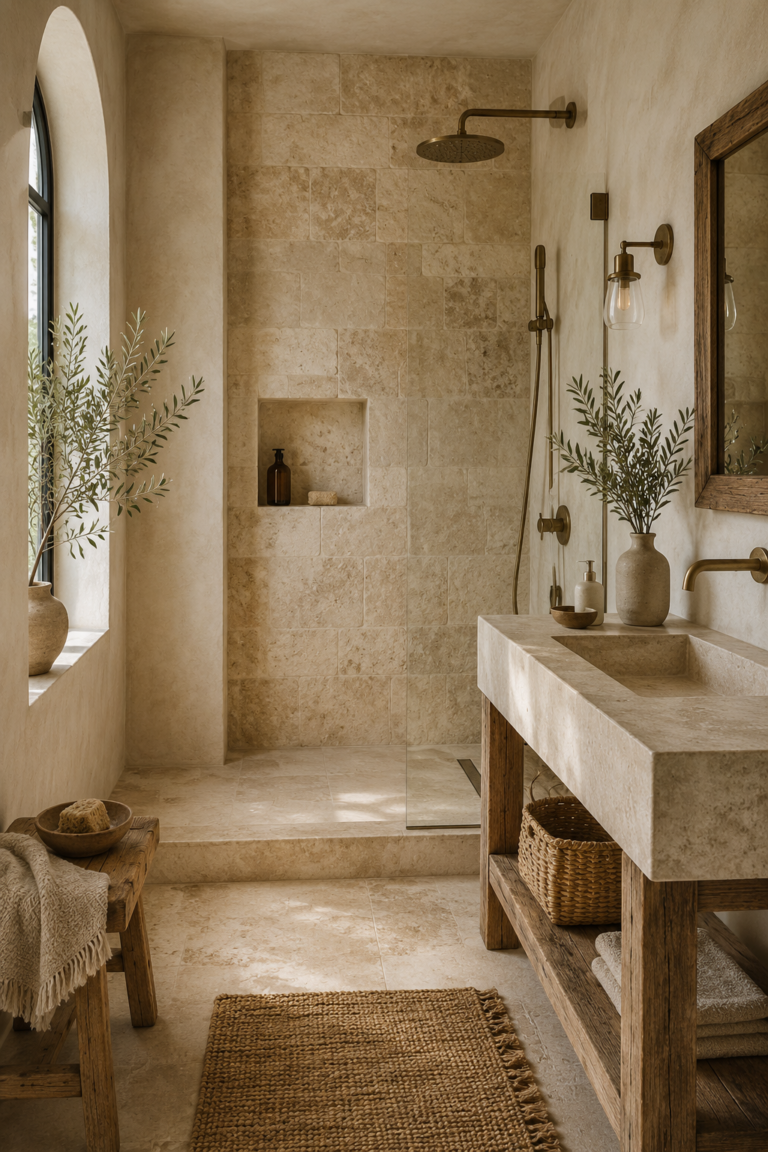
In a Provençal bathroom, the eye rests on texture first: limewashed plaster, matte stone, handmade tile, old timber, linen, ceramic, and blackened or aged metal. If the shelf is filled with glossy plastic, bright labels, chrome, and thin synthetic textiles, the room loses that calm even when the bones are good.
A useful first edit is to remove everything from the shelves and sort items into three groups: daily use, weekly use, and atmosphere. Daily-use pieces need to be reachable and rinseable. Weekly-use pieces can live in baskets, drawers, or closed containers. Atmosphere should be minimal: one small vase, one handmade dish, one folded guest towel, not a full still life.
Choose Storage Materials That Belong in a Provençal Bathroom
The strongest Mediterranean bathroom shelves are built around honest materials. This does not mean everything must be antique or expensive. It means finishes should look better with age rather than worse after a few months of humidity.
Natural linen is especially forgiving. It creases, softens, and never looks as stiff as bright white hotel cotton. For open shelves, linen towels in chalk, sand, flax, warm gray, or muted olive create a softer block of color than stark white stacks. If your bathroom is very small, keep the towel color close to the wall or tile so the shelves do not become visually heavy.
Woven baskets work best when they are used for categories, not as random catchalls. One basket can hold hair tools, another extra soap, another folded washcloths. In humid bathrooms, avoid overstuffing tightly woven baskets with damp textiles. Give towels room to breathe, and use baskets for dry storage whenever possible.
Ceramic and stone accessories make small products feel intentional. A handmade ceramic soap dish beside a basin has more weight and warmth than a plastic pump. A travertine tray can gather small bottles and keep them from spreading across a shelf or vanity. The important detail is restraint: one tray should solve a problem, not become a stage for clutter.
Brass or blackened metal can add definition, but use it sparingly. A few towel hooks are often more relaxed than a long shiny towel bar. Hooks also suit narrow bathrooms because they use vertical wall space and allow towels to hang with softer folds.
Give Towels and Daily Products Separate Roles
A common shelving problem is treating towels and toiletries as decoration at the same time. Towels can be beautiful on open shelves, but they should still function as towels. Products can remain visible, but only if they are few, well contained, and easy to clean around.
If you have two shelves, give each one a purpose. The upper shelf can hold extra folded towels and one closed basket. The lower shelf can hold daily essentials in a tray, a soap dish, and perhaps a small cup. This simple separation keeps the practical layer from invading the linen layer.
For folded towels, avoid high stacks that lean forward or create a hotel-spa effect. Two or three bath towels folded low and wide often look calmer than six stacked tightly. Washcloths can be rolled in a shallow basket, but bath towels usually look more refined folded with the spine facing outward. If your shelving is narrow, fold towels in thirds lengthwise, then in half or thirds again, so the visible edge looks clean without becoming bulky.
Daily products need air and access. Leave a little empty space around the soap dish, toothbrush cup, or tray so wiping the surface is not an ordeal. Mediterranean style is not compatible with dusty arrangements. The room should feel lived-in, but it must also be easy to rinse, dry, and reset.
Use Wall Space Without Making the Room Feel Busy
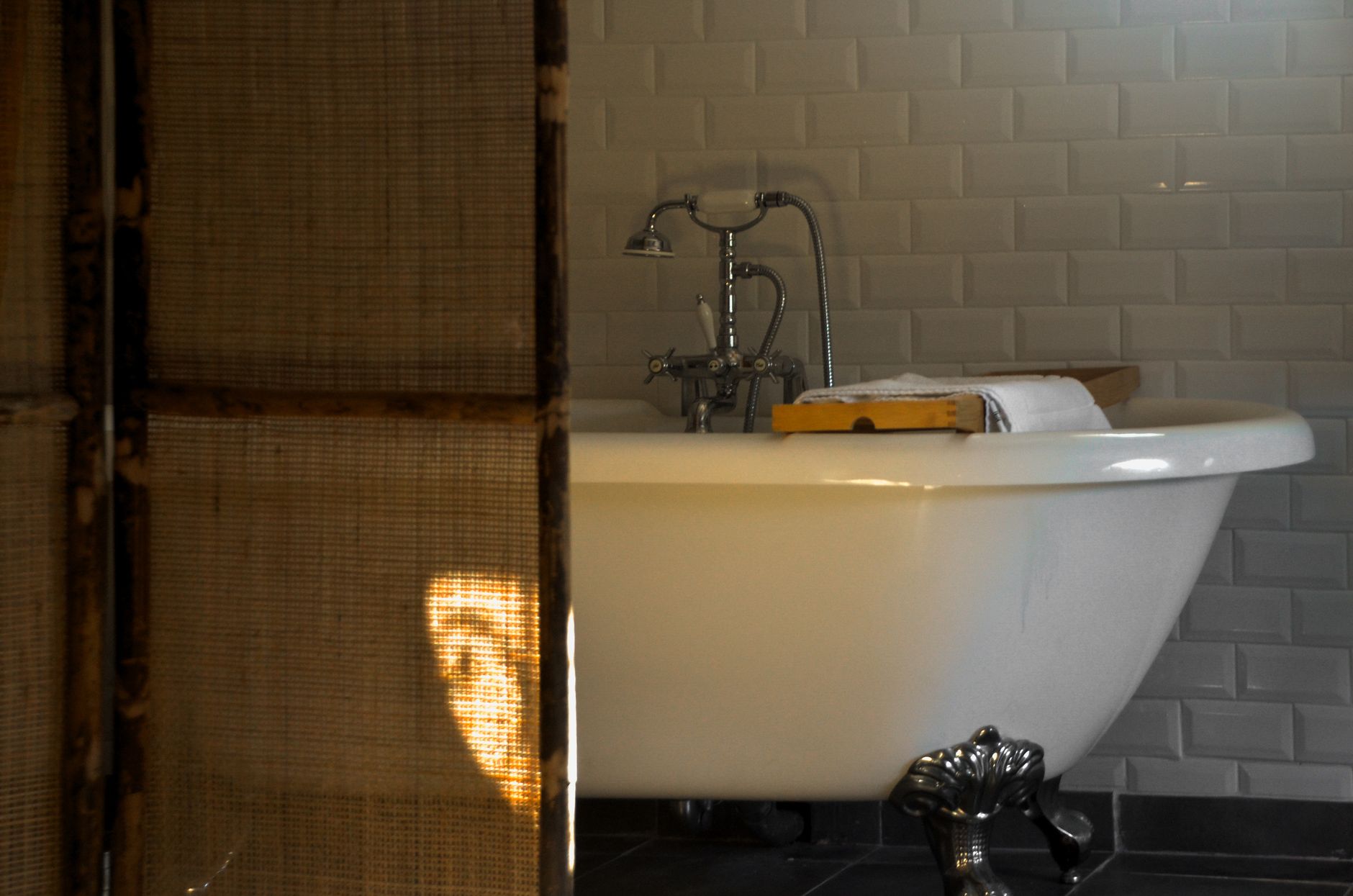
When a bathroom lacks cabinetry, walls have to work harder. The mistake is adding too many shelves, hooks, rails, and mirrors until every surface is occupied. In a small Mediterranean bathroom, negative space is part of the design. Limewashed plaster or pale painted walls need room to show their soft irregularity.
Think in vertical zones. The wettest zone near the sink or tub should stay simple and wipeable. The middle zone, roughly from waist to eye level, is for the things you reach for daily. The high zone is for extra towels, baskets, or one quiet decorative object. If every zone holds small items, the wall will look restless.
Hooks are often better than another shelf. A pair of brass hooks beside the basin can hold a hand towel and a small linen washcloth. In a shared bathroom, individual hooks make more sense than one crowded towel bar. Place hooks where towels can dry without brushing against toiletries, unsealed plaster, or timber shelving.
If you are adding shelves, consider depth carefully. In a tight bathroom, a shelf around 5 to 7 inches deep is often enough for folded hand towels, small baskets, and daily objects without projecting too far into the room. Deeper shelves can work above a toilet or along a blank wall, but near a sink they can feel bulky and collect too much.
Shape the Palette Around Stone, Linen, and Soft Shadow
The most convincing Mediterranean bathrooms are rarely built from a strict theme. They are built from a narrow family of natural tones. For open shelves, that palette matters because every visible item becomes part of the wall.
Begin with the fixed surfaces. If your tile is warm beige, cream, terracotta, or travertine, choose towels and baskets in related sun-faded shades. If your bathroom has cool gray tile, warm it carefully with flax linen, pale wood, aged brass, and off-white ceramics rather than strong orange terracotta. Too much terracotta against cool gray can look decorative instead of integrated.
White can work, but avoid a sharp blue-white if the room is meant to feel Provençal. Softer whites, chalk, ecru, oatmeal, and stone are easier to combine with aged materials. A single muted green element, such as a small olive-toned towel or a simple branch in a vase, can bring life without taking over the shelves.
Shadow is part of the palette too. Open shelving looks more atmospheric when there is gentle contrast: pale plaster, a slightly darker basket, a matte ceramic dish, a linen towel with relaxed folds. If everything is the same flat cream, the room can feel washed out. If everything is high contrast, it can feel busy. Aim for small shifts rather than dramatic color blocking.
The Calm Shelf Checklist
Use this checklist after you have placed the main storage pieces. It is a simple way to decide whether the shelves feel useful, quiet, and consistent with the rest of the bathroom.
- One purpose per shelf: towels, daily products, or hidden storage, rather than all three competing at once.
- One visible texture leads: linen, woven fiber, ceramic, or stone should dominate, with the others supporting it.
- Labels are reduced: bright packaging is decanted, stored in a basket, or kept off the most visible shelf.
- There is room to clean: daily items can be lifted away easily, and no tray or basket is packed edge to edge.
- The wall still breathes: empty plaster or tile remains visible around the shelves, hooks, and mirror.
Make Room for Imperfection Without Letting It Become Mess
A Mediterranean bathroom should not feel sealed, glossy, and untouchable. Linen can be slightly rumpled. A ceramic dish may have an uneven glaze. A basket may not sit perfectly square. These imperfections are what keep the room from feeling like a showroom.
But imperfection needs boundaries. If every towel is unfolded, every bottle is visible, and every basket is overflowing, the charm disappears. The difference is intention. A single towel hanging loosely from a brass hook feels relaxed. Four damp towels layered over each other feel neglected. A handmade soap dish with one bar of soap feels simple. A tray full of unrelated samples and tubes feels unfinished.
Maintenance is part of the design. In a bathroom with open storage, plan a weekly reset: refold towels, empty the basket that collects extras, wipe the tray, rinse the soap dish, and remove anything that migrated in from another room. This takes less time when the shelves have fewer categories and each item has a clear place.
Humidity should also guide your choices. Keep spare towels away from direct splash zones. If ventilation is limited, store only a few textiles in the bathroom and keep the rest in a linen closet or bedroom cupboard. Woven baskets should be lifted occasionally so the shelf underneath can dry fully. Natural materials are beautiful, but they still need air.
Shop the Look
These pieces support the quiet storage approach: tactile, useful, and easy to layer with plaster, stone, linen, and aged metal finishes.
- soft linen towels
- woven bathroom storage baskets
- brass towel hooks
- handmade ceramic soap dish
- travertine tray for small essentials
- simple linen shower curtain
The Last Edit Before the Room Feels Finished
When the shelves are styled, step back and look at the bathroom from the doorway. This is how the room is usually experienced: quickly, in passing, often in morning or evening light. The shelves should read as calm shapes first and useful details second.
If a basket is the first thing you notice, it may be too large or too dark. If the towels dominate, reduce the stack or soften the color. If the room feels too plain, add one tactile object rather than several decorative ones: a ceramic dish, a small vase, or a stone tray. If the shelves still feel cluttered, remove one category completely and give it a closed home elsewhere.
The best Mediterranean bathroom storage does not announce itself. It supports the room quietly, with materials that feel at ease beside plaster, tile, water, and light. A few well-chosen baskets, linen towels, ceramic pieces, and hooks can make open shelves feel less like a compromise and more like part of the architecture of daily life.
Affiliate disclosure: La Maison du Sud may earn a commission from qualifying purchases made through links in this article, at no extra cost to you.