Mediterranean Pendant Lighting Ideas With Woven Rattan Shades for Low-Ceiling Dining Rooms
Mediterranean pendant lighting can completely change the mood of a dining room, but low ceilings require a more thoughtful approach. A dramatic oversized lantern may look beautiful in a vaulted villa, yet feel heavy and awkward in a compact dining nook. The good news is that the Mediterranean look is not only about grandeur. It is also about texture, warmth, handmade details, and light that feels gentle rather than harsh.
For a low-ceiling dining room, woven rattan shades are one of the most useful choices. They bring natural texture without visual heaviness, filter the light softly, and pair beautifully with plaster walls, terracotta floors, linen curtains, aged wood, and ceramics. The goal is not to force a tall chandelier into a short room. Instead, the best approach is to choose pendants that sit closer to the ceiling, spread light warmly, and make the table feel inviting.
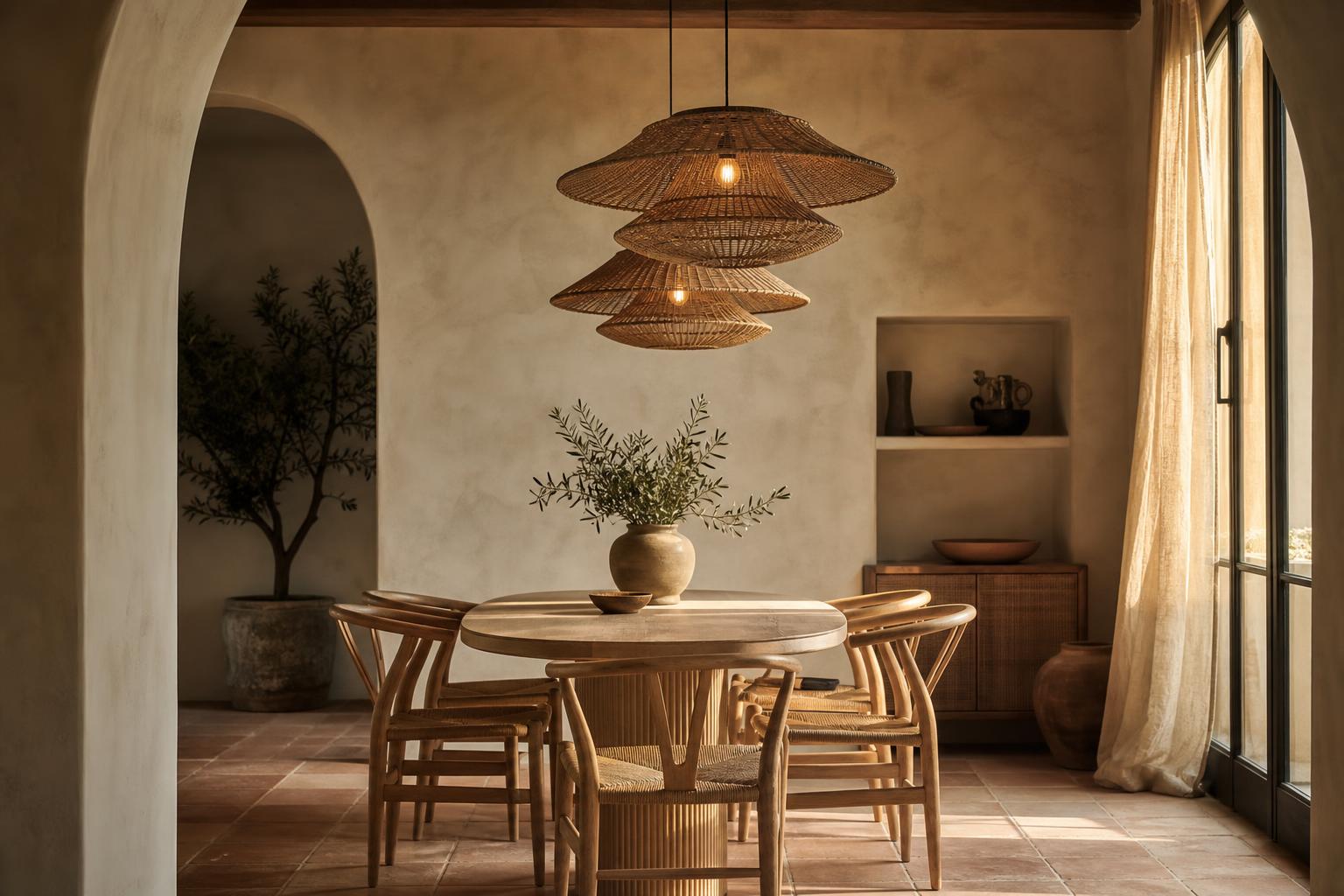
Why Woven Rattan Works So Well in Mediterranean Dining Rooms
Rattan and woven reed lighting have a natural connection to Mediterranean interiors. They echo baskets, cane chairs, market totes, woven shutters, and relaxed seaside textures. Unlike glossy metal or heavy crystal, rattan has an organic softness that makes a dining room feel welcoming, imperfect, and lived in.
In a low-ceiling dining room, this matters because every object overhead carries more visual weight. A dense pendant can make the ceiling feel lower, while a woven shade allows glimpses of air and shadow. The texture creates interest, but the open weave keeps the pendant from feeling like a solid block above the table.
Woven rattan is also highly adaptable. It can lean rustic with reclaimed wood and terracotta, coastal with white walls and blue ceramics, or refined with travertine, linen upholstery, and black iron details. For Mediterranean style, the most timeless versions are usually simple shapes in natural honey, sand, wheat, or soft tobacco tones.
The Best Pendant Shapes for Low Ceilings
The shape of the pendant is more important than many people realize. In a room with limited ceiling height, a light fixture should feel horizontal, airy, and proportionate. Tall lanterns and elongated basket pendants often need too much vertical space. A shallow dome, flat drum, or wide saucer shape usually works better.
Shallow dome pendants
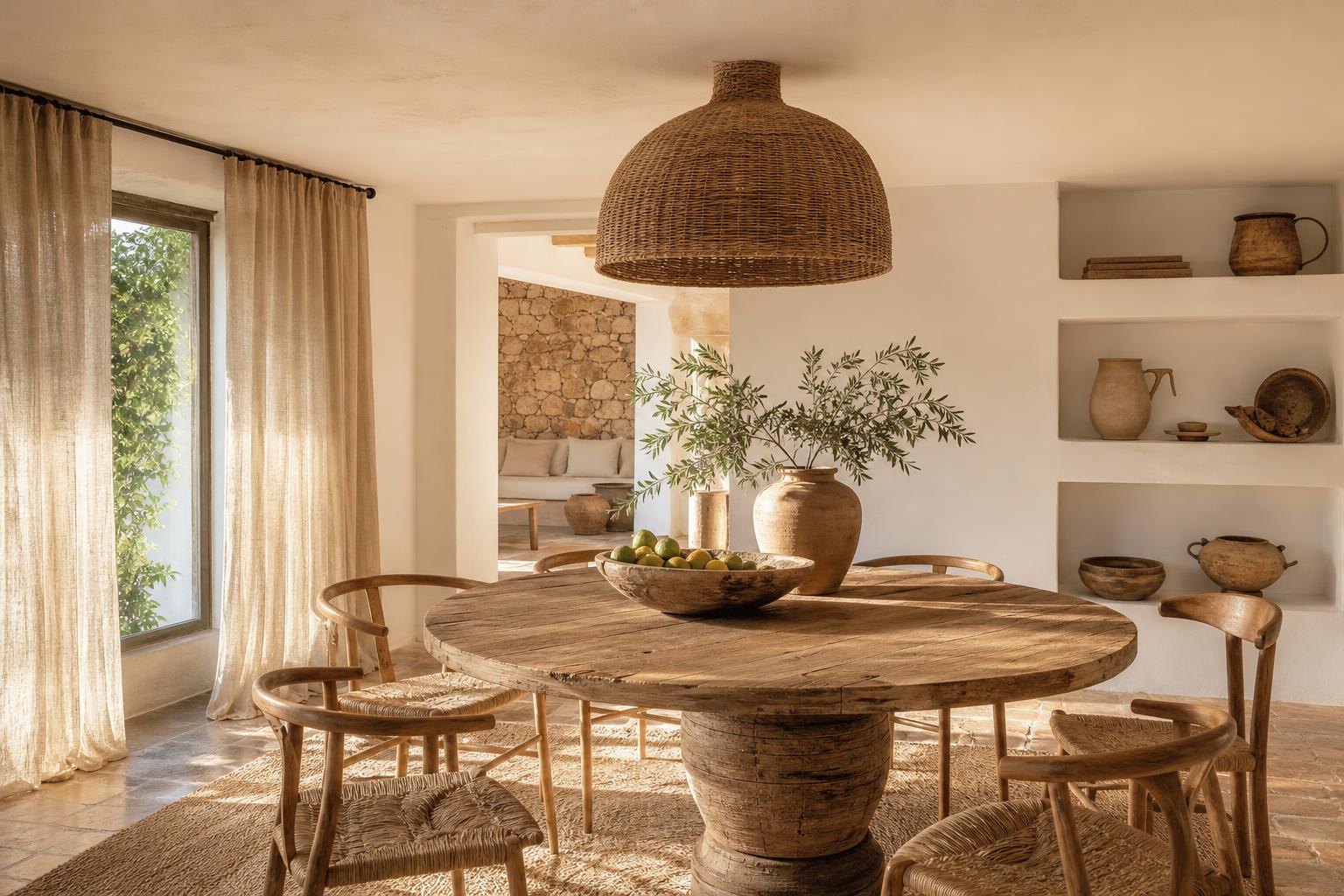
A shallow rattan dome is one of the safest and most beautiful choices for low-ceiling dining rooms. It gives the table a clear focal point without dropping too far into the room. The curved silhouette feels relaxed and Mediterranean, especially when paired with a round or oval dining table.
Wide drum pendants
A woven drum shade offers clean lines and even light distribution. This shape is especially useful if your dining room has more modern architecture or if you want Mediterranean style without making the room feel overly rustic. Choose a drum that is not too deep, and keep the weave open enough for a soft glow.
Flush or semi-flush woven fixtures
If the ceiling is particularly low, consider a semi-flush rattan fixture rather than a traditional hanging pendant. It can still deliver the woven Mediterranean look while staying close to the ceiling plane. This is also a smart option for apartments, breakfast corners, or dining areas that connect to walkways.
Small paired pendants
For a narrow rectangular table, two small woven pendants can work better than one large central fixture. The trick is to keep them compact and hung at the same height. This creates rhythm without crowding the room, and it helps distribute light evenly along the table.
How Low Should a Pendant Hang Over a Dining Table
Standard dining room advice often suggests hanging a pendant about 30 to 36 inches above the tabletop. In a low-ceiling room, that range may still work, but the fixture design becomes critical. A deep shade hanging at 32 inches can feel intrusive, while a shallow rattan dome at the same height may feel comfortable.
Start by measuring from the tabletop to the ceiling. Then consider the height of the fixture itself. The bottom of the pendant should not block eye contact across the table, and it should not feel like something guests have to avoid when sitting down or standing up. If you have a ceiling under eight feet, look for a fixture with minimal drop or an adjustable cord that can be shortened cleanly.
For everyday dining, comfort matters more than dramatic styling. A pendant should define the table, not dominate the room. If everyone can sit, talk, serve food, and move around easily, the height is probably right.
Choosing the Right Scale for the Table
A Mediterranean dining room often uses generous natural materials, but low ceilings call for restraint. The pendant should relate to the table size without visually pressing down on it.
For a small round table, a rattan pendant around 18 to 24 inches wide can be enough. For a larger round or oval table, you might choose a shade between 24 and 32 inches, as long as it is shallow and airy. For a long rectangular table, either one elongated woven shade or two smaller pendants can create balance.
A helpful rule is to leave plenty of breathing room between the pendant edge and the table edge. If the pendant is nearly as wide as the table, it may feel top-heavy in a low room. Mediterranean interiors benefit from ease, so choose a fixture that feels relaxed rather than perfectly filling every inch.
Warm Bulbs Are Essential
The most beautiful rattan shade can lose its charm if the bulb is too cool or too bright. Mediterranean dining rooms need warmth. Look for bulbs around 2200K to 2700K. This range creates a golden glow that flatters plaster walls, wood, ceramics, linen, and food on the table.
Dimmable bulbs are especially valuable. Bright light is useful when cleaning or setting the table, but dinner feels better with a softer glow. If possible, install a dimmer switch so the room can shift from practical to intimate.
Also pay attention to bulb visibility. Some woven pendants expose the bulb through the weave or from below. In that case, choose a warm frosted bulb instead of a clear bulb that can create glare. A diffuser can also help if the pendant hangs low over the table.
Pairing Rattan Pendants With Mediterranean Materials
Rattan lighting works best when it feels connected to the rest of the room. The pendant should not be the only natural texture. Repeat similar warmth through furniture, accessories, or architectural finishes.
- Plaster or limewash walls: Soft matte walls make woven lighting feel even warmer. The shadows from rattan look beautiful against lightly textured surfaces.
- Terracotta or limestone floors: Earthy flooring grounds the dining room and gives the pendant a natural context.
- Wood dining tables: A rustic oak, walnut, pine, or reclaimed wood table pairs naturally with woven shades.
- Linen textiles: Linen curtains, napkins, or seat cushions soften the room and support the relaxed Mediterranean mood.
- Handmade ceramics: Bowls, pitchers, and plates bring the artisanal detail that makes the lighting feel intentional.
- Black iron accents: A subtle touch of wrought iron in curtain rods, cabinet pulls, or chair frames can balance the softness of rattan.
The key is not matching everything perfectly. Mediterranean rooms often feel collected over time. Let the pendant speak to the room through tone and texture rather than identical finishes.
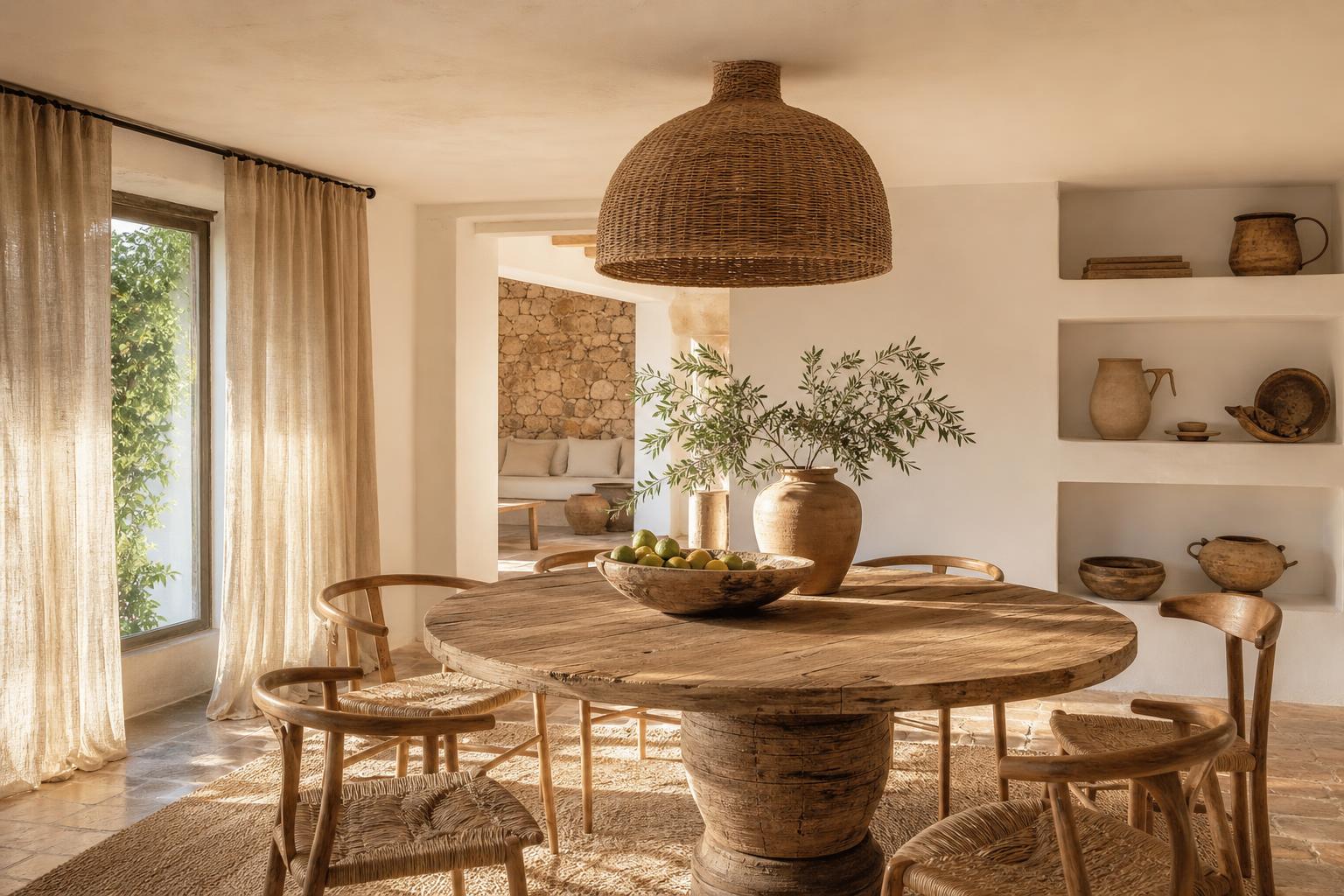
Color Palettes That Complement Woven Pendant Lighting
Natural rattan works with several Mediterranean color schemes, but low-ceiling dining rooms usually benefit from lighter walls and grounded accents. A pale envelope helps the ceiling feel higher, while warm natural materials keep the room from looking plain.
White plaster, honey rattan, and olive wood
This palette feels classic, calm, and sun-washed. Use creamy white walls, a natural rattan pendant, an olive wood or medium oak table, and simple ceramics. Add muted green through branches, artwork, or linen napkins.
Sand, terracotta, and warm walnut
For a richer look, combine sandy beige walls with terracotta tile or rust-colored textiles. A slightly darker rattan shade can hold its own against walnut furniture. This palette feels earthy and intimate, especially in evening light.
Ivory, sea blue, and pale cane
If you prefer a coastal Mediterranean feeling, choose ivory walls, pale rattan, and blue accents in ceramics or artwork. Keep the blue muted rather than overly nautical. A soft indigo, faded denim, or Aegean blue is more timeless than bright turquoise.
Greige, black iron, and natural fiber
For a refined Mediterranean dining room, try greige walls, black iron details, woven rattan lighting, and stone accessories. This palette works especially well in apartments or homes with modern architectural lines.
How to Avoid a Ceiling That Feels Too Low
Lighting is only one part of the visual equation. A low-ceiling dining room can feel more open when the whole design supports vertical lift and softness.
- Keep wall colors light: Cream, chalk, warm white, and pale sand help bounce light around the room.
- Avoid heavy overhead contrast: A black or very dark pendant may visually lower the ceiling unless the shade is extremely open.
- Use vertical accents: Tall curtains, slim wall art, and vertical shelving can draw the eye upward.
- Choose open-back chairs: Woven, cane, or spindle chairs reduce visual bulk around the table.
- Limit clutter above eye level: Too many high shelves or busy wall displays can make the ceiling feel compressed.
- Add wall lighting if needed: Soft sconces or picture lights reduce the pressure on the pendant to illuminate the entire room.
A low ceiling does not have to be a design flaw. With the right pendant and supporting details, it can make the dining room feel intimate, sheltered, and cozy.
Single Pendant or Multiple Pendants
One large pendant creates a clear focal point, which is ideal for round or square dining tables. In Mediterranean design, a central woven pendant can feel like a relaxed modern version of a traditional lantern. It anchors the table and makes the room easy to style.
Multiple pendants work better for long tables, built-in banquettes, or narrow dining spaces. Two small rattan pendants can create a casual taverna-inspired rhythm without needing a deep chandelier. Keep the spacing even and choose simple shades so the effect feels calm rather than busy.
If you choose multiple pendants in a low-ceiling room, avoid hanging them too low. Their repetition already adds emphasis, so they do not need dramatic drop lengths. Shorter cords will feel cleaner and more practical.
Renter-Friendly Pendant Lighting Ideas
If you rent, you may not be able to change hardwired lighting. You can still create a Mediterranean pendant look with smart alternatives. A plug-in woven pendant can be swagged over the dining table using ceiling hooks, provided it is installed safely and the cord is managed neatly. Choose a fabric-covered cord in cream, tan, or dark brown for a more finished appearance.
Another option is a lightweight rattan shade designed to fit over an existing ceiling fixture. This can soften a basic flush mount without major electrical work. Always check heat clearance and bulb compatibility, especially with natural fiber shades.
If changing the ceiling light is not possible at all, use a table lamp on a nearby console, battery wall sconces, or a floor lamp with a woven shade to echo the Mediterranean texture. The pendant may be ideal, but the atmosphere comes from layered warm light.
Styling the Table Beneath a Rattan Pendant
The area directly beneath the pendant should feel simple and intentional. Because woven lighting already adds texture, avoid overcrowding the table with too many decorative pieces. A low ceramic bowl, olive branches in a handmade vase, or a linen runner is often enough.
For everyday dining, keep the centerpiece low so it does not compete with the pendant. Natural materials are best: unglazed clay, weathered wood, travertine, linen, and glass. In a low-ceiling room, a tall floral arrangement can make the space feel tighter, while a low arrangement preserves openness.
Repeat the pendant texture subtly with woven placemats, cane chair seats, or a basket on a sideboard. Repetition makes the lighting feel integrated, but too much rattan can become theme-like. Balance it with smooth plaster, simple ceramics, and soft fabric.
Common Mistakes to Avoid
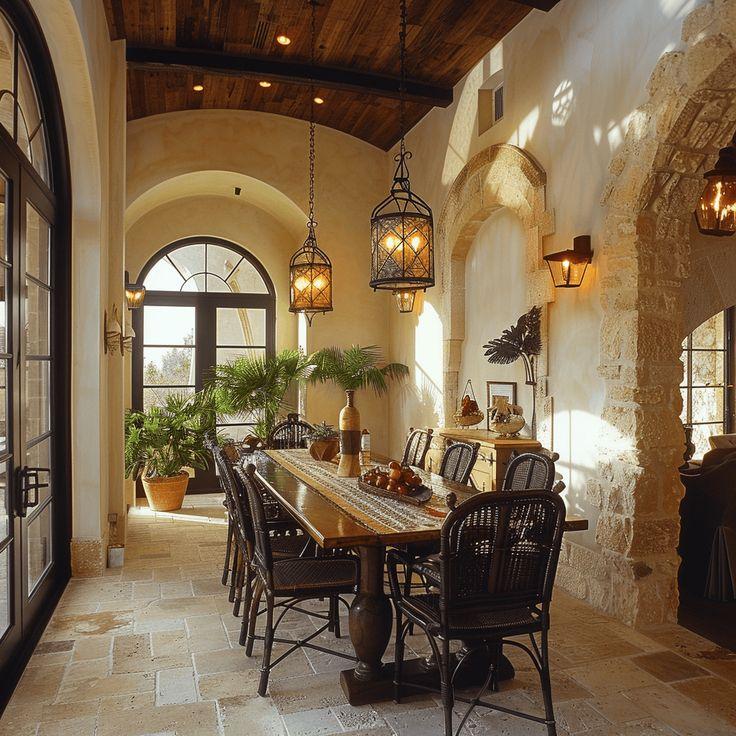
The first mistake is choosing a pendant that is too tall. Many beautiful Mediterranean lanterns are designed for stairwells, vaulted entries, or high ceilings. In a low dining room, they can feel cramped. Always check fixture height before falling in love with the style.
The second mistake is using bulbs that are too cool. Cool white light fights against the warmth of rattan and can make Mediterranean materials look flat. Warm bulbs are not optional; they are part of the design.
The third mistake is ignoring glare. A pendant that exposes a bare bulb can be uncomfortable during dinner. If the shade is open at the bottom, choose a frosted bulb, a lower lumen level, or a fixture with a diffuser.
The fourth mistake is making the pendant the only light source. Dining rooms feel better with layers. Even a small room can benefit from a wall sconce, buffet lamp, or subtle accent light. This creates depth and prevents the overhead fixture from feeling harsh.
Finishing Details for a Complete Mediterranean Dining Room
Once the pendant is chosen, the finishing details should support the same relaxed warmth. Use a simple linen tablecloth for special dinners, or leave a wood table bare for a more rustic look. Add handmade plates, small ceramic bowls, and glassware with slight imperfections.
On the walls, consider one large piece of art, a small collection of ceramic plates, or a shallow niche if your architecture allows it. Keep the palette restrained so the woven pendant remains a gentle focal point. For the floor, a flatwoven rug can add softness, but in a dining room it should be easy to clean and large enough for chairs to remain on the rug when pulled out.
If the room connects to a living area or kitchen, repeat one or two materials across the spaces. For example, use the same warm wood tone in the dining chairs and nearby shelves, or repeat black iron in both lighting and hardware. This creates continuity without making everything match.
Shop the Mediterranean Look
Bring warm texture and soft dining room light into your home with natural woven fixtures and simple Mediterranean accents.
- shallow rattan dome pendant light
- semi-flush woven ceiling light for low ceilings
- warm dimmable LED bulbs for dining rooms
- natural linen table runner
- handmade ceramic serving bowl
- woven placemats for a Mediterranean table
Conclusion: Let the Light Feel Warm, Low, and Effortless
Mediterranean pendant lighting for low-ceiling dining rooms is all about balance. The fixture should be beautiful but not bulky, warm but not glaring, textured but not overwhelming. Woven rattan shades are ideal because they bring the relaxed character of Mediterranean interiors while keeping the space visually light.
Choose a shallow shape, pay close attention to hanging height, use warm dimmable bulbs, and surround the pendant with natural materials. With the right proportions and a soft glow, even a compact dining room can feel like an intimate Mediterranean retreat made for long meals, easy conversation, and everyday beauty.