Mediterranean Entryway Ideas for a Narrow Hall That Actually Stays Tidy
A narrow entryway has a difficult job. It is expected to welcome, store, sort, hide, light, and still leave enough room for two people to pass without knocking into coats or shoes. In a Mediterranean home, especially one inspired by the quieter side of Provence, the answer is not to fill the hall with rustic objects. It is to make a few useful things feel as if they belong: a slim place to drop keys, a basket for sandals, a mirror that catches daylight, a lamp with a warm shade, and materials that look better with small marks rather than worse.
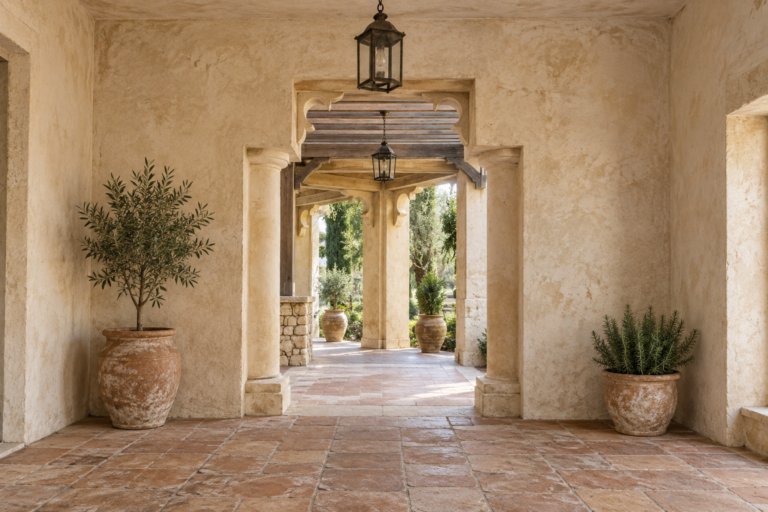
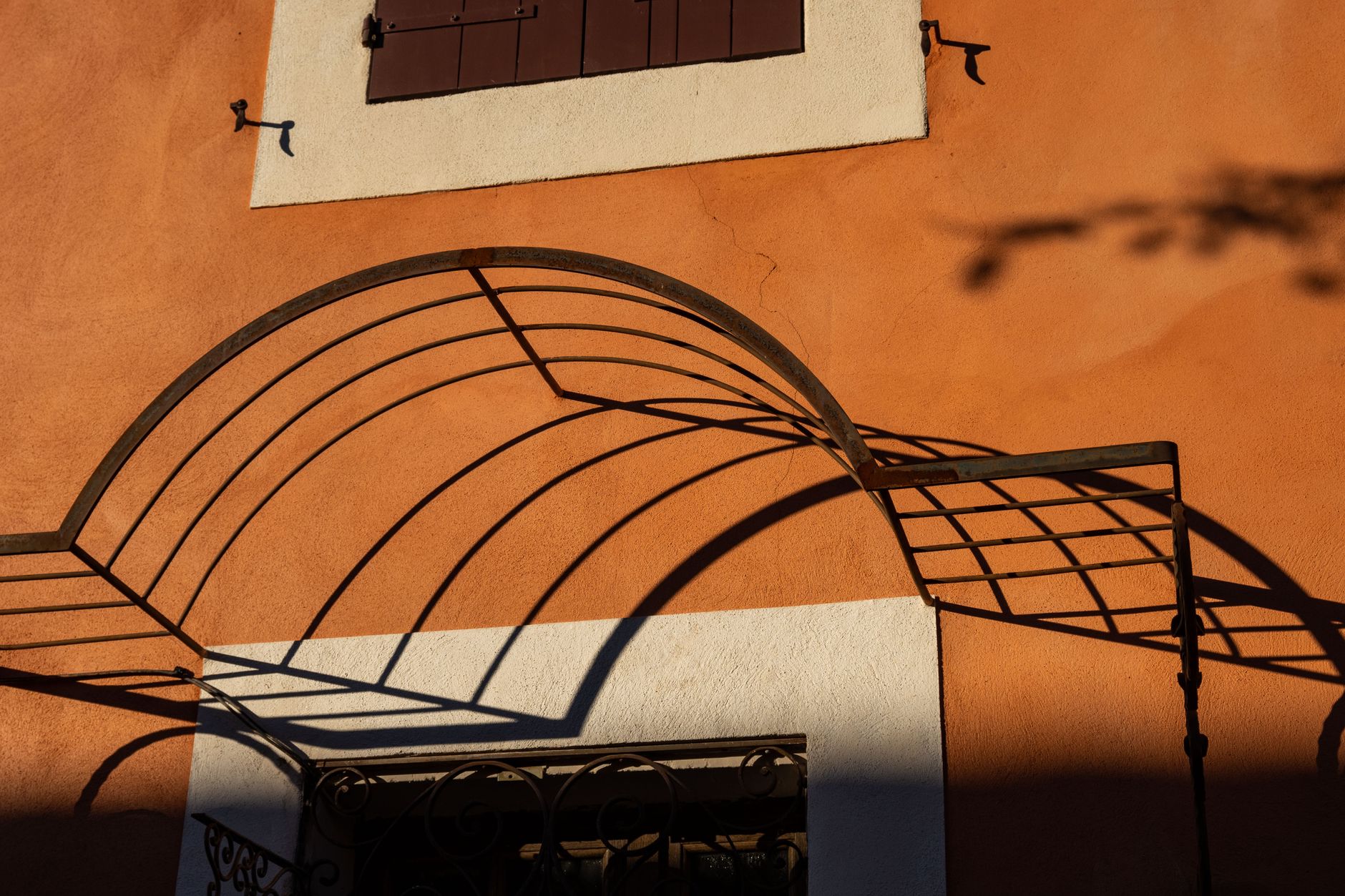
The most convincing Provençal entries are rarely grand. They are often modest thresholds in village houses, old apartments, or mas-style homes where stone, plaster, timber, and woven textures do the work. For a narrow hall, that restraint is helpful. You need texture, not clutter; warmth, not heaviness; storage, not a decorative obstacle course.
Begin With the Walking Line
Before choosing a bench or console, stand at the door and trace the path your body takes when you enter with a bag, shoes, mail, or a wet coat. In a narrow hallway, the first design decision is not style. It is circulation.
A Mediterranean entry should feel relaxed, but it cannot work if the furniture projects too far. A deep console may look beautiful in a photograph, yet become irritating when the door swings open or when someone tries to pass with groceries. Start by keeping one side of the entry visually and physically quieter. If storage must happen on both sides, make one side shallow: hooks, a mirror, a narrow shelf, or a row of pegs rather than a full piece of furniture.
The 36-inch passage rule
Use this simple measurement rule before buying anything for a tight entry:
- Aim for about 36 inches of clear walking space where the hall is used daily.
- Keep shallow furniture around 10 to 14 inches deep if the hallway is narrow.
- Leave the door swing completely free, including space for a mat that will not catch under the door.
- Place baskets below shelves, not in the walking path, so storage reads as intentional rather than temporary.
If your hall is tighter than that, treat the wall as the main storage surface and skip floor furniture altogether. A mirror, hooks, a small ledge, and one contained basket can still feel complete.
Choose One Anchor Piece, Not a Full Set
The quickest way to make a narrow entry feel cramped is to furnish it as if it were a room. Instead, choose one anchor piece that solves the most annoying daily problem.
If shoes collect by the door, use a low bench or a lidded basket. If mail and keys disappear, use a slim console, wall shelf, or small tray. If the hall feels dark and abrupt, make the anchor a mirror and lamp. If coats pile on chairs in another room, hooks matter more than a decorative table.
In Mediterranean interiors, mixed pieces often look more natural than matching sets. A pale plaster wall, an aged wood shelf, a blackened iron hook, and a woven basket can feel collected over time. The trick is keeping the silhouettes simple. Avoid heavy scrollwork, oversized carved furniture, or anything that turns the entry into a theatrical version of the Mediterranean. The South of France version is usually more practical: a worn threshold, limestone underfoot, linen at the door, and useful objects that have had years to settle in.
Storage That Looks Calm From the Front Door
An entryway can have plenty of storage and still look noisy if everything is exposed. The Mediterranean approach for a narrow hall is to combine visible texture with hidden mess.
Use baskets for items that naturally look casual: scarves, market totes, dog leads, or seasonal sandals. Choose a basket with enough structure to hold its shape, because collapsed baskets quickly make the hall feel untidy. If shoes are the issue, one larger basket may look calmer than several small bins, but it only works if your household will actually use it. For families, assigning one basket per person can be more practical, especially beneath a bench.
Hooks are useful, but they need editing. A row of pegs overloaded with coats will dominate the entry no matter how beautiful the hardware is. Keep everyday coats on the hooks and move extras to a closet when possible. If there is no closet, consider two levels: higher hooks for jackets and lower hooks for bags or children’s items. The lower row should not catch hips or bags as people pass.
For keys and small objects, use a tray rather than an open pile. Wood, stone, or ceramic works well because these materials have enough presence to make ordinary items look organized. A tray also creates a clear limit: when it fills, it is time to sort.
Warm Materials Without Making the Hall Feel Heavy
Mediterranean style is often associated with terracotta, stone, iron, and warm wood, but in a narrow entry these materials need balance. Too much dark wood can close the hall in. Too much terracotta can feel orange, especially under warm bulbs. Too much black metal can become visually sharp.
Think in layers of weight. The walls can be the lightest layer: chalky white, limewash, soft sand, pale stone, or a muted plaster tone. The floor can carry more depth if it is terracotta, stone, brick, or a natural-toned runner. Then choose one or two warm accents: aged wood, a clay vase, a woven basket, or a lamp with a linen shade.
If your entry floor is plain tile, vinyl, or rental flooring you cannot change, do not fight it with too many accessories. A narrow runner in jute, wool, or a softly faded pattern can help, but leave the edges clear so the hall still feels passable. In a very small entry, a simple mat in a natural fiber tone may be enough.
Limewashed or plaster-like wall finishes suit this look particularly well because they add movement without requiring many objects. If you cannot alter the walls, bring in the same effect through matte ceramics, unvarnished wood, linen, or a chalky paint color on a small shelf.
Lighting for a Threshold With Little or No Daylight
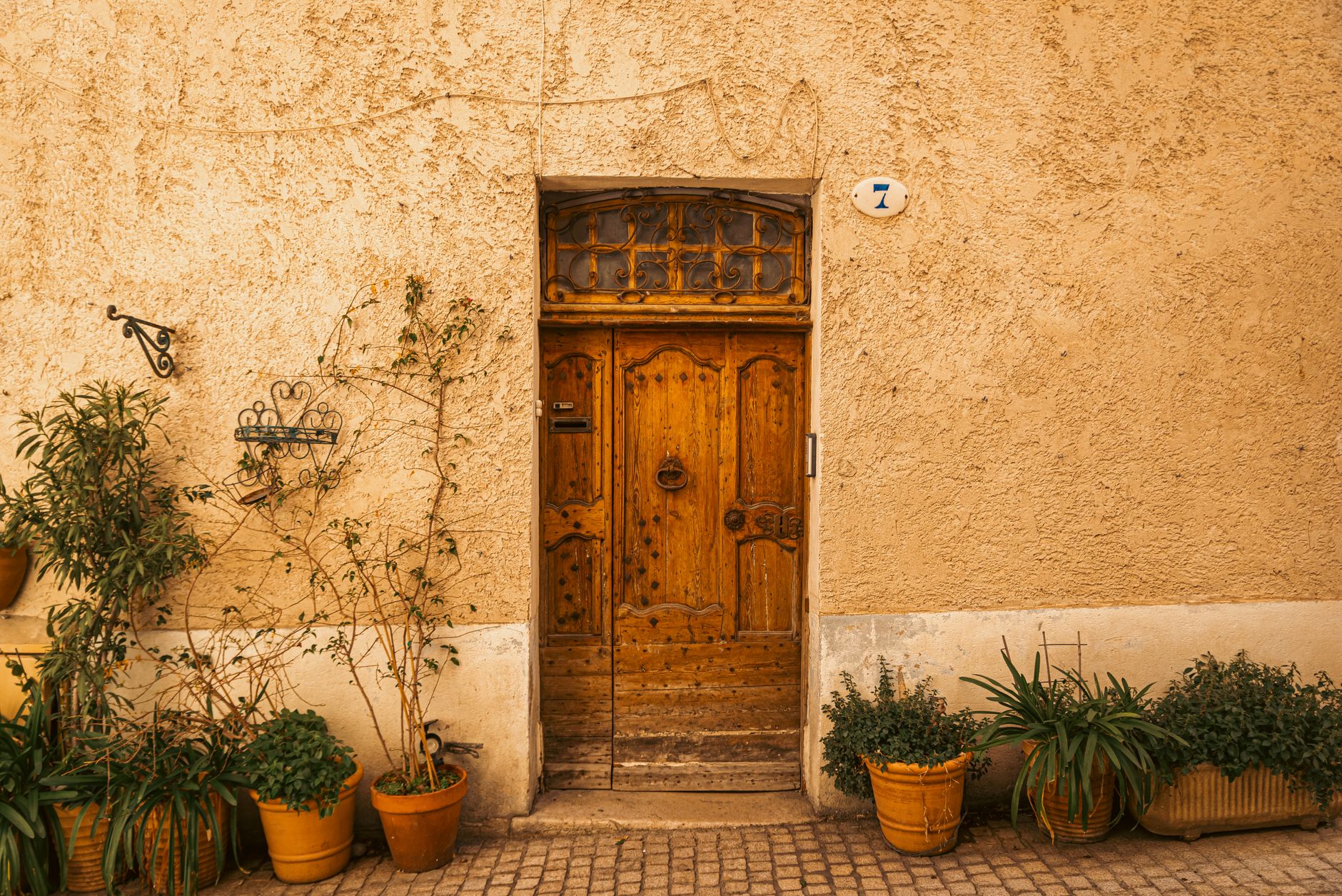
Many narrow entries receive borrowed light from another room rather than direct sun. A single ceiling fixture can flatten the space, making even good materials look dull. More successful lighting is gentle and layered.
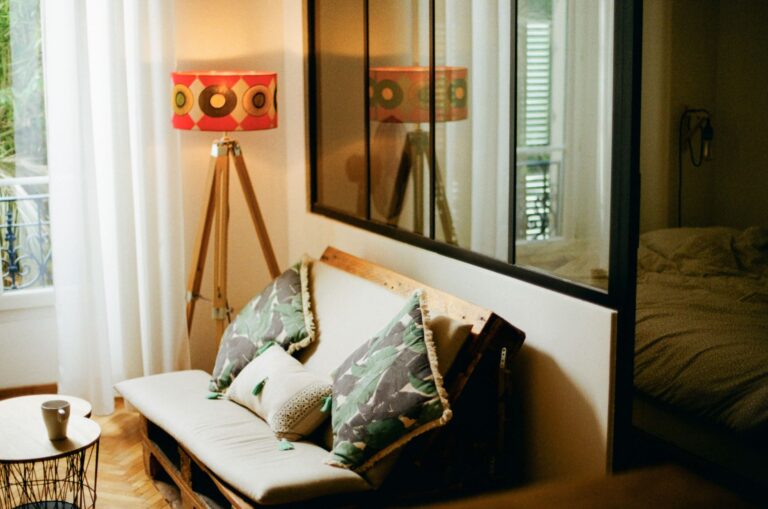
If you have an outlet, a small table lamp on a narrow console is one of the easiest ways to soften an entry. Look for a base with natural texture: rustic wood, ceramic, terracotta, or stone-like finishes. The shade matters as much as the base. Linen or fabric shades diffuse light in a way that suits plaster, stone, and baskets better than bare bulbs or glossy glass.
Where there is no room for a table, consider wall lighting if wiring allows. Mount sconces high enough not to be knocked by shoulders or bags. In a rented home, a plug-in wall light may be easier, provided the cord can be managed neatly. Avoid cool bulbs in this space. Warm light is more flattering to limestone, terracotta, aged wood, and natural linen.
A mirror can double the effect of whatever light is available. Place it so it reflects a window, doorway, lamp, or pale wall rather than a cluttered coat area. An arched mirror can work beautifully, but only if it is scaled to the wall. In a narrow hall, one generous mirror is usually calmer than a gallery of small mirrors.
A Wall Plan for Coats, Keys, and Mirrors
When floor space is limited, the wall becomes the entry’s main design surface. The goal is to make the arrangement feel composed rather than improvised.
Start with the mirror or artwork height. In most entries, the center of a mirror or framed piece should sit roughly at eye level, adjusted for the people who use the home. A mirror above a console can be lower than one above a bench because the console visually supports it. Leave some breathing room between the tabletop and the bottom of the mirror so the arrangement does not feel squeezed.
Next, locate hooks in a practical zone. Coats need enough clearance below, while bags need to hang without dragging on the floor. If hooks are directly beside the door, check that a hanging coat will not block the handle, peephole, intercom, or light switch.
Finally, create a landing spot for small items. This can be as simple as a small wooden tray on a ledge. It should be close enough to the door that keys are easy to drop, but not so exposed that every visitor sees a pile of receipts and loose change. In a Provençal-inspired entry, usefulness is part of the charm. A tray, a basket, and a mirror can be more convincing than a wall full of purely decorative objects.
Color Choices That Feel Provençal, Not Theme-Like
For a narrow Mediterranean entry, color should widen the space and support the materials. The safest base is not stark white, but a softened neutral: chalk, limestone, warm cream, sand, or a pale greige with a sun-washed quality. These shades keep the hall bright while feeling more natural against wood and terracotta.
Muted olive green works well for a door, small shelf, or painted peg rail. It brings the garden indoors without overwhelming the space. Soft ochre can be beautiful in very small doses, especially through ceramics or a faded textile, but it becomes heavy when used on every wall in a tight hall. Clay and rust tones should be balanced with pale plaster, linen, and wicker so they do not become too saturated.
Black has a role, but it should be restrained. A blackened iron hook, slim mirror frame, or lantern-style detail can give structure. Too many black elements in a narrow hall can make the entry feel like a corridor of outlines. If the flooring is already dark, keep wall accessories lighter.
Small Details That Survive Daily Use
An entryway is touched constantly. It needs finishes and objects that age gracefully. Matte surfaces tend to be kinder than glossy ones because fingerprints and small marks are less obvious. A slightly uneven ceramic bowl, an aged wood tray, or a woven basket can absorb the minor disorder of daily life in a way shiny lacquer cannot.
Choose washable or shakeable textiles near the door. If the entry opens directly to a garden, courtyard, or street, avoid pale rugs that cannot handle dust. Natural fibers look right, but they should be easy to lift, air, or replace. A runner with a low profile is safer than a thick one that catches under the door or becomes a trip hazard.
Keep scent subtle. Mediterranean entries can easily slip into cliché if every sensory detail is pushed too far. A small bundle of dried lavender may be lovely in the right setting, but it should not be the whole story. A ceramic vase with olive branches, a wooden tray for keys, or a woven basket for daily shoes will feel more lived-in and less staged.
Most importantly, leave some empty wall and floor space. The quietness is what makes the materials feel elegant. In a narrow entry, restraint is not minimalism for its own sake; it is what lets the hallway function.
Shop the Look
These pieces suit a narrow Mediterranean entry because they add storage, warm texture, or a useful landing point without demanding a full renovation.
Let the Threshold Set the Pace
A narrow entry does not need to announce the entire house. It only needs to make the first few moments easier and more beautiful: shoes contained, keys in one place, coats edited, light softened, and the materials quietly connected to the rest of the home.
The most enduring Mediterranean entries are not overdecorated. They are practical thresholds with honest textures: plaster, wood, ceramic, linen, wicker, and a little iron where structure is needed. When the walking line is clear and every object has a job, even the smallest hall can feel like a calm Provençal arrival rather than a cramped passage.
Affiliate disclosure: La Maison du Sud may earn a commission from qualifying purchases made through links in this article, at no extra cost to you.