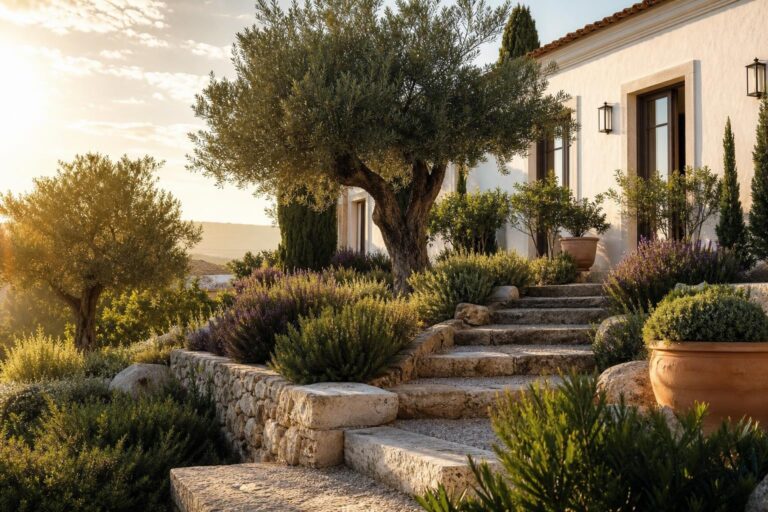
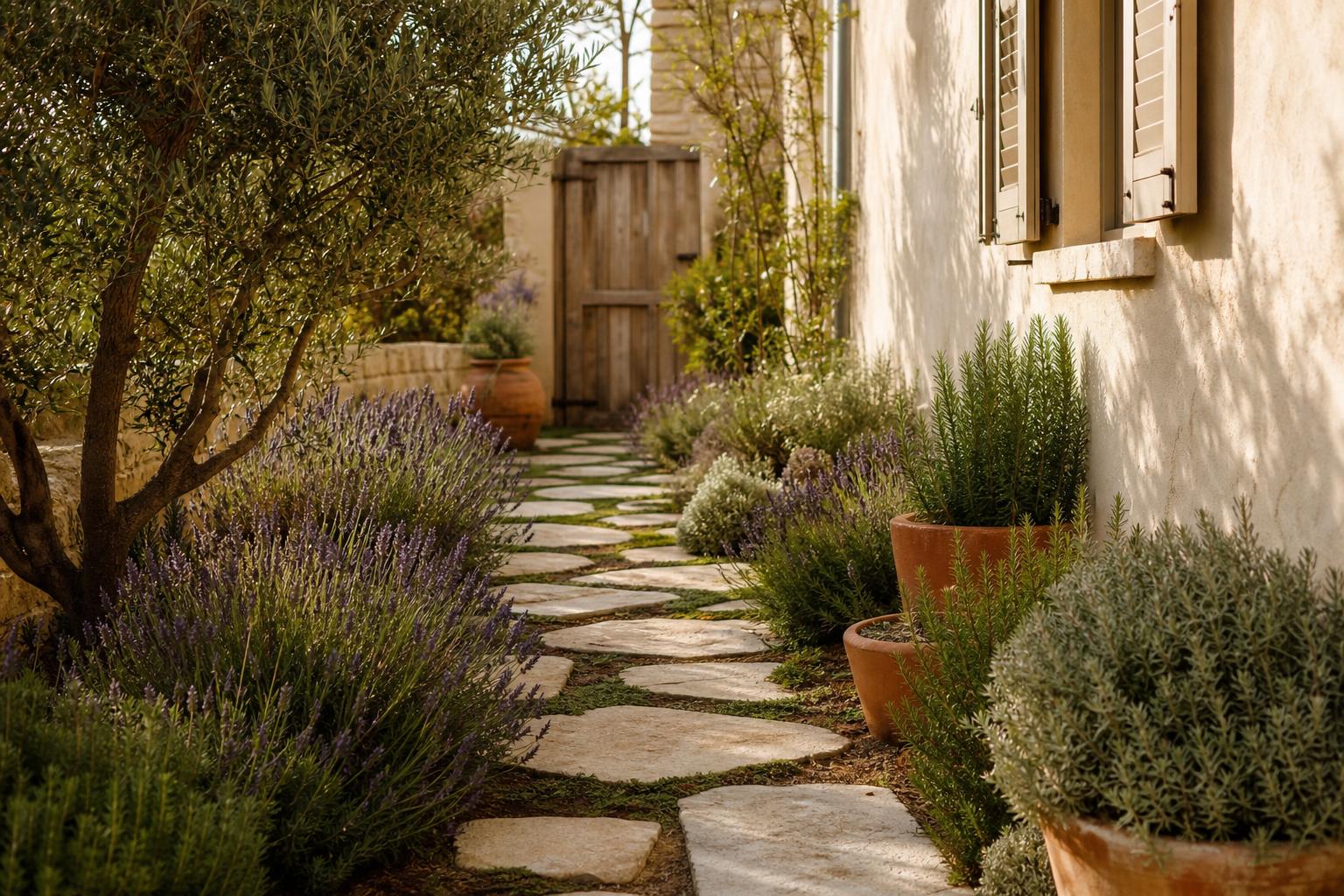
Mediterranean Garden Ideas With Lavender Borders and Reclaimed Stone Paths for Narrow Side Yards
Why a Narrow Side Yard Is Perfect for a Mediterranean Garden
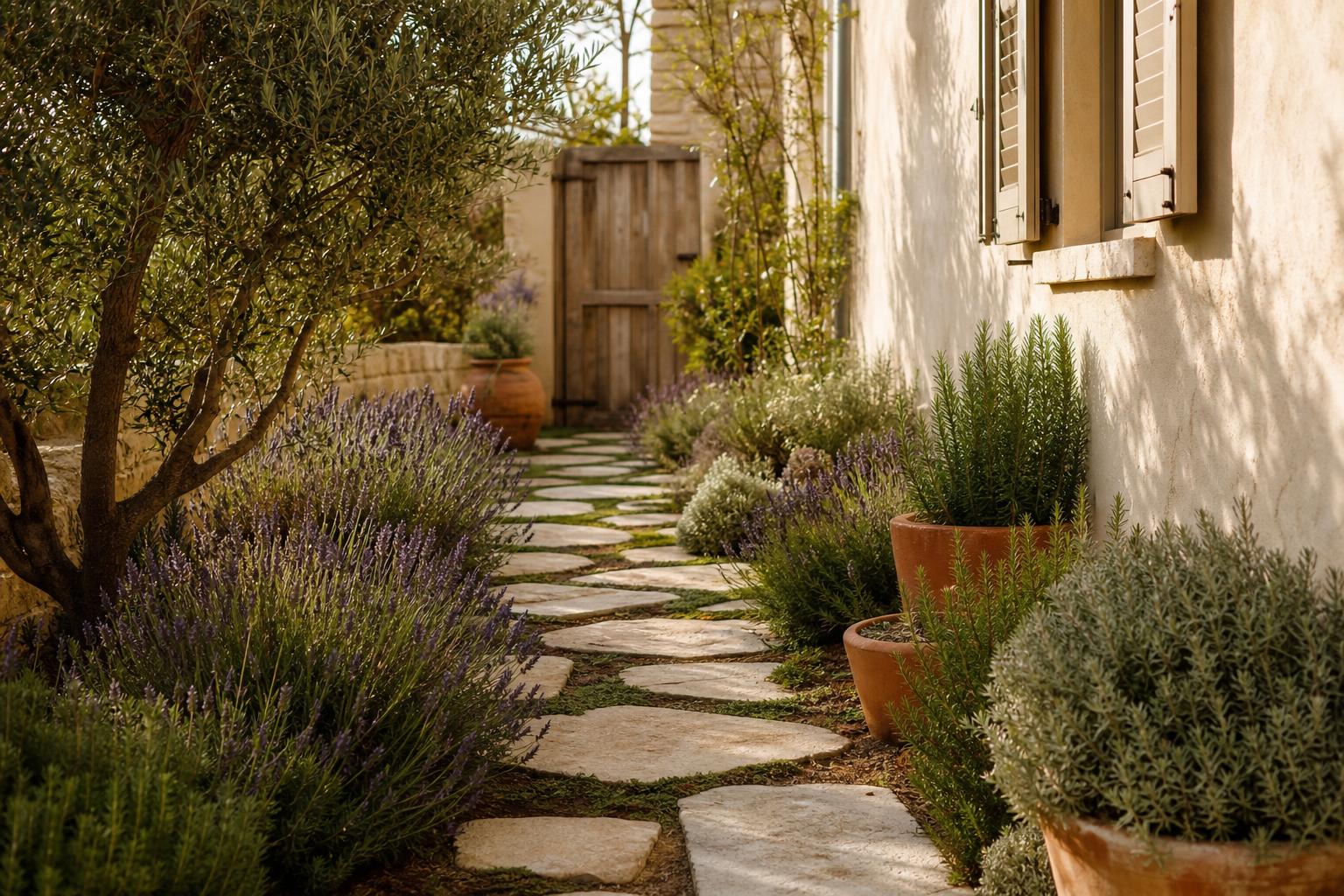
A narrow side yard is often treated as a pass-through: a place for bins, hoses, utilities, or a plain strip of paving. Yet in Mediterranean homes, the most charming spaces are often the ones that feel tucked away. A slim garden path lined with lavender, herbs, stone, and climbing greenery can turn an overlooked corridor into one of the most atmospheric areas of the property.
This design approach works especially well because Mediterranean gardens do not depend on wide lawns or oversized planting beds. Their beauty comes from texture, fragrance, shade, sun-warmed surfaces, and layered materials. A reclaimed stone path gives the space age and permanence. Lavender borders soften the walkway, release scent when brushed, and bring the soft purple tones associated with coastal villages and dry hillside gardens. Terracotta pots, gravel, white walls, and simple lighting complete the look without making the side yard feel crowded.
The goal is not to fill every inch. The most successful narrow Mediterranean garden feels composed but relaxed, as if it has evolved over time. It should guide movement, frame views, and offer small moments of beauty from the kitchen window, dining room, bedroom, or entry gate.
Start With the Path: Reclaimed Stone as the Main Design Feature
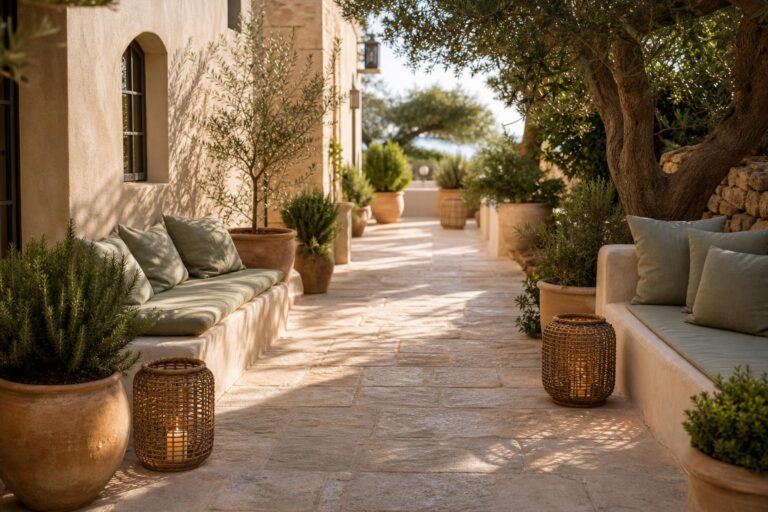
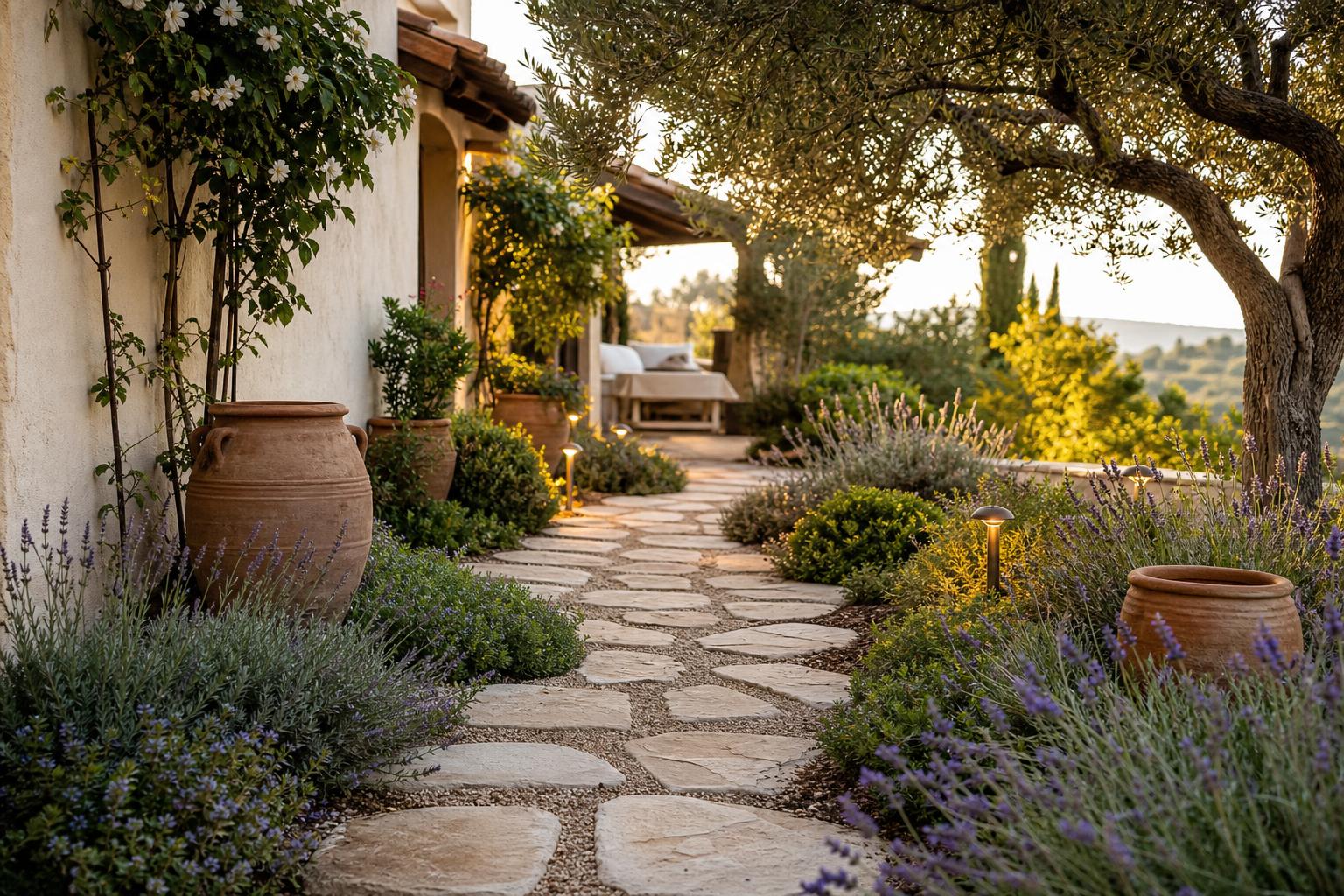
In a narrow garden, the path is not just practical; it becomes the visual spine of the entire design. Reclaimed stone is ideal because it instantly gives the side yard character. Instead of looking newly installed and overly perfect, aged limestone, sandstone, slate, or weathered paving brings irregular edges, subtle color variation, and a sense of history.
For a Mediterranean look, choose stones in warm neutral shades rather than cool gray when possible. Cream, honey, beige, pale taupe, and soft sand tones pair beautifully with lavender and terracotta. If your home has stucco, stone, or warm brick, repeat one of those colors in the path so the garden feels connected to the architecture.
There are several ways to lay the path. Large irregular slabs set in gravel create a rustic coastal feeling. Rectangular reclaimed pavers arranged in a loose running bond feel more formal but still aged. Stepping stones surrounded by creeping thyme or gravel work well if the space is very narrow and you want the planting to feel fuller.
Keep the path simple enough to walk comfortably. A Mediterranean garden should feel romantic, but not inconvenient. If the side yard is used daily, make sure the stones are level, stable, and wide enough for easy movement. The charm should come from material and planting, not from an awkward walking surface.
Use Lavender Borders to Soften the Edges
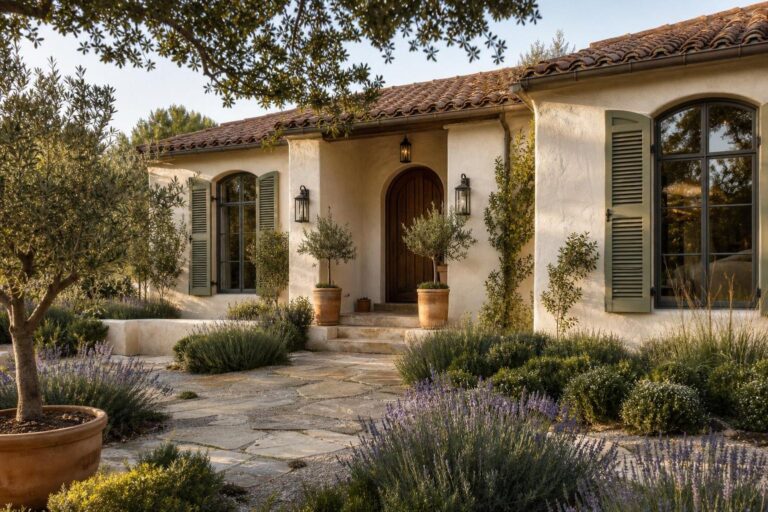
Lavender is one of the most recognizable Mediterranean garden plants, and it is especially useful in narrow side yards because it provides structure without feeling heavy. Its silvery foliage reflects light into shaded corners, while its upright flower spikes add movement and color. When planted along a stone path, lavender creates a soft edge that makes the walkway feel intentional.
The key is choosing a variety that suits your climate and the width of your space. English lavender is compact and well suited to smaller gardens with good drainage. Spanish lavender has distinctive flower heads and a bolder look, especially in warm climates. French lavender can feel loose and romantic, but it may need a little more room to spread.
For the cleanest design, repeat the same lavender variety along the length of the path. This gives the narrow space rhythm and cohesion. If the yard is too tight for a continuous border, place lavender in clusters at widened points, corners, or near doorways. Even three or five repeated groups can create the impression of a full Mediterranean border.
Lavender needs sun and drainage, so avoid planting it in wet, compacted soil. If your side yard receives only partial sun, use lavender in the brightest stretches and combine it with more shade-tolerant Mediterranean-style plants elsewhere.
Build a Plant Palette Around Silver, Green, and Soft Purple
A narrow Mediterranean garden feels best when the plant palette is restrained. Too many flower colors can make the space feel busy. Instead, build around silver foliage, deep green leaves, chalky purple blooms, and occasional cream flowers. This palette feels calm, sun-baked, and timeless.
Lavender can form the main border, but it should not carry the garden alone. Add low herbs such as thyme, oregano, and savory between stones or at the front of planting pockets. Rosemary can provide height and evergreen structure, especially in a clipped mound or upright form. Santolina offers a silvery texture that pairs beautifully with reclaimed stone. Germander, teucrium, and artemisia can also create that dry garden softness associated with Mediterranean landscapes.
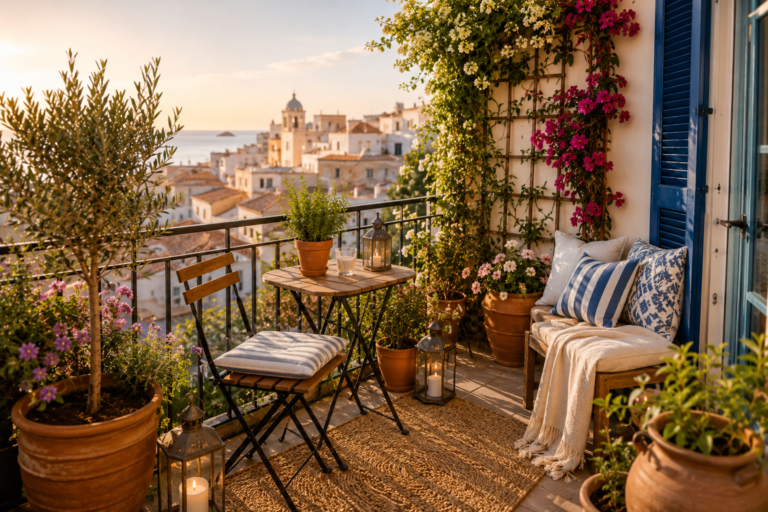
If you have a wall or fence, add vertical greenery to make the side yard feel enclosed in a beautiful way rather than boxed in. Star jasmine, climbing roses, bougainvillea in warm climates, or grapevine can soften hard surfaces. Choose one strong climbing feature rather than several competing vines. A single wall covered in jasmine can make the entire path feel fragrant and established.
Make the Most of Walls, Fences, and Boundaries
Most narrow side yards have at least one long boundary wall or fence. Instead of seeing this as a limitation, treat it as the backdrop for the whole Mediterranean composition. A pale stucco wall, limewashed brick, woven reed screening, or warm timber fencing can transform the atmosphere immediately.
If the existing fence is dark, cold, or visually distracting, consider a lighter finish. Cream, chalk white, warm beige, and muted stone colors reflect sunlight and make the garden feel wider. A whitewashed wall behind lavender creates a classic Mediterranean contrast, especially when the purple flowers bloom.
For rental-friendly or budget-conscious updates, use freestanding trellis panels, tall planters, or climbing plants in large pots. You can create the impression of an architectural garden wall without rebuilding the boundary. The goal is to reduce visual clutter and create one continuous background for the stone path and planting.
Arched details can also work beautifully in a side yard. A small arched gate, arched wall mirror designed for outdoor use, or curved trellis introduces Mediterranean architecture without requiring a major renovation. Use these features sparingly so the garden remains elegant rather than themed.
Add Terracotta Pots Without Blocking the Walkway
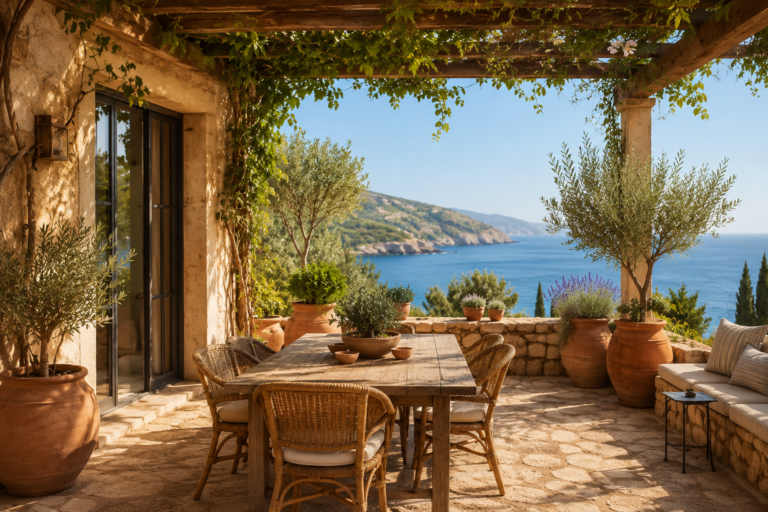
Terracotta is essential to Mediterranean garden style, but in a narrow side yard, pot placement must be edited carefully. Too many containers can make the path feel cramped. Use fewer pots in larger sizes rather than many small ones scattered along the ground.
Place terracotta pots at natural pause points: beside a gate, at the start of the path, near a side door, or at the end of the view. These anchor moments make the garden feel designed. A tall urn with rosemary, a deep pot with bay laurel, or a cluster of two or three aged planters can add height and warmth without reducing circulation.
For a more layered look, choose pots with slight variations in tone and shape. Smooth terracotta, ribbed clay, and handmade ceramic finishes can all work together if the palette remains warm and earthy. Avoid glossy bright colors if you want the garden to feel rustic and sun-washed.
If your climate has freezing winters, choose frost-resistant terracotta or move delicate pots to a protected area. Mediterranean style should be beautiful, but it also needs to survive your real weather conditions.
Use Gravel to Create Drainage and Texture
Gravel is one of the most useful materials for a narrow Mediterranean garden. It improves drainage around lavender and herbs, reduces mud, suppresses weeds when properly installed, and creates a soft crunch underfoot. It also visually connects the reclaimed stone path to the planted borders.
Choose gravel in a color that complements the stone paving. Buff, cream, tan, or pale golden gravel creates a warm Mediterranean feeling. Very white gravel can look harsh in strong sun, while dark gravel may absorb heat and feel heavy in a tight space. Pea gravel offers a relaxed look, while crushed stone feels more compact and stable.
For side yards used frequently, install edging to keep gravel from spilling into planting beds or drains. A subtle metal edge, stone setts, or buried brick can define the path without drawing attention. The best edging is the kind you barely notice.
To avoid a flat, dry look, combine gravel with plants that spill gently over the edges. Creeping thyme, trailing rosemary, erigeron, and low oregano help blur the line between path and planting. This softness is what separates a Mediterranean garden from a simple gravel walkway.
Handle Shade in a Mediterranean Way
Not every side yard receives full sun. Many are shaded by the house, a neighboring wall, or tall fencing. If your narrow garden gets limited light, you can still create a Mediterranean mood by focusing on texture, wall color, stone, pots, and shade-tolerant plants with the right character.
In shadier areas, use plants such as bay laurel, myrtle, clivia in warm climates, asparagus fern, cast iron plant, hellebores, and certain varieties of jasmine. You may not get the same lavender performance in deep shade, so reserve lavender for the sunniest end of the path or grow it in pots that can be positioned where light is strongest.
Another trick is to use pale hardscaping to brighten the space. Reclaimed stone in warm ivory tones, cream gravel, and whitewashed walls can make a shaded side yard feel luminous. A dark, narrow corridor becomes a soft garden passage when surfaces reflect available light.
If the space is very shady, lean into a courtyard-like feeling. Add a water bowl, sculptural pot, simple bench, or lanterns. The Mediterranean look is not only about sun; it is also about cool retreats, shaded passages, and quiet transitions between rooms and gardens.
Create Rhythm With Repetition
Narrow spaces need rhythm more than variety. Repetition helps guide the eye down the path and makes the garden feel longer, calmer, and more intentional. This can be done with plants, pots, lights, or paving details.
For example, repeat lavender mounds every few feet along one side of the walkway. Install matching bronze path lights at even intervals. Use three terracotta pots in the same shape but different sizes. Repeat a climbing plant on two trellis panels. These simple patterns make the garden feel composed without becoming formal.
Repetition is especially important when the side yard is visible from inside the home. If you look out from a hallway, kitchen, or bedroom, repeated plant forms and stone lines create a beautiful view even when you are not walking through the garden.
Light the Path for Warm Evenings
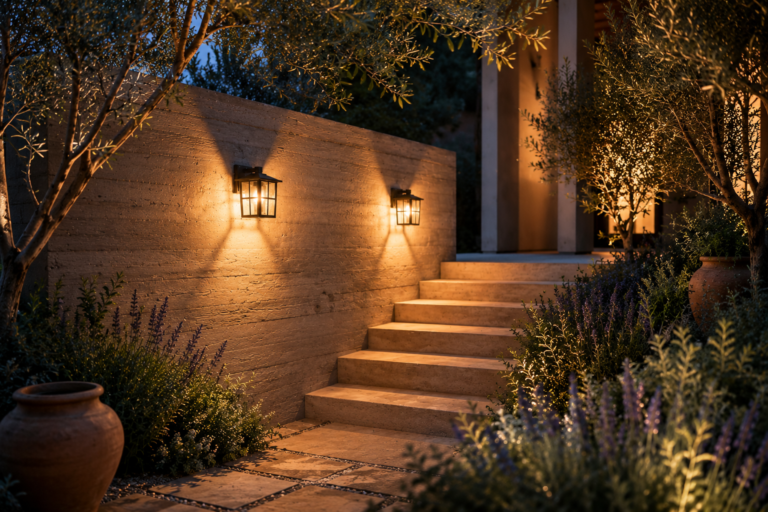
Mediterranean gardens become especially beautiful at dusk. Warm lighting makes reclaimed stone glow, highlights lavender texture, and turns a simple side yard into an inviting evening passage. The best lighting is subtle, low, and warm-toned.
Use path lights sparingly so the space does not feel like a runway. Bronze, copper, blackened metal, or aged brass finishes suit the Mediterranean palette better than shiny chrome. Place lights where they help with movement: near steps, turns, gates, or doorways.
Wall lights are another option if the side yard has a stucco or masonry surface. A simple lantern-style sconce or plaster-effect light can add architectural charm. If wiring is not possible, solar path lights and battery lanterns can still create a warm glow, especially for seasonal entertaining.
Avoid cool white bulbs. Choose warm white light to flatter stone, terracotta, and plants. The aim is to create atmosphere, not brightness.
Design for Fragrance and Touch
A narrow side yard is experienced up close. Unlike a wide garden, where you may view planting from a distance, a side path encourages you to brush past lavender, herbs, and climbing greenery. This makes fragrance and texture especially important.
Plant lavender close enough to release scent when you walk by, but not so close that it becomes a tripping hazard. Tuck thyme near stepping stones. Train jasmine near a gate or bedroom window. Place rosemary where it can be touched as you pass. These small sensory details make the space memorable.
Texture matters as much as scent. Combine the roughness of reclaimed stone with soft lavender blooms, matte terracotta, fine gravel, and glossy green leaves. Mediterranean gardens are rich because every surface has a tactile quality.
Keep the Layout Practical for Daily Use
Even the most romantic side garden needs to work for real life. If the side yard connects the front and back of the house, keep a clear walking route. If bins, bikes, or tools must pass through, make the path wider and reserve planting for one side. If there are utility meters or access panels, leave them visible and reachable.
Practicality does not have to ruin the design. Storage can be disguised with a timber screen, woven panel, or large pot. Hoses can be mounted on a simple dark metal reel. Utility areas can be softened with climbing plants while remaining accessible.
Before planting, observe how water moves through the side yard. Narrow spaces often have drainage challenges. Lavender and Mediterranean herbs dislike soggy soil, so improve drainage with gravel, raised edging, or amended planting pockets where needed.
Budget-Friendly Ways to Get the Look
You do not need to renovate the entire side yard at once. A Mediterranean garden can be built gradually because aged, collected materials suit the style. Start with the path and one strong planting idea, then layer in pots, lighting, and vertical greenery over time.
- Use reclaimed or leftover stone: Search locally for salvaged pavers, broken flagstone, or offcuts that can be arranged as stepping stones.
- Plant lavender in repeated groups: Repetition feels more designed than buying many unrelated plants.
- Refresh boundaries with pale paint: A lighter wall or fence can transform the mood before you add anything else.
- Choose gravel over complex paving: Gravel is often more affordable and suits Mediterranean planting well.
- Buy larger pots slowly: One beautiful terracotta urn has more impact than several small plastic containers.
- Add lighting last: Once the path and plants are in place, it is easier to see where light is actually needed.
Common Mistakes to Avoid
The first mistake is overcrowding. A narrow Mediterranean garden should feel abundant, but still breathable. If plants spill too far into the path, the space becomes difficult to use and may feel neglected rather than charming.
The second mistake is using too many materials. Reclaimed stone, gravel, terracotta, pale walls, and greenery are enough. Adding multiple tile patterns, brightly colored pots, metal screens, and decorative objects can make the side yard feel confused.
The third mistake is ignoring the local climate. Mediterranean style can be adapted almost anywhere, but the plants must suit your conditions. In cold or wet climates, prioritize drainage and choose hardy lavender varieties. In hot dry climates, focus on drought-tolerant herbs and deep watering while plants establish.
The fourth mistake is choosing cool lighting. Blue-white light can make stone and plants look flat. Warm light is one of the easiest ways to create the relaxed glow associated with Mediterranean homes.
A Simple Design Plan for a Narrow Mediterranean Side Yard
If you want a clear starting point, imagine the path as a sequence of small moments. At the entrance, place a large terracotta pot with rosemary or bay. Continue with reclaimed stone stepping slabs set into pale gravel. Along the sunniest side, plant a repeated lavender border. On the opposite wall, train jasmine or a climbing rose on a simple trellis. Add thyme between a few stones and bronze path lights at the key turns.
At the end of the path, create a destination. This could be an aged urn, a small bench, an arched gate, or a wall fountain. A narrow side yard feels more intentional when the eye has somewhere to land. The destination does not need to be dramatic; it only needs to feel thoughtful.
From there, edit. Remove anything that interrupts the calm rhythm of stone, lavender, gravel, and terracotta. Mediterranean garden design is often about restraint. The materials are beautiful enough when they have room to breathe.
Shop the Mediterranean Look
Bring this narrow side garden style to life with practical pieces that add fragrance, texture, pathway definition, and soft evening atmosphere.
- aged terracotta garden pots
- lavender plants for garden borders
- natural stone stepping stones
- bronze solar pathway lights
- garden trellis for climbing greenery
- decorative pea gravel for paths
Bringing the Side Garden Together
A narrow side yard can become far more than a route between two places. With reclaimed stone underfoot, lavender along the edges, terracotta pots at key points, and soft warm lighting, it can feel like a small Mediterranean passage full of fragrance and texture.
The most important design principle is cohesion. Choose a simple material palette, repeat plants for rhythm, and let the path guide the experience. Whether your side yard is sunny, partly shaded, rustic, modern, rented, or newly renovated, the Mediterranean look can be adapted with thoughtful choices.
Start with one improvement that changes the feeling of the space: a warmer path, a lavender border, a pale wall, or a pair of generous terracotta pots. Over time, the garden will gain the layered, collected beauty that makes Mediterranean outdoor spaces so enduring.